

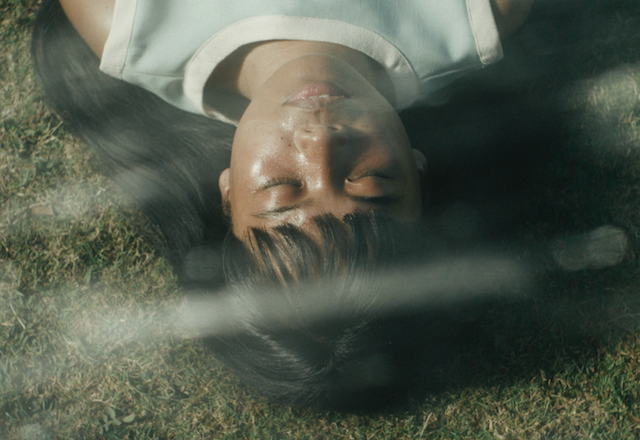
©Courtesy of Sundance Film Festival
Master directors Jia Zhangke of China and Lav Diaz of the Philippines both believe that films need space and time to breathe. Long, slow takes allow viewers to notice small details, absorb everyday moments, and reflect. Filmmaker Rafael Manuel has taken this philosophy to heart. In his quietly powerful debut feature, “Filipiñana”, which won the World Cinema Dramatic Special Jury Award for Creative Vision at the Sundance Film Festival, Manuel weaves deadpan humor into a sensitive exploration of class and Filipino identity.
It is also Jia Zhangke, the acclaimed filmmaker behind “Still Life” (2006), “A Touch of Sin” (2013), “Mountains May Depart” (2015), and “Ash Is Purest White” (2018), who mentored Manuel and serves as executive producer of the film. While his mentor offered guidance, Manuel has clearly developed his own voice.
Set on an elite golf course and resort outside Manila, “Filipiñana”, adapted from Manuel’s 2020 award-winning short of the same title, unfolds over a hot, humid day. The film follows two women navigating a world of businessmen, privileged Chinese tourists, and caddies: seventeen-year-old Isabel (Jorybell Agoto), a reclusive and quietly rebellious new tee girl, and Clara (Carmen Castellanos), the melancholic 30-something niece of the club’s owner, Dr. Palanca, visiting from New York.
The film centers primarily on Isabel, who speaks Ilocano in parts of the film, subtly signaling her class and regional background within the resort’s rigid social hierarchy. She has just started her job, serving all-male customers for low pay, and spending long hours at the driving range placing golf balls on tees so golfers never have to bend down.
Through its all-female staff, the film reveals routines, hierarchies, patriarchy, and small acts of resistance beneath polished surfaces of privilege. It’s a creepy world — a utopia of exploitation, a paradise rotten on the inside — and a metaphor for the Philippines’ deep class divide and colonial past. The golf course becomes a mirror of society, also recalling how some of these courses in the Philippines were built on or tied to former U.S. military bases.
Using static cameras and long, patient takes, Rafael Manuel lets viewers quietly observe this world. Xenia Patricia’s cinematography (“Zodiac Killer Project”, 2025) is stunning, with rich compositions where every detail speaks. Each frame could stand as a painting. Production designer Tatjana Honegger turns the resort into a polished, almost eerie space, where class and control emerge through neat uniforms, pastel interiors, and carefully ordered rooms. The look feels timeless, yet strangely futuristic, like a fever dream.
While the plot is spare, we slowly come to understand Isabel as she learns the job. She is a woman of few words; her eyes carry most of the emotion. At one point, she tries to return a lost golf club to Dr. Palanca – she seems quietly obsessed with him. She longs for something more, revealed in small acts of rebellion, such as tasting the top of a cake she could be fired for touching or casually hitting a mango into the bushes with the boss’s golf club.
This world may seem dull and dark, but Rafael Manuel brings a refreshing dry humor to it. Visual gags lighten the mood: tee girls move in sync with men swinging their clubs, like a weird musical. Isabel gives directions to a group of blind people from afar, while Dr. Palanca delivers an awkward karaoke performance as the camera pulls back. In other scenes, cleaners sweep in rhythm, and golf balls are compared to an old man’s testicles.
Rafael Manuel knows exactly what he’s doing. He has a deep, grounded understanding of cinema, drawing inspiration from German auteur Rainer Werner Fassbinder alongside the playfulness of Jacques Tati and Federico Fellini. His film is immersive and slyly funny, blending the reflective patience of fellow countryman Lav Diaz (”The Woman Who Left”, 2016) with Jia Zhangke’s keen eye for everyday life. Even as unseen violence lingers at the club, Manuel lets us hope that Isabel might find a way toward something better – at least within this film world, where space is given to breathe and moments are fully absorbed. Hats off, Mr. Manuel.
Grade: A-
If you like the review, share your thoughts below!