

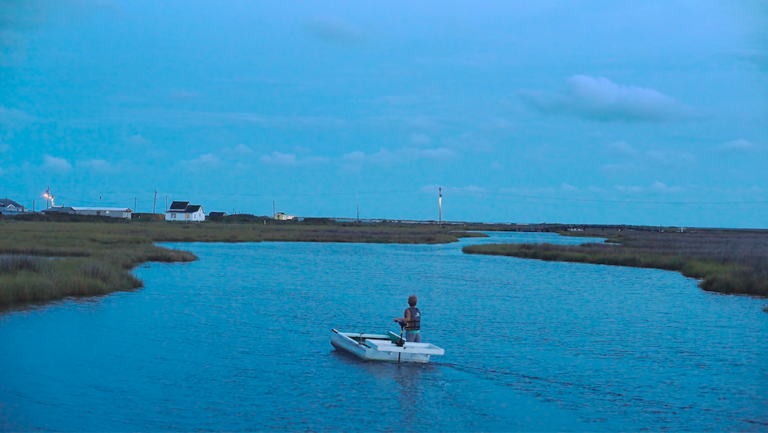
In recent times, there’s been a rise in cinematic stories unveiling the issue of climate change refugees. The documentary by Japanese-American NYC-based director David Usui captures exactly this preoccupying situation concerning an island that is bound to vanish in the United States.
Been Here Stay Here plunges viewers in the remote Tangier Island, nestled in Virginia’s Chesapeake Bay. This is the home to an evangelical Christian fishing community that settled in the early 20th century. Over the course of the past 150 years two thirds of the island have disappeared because of the rising tides.
Old footage celebrates the simple life of previous generations populating the island. The current inhabitants — lead by a mayor who is a commercial crabber and is the 6th generation on the island — seem to be crystallised in that bygone era; as no digital devices seem to be present, alcohol is off limits and a slow, analog lifestyle characterises the daily routines of all. There are cars, motorbikes (also for children) and motorised boats, and no matter the age the main focus of the community is to fish and pray.
The only break from this humdrum is a film within a film situation: we witness a German documentarian accompanied by a camera person, interviewing the islanders with the pursuit of making a film about the fate of the vanishing island. The foreign filmmaker raises questions about belonging and how the landscape is shifting beneath the feet of the people on Tangier, since the weather determines life on the island. The people are friendly and talkative in sharing the history of the place and their views on its future, as their centuries-old way of life — anchored in faith, family, and the rhythms of the bay — stands at a crossroads.
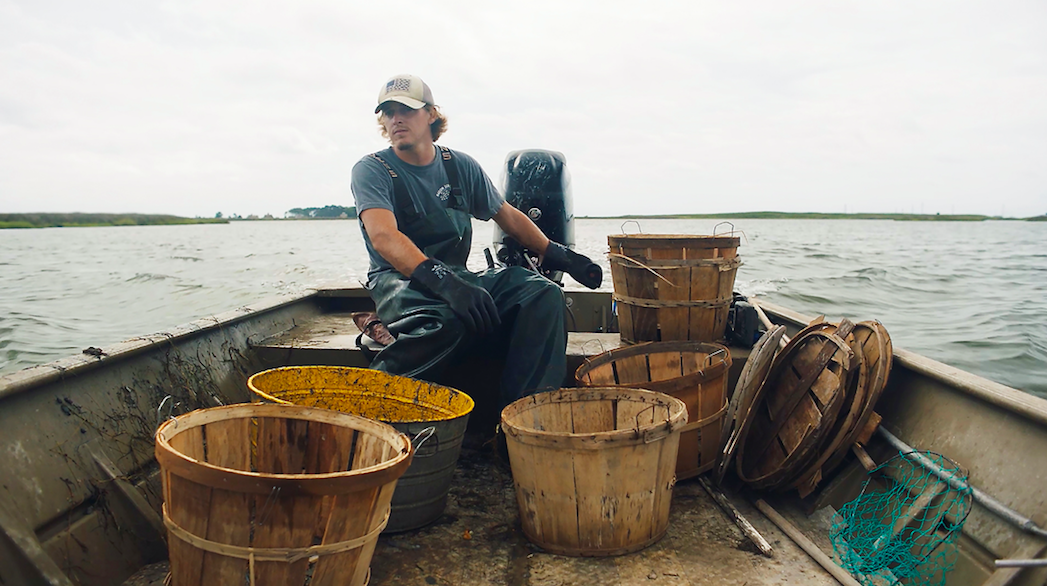
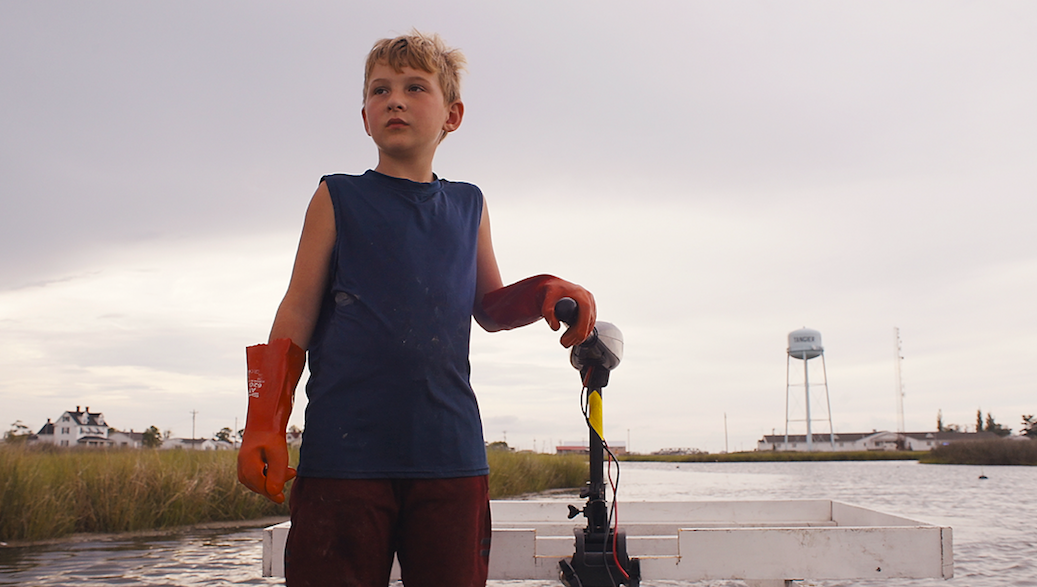
Climate change is real in Been Here Stay Here. It’s an ominous presence that affects indiscriminately all inhabitants as we can compare three generations of men tackling with crab fishing: Ooker Eskridge, the resolute and proud mayor; Cameron Evans, a young man who struggles between the comfort of tradition and the appeal of opportunities beyond the island; and Jacob Parks, a seven-year-old boy learning the deep maritime knowledge that he may not be needing if the island is destined to be submerged.
David Usui’s studies in philosophy and human ecology fully transpire in this documentary, that questions the ongoing struggle between the anthropocentric and ecocentric dimensions. The choice of music enhances the sentimentally reflective mood of the storytelling, with the use of string instruments that provide a melancholic sense of despondency.
Usui’s narrative angle and visual style correspond to the way the topic of his investigation is confronted discreetly. Often cinema has tackled the climate crisis in a brash and boisterous manner, sensationalising the heinous actions perpetrated by humans on our environment. In this film there aren’t testimonies of scientific experts, explaining the geological evolution that awaits the island. The film is not argumentative, it’s observational.
Been Here Stay Here — that premiered at IDFA and has screened at festivals including DCEFF, Docaviv, AFS Doc Days, Martha’s Vineyard, Annapolis, and Princeton — chooses a quieter approach that allows us to “sink in” the situation that is being depicted. The ebb and flow of Tangier Island’s destiny is irreversibly doomed. As one of the characters points out, the constant deterioration of the island represents “a kerosene beauty,” which somehow seems to be the unspeakable charm of David Usui’s cinematic take on this story.
Final Grade: B+
Photos credits: Courtesy of Lost and Found Films