
©DIMENSIONS
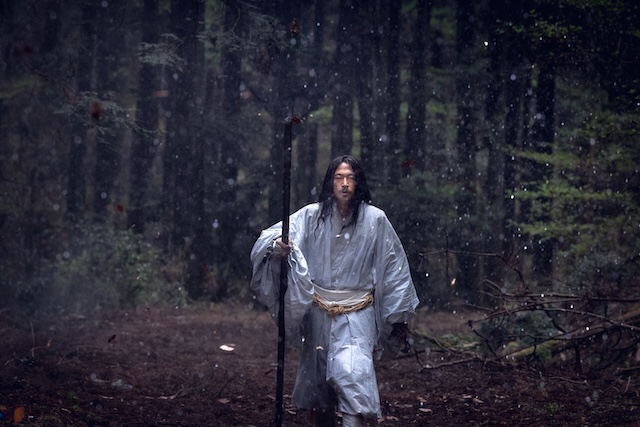
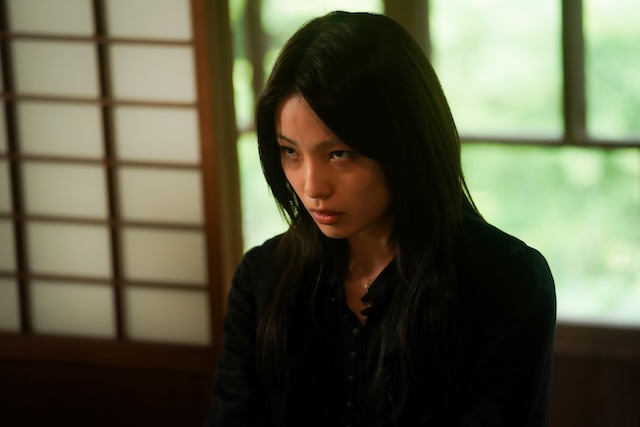
NYAFF 2025 Filmmaker in Focus : Toshiaki Toyoda immerses viewers in an aesthetically transfixing vision of inner and outer worlds, set against a backdrop of collapsing realities and cosmic uncertainty.
©DIMENSIONS
Exclusive Interview with Writer/Director Toshiaki Toyoda
Q : Wolf Worship, the Japanese wolves that once lived in Japan were revered by the people as creatures that hunted wild boars and deer that ravaged their fields and protected their crops. As a result, a “wolf worship” belief emerged in a wide area centered on the Kanto region, where wolves were worshipped as gods, and this belief still remains in various parts of Japan today. What was the initial inspiration for creating the short film “Noroshi ga yobu”(which is created the “Wolf Revival Mountain Series” including the latest film, “Transcending Dimensions” centered on this belief in the revival of wolves?
Toshiaki Toyoda : There was a band called Seppuku Pistols, and after seeing their live performance, I wanted to use one of their songs in a movie. The song was titled “Wolf Worship.” When I researched what “wolf worship” meant, I found that wolves are at the top of the food chain, which is something that is often discussed in the movie “Princess Mononoke”. But that’s not what I’m talking about. During the Meiji era, when Japan modernized, wolves were exterminated and eradicated. After the Meiji era, Japan leaned toward capitalism, and my “Wolf Worship” is a kind of antithesis or counterargument to that.
Q : At that time, I heard that wolves were regarded as dogs, and due to concerns about rabies and other diseases, they were exterminated.
Toshiaki Toyoda : It’s similar to the rumor that Koreans poisoned wells during the Great Kanto Earthquake. No one knows if such a thing really happened. However, as Japanese society became more capitalist, I feel that wolves became unnecessary as the forests were cleared.
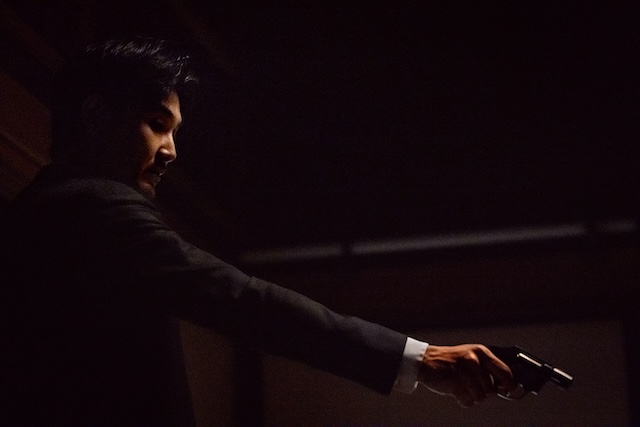
Q:After creating “Noroshi ga yobu”, you released “The Day of Destruction” (2020) and “Zenin Seppuku” (2021), and your latest film “Ikiteiru.” You continued to create works that challenge the chaotic era through the “Wolf Revival Mountain” series. However, this time, you have expanded the stage to the universe and depicted a grand story that transcends time and space. What was the motivation behind choosing the universe, a world still largely unknown to humanity, as the setting for this work?
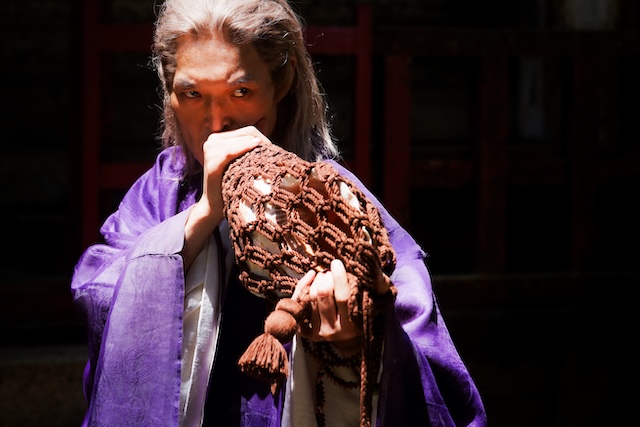
Toshiaki Toyoda: I think the setting is not space, but mountains or the human heart. The fact that a depiction of the universe was necessary in this case is because, when researching mountain religions like Yamabushi or Shugendo, one inevitably arrives at esoteric Buddhism, and within that esoteric Buddhism, the concept of the universe is expounded upon. Before blowing the conch shell in the film, it says the same thing as in the movie—“Ajimon”—and “Ajimon” refers to the universe. That’s the imagination I drew from.
©DIMENSIONS
Q : Throughout the series, you seem to view the shrines in Kanuma City, Tochigi Prefecture, as shrines dedicated to the worship of wolves. What was your mindset in connecting the themes throughout the series?
Toshiaki Toyoda: Not at all. Each film is unique. When I made the film “Noroshi wo Yobu,” I happened to use a shrine in Tochigi, and when I tried to make another film, I thought that movie theaters would be empty during the Tokyo Olympics next year, so I asked for those empty theaters and decided to release the film on July 24, the day of the Olympics. But then Covid hit.
So, while all other films were on hold, I made a film about the Covid called “The Day of Destruction.” After that, I wanted to ask, “What was the Covid issue like?” That’s why I made “Zenin Seppuku” I continued to make films based on my personal feelings each year and release them immediately. Looking back, I realized that they were all connected, such as using the same shrine. So, like Osamu Tezuka’s “Phoenix,” I think each film is an independent work.
Q : I imagine it’s difficult to raise funds for films that deal with faith and catharsis. Did crowdfunding and the cooperation of the villagers in Kanuma City, Tochigi Prefecture (where the film was shot) play a significant role?
Toshiaki Toyoda: Of course, I myself have already moved to that village in Tochigi Prefecture, so I have transferred my residence registration there. I participate the festivals with them, so when I’m making a movie is like being in the festival with them(village residents), but not just with them, of course, professional staff are also involved in the process. I’ve been doing this for about six years since 2019.
Q : The band Seppuku Pistols, which you mentioned earlier, is in charge of the music for this series. What aspects of the music have you entrusted to them? How do you usually decide on the music of the film?
Toshiaki Toyoda: If you search for “Seppuku Pistols” on YouTube, you’ll see what I mean. They wear Edo-period peasant clothing called “nora-gi,” and they’re committed to using traditional Japanese instruments, but their music is punk rock in the true sense of the word. There is punk rock in Japan, but it’s basically just a copy of British punk rock. These guys are doing real Japanese punk rock with traditional Japanese instruments, and I really like that.
They live in Tochigi, and about half of the members have moved there together. In a way, they’re comrades who share the same vision. This time, it’s not just that—I’ve always been inspired by musicians that I love, and this time it’s the British jazz band Sons of Kemet. I communicated with the leader, Shabaka Hutchings, when he came to Japan, hung out together, and used their music.
Q : I think the script for this film requires a great deal of imagination. Mr. Toyoda has been writing the script and directing at the same time, but what kind of particular focus do you have when writing the script?
Toshiaki Toyoda: I think the original story is proportional to my own life. How I live my life, the things I encounter, and the experiences I have—all of that directly becomes the screenplay for the film. From another people’s perspectives, it’s being turned into fiction, but for me, it’s all documentary. It transcends dimensions, but in reality, it’s about expanding on my real-life stories.
©DIMENSIONS
If you like the interview, share your thoughts below!
Check out more of Nobuhiro’s articles.
Here’s the Trailer of the film.