
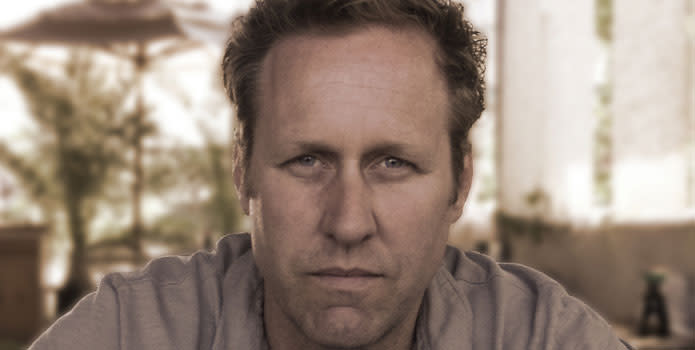
Oscar-winning screenwriter and director Roger Avary is stepping back into the helmers chair after several years away with an ambitious new project: a feature adaptation of Paradise Lost. The film, based on the 1667 poem pf the same name by John Milton, will be produced by AI-focused banner Ex Machina Studios, Deadline is reporting. The news signals a bold fusion of classical literature and emerging filmmaking technology.
Avary is is no stranger to adapting dense, stylized material. He’s best known for co-writing Pulp Fiction with longtime collaborator Quentin Tarantino and directing The Rules of Attraction.
Yet Paradise Lost represents perhaps his most daunting challenge to date. Milton’s sprawling narrative dramatizes the fall of Lucifer, the creation of the world, and the temptation of Adam and Eve. It has long challenged filmmakers attempting to translate it to the screen. Its philosophical depth, theological themes and cosmic scale have thwarted multiple filmmakers over the decades.
Among those who previously attempted the feat is Alex Proyas, who at one point developed a high-profile adaptation at Warner Bros. Bradley Cooper signed on to play Lucifer. That version ultimately collapsed under the weight of its budget and scope. Avary and his collaborators believe that advances in artificial intelligence could finally make such an epic feasible.
Marco Weber, co-founder and CEO of Ex Machina Studios, is producing the new adaptation. Veteran production designer Kirk Petruccelli is serving as the movie’s executive producer. K5 International is handling international sales, with the project is expected to draw attention at the Cannes market.
Described by its producers as the ultimate faith-based heroic saga, the film will depict a cosmic war in Heaven. The charismatic archangel Lucifer defies God, falls into Hell, and reemerges as Satan. From there, he plots revenge by corrupting humanity’s first parents, Adam and Eve, ultimately triggering the Fall of Man and the loss of Paradise. At its thematic core, the story explores enduring questions of obedience, rebellion and redemption.
What sets this adaptation apart is its planned use of generative AI. According to the production team, Ex Machina’s proprietary tools will allow them to create vast, otherworldly environment — Heaven, Hell and Eden — on a scale that would traditionally require blockbuster-level financing.
At the same time, the filmmakers emphasize that the project will still rely on human actors, traditional storytelling and industry-standard production practices. While the filmmakers have not yet announced a cast, they expect the film to carry a sizable budget for an independent production.
For Avary, the movie represents both a creative and technological evolution. He previously co-wrote Beowulf for director Robert Zemeckis, another adaptation of a classic epic poem. However, he describes that film as a revisionist reimagining produced on a massive budget. But Paradise Lost will aim for greater fidelity to the source material while leveraging modern tools to control costs.
“This project brings together everything I’ve learned as a filmmaker,” Avary said. Closed doors have opened, due to advances in AI. He spent struggling within the traditional studio system, where large-scale passion projects can be difficult to finance. But he now sees AI as a way to democratize ambitious storytelling. He has even expanded his recent efforts by launching AI-driven ventures, reflecting a broader shift in how filmmakers may develop and produce films in the coming years.
Still, the use of AI in filmmaking remains controversial. While some industry figures have expressed skepticism or concern, others — including prominent directors and cinematographers — have begun to explore its creative potential. Avary’s Paradise Lost will likely become a key test case in this ongoing debate. It will demonstrate whether AI can truly support, rather than replace, human artistry.
The source material itself has inspired countless artists over the centuries, from Mary Shelley to Neil Gaiman and Philip Pullman. It has also influenced composers like Joseph Haydn and filmmakers such as Ridley Scott. Even modern musicians like Eminem have drawn on its themes. With such a rich legacy, expectations for any adaptation remain high.
Whether Avary’s vision succeeds where others have faltered remains to be seen. But with a combination of literary ambition, technological innovation and industry experience, this new take on Paradise Lost could mark a turning point. It may not only change adaptations of Milton’s work, but for the future of filmmaking itself.
If you liked this article, please share your comment below.