

©Courtesy of Netflix
Watching a Guillermo del Toro film feels like discovering a forgotten fairy tale in a mausoleum — lush, disturbing, and hard to forget. The Mexican filmmaker crafts fables for grownups: grotesque yet tender, brutal yet poetic. More than just spectacle, we can’t stop liking his emotional monsters — from “Pan’s Labyrinth” (2006) to “The Shape of Water” (2017). His latest work conjures the most legendary creature of all: the irresistible and mythical “Frankenstein”. When del Toro reimagines Mary Shelley’s iconic 1818 gothic horror novel, he paints with bold strokes, puts on a bombastic, sprawling visual show, anchored by a stunning Jacob Elordi as the lonely outcast.
“Frankenstein” has stalked the screen for nearly a century, but it was James Whale’s 1931 classic that set the template — Boris Karloff’s tender, clumsy creature as much victim as villain. Since then, the monster has been reborn countless times: in Hammer’s gothic series (1957 to 1974), Kenneth Branagh’s “Mary Shelley’s Frankenstein” (1994), parodies like Mel Brooks “Young Frankenstein” (1974), or kid-friendly riffs like Tim Burton’s “Frankenweenie” (2012). More recently, modern parables like Yorgos Lanthimos “Poor Things” (2023) have echoed its themes. Each incarnation trades in fear and fascination, asking: who is the real monster — the creature or the hand that made him.
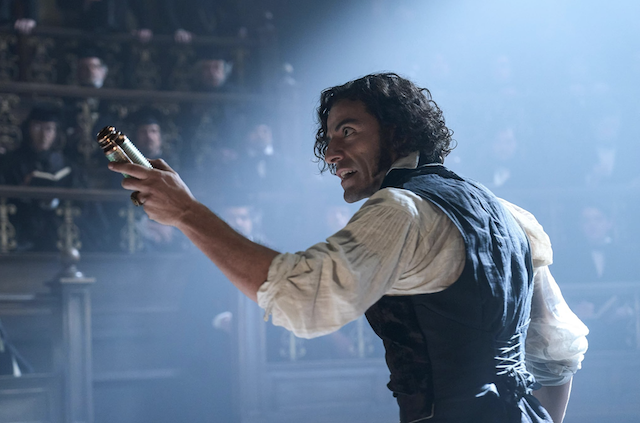
Del Toro chooses to emphasize the romanticism, toning down the horror. His version isn’t just a retelling — it’s a reinvention rooted in emotional mythmaking, a horror film with a soul. Oscar Isaac plays the brilliant scientist Victor Frankenstein, tormented by passion and ambition. His presence is unsettling: human enough to be relatable, monstrous enough to be feared. He is no cold technician, but a soul consumed by yearning to conquer death, making him both creator and destroyer, both brilliant and self-destructive.
©Courtesy of Netflix
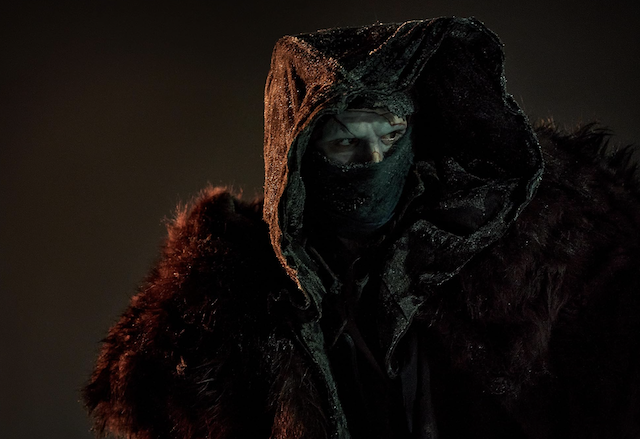
The story doesn’t open in a castle but on the frozen edge of the world. A Danish ship, locked in Arctic ice, its crew (they do speak Danish) bracing against merciless weather and faces a monster of inhuman strength. They also rescue a half-dead stranger — Victor Frankenstein himself — who begins to recount the nightmare that brought him here. Victor’s tale begins.
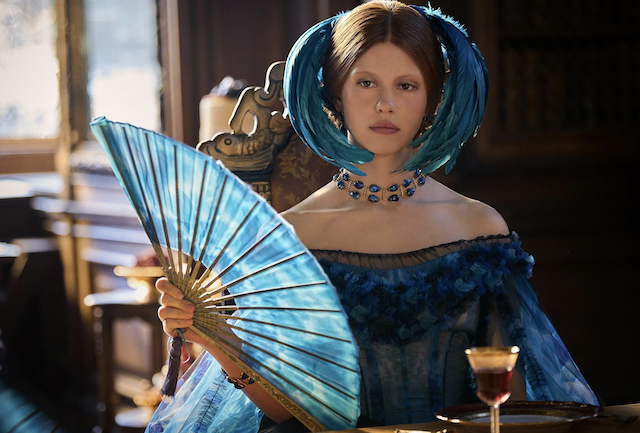
The film is filmed in Toronto studios and in Scottland by Danish cinematographer Dan Laustsen, who also shot del Toro’s “Nightmare Alley” (2021) and “The Shape of Water”. It’s a feast for the eyes, shifting between shadowed intimacy and sweeping gothic grandeur. Yet at two hours, the sheer scale grows overwhelming, even tiring. Still, every location feels meticulously designed. The production design and Kate Hawley’s costumes are dazzling and likely Oscar contenders — particularly Mia Goth’s Elizabeth (Victor’s love interest and Christoph Waltz’s characters niece), whose wardrobe feels like its own narrative thread.
Even though the film runs long, the music swells too bombastically, and the grandiose visuals sometimes create distance, the emotional core remains gripping: the father-son dynamic between creator and creation. Victor treats his “son” with coldness and incomprehension, neglecting him without guidance, love, or compassion. This cruelty draws the audience’s sympathy toward the creature, and Victor’s ego gives bad parenting a chilling new dimension, echoing his own father’s distant authority.
The most arresting part arrives when the monster’s point of view takes over. He finally speaks, and his tragic tale unfolds. We follow his desperate search for connection, only to meet fear and rejection at every turn. The cinematography mirrors his isolation: close-ups linger on his anguished face, capturing the human heart beating beneath stitched skin. Australian actor Jacob Elordi nails him. Movement, body language, voice — his performance is a study in restrained intensity.
Elordi’s creature is pale, his almost radiant skin contrasting with dark, melancholic eyes. Gone are the bolts and the flat-top head of Whale’s icon; here, the monster seems sculpted from human flesh, marked by subtle scars and expressive eyes. This infuses him with both menace and fragility.
We get to meet a lonely, tragic being caught between life, death, and humanity. A stranger, curious and terrifying, yet heartbreakingly human. He rages and suffers with innocence — a newborn rejected by the world.
©Courtesy of Netflix
Grade: B-
If you like the review, share your thoughts below.
Check out more of Niclas’ articles.
Here’s the trailer of the film.