

©courtesy of Juno Films
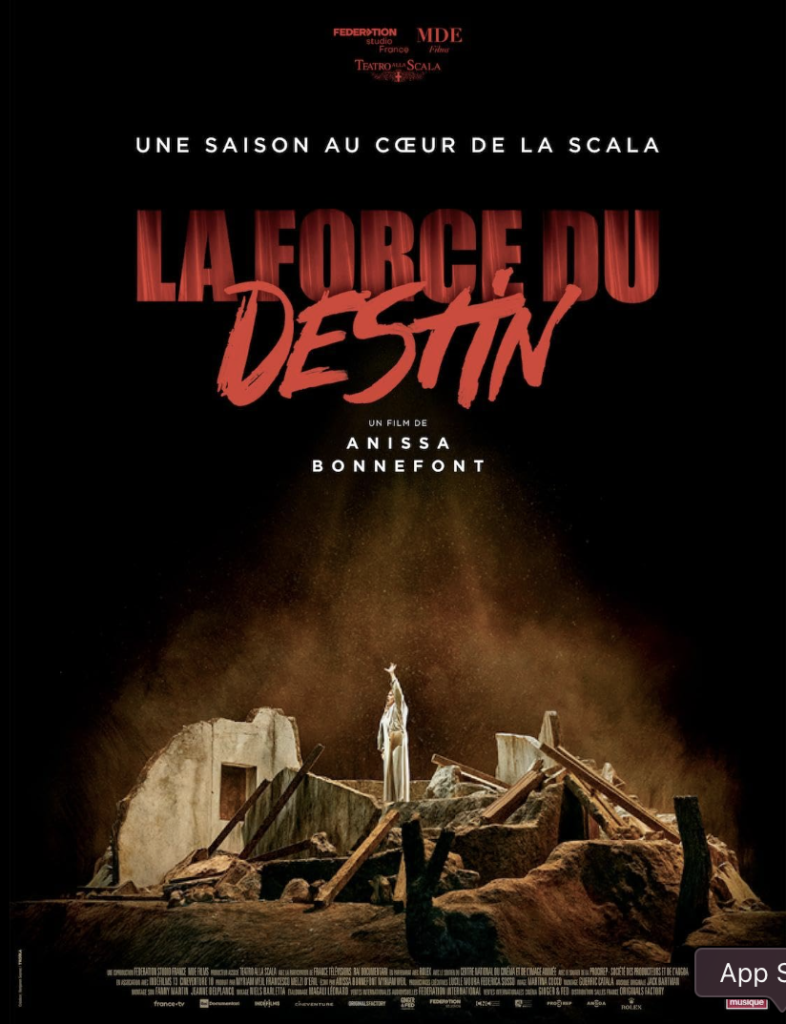
Q :I heard that this was the first time that La Scala, a prestigious opera theater in Milan, Italy allowed filmmaker to film inside, how did you get the permission to shoot? Did producer Miriam help to land the permission?
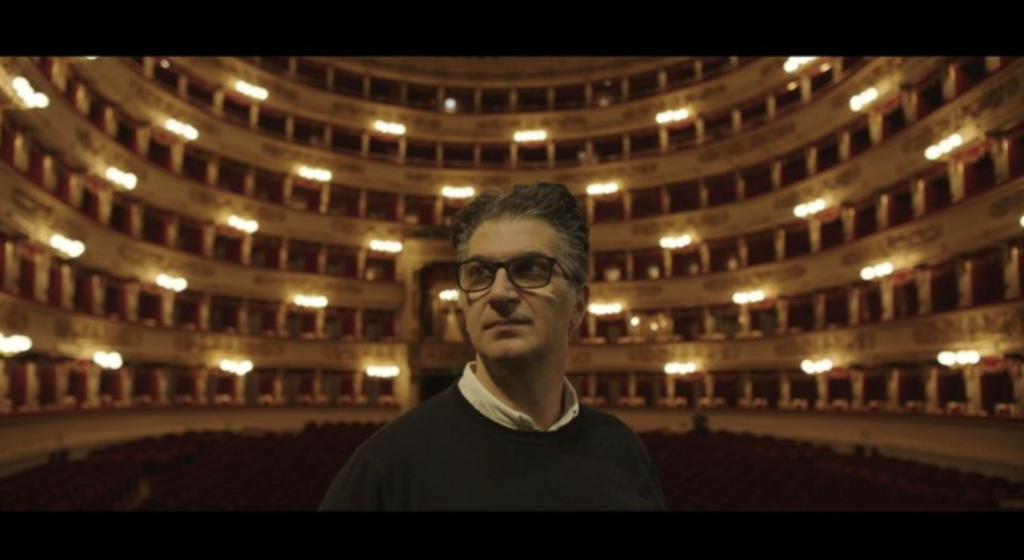
Anissa Bonnefont: Producer Miriam met this man at Film Festival who was working for La Scala. And so thank to him. We’ve been able to meet with the director and the people in charge there. We did the first meeting explaining the movie that we had in mind and what I wanted to do. And they were very happy about the idea because it was brand new for them something different than they have ever been approached for. And the fact that it was a movie that would show the work of everybody in the heart of the opera was a very nice idea. They were happy to go with it.
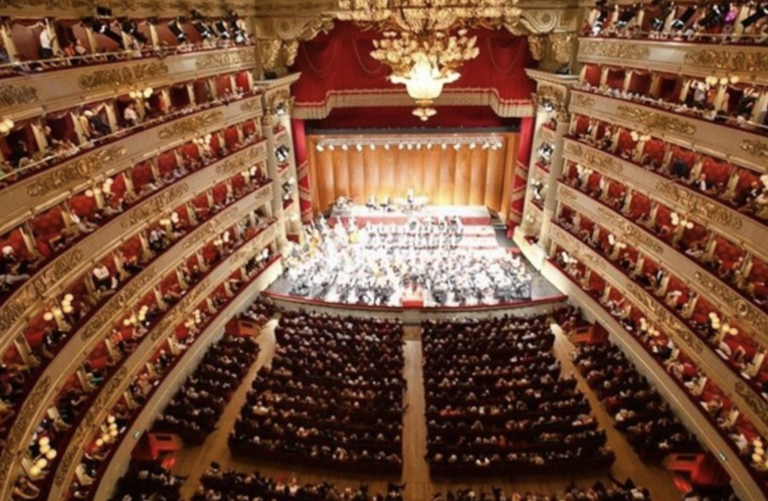
Q : Since its established in 1778, La Scala has maintained its reputation as the most prestigious social venue for Milan’s aristocracy and wealthy elite. How its different now, are they more welcoming to tourists? So, could you talk about how venue change from when they established until now.
Anissa Bonnefont: When we were filming the movie, there was the director of La Scala was this French man. Who was there, and he really, for him, was very important to democratize the the opera. He really wanted to open the opera for everybody, to the young people, to the people that didn’t have the money to pay a plane ticket. So he made some tickets at 5 Euros, 20 Euros for people to be able to assist to some representation at La Scala. It was this man who named Dominique Meyer. In France, he’s also very important cultural person because he’s been working in different culture places. the idea was to bring back the opera at the center of the city and to show that opera is not only for elite, but for everybody because what the opera has to tell, like the stories of the opera, they’re very simple and based on the emotions, love, revenge, fear, and passion. He did that and it’s wonderful because now much more people are going there.
They opened for the public to visit the La Scala during the day. Now, they have this little museum in La Scala that have beautiful nice little exhibition that people can go, so they’re trying to open La Scala and the opera world to the people.
Q : This Giuseppe Verdi’s opera, “La Forza del Destino” was exceptionally beautiful and original. And it marked as a major turning point for Verdi’s career. Because he had been in a fierce conflict with La Scala during the Joan of Arc period and he had been estranged from the theater for over twenty years, “La Forza del Destino” came to symbolize his definitive reconciliation with both the theater and the city.
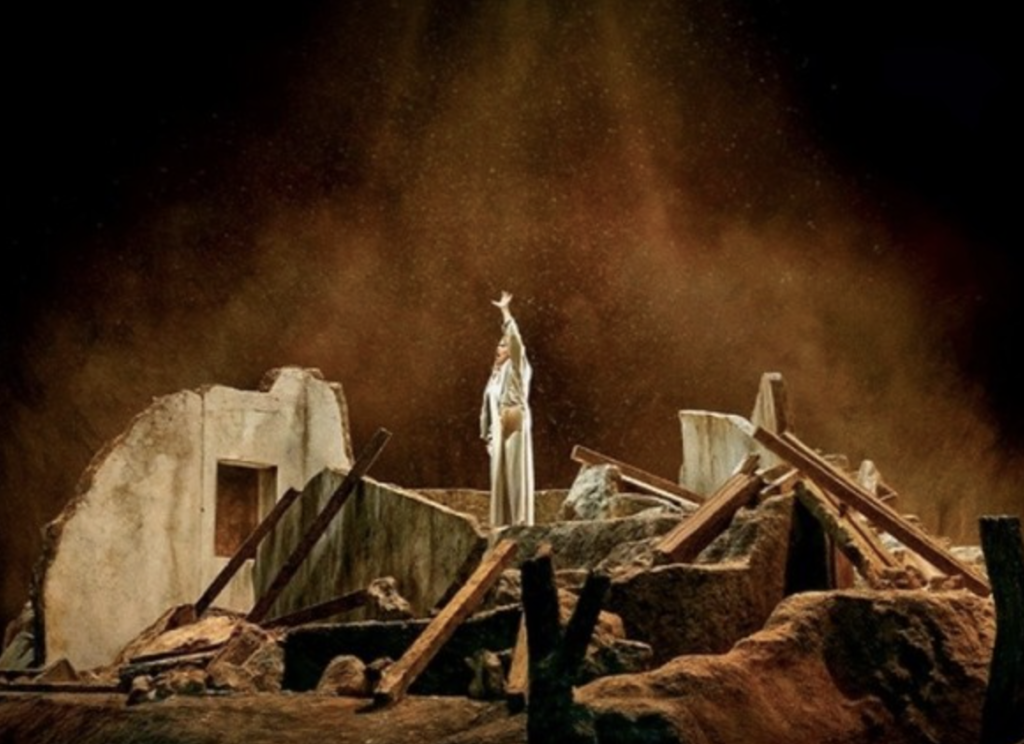
Anissa Bonnefont: Yeah, it was very important for them to have a Verdi’s opera there, especially that opera. That’s a very specific one and hard opera. It’s long and it’s very demanding like for the soprano role is very hard. It’s been a long time that La Scala didn’t have “La Forza del Destino” but they did a Verdi’s year more or less. So they had other pieces of Verdi coming and so they wanted to finish with “La Forza del Destino” to open the season. “La Forza del Destino” , it’s really an opera that has been complicated because the legend said that it’s a cursed opera. Each time that that “La Forza del Destino” was being played, something would happen.
For example, when there was an opening “La Forza del Destino” in Warsaw in Poland, German entered the city during the Second World War, and Metropolitan Opera in New York, a baritone Leonard Warren had a stroke on stage as soon as he entered for “La Forza del Destino”. There was always some very harsh and crazy story around “La Forza del Destino”, so much that the people working on the opera, in the opera house, they wouldn’t say the title of the opera. They would say the opera that we shush the name. That’s how they pulled it inside the house. So it was funny to have this history behind it and we were like, oh my God, what is gonna happen with our production, you know. But our production nothing happened, everything went very well, more or less than their regular normal difficulties that you encounter, when you work on such a big project. Yes, it was really something to do “La Forza del Destino”, and it’s such an amazing and beautiful opera. The music is stunning. This was a big gift.
©courtesy of Juno Films.
Q : One of the fascinating elements that you shot without voice over and talking head. How did you come to make that decision?
Anissa Bonnefont: Yeah, when I do documentaries, because I’m a movie director of documentaries, but also fiction, I really believe that when we do documentaries, that’s the way I love to do them. I really adore to enter a world that we don’t really have access to and to discover it as being part of it. So for me, it was much more interesting, much more organic and for everybody to relate to tell the story through the people that are, working at La Scala. Because when you pass through the human beings, it makes it much more universal.
Then, you don’t have to be an opera aficionado or have a lot of knowledge on the opera. You just follow the people, their souls, and you can find some stuff that link you to these people. And then you realize that the opera world is for everyone. I really wanted to make it very human. For me, being a movie director it gave me the possibility to show all the people that work in the shadow. In the art industry because when you create, when you build an opera, when you make a movie a musical or whatever, there is so many people behind it. That you never see that have so much talent that works so hard and that are so important for every production that I thought it was great to be able to make a movie to put them in front, to put them in the light for once, right? To see all this work. So that was also really my desire there. And I felt that, with that opera there were 900 people working, it was very interesting to shoot one place to the other.
Q : It’s very large production. Because of this opera deal with history So there’s like many costumes to design and there’s so much set design to build. So the production was really created from scratch. So it’s really intriguing to look at how it was all came together. So, could you talk about their preparation about the costume and the set design, because I thought that was really intricate.
Anissa Bonnefont: That was very impressive and beautiful to watch. Basically, they work with the director of the play and then the costume designer and the set designer, they work together to find, the idea and how do they want to adapt the work of Verdi. And in “La Forza del Destino”, they’ve decided to put it in four different moment of our humanity during different wars. And to say that unfortunately we always recreate the same things, the same mistakes, the same wars over and over.
So they decided to choose this different period of time in our history. And after this was set together, then they all go and work on their sides. And, they work on the colors because the idea is to have a sense of color working together between the sets. The season and then the costumes, and they all recoup all the time, so they work on their side, but then they always recoup in order to make it organic and to work altogether.
So this triangle I adored filming them, like Leo Muscato the director of the opera. That for me, it was an amazing person, full of talent and generosity and knowledge and it was beautiful to see how he, his vision and how he would bringing it to life, little by little. Thanks to all the people around him. They had to start from scratch. So many people working for that because the set is huge and the set was turning. there is a lot of technology It’s not only, creativity, there is a lot of ingenuity behind, right?
As far as the costumes, there were so many because there were so many people on stage, extras and everything. months and months of work. Everything is in the details. For example, what I found that amazing was each detail, on the costumes, they wanted to make it a bit more dirty I remember one day asking Sylvia, the costume designer, I said, but listen, Sylvia, nobody’s gonna see that. And she say, maybe nobody’s gonna see that, but if you don’t have it, then people are gonna feel that it’s not perfect. And I thought, wow, that’s how precise they are in their work.
Q : Could you talk about direction Leo Muscato, he seems very demanding to actors, but he seems to large perspectives of whole opera, could you talk about his direction that stood out for you?
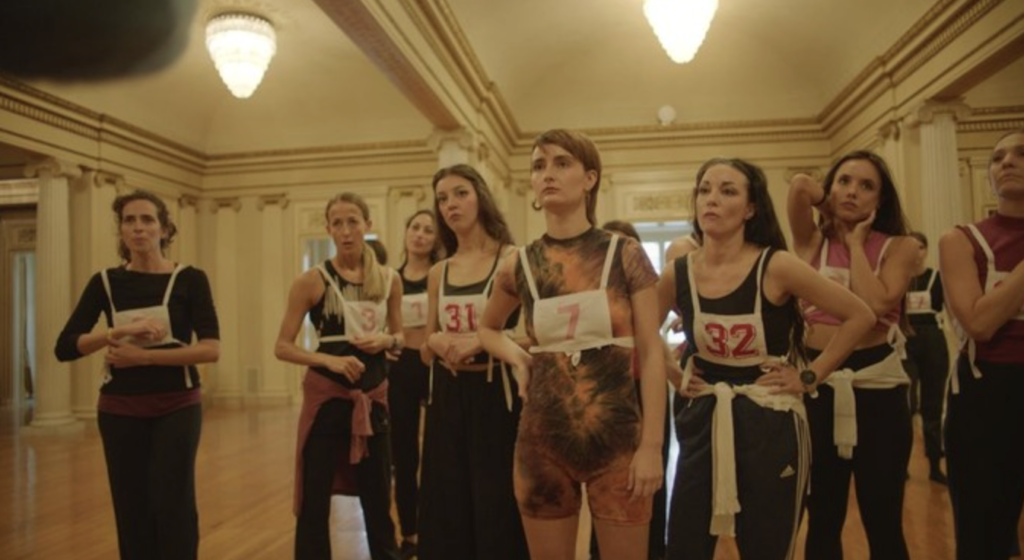
Anissa Bonnefont: I felt that he had so many people under his direction and so many singers and dancers and actors, and the fact that he was always knowing exactly what he wanted, but he was kind in the way he would bring it to the singers.
And he was a hundred percent into it that he would go there, really be with them, show them, act with them. He was giving them so much of his energy, but in a beautiful way, trying to fit them with his passion for that masterpiece. So I was in awe to see someone who worked so hard to understand in a very sensitive way what Verdi wanted to tell with his opera and how he could bring that and give that, explaining that to all the singers and actors around and, for everybody to be part of the same story.
©courtesy of Juno Films.
Q How did you choose the music of this film, because in the film, you already have opera singer singing, music, orchestra and chorus, and there’s sound of sawing the costumes and hammering to create the set design, enough of the sound, how did you work with jack Birman, and choose the music that you selected, how you placed those music?
Anissa Bonnefont: It was my second movie with Jack. We did a film before together, and we’re doing my next one again together. I said to Jack that I wanted, since we had the music of Verdi, that is so amazing and powerful and huge, so it’s a movie already full of music.
But I said to Jack, we have to compose an original score. Where our music is gonna be, the music of the emotion, the music of the characters, of the film, and it has to be able to mix it with Verdi’s music, but it has to be very contemporary. It has to be from today, and we have to use sounds.
Organic sounds of the opera, like the clock because it’s a ticking clock all the time. The sound of steps and the corridors, the sound of breathing, the sound of little voices there, and so we really tried to create this music that could bring the emotions of the people working inside of La Scala. Yes. That was the idea. for the score of the film.
Q : What was most challenging elements to shoot. And at the end, after you shot this film, how do you want the audience to take away from this film about La Scala?
Anissa Bonnefont: The hardest part was able to film everything I wanted because there were still some rules and I had to fight to be able to film a lot of things, they said yes, but then I had to fight almost every day to be able to go film something or the musicians here, mainly, one of the hardest thing for me was that when the rehearsal enters in La Scala, after we were in the first place that you see in the movie when we arrived at La Scala, there were so many places to film at the same time that I had to really understand what, because of course I couldn’t have 20 cameras, so I really had to understand where I had to go and what I had to do.
I really had to focus on the story little by little where I supposed to go and find a position that was not taking too much place because they were working and I couldn’t bother them. So it was finding my way inside this opera. And at the end it worked very well because we felt that we was completely part of this making of “La Forza del Destino”. It was a beautiful experience. What I would love the audience to come out with, is to be more open and curious about the opera because I think with that film, we realized that the opera is for everybody, the people that are working there just like us, very simple people they are not like, you don’t have to be an aficionado to love the opera.
I would love people to be curious about the opera after seeing this film. And I also believe that nowadays the fact that we live with AI more and more in that movie, you can see that AI had no place, like in the opera making AI has no, there’s no place like it’s a work of all these human beings together, working together and no AI could go inside there. And I think it’s beautiful to see that human beings can still be a group, a big group of people doing something together,
Q : Thank you so much for your time, Anissa. I really enjoyed this film and talking to you.
Anissa Bonnefont: Thank you.
©courtesy of Juno Films.
If you like the interview, share your thoughts below!
Check out more of Nobuhiro’s articles.
Here’s the trailer of the film.