

©Courtesy of Lionsgate
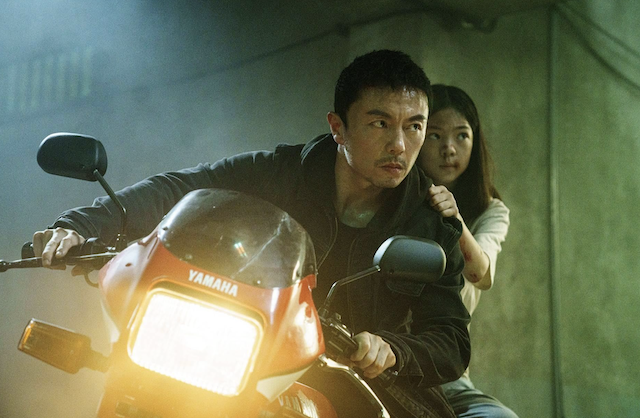
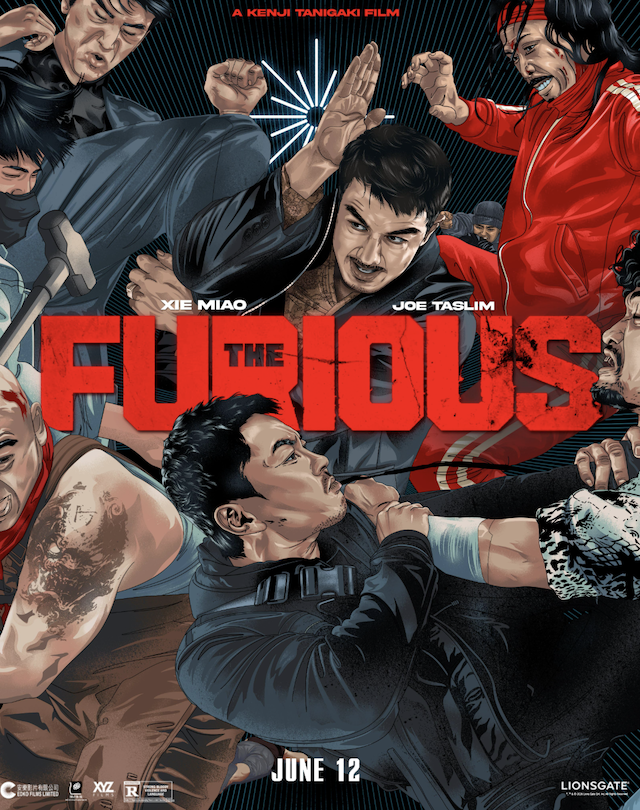
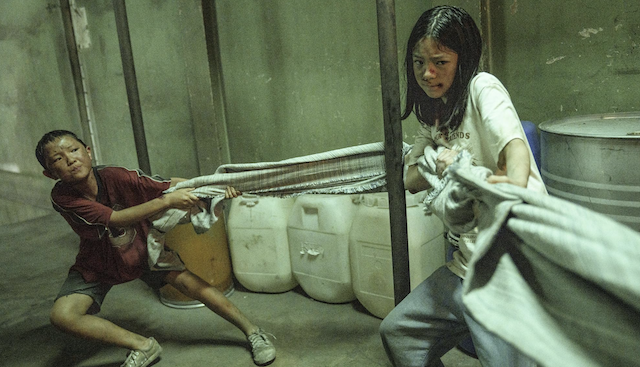
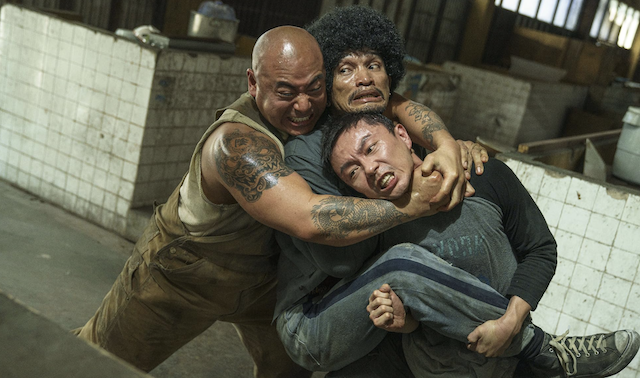
The Furious : After the daughter of Wang Wei (Xie Miao) is kidnapped by a criminal network and he receives no help from the corrupt police, Wei sets out on a rampage to find her himself. His only ally is Navin (Joe Taslim) — a relentless journalist whose wife has mysteriously disappeared. Fueled by a furious vengeance, the unlikely duo ruthlessly fights against the kidnappers in this explosive martial arts showdown.
Director : Tanigaki Kenji
Producer : William Kong, Shan Tam, Frank Hui
Screenwriter : Tin Shu Mak, Zhilong Lei, Kwan-Sin Shum, Frank Hui
Distributor : Lionsgate
Production Co : Edko Films, Zhejiang Hengdian
Film Rating : R (Language|Strong Bloody Violence)
Genre : Action, Crime, Mystery & Thriller
Original Language : Chinese
Release Date (Theaters) : Jun 12, 2026, Limited
Runtime : 1h 53m
©Courtesy of Lionsgate
Exclusive Interview with Director Kenji Tanigaki
Q: Mr. Tanigaki, you joined the Kurata Action Club’s in Osaka training center and were active there. What did you learn from Mr. Kurata, and what about your work with him led you to go to Hong Kong? Could you tell us a little about that?
Kenji Tanigaki: I was a big fan of Hong Kong movies, so when I was wondering where in Japan I could learn the most about them—and where was the closest place—it turned out to be the Kurata Action Club, not the Japan Action Club(Which Sonny Chiba established). There, I learned the skills needed to become a stuntman, such as karate, gymnastics (including artistic gymnastics), and boxing. And then, of course, the most important thing was reaction—the reactions during action choreography when interacting with other actors. I learned all that, and it proved incredibly useful when I went to Hong Kong.
It wasn’t so much that I went to Hong Kong from the Kurata Action Club, but rather that what I learned there proved very useful for Hong Kong films. However, given the state of the Japanese film industry at the time, there were almost no opportunities to put that knowledge to use. Since I was in Osaka, I’d go to Kyoto to work on period dramas, but when it came to actually applying what I’d been learning there, that wasn’t really the case in Hong Kong. I chose that path because it was similar to Hong Kong cinema, but of course, it wasn’t actually Hong Kong cinema. So I started wondering whether I should go to Hong Kong or not, and that’s why I quit the Kurata Action Club and went to Hong Kong on my own.
Q: I’ve heard that you visited various people in the film industry from there. How did you go about approaching them back then, and what was your daily life like in Hong Kong? It takes a lot of determination to start from scratch like that, doesn’t it?
Kenji Tanigaki: It wasn’t about grit, you know. It was just the only option I had. Japan was in such a dire state back then that, if I wanted to keep doing this (action work) as a career, that was really the only way. Back then, if you looked in the Yellow Pages, there were hundreds of movie studios and production companies listed.
So I put together my own resume, decided how many places I’d visit each day, and went knocking on doors. Some would take me seriously, and of course, others wouldn’t—that’s just how it was. Through that process, all sorts of things happened—like opportunities that led me to become a stuntman. Since I didn’t have any money back then, I had to walk everywhere myself, so I memorized the routes and asked people for directions.
As I did that for several months, I gradually came to understand the nature of Hong Kong—its locations, its landscape, and the character of its people. There were aspects where the Hong Kong I saw in movies matched the real Hong Kong, and of course, there were differences too. So, looking back now, maybe my memories are romanticized, but at the time, I didn’t really think it was that hard.
Rather, during that time—whether it was working as an extra or becoming a stuntman a few years later—I spent my days looking for “small victories.” Looking back now, they seem like nothing special, but at the time, certain things felt like huge accomplishments—like meeting and talking to so-and-so that day. Those kinds of things served as “small victories” for me, making me feel like I could keep going. I guess that’s just the kind of person I am.
Rather, during that time—whether it was working as an extra or becoming a stuntman a few years later—I spent my days looking for “small victories.” Looking back now, they seem like nothing special, but at the time, certain things felt like huge accomplishments—like meeting and talking to so-and-so that day. Those kinds of things served as “small victories” for me, making me feel like I could keep going. I guess that’s just the kind of person I am.
©Courtesy of Lionsgate
Q: So, right after “Small Victory”, you ended up teaming up with Donnie Yen. Donnie Yen isn’t just an actor—he’s also an action director. Given that, did meeting Donnie Yen play a major role in shaping who you are today as a director and action choreographer?
Kenji Tanigaki: That’s a big deal. You mentioned us “teaming up” just now, but it’s not like we’re partners on equal footing—it’s basically about how I can help out on Donnie’s set, so it’s not really something as grand as a “partnership.” Still, what I learned from working with him was incredibly valuable. The reason is this: I first went to his set in 1995, and by 1996, he had started his own film company. It was, of course, a very low-budget film environment, but in a way, that actually worked out for the best—precisely because it was low-budget, there weren’t that many people there. That’s why I had the chance to really spend time with Donnie and understand what he was thinking and what he was planning to do.
If a stuntman were only doing stunts, they wouldn’t know what the film’s story is about. And if there are 100 days of shooting, they aren’t actually on set for all 100 days, right? It’s the same for other departments, too. The camera crew, though, is there every day. Most departments are on set every day. Stunt crews aren’t really like that—even though they’re the highlight of an action movie, they aren’t there every day—so I’d always wanted to understand how a movie actually comes together.
So, through various opportunities—like getting involved in writing the script, location scouting, filming, and eventually even ordering boxed lunches—I ended up getting involved in editing and publicity as well. It was precisely because it was a low-budget production that I was able to be involved in everything. So, being able to gain even a little insight into how a movie is created and released to the public when I was in my mid-teens—that was really a blessing because of that process.
Through that experience, I realized that maybe that’s the kind of thing I actually prefer. I think that was a period when I came to realize that I probably enjoy creating things more than actually performing. Donnie was the kind of person who would tell me pretty much anything about that—he’d talk to me about what I wanted to do at the moment, how I was feeling, and all sorts of things—so that was really great. That’s why, even though people often call me a “Hong Kong action guy,” it’s not really Hong Kong action. If I had to choose, I’d say it’s “Donnie-style action.” What I mean is, it’s that creative approach—that’s what “Donnie-style action” is all about. In terms of the creative approach to crafting action scenes, what works and what doesn’t, I think my style is very close to Donnie’s.
So, while it is Hong Kong action, there are many different styles within that genre, right? So, within that context, “Donnie-style action” might be the closest description. Of course, I got into the industry because I loved Jackie Chan’s action, but I think if I’d been on Jackie’s team, I wouldn’t have had the chance to do all the different things I did. It was precisely because we had a low budget and a small crew that I was able to get involved in so many different aspects—and looking back now, I realize that was actually a good thing.
Q: Let’s talk a little about this film. Out of the 1 hour and 50-minute runtime, 1 hour and 40 minutes are action scenes—it’s a film unlike anything I’ve ever seen before. When making this film, what kind of vision did you actually discuss in advance with Mr. Sonomura, who was in charge of the action, and the actors before you began shooting? Did you create something like a storyboard beforehand, or how did that process work?
Kenji Tanigaki: First of all, producer Bill Kong told me we were going to create some amazing action scenes, so I thought, “Well, what exactly defines an ‘amazing action movie’?” Of course, there are films like *The Fast and the Furious* and *Mission: Impossible*, but when I considered where our strengths really lie, I realized that car chases and exploding cars are definitely not our forte.
If anything, I believe that hand-to-hand combat is the true strength of Asian cinema, so I felt we had to bring that to the forefront. While Asian films these days have become more entertainment-oriented, using CG and various other effects, my original idea was that aiming for something much more fundamental—like “Unplugged Music” in the music world—would actually be what makes this film unique.
So, to achieve that, we really had to choose a cast that could actually perform the action scenes. And since I’m the director, I couldn’t fully commit myself to the action alone, so we definitely needed an excellent action team as well—those were the key factors.
So, while we were creating what you might call storyboards—which were actually closer to pre-visualizations—we also made sure to prioritize the live, on-set moments that unfolded naturally. However, no matter what we did, having actors who could actually move was an absolute minimum requirement. If that weren’t the case, we’d end up having to make an action movie by “sprinkling plenty of Ajinomoto” on it—and by “Ajinomoto,” I mean relying on various techniques to create the film. Of course, that’s wonderful in its own right, but I thought that making a film that makes the most of the raw talent—more so than usual—would ultimately serve as an opportunity to reach a wider audience.
©Courtesy of Lionsgate
Q: The filming took place in Bangkok, and according to Mr. Sonomura, there was a preparation period about one or two months before filming, during which they apparently trained for nearly nine hours every day. It seems the entire cast joined in on the training as well—after all, each cast member has their own special skills, right? For example, Xie Miao specializes in martial arts, and Joe Taslim in judo. When it comes to staging scenes that highlight their individual strengths, was the direction already designed to reflect their specific characteristics to some extent right from the training phase?
Kenji Tanigaki: About three months before filming, the action team had already started rehearsals in Japan. At that point, the action choreography was pretty much set, and the cast had mostly been decided, so of course we wanted to make the most of their strengths. Now, in a typical movie, you’d have to start from the very beginning with training, and usually, that training starts with a basic system like “one, two, three, four, five.” But in this case, rather than going through training, we were able to jump right into rehearsals. In that sense, I think the bar (for action standards) was set higher than in other movies—or rather, I think we were able to set the bar for action requirements higher.
So when actors do action scenes, it usually feels like they’re tackling something a bit special, right? But the actors on this project were all people who could approach the action on the same level as their acting, so in that sense, I think it worked out really well. Of course, the action team—and Sonomura-kun, who’s also directing now—really understood that aspect, and I’m incredibly grateful for that.
You know, I’ve always thought there’s a big misunderstanding about action choreography. It’s not enough to just memorize the moves—it really comes down to how you break them down and make them your own. Memorizing action choreography is ultimately the same as memorizing lines, but just because you’ve memorized the lines doesn’t mean you’re done.
Actors need time to process and internalize them, transforming them into their own words. So I think it was really great that they were able to do that. It wasn’t just a matter of memorizing it and performing it exactly as is on set; I really feel like they were able to fully internalize the action choreography and make it their own.
Q: I understand that the filming period was 60 days, and that the scenes at the police station alone took 18 of those days. As you mentioned earlier, these were actor-driven action scenes, and naturally, the actors had already performed some incredibly spectacular action sequences leading up to that point. Could you tell us how you decided on the order of the various action sequences and how you structured the story so that the action kept escalating?
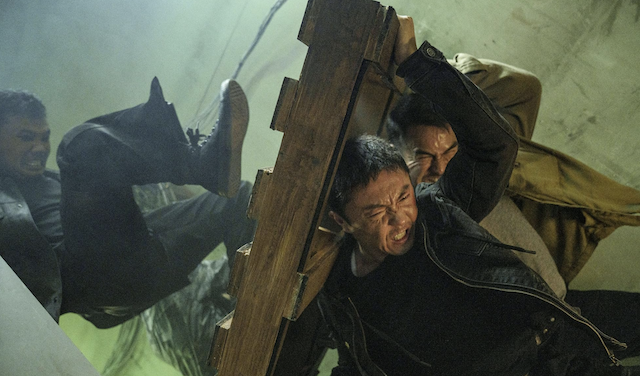
Kenji Tanigaki: Well, basically, we shot the scenes in order. As we went along, we’d think, “This scene turned out well,” and then, “Okay, let’s make the next one even better”—so there was a sense that everything kept escalating. One thing that worked well, even in the ending, was that while the five of them were fighting together, they were ultimately in a situation where they had to cooperate—it wouldn’t have worked otherwise. In that sense, the actors really bonded by the end and had a great rapport, so I think that’s why we were able to capture such a great scene.
The story escalates as well, and another thing that escalates is the actors’ anger. Of course, there are some flashy action scenes, but because their anger and emotions keep escalating, I think that’s what really made the audience feel it even more. So when you look at the action choreography, rather than us doing increasingly exaggerated moves, it’s because the actors’ emotions were escalating—and the audience might have felt that intensity as a result. At first, I thought it might be a story like the movie *Taken*, where a father goes to rescue his daughter, but by the end, everyone’s angry, right? Having all five of them—all in a state of rage—fighting in one place was ultimately what I wanted to achieve. In that sense, if things hadn’t escalated, it wouldn’t have led to that final outburst of anger, so that might be the reason.
Q : Well, they’ve asked us to wrap up the interview here. I would have liked to talk a little more, but thank you very much. I really appreciate your valuable time.
Kenji Tanigaki: Thank you so much!
©Courtesy of Lionsgate
If you like the interview, share your thoughts below!
Check out more of Nobuhiro’s articles.
Here’s the trailer of the film.