

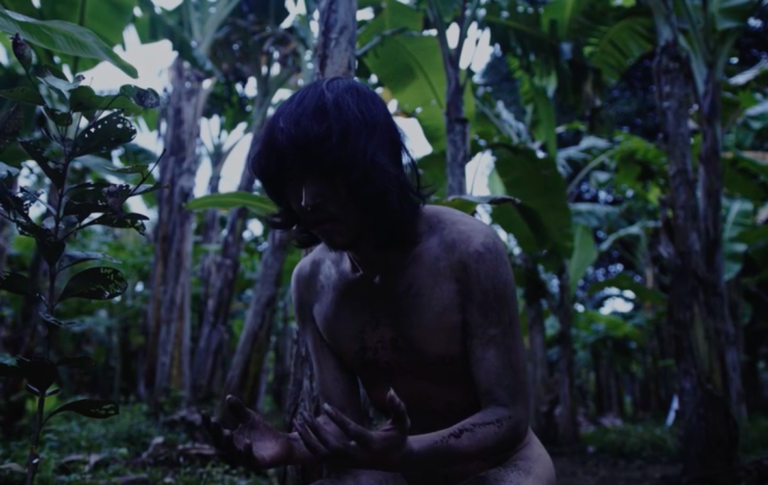
The Japanese-Filipino film Ryo lands in the line-up of the 2026 International Film Festival Manhattan.
The motion picture, directed by Jayvee Lajot Arboladora, introduces us to the titular protagonist Ryo (Shotou Iguchi) who wakes up alone in a forest in the Philippines with no clothes and no memory of who he is. During his homeless return to life he meets Sarah and her brother Bito who lend a hand. However, their father’s violent interference in this newfound friendship comes with serious consequences.
Prior to this dramatic turn of events, we witness how the Japanese outsider is struggling to rebuild his place in society. The unexpected compassion of strangers — who are just as impoverished as he is — compels him to confront his past. Through this interior journey Ryo feels as if “his soul is being cleansed” and we understand the meaning of these words profoundly, as the narrative unfolds. In anticipation of the truth coming into full view, spectators wonder about Ryo’s life before his awakening in the forest, that seemingly offered a blank slate, and whether there was more to him than his innocent appearance suggested.
When the answers to these questions finally surface — shrouded in darkness to convey the film’s moral message — they are penned and staged in a rather cliché-ridden manner. Ryo’s call for humanity to break the cycle of violence and replace it with a virtuous circle is noble in principle, but delivered in a rather naïve manner.
On the other hand, one of the film’s more compelling aspects is its portrayal of the language barrier between Ryo and his Filipino rescuers. He speaks Japanese, they speak their own language, and yet, somehow, they find a way to understand one another. In a world divided by words, a quiet form of understanding emerges, reminding us that human connection can transcend the limits of language.
Ryo — who is brilliantly brought to life by actor Shotou Iguchi — epitomises the courage to confront the shadows of the past, with the hope that redemption may come. Yet there seems to be a certain hypocrisy in the way the story preaches atonement for the sins of yesterday, as though the weight of previous misdeeds could be ever so easily absolved. It somehow reflect a sanctimonious, conservative mindset, in the way guilt seems to suffice to make up for one’s mistakes. Beyond fiction, some things cannot be forgiven or forgotten no matter how deeply the perpetrator regrets having committed them.
Nevertheless, the lasting impression filmmaker Jayvee Lajot Arboladora leaves behind, is the quiet struggle to turn the page. By encouraging us to believe that even a life marked with mistakes can begin anew, he reminds us of the importance of finding joy in the little things that make life meaningful.
Final Grade: C
Check out more of Chiara’s articles.