

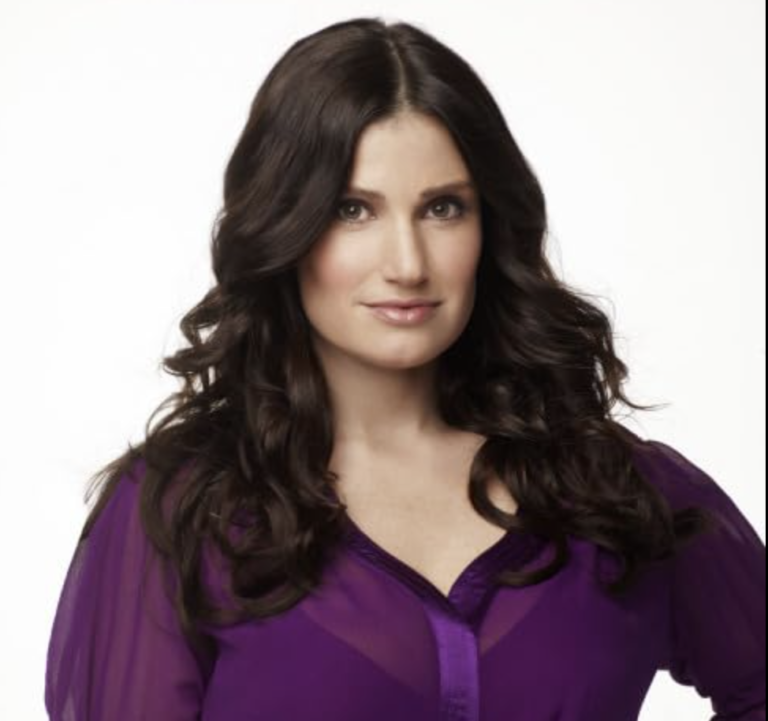
Vulture journalist Jason P. Frank recently moderated a panel with Idina Menzel at New York Comic Con to celebrate her 30-year career on Broadway and in films and television. During the event, Menzel and Frank shared their passion for her theater productions, including Rent, Wicked and If/Then. They also discussed her roles on screen in such films as Frozen and Enchanted, as television shows like Glee.
Highlights from the Event
The panel featured several notable moments and discussions.
- Event Date — The panel took place on October 8, 2026, at New York Comic Con.
- Moderator Role — Jason P. Frank, who has written about Menzel’s career on Broadway in Wicked and Redwood, moderated the conversation.
- Memorabilia Surprise — To close out the panel, Menzel treated the audience to a brief live performance of Let It Go, the Academy Award- and Grammy Award-winning song from Frozen.
- Celebration of Legacy — Menzel reflected on her iconic roles of Maureen Johnson in Rent, Elphaba in Wicked and Elsa in Frozen.
Q: The world first met you through Rent, which is celebrating its 30th anniversary this year. You’re returning to Broadway to participate in another performance of it, correct?
Idina Menzel: Is it called a performance? We’re just doing a bunch of songs, and we’re all going to figure it out. But it could be something good.
Q: Where were you in your life when you first found Rent and that audition came along? What was the process of getting involved with the show like?
Idina Menzel: I was driving my little red Nissan Sentra hatchback to gigs all over the New York Tri-State Area. I was doing shows everywhere from the Four Seasons and the Waldorf to Leonard’s on Long Island, which is a place where five brides are running around.
It was in January and February, when there aren’t a lot of weddings, and I needed a job. I had this boyfriend who worked at an agency, and they were saying they needed kids whose faces nobody knew. He stuck my headshot in the fax machine and got me the audition. He wasn’t even an agent; he was a lowly assistant. They called me in, and I had two or three callbacks.
Q: Do you remember what you sang?
Idina Menzel: I sang Bonnie Raitt’s Something to Talk About and When a Man Loves a Woman.
The thing about it all was that I was always a little unprepared. This is bad advice for aspiring performers. I was never good at having that loose-leaf sheet of songs in the pretty plastic folders. I didn’t have my pop song and my comedy song all organized.
One thing I forgot was that when you do a pop song, there are codas at the end. You keep going back and repeating because songs like that keep repeating on the radio, and then they usually fade out.
We got to the end of When a Man Loves a Woman, and I didn’t have any ending written down. So we just kept repeating it and repeating it. I was trying to look at the accompanist like, “This is a good sign.” That was my callback.
When I got the sides for Over the Moon, I wasn’t sure what it was. Was it a monologue taken seriously? Was it comedic?
(Rent‘s director,) Michael Greif said, “Think of it as performance art.” He gave me some women like Laurie Anderson and Diamanda Galás, and told me to go back and listen to them. Michael said (the character of Maureen) hadn’t found her voice yet and was copying all these people. He asked how it would be for me to take on their voices.
(Maureen) became this tapestry of all these very eccentric women. That’s what I did. I wore that little suede patchwork skirt that was mine, and now they still put people in that.
Q: Rent was your first time being at the center of a phenomenon. It was a whole different thing on Broadway than had ever happened before. What was it like being in the middle of it for the first time?
Idina Menzel: It was an extraordinary, signature experience because we lost our composer, Jonathan Larson, during the process. It was an extremely sad time. We were mourning, but we had this show that spoke to everything he was about. It was like a gift that he had left us.
For me, it also set a principle for a foundation. I think I can speak for the whole cast when I say we couldn’t take what was happening for granted. When we came out, we had to communicate his music in the best way we possibly could because he was in that theater with us.
Not that every cast doesn’t do that all the time, but there was something very special about that. I think it gave us a lot of perspective and kept us humble.
We did things nobody does anymore. We all did eight shows a week, as sick as could be, for six months. Nobody missed a show. That’s unheard of these days.
It was a crazy time. To have these posthumous accolades and not have him around to celebrate with us was very bittersweet.
Q: In the time directly after Rent, what was your career like? You did some amazing shows like The Wild Party and Aida. What were you up to before Wicked, but after Rent?
Idina Menzel: Nowadays, it was probably my dream. I always wanted to be on Broadway since I was a little girl. But as I started doing all those bar mitzvahs and weddings, I started learning all this different music. Then I started realizing I wanted to write music.
All of a sudden, my dream became more about wanting to be like Alanis Morissette and be a rock star. I was doing gigs at The Bitter End on our days off, and the Rent cast would come and support me.
Then Rent happened, which was sort of a hybrid for me: being on Broadway and getting to sing this kind of rock music.
When it happened, all these record labels finally came to see my little shows at clubs down in the Village. I got a record deal for the first time. Then I promptly got dropped after the first album because I didn’t sell any records.
I don’t know if I wasted that time, but that’s the time when I should have been getting seen for television and film and working that whole angle. I sort of dropped that momentum and was writing and trying to do this album. Then I had to start again.
People always ask me that question, and that’s why I’ve ebbed and flowed. I think that’s what’s kept me fortunate to be in this place where I have the next opportunity.
Q: Moving onto Wicked, you joined the show as Elphaba before the team had fully figured out what the show would eventually become. What was it like when you joined the production?
Idina Menzel: I joined in an early workshop. It took at least four years for it to go through that process. I had to audition for it. That audition was kind of crazy.
I’ve told this story a lot, so forgive me if you’ve heard it already. I had read the novel, which is so different from the Broadway show. It’s like The Hobbit. I thought Elphaba was going to be kind of goth. In the book, she’s got these crazy nails, and she’s that girl everybody looks at and thinks, Who is that?
I wore Doc Martens, a black dress, green lipstick and dark eye makeup. I sang something from Aida, I Know the Truth.
Then they called me back and gave me all the music to learn. I had to learn Defying Gravity.
That high note at the end was really hard for me in that evaluation. It’s just really hard up there, and I botched it when I got there.
I had the awareness not to let that throw me off course. I stopped. I totally cracked, then looked at the accompanist and said, “I’m going to do that again.” Then I did it really well.
(Wicked director) Joe Mantello said that was the moment when he saw I had this strength and this ferocity about me that could be witchy.
Q: One of the amazing things about Elphaba is that she has a real sense of humor. It could be easy to give Glinda all the comedy, but Elphaba is really funny. In past interviews you’ve hinted that you brought a bit of sarcasm to the role. Did that become part of the character?
Idina Menzel: I wouldn’t take so much credit for that. I think the writers helped me find the dry humor, paired with Kristin (Chenoweth‘s) exuberant brilliance (as Glinda).
It took them a while to find that. When we went to San Francisco, Elphaba was just speaking in exposition. She wasn’t fleshed out that way. Then they started to find her and write her with this kind of dry humor, which was really exciting.
Q: When Wicked came to Broadway and became so successful, had you learned anything from Rent about being in the middle of something that big? Did you treat it differently? Did you understand what it was like more?
Idina Menzel: The Rent experience was its own thing because of everything with Jonathan, the show’s quick rise and the way it happened. It was also the first time people would sleep outside a theater to get $20 seats. Jeffrey Seller came up with that. That was one of a kind.
With Wicked, we didn’t get very good reviews at all. We thought, oh well. Then it just started to take off. The audiences made it its own little animal.
We were wondering, Do we have a hit? Do we have a hit?
Due to where I came from with Rent and my life, I’m always the naysayer. I’d say, “Oh no, that’s not happening. Let’s just stay in our bodies and not let it go to our heads.”
But it just starts to happen. I don’t think I’m aware of it that much. I guess when they stand up at the end of Act One and cheer really loudly.
My mom is always the barometer. She goes into the bathroom during intermissions of my shows and listens to what people are saying. She’s like, “This is going to be a good one.”
Q: What do you think critics missed about Wicked? The popularity, the fervent audience, and the care people had for the show seemed to blindside them.
Idina Menzel: We were playing against Avenue Q, which was the complete opposite: a small little show. In that documentary they made about us, there was a lot of people hating on the big-budget, big-money commerciality of it.
I don’t exactly know. I remember one line in the whole review, of course. Ben Brantley said I had a good presence and a bold, fine voice. He also called me wolflike. I had to look that up, but that was a compliment.
That was all. Little by little, I started to feel love for Elphaba.
Q: Right after Wicked, you started doing the film and television work you talked about earlier. You were in Enchanted, in a part that has a very New York sensibility. You were also on Glee, which people love. When you look back on that time after Wicked, how do you see those years?
Idina Menzel: Enchanted was such a great experience because I got to ballroom dance with James Marsden and Patrick Dempsey.
The Glee experience was complicated for me because I had just had my son, Walker. He was about three months old, and I was still breastfeeding. I had to be in my trailer pumping milk while Lea Michele and the whole crew were young and hot. I had all this weight and couldn’t fit into the costume. My self-esteem was pretty low then.
Q: After working on Enchanted and Glee, when did you first get asked to do Frozen? How did you get involved?
Idina Menzel: I originally auditioned for Tangled. They wanted me to come into an actual recording studio and do something sort of folky.
I did the Beatles song Blackbird and brought in my friend, who’s a guitarist. The casting director will admit that she actually bootlegged that recording.
I ended up falling in the middle between my age and my voice. My voice didn’t sound like one or the other. It was for Mother Gothel.
The casting director saved that recording on her phone. Then, as Frozen was happening, she remembered me.
I remember Frozen going through developmental stages. Elsa was the Ice Queen for a long time. She was going to be a nemesis and didn’t have a big heart.
Then the Lopezes (Robert and Kristen) wrote Let It Go, and that changed everything. They realized Elsa had this pain and this big heart, and she could be much more complicated and nuanced. So they rewrote so much about her.
They had Kristen Bell and me go in for a big table read before Let It Go existed. They asked us to do a duet, but there was no music written.
It was Kristen’s idea to come in and do Wind Beneath My Wings as a duet. There was something about it that spoke to two sisters.
We had all these big wigs at Disney sitting there. John Lasseter, who was the head of all animation, was sitting between us. We sang this beautiful song, and that was that. Then we got the gig. It was fun.
Q: When Frozen was becoming the biggest thing in the world, and the song was as popular as any song could possibly be, how did you know it was going to become so acclaimed? It was a movie, not a show like your previous experiences.
Idina Menzel: I never know. I know it felt just like Wicked. I knew it felt like something special, like Rent. It moves me, but I didn’t know that it was going to become the phenomenon it did.
With Wicked, when I left the audition, I went outside and started crying. I wanted it so badly. I really related to the characters.
With Frozen, I had no idea either. You just don’t know.
It’s the best job in the world. You show up with practically no makeup on, in your pajamas. They always have a camera filming you, but you totally forget about it because the animators are so great. They absorb and infuse the characters with your body language and everything.
The funniest part, the part that makes me feel so idiotic, is when you’re in there. They give you this bar. The microphone is here, and there’s a metal bar so that if you feel like sitting, you can sit. But if you feel like being active, you can.
It’s usually for when you’re doing exertions, I think. When they’re doing action, if Elsa is making her moves or zapping people with ice, they need all of that stuff.
Sometimes she was running, so I had to do all these different sounds. They wanted so many options to choose from: high ones, low ones, longer ones, and ones with more air
Q: When Frozen was really hitting, you were on Broadway in If/Then. What was it like having those two things happening around the same time?
Idina Menzel: I’ll be totally honest. I was separating from my (first) husband (and Rent co-star, Taye Diggs). I had my son Walker, who was about three at the time, coming to my dressing room. We’d face-paint together because Mommy had to do makeup. H got to do his crazy tiger makeup that he’d learned at a party.
(Diggs) and I were separating, and it was really hard. The story of If/Then was about a woman making different choices in her life and finding her identity.
Then Frozen was coming out just as we were breaking up. He had to hear my voice every day singing Let It Go. He’d be in a mall and hear it everywhere. He was like, “I can’t let it go.”
It was very complicated that whole time, but it saved me. The film was filling my heart with joy, love and forgiveness. It was also wonderful to be able to show my son this film.
Q: What was it like to be the voice of a generation’s hero?
Idina Menzel: (Frozen) has been the greatest gift of my life, honestly.
People always say, “Do you get sick of singing it?” I don’t get sick of it because every time they want you to sing it, it brings something new.
The greatest gift of my life is that every time I sing it, it brings something else out. I learn something else about who I am. Sometimes it’s something in my life. Sometimes it’s seeing the kids in the audience wearing blue dresses.
There’s a gratitude for how it changed my life. It’s life-changing.
If you like the interview, share your thoughts below!