


Through the testimonies of nine Indigenous sisters, Shannon Kring’s documentary confronts the legacy of abuse in the American Indian boarding school system and the long, painful pursuit of justice. With producers Wolfgang Knöpfler and George DiCaprio, and the involvement of attorney Gregory Yates — along with executive producers Leonardo DiCaprio and Tony Robbins — the film raises questions that extend beyond the screen: who is held accountable when institutions betray the very people they were meant to protect.
A haunting echo of stolen childhoods
There is something deeply unsettling about the way a childhood rhyme can carry the weight of a history. Ten Little Indians, the nineteenth-century counting song familiar to generations of American children, belongs to a tradition of nursery rhymes that appear, at first glance, to inhabit an innocent world of repetition, rhythm and play. Yet the history surrounding Indigenous peoples in America tells a far darker story, one of dispossession, forced assimilation and violence. In Nine Little Indians, director and co-producer Shannon Kring turns her attention to nine women whose lives bear witness to the devastating consequences of that history.
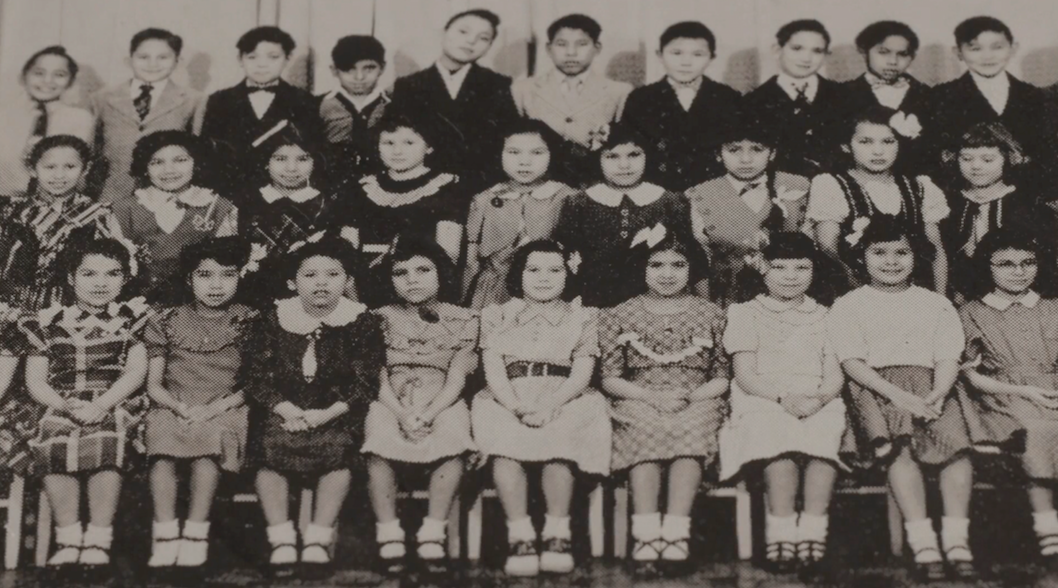
At the centre of the documentary are the Charbonneau sisters — Joann, Mary Lou, Francine, Berta, Gerri, Louise, Barbara, Laurette and Yvonne — members of the Turtle Mountain Band of Chippewa Indians. Their story unfolds through their experiences at St. Paul’s Indian Mission School, also known as Marty Indian School, in South Dakota, where they endured abuse at the hands of the adults entrusted with their care. The school was supposed to provide education, guidance and protection. Instead, as the sisters recount in the film, it became a place where childhood was stripped of its security and dignity, leaving wounds that would follow them long after they had left its grounds.
For producer Wolfgang Knöpfler, the connection between this film and his earlier projects lies in the systems of power that permit exploitation to continue. “The connection is stronger than it might appear,” he explains. “Much of my work has focused on the natural world, but films such as The Ivory Game and Sea of Shadows are also about people, power, exploitation, and the consequences of looking away.” In Nine Little Indians, the subject demands a different kind of sensitivity, but the underlying responsibility remains: to investigate what has been concealed, to listen to those whose voices have been marginalised and to resist the temptation to look away when the truth becomes uncomfortable. “What drew me to this film was the courage of the sisters and their determination to be heard after so many years,” Knöpfler says. “There is something profoundly moving about people who continue to seek justice when the institutions they are confronting have far greater resources and authority.”
A story discovered in the aftermath of tragedy
The origins of Nine Little Indians can be traced to 2016, when Kring was invited by members of the Yankton Sioux Tribe to visit the former St. Paul’s Indian Mission School in Marty, South Dakota. Skeletal remains of children had been unearthed during construction at the still-operational school. “When my team and I arrived on the Yankton Sioux Reservation, the sorrow and anger were palpable,” Shannon Kring recalls. “It didn’t take long to learn why. This wasn’t the first time the remains of children had been found at the school.”
Kring had already spent years interviewing survivors of the American Indian boarding school system, but what she encountered in Marty was particularly disturbing. Among the testimonies was that of Geraldine “Gerri” Charbonneau, who had been raped and impregnated by the head priest before being subjected to an abortion against her will.
Kring’s earlier documentary, End of the Line: The Women of Standing Rock, explored Indigenous communities and the struggles faced by women confronting entrenched systems of power. Yet she is reluctant to present the Charbonneau sisters’ experiences as exceptional. “I wish I could say the experiences of the Charbonneau sisters were unique. They aren’t,” she says. “I cannot even count the number of women I have interviewed across the Americas and beyond who have been victims of colonization.”
For Kring, the distinction between her previous work and this documentary is therefore not that the latter addresses an isolated tragedy, but that it reveals another dimension of a much wider and continuing history. “This isn’t a problem from long ago,” she emphasises. “There are still 125 schools open today in the United States that were or are considered Indian boarding schools. I have interviewed people who were abused in these schools in the late 1990s.”
She is equally concerned that the history of abuse should not be understood exclusively through the experiences of women. Men, too, have been subjected to beatings, sexual violence and killings in the name of colonialism. Forced sterilisation affected both Indigenous men and women. Kring also connects the boarding school system to the wider crisis of Missing and Murdered Indigenous People. Referring to figures she cites from an FBI report in 2025, she notes that 9,687 American Indian and Alaska Native people were reported missing, including 5,303 women and 4,369 men. The majority, she says, were under the age of eighteen. The figures underline the importance of understanding the boarding school system not simply as a closed chapter in American history, but as part of a wider pattern of colonial violence whose consequences remain visible.
Documenting trauma without defining survivors by it
Telling the sisters’ story required Kring and her team to navigate the considerable emotional burden of revisiting experiences that had remained painful for decades. “It is extremely difficult to tell the story of individuals who are still understandably traumatized by the horrific abuse that they endured as children at the hands of those who were charged with protecting them,” she says. The process of documenting their testimonies meant that the participants had to confront feelings and memories they had carried since childhood. “In sharing their story with our team and the world, the film participants bravely relived the feelings they experienced as children. This process has been a painful one, and yet the desire for acknowledgment, justice, and healing prevailed.”
For producer Wolfgang Knöpfler, the connection between human testimony and investigative rigour is essential. “My experience with investigative documentaries shaped my belief that emotional storytelling and rigorous research must support each other. As a producer, you need to help create the conditions for both.” He adds that, when dealing with trauma, the responsibility extends beyond the finished film. “Their experiences cannot simply become material for a powerful scene.” Much of the credit, he says, belongs to Kring herself. He describes her approach to the sisters as one marked by “sensitivity, patience, and respect”, emphasising the trust she built over the years. Her perseverance, he believes, reflects not only professional determination but a deep personal commitment to the people whose experiences she has brought to the screen.
Kring’s commitment to allowing survivors to speak is also reflected in what has happened since the film began reaching audiences. She receives testimonies from survivors regularly, and describes one particularly moving encounter following a screening. “Just two days ago at a film screening, an 84-year-old woman shared with me the story of her own sexual abuse at her American Indian boarding school,” she recalls. “She said that Nine Little Indians inspired her to share her story for the first time.” It is a striking illustration of the potential impact of documentary filmmaking.
For Knöpfler, the balance between human experience and wider context is also central to the film’s international reach. Having lived in Africa, being European and working with American productions has made him conscious of the different historical knowledge audiences bring to a documentary. “A story that seems familiar in one country may be almost entirely unknown in another,” he says. “You have to provide enough context for people to understand the history without allowing explanation to overwhelm the human story.” For him, the way into Nine Little Indians is through the sisters themselves: their relationships, courage and determination to have their experiences acknowledged. A viewer does not need prior knowledge of the American Indian boarding school system to understand the betrayal of a child’s trust or a family’s struggle to be heard. At the same time, he stresses that making the film accessible to international audiences must not erase the specificity of the sisters’ Indigenous identities. “My background does not give me authority to speak for them,” he says. “It reminds me to listen, question my assumptions, and support a film in which their voices remain central.” This distinction matters. The sisters’ experiences are part of a wider history, but they are not simply illustrations of it. They are individuals whose lives, relationships and memories deserve to be understood on their own terms.
The wider context is essential nonetheless. Native American children were sent to boarding schools from as early as the mid-nineteenth century. These institutions formed part of a broader colonial project intended to assimilate Indigenous children into the dominant social and cultural order, often by separating them from their families, communities, languages and traditions. Against this background, the experiences recounted in Nine Little Indians cannot be understood solely as the actions of individual perpetrators. They also raise questions about the institutions, ideologies and systems of authority within which Indigenous children were placed. The trauma did not end when the sisters left the school. Its effects followed them into adulthood and, as the women have reflected, sometimes passed unintentionally into their relationships with their own children. The documentary therefore reaches beyond the immediate history of the institution to consider the intergenerational consequences of abuse: how pain can become embedded in family life, and how patterns of silence and fear may persist even when the original circumstances are long gone. Their decision to speak, to revisit their experiences and to pursue recognition is itself an act of resistance. The film’s emotional force lies in this tension between the persistence of trauma and the determination to reclaim a voice.
When the search for justice becomes another battle
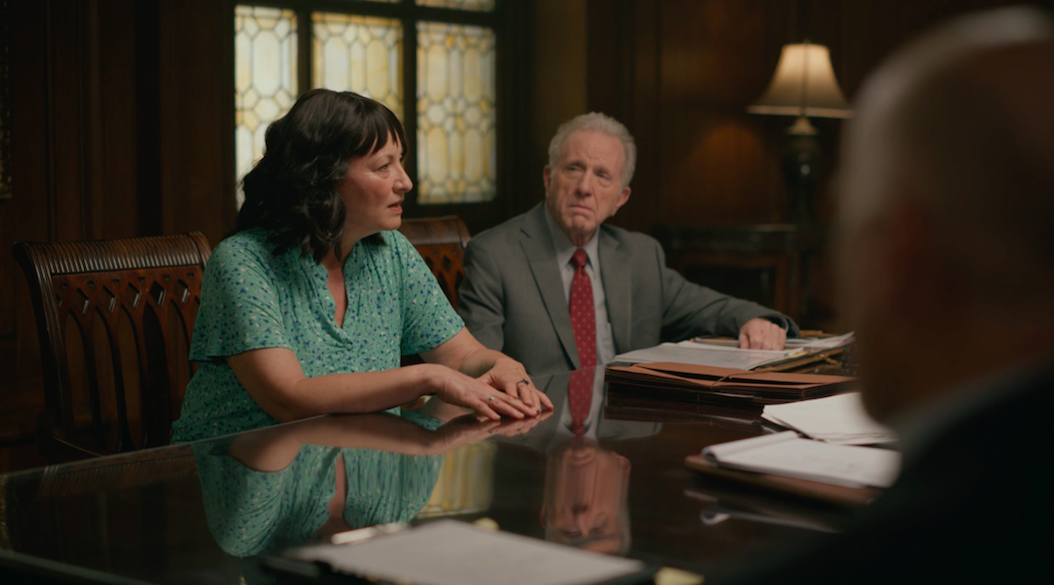
One of the most troubling dimensions of the sisters’ story is their long struggle to obtain legal recognition and accountability. Their pursuit of justice culminated in a legal battle that, as presented in the film, did not produce the outcome they had hoped for. Gregory Yates, the civil trial attorney involved in the sisters’ case, offers a particularly important perspective on the proceedings. His testimony is significant because he was personally present during all nine depositions and witnessed the way the sisters were questioned by the attorneys representing the various church entities and other defendants.
In the documentary, the reenactments of these depositions are particularly striking. The questioning often appears dismissive of the trauma the women endured, at times suggesting that the sisters themselves were on trial or were being required to defend the credibility of their experiences. Yates explains that the original depositions were not videotaped. Consequently, their written transcripts could not convey the conduct of the attorneys or the manner in which their questions were delivered. “I was personally present and witness to all nine of the sisters’ depositions,” he says. “When the church defense attorneys asked questions of the sisters their demeanor varied from attorney to attorney and depended on which institution they were representing.”
He singles out one attorney, Robert Stitch of Minneapolis, as an exception. “The only attorney that stood out as being respectful, empathetic, and conscious of the pain that reliving these horrific experiences the very explicit and piercing questions were having on the sisters was Robert Stitch from Minneapolis, Minnesota.” However, Yates’ assessment of the remaining attorneys is considerably more damning. “For the most part the rest of the attorneys representing the several other involved defendant church entities, orders and abusers were, by virtue of their demeanor and attitude, condescending, accusatory, insensitive, aggressive, and by the manner in which they asked their questions, clearly inferring that the sisters were fabricating their stories.”
Yates believes that the manner of questioning effectively placed the burden of proof on the women in a deeply troubling way. “It was as though the sisters were on trial for false accusations,” he says. Drawing on more than fifty years of experience as a civil trial attorney, he recognises the approach as a familiar form of deflecting accountability: “I have litigated hundreds of cases and have on many occasions experienced this type of ‘victim-blaming’ by defense attorneys in civil cases. They were usually situations where their clients were, in fact, the most culpable.”
His testimony adds a particularly revealing dimension to the documentary. The sisters’ experiences were not only shaped by what allegedly happened to them as children, but also by the difficulty of seeking recognition within a legal process in which their memories, credibility and personal histories were subjected to intense scrutiny. Yates describes the intervention in uncompromising terms: “Unfortunately, the manner in which the church attorneys went behind our backs without providing the sisters an opportunity to be heard and introduced legislation to prevent a jury trial is a malevolent blueprint for unscrupulous civil defense attorneys to sweep under the rug the victims of childhood sex abuse and prevent their access to justice in future cases in South Dakota and other states.” He further argues that the consequences extend well beyond the Charbonneau sisters: “It provides a roadmap for escape from accountability for entities that fail to properly monitor, discipline, rehabilitate or terminate the abusers. It was a trial by the legislature funded by the very entities that failed to protect children under their care and control.” Yates thusly considers the intervention constitutionally troubling, arguing that it raises fundamental questions about the relationship between political influence, the independence of the courts and the right of survivors to have their claims heard.
The distinction between recognition and accountability is crucial. A story may finally reach a public audience without producing the legal or institutional consequences its subjects seek. The passage of time can make that gap especially painful: the survivors must live with the consequences of what happened, while those responsible for addressing the past may be tempted to regard it as closed. Knöpfler recognises this distinction. “A documentary can bring sustained attention to people whose experiences have been ignored and make questions of responsibility harder to avoid. But awareness and accountability are different things. A moving film does not, by itself, deliver justice.” For him, the film’s purpose is to encourage a shift in the questions audiences ask. “With Nine Little Indians, my hope is that audiences move beyond asking, ‘How could this have happened?’ and begin asking, ‘Who must answer for it, and what remains to be done?’”
Beyond the screen: healing, policy and institutional responsibility
For Kring, the documentary’s hoped-for impact extends beyond raising awareness. She hopes it will contribute to healing while also helping to bring about concrete changes in the treatment of survivors. “Our goal with this film is that it inspires healing,” she says. “I hope that it also brings about a change in the South Dakota law that was created to block the sisters and their childhood classmates from receiving justice.” Her ambitions also extend to the Catholic Church and its response to survivors of American Indian boarding school abuse in the United States. “It is also our great hope that this film serves as an additional tool to prompt the Vatican to issue an apology to the countless survivors of American Indian boarding school abuse in the United States.”
Kring points to the apology issued by Pope Francis to survivors of Canada’s residential school system in 2022, contrasting it with the absence of an equivalent apology to survivors in the United States. “Survivors here in the United States never received the same, and they very much want this and deserve for this to happen,” she says. “We welcome a dialogue with the Catholic Church.” The statement makes clear that, for Kring, the film is an invitation to institutions to recognise the experiences of survivors and respond to the demands that have remained unresolved for decades.
Documentaries can preserve testimony and introduce audiences to histories that might otherwise remain marginal. The documentary’s world premiere at Lincoln Center, and serving as the opening film at the Red Nation International Film Festival — where it won the Best Documentary Feature Award — provided a significant public platform for their story. Knöpfler regards this as a meaningful step towards wider recognition, but he is cautious about claiming that the film has already brought about legal or institutional change. “The measure of its impact must ultimately include what changes for the survivors themselves — not only how strongly audiences respond,” he says.
There is, finally, the question of the place itself. Marty Indian School is now operated by the Yankton Sioux Tribe. Its present-day operation offers a different context from the one described by the Charbonneau sisters, and a reminder that institutions and places can change while the histories attached to them remain unresolved. The hope that the grounds might become a place of healing, rather than one associated only with suffering, is inseparable from the need to acknowledge what happened there.
Nine Little Indians is a serious and emotionally challenging documentary, but its value lies precisely in its refusal to allow discomfort to become an excuse for silence. By placing nine Indigenous women at the centre of a history that deserves greater public attention, Kring’s film connects personal testimony with questions of institutional responsibility, historical injustice and the continuing search for answers. Some truths are painful to uncover. Others are painful because they have remained concealed for so long. Nine Little Indians asks its audience to confront both — and to recognise that the first step towards healing is not to accept things as they are, but to acknowledge what happened and ask what must still be done.
Final Grade: A