
The Netflix animated film, directed by Alyce Tzue and John Ripa, retells the familiar Cinderella story from the perspective of its infamous stepsisters.
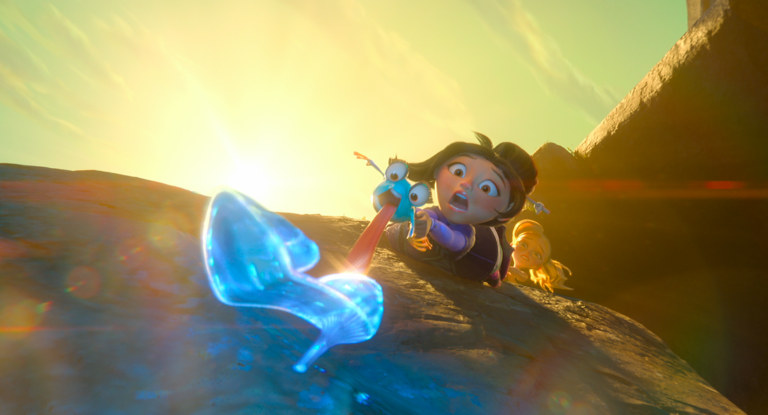
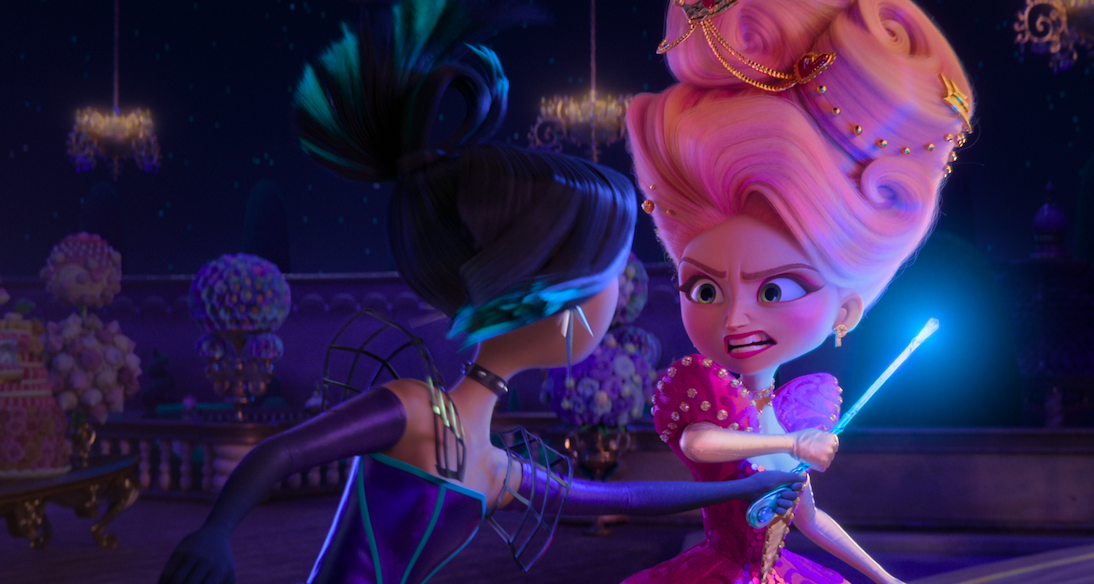
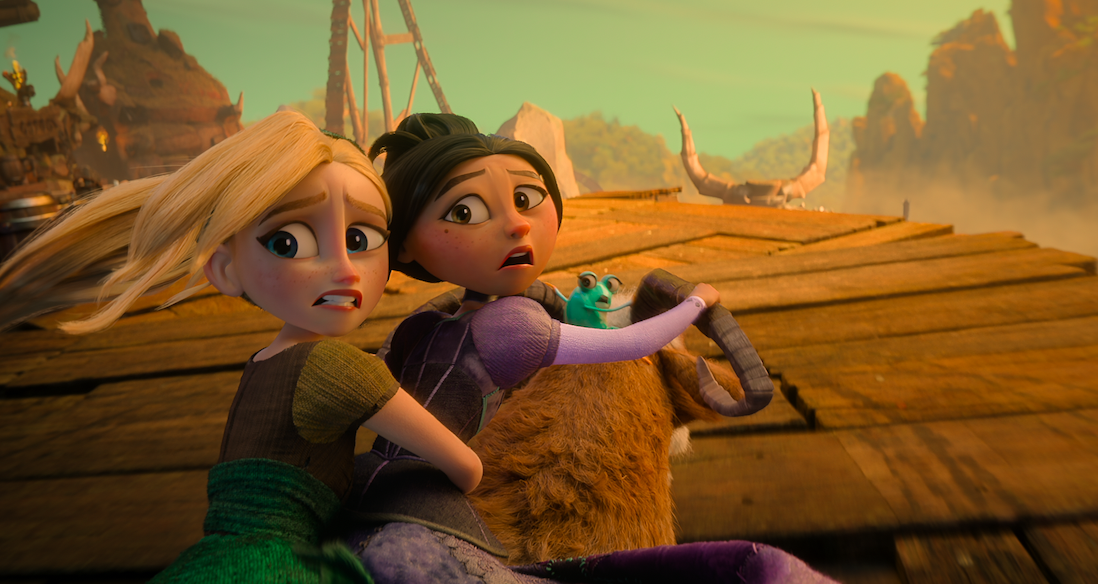
Steps explores the difficulties of being a stepsister to someone who seems perfect in every respect, and of having to live perpetually in her shadow. Feeling like an outsider, Lilith (Ali Wong) steals the Fairy Godmother’s (Bette Midler) magic wand and, alongside her sister Margot (Stephanie Hsu), hijacks the Royal Ball, disrupting the Cinderella story as we know it. Yet the real twist is that the story’s true villain turns out to be someone else entirely: Priscilla (Nikki Glaser), a scheming antagonist determined to do whatever it takes to steal the Prince (Daniel Radcliffe) away from Cinderella (Amanda Seyfried) and seize the throne. Lilith eventually takes centre stage, saving the day by confronting Roderick (Peter Dinklage), Priscilla’s henchman, who has been ordered to eliminate Cinderella. Along the way, she also sets her sights on winning the heart of Gef (Young Mazino), a handsome young troll.
Visually, Steps relies on 3D computer-generated imagery (CGI), rather than traditional hand-drawn 2D animation. Its aesthetic draws heavily on Rococo art and architecture, evoking pre-Revolutionary 18th century France through elaborate costumes, ornate interiors and extravagant decorative details. However, the highly expressive character designs and dollhouse-like environments lend the film an almost video-game-like appearance, which I may feel less appealing than other animation styles, particularly the timeless charm of Disney’s hand-drawn classics.
As for the narrative, written by Ava Tramer, James Madejski, Jen Chuck, Dana Schwartz and Felicia Ho, it feels rather disjointed: a mishmash of action and fantasy tropes that audiences have grown increasingly weary of. Compounding this is the sentimental moralism underpinning the portrayal of this blended family, which seems intent on putting a more positive spin on the traditional fairytale. Yet one aspect deserves particular scrutiny: although the villain has changed, the underlying narrative structure remains largely intact and outdated, still revolving around women competing for a man. In earlier adaptations, Anastasia and Drizella occupied this role in Disney’s Cinderella; here, the rivalry isn’t entirely thrust upon Lilith and Margot, but has simply been transferred to the newly introduced Priscilla. Perhaps it is finally time to rethink these familiar narratives altogether, moving beyond stories that perpetuate female rivalry and define women’s ambitions primarily through their relationships with men.
More broadly, in recent years, cinema has increasingly embraced the trend of retelling classic fairytales from the perspective of their villains. Traditionally wicked characters are humanised by exploring their origins, motivations and untold stories, challenging the simplistic moral categories through which audiences have come to understand them. Think of Maleficent, the dark fairy and antagonist of Sleeping Beauty; Cruella de Vil, the eccentric, fashion-obsessed villain of One Hundred and One Dalmatians; the Queen of Hearts, the tyrannical ruler of Alice in Wonderland; and, of course, Cinderella’s stepsisters, traditionally depicted as vain, jealous and cruel figures who torment the heroine. Through films such as Maleficent (2014), Maleficent: Mistress of Evil (2019), Cruella (2021), Descendants: The Rise of Red (2024) and The Ugly Stepsister (2025), familiar antagonists are recast as complex protagonists, inviting audiences to question the conventional distinction between good and evil and reconsider whose side of the story they have been hearing all along.
This growing appetite for villain-centred storytelling reflects a broader desire to understand the experiences, betrayals and personal circumstances that shape supposedly wicked characters. Rather than accepting the traditional labels of good and evil, audiences seem increasingly interested in the grey areas of human nature and in the possibility that even the most notorious villains have a story worth telling.
Disney itself appeared to recognise this appetite back in 2019, when it announced The Book of Enchantment, a Disney+ series inspired by Serena Valentino’s Villains novels. The project was intended to explore the backstories of characters such as Ursula, Maleficent, the Evil Queen from Snow White and the Beast from Beauty and the Beast. Unfortunately, the series was cancelled before production ever began.
Nevertheless, Disney has reportedly been developing a live-action solo film centred on Gaston, the arrogant hunter and Belle’s unwanted suitor in Beauty and the Beast. It remains to be seen whether Disney will succeed in offering a more compelling take on yet another fairytale villain’s story — and, perhaps, do a better job than Netflix with Steps.
Final Grade: C+
Check out more of Chiara’s articles.
Photo Credits Netflix Studios