

©Courtesy of 1-2 Special
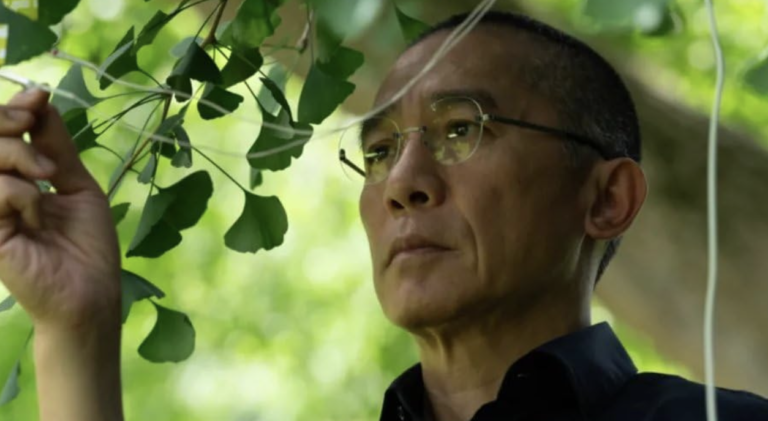
Dr. Tony Wong is a rare beast. He is an elite researcher, who also delivers entertaining lectures. Even in English, rather than his native Cantonese, his classroom presentations could pass for a top 10 TED talk. Unfortunately, the mandatory Covid closure sends all the visiting professor’s students home, leaving him stranded at Germany’s distinguished Marburg University. However, he is not alone. He has the trees and plants of the university’s botanical garden. Even though Wong studies brain function, the plants spur his scientific curiosity, like they did for several of his predecessors, as viewers will quietly observe in Ildiko Enyedi’s multinational co-production, Silent Friend, which releases Friday in theaters.
Wong conducts cutting-edge research into human perception in pre-verbal infants and toddlers. He also has the ability to talk about his work in provocative and accessible terms. Botany lays outside his area of expertise, but the Botanischer Garten Marburg, which he must walk through to reach his guest quarters, still impresses and soothes him. In fact, an imposing gingko tree so fascinates Wong, he starts applying his research methods, to determine whether he might be able to detect similar emotional responses within Marburg’s silent observer.
That tree has indeed seen a lot, as does the audience via flashbacks. In 1908, earnest Grete becomes the first woman admitted to the university, despite a professor’s boorish attempts to humiliate her during the oral entrance examination. By necessity, she also pioneers an expertise in the scientific applications of photography, when she is forced to accept lodging and employment with a kindly portrait photographer.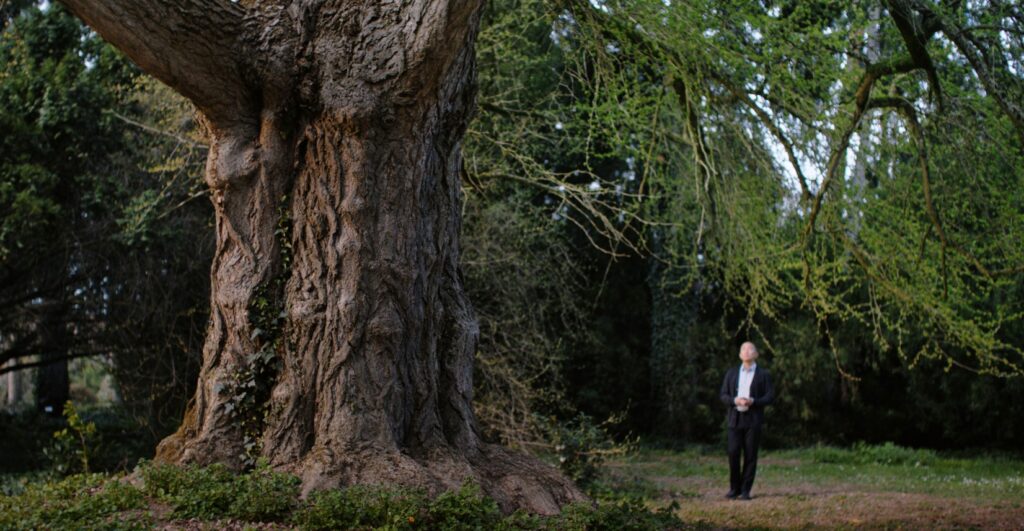 ©Courtesy of 1-2 Special
Likewise, the same gingko was present (and perhaps watching) in 1972, when naïve Hannes from the rural countryside falls for his housemate, Gundula, a considerably more forward flower child, conducting research that somewhat prefigures that of Wong. He obviously carries a torch for her, but the chasm between their worldviews and experience might be impossible to bridge.
To succeed where Gundula failed, Wong will need help. First, he must win over Anton, the groundskeeper, who sabotages his early experiments, presumably out of concern for the tree. (Even by this film’s hushed standards, Anton is a taciturn fellow.) Wong also remotely recruits Dr. Alice Sauvage, a French botanist, who agrees to advise Wong, out of professional courtesy and a desire for intellectual activity during the Covid shutdown.
Enyedi and cinematographer Gergely Palos clearly and distinctly differentiate all three time periods. Wong’s 2020 scenes were vividly shot on digital, whereas retro 16m stock was used for the 1972 sequences and the early 20th segments were rendered on ethereal-looking black-and-white 35mm.
Just as the look varies between time periods, so does the degree to which the respective drama engages and compels the audience. Unquestionably, the most successful timeframe is the most contemporary, thanks in large measure to Tony Leung Chiu-wai (a.k.a. “Little Tony”). His performance as Wong is subtle but richly complex. Indeed, it could very well be the case that the HK scientist has an easier time making a significant emotional connection with a tree than another person.
Although Lea Seydoux only appears as Dr. Sauvage in video chats on Wong’s laptop, which are not inherently dramatic in nature, her charisma still shines through. In contrast, Luna Wedler has the most demanding role, by any measure, as Grete, whose acute sensitivity and expressiveness are quite haunting.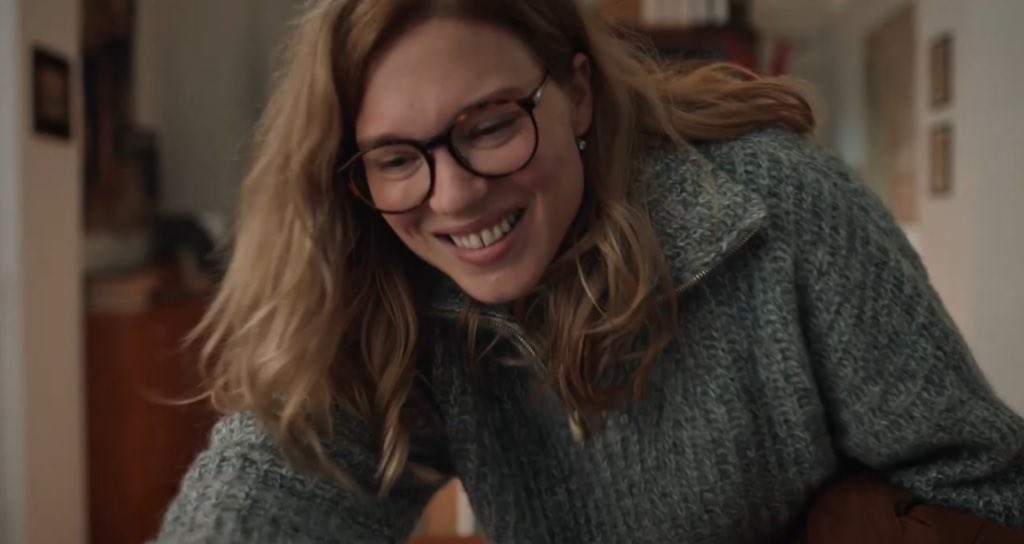 ©Courtesy of 1-2 Special
On the other hand, Marlene Burow never elevates Gundula above a free-spirited hippie stereotype. Enzo Brumm conveys a sense of deep and stormy waters beneath Hannes’ standoffish façade, but the way the film equates his traditional reserve with neurotic instability also represents a rather lazy cliche.
Of course, Enyedi would be the first to suggest some of her most important cast-members were the botanical garden’s dozens of species of plants, which she duly acknowledges during the closing credits. It is altogether fitting, because the Botanischer is such a wonderfully lush and verdant setting. Consequently, Silent Friend is an unusually beautiful film, with considerable credit also due to Palos’s striking black-and-white cinematography.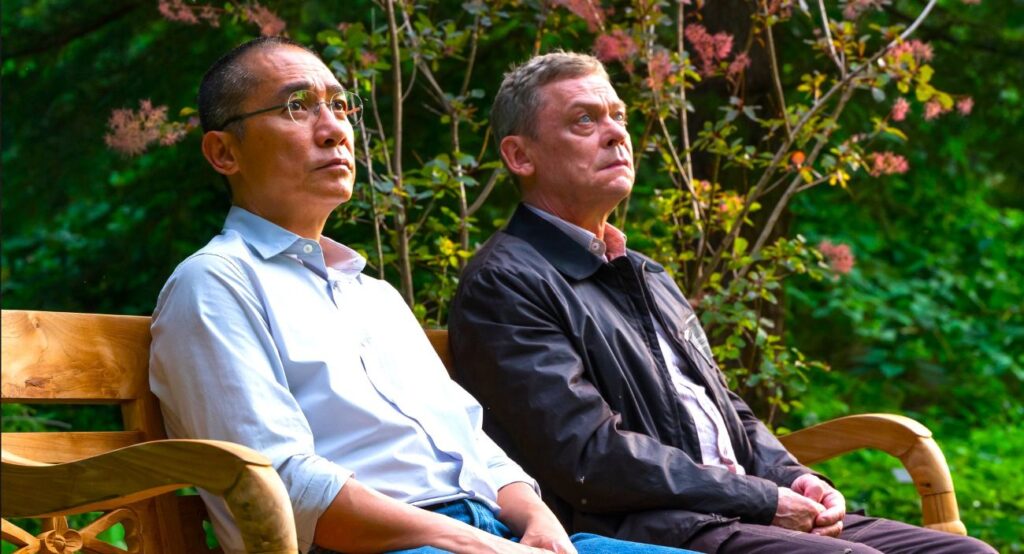 ©Courtesy of 1-2 Special
This film clearly invites the audience to meditate on what makes us human. Beyond questions of epistemology, the film also addresses themes of exile and isolation. Perhaps ironically, it is especially poignant to watch Tony Leung portray a solitary expat at a time when so many of his fellow Hong Kongers (like Nathan Law) have been forced into exile (or even hiding), because they protested the dismantling of Hong Kong’s democratic institutions and civil liberties. In a way, it is the sort of film that accidentally reflects the zeitgeist.
Regardless, Silent Friend constitutes some very refined and assured filmmaking. It is moody, philosophical, and humanistic. Recommended as a cinematic Walden Pond for the post-Covid, post-Hong Kong crackdown era, Silent Friend opens this Friday (5/8) in New York.
Grade: B+
If you like the review, share your thoughts below!
Check out more of Joe’s articles.
Here’s the trailer of the film.