

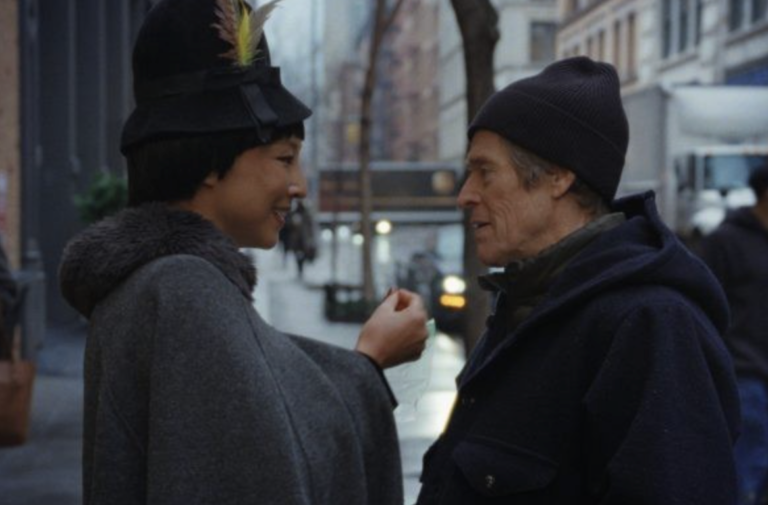
Receiving a resurgence in attention for their long-lost work can create a wistful melancholy for many creatives. That’s certainly true for poets in a culture like downtown New York City that values independent art. Willem Dafoe‘s protagonist, former poet Ed Saxberger, must do just that amongst a newfound circle of literary aspirants. The up-and-coming writers embrace his decades-forgotten work in the new drama, Late Fame.
Kent Jones helmed the upcoming movie, after he made his narrative directorial debut on the 2018 drama, Diane. Late Fame, which is the filmmaker’s second feature, adapts author Arthur Schnitzler’s recently rediscovered novella of the same name.
Oscar-nominated May December scribe Sam Burch penned the script for Late Fame. The screenwriter updated the Austrian author’s take on art in turn-of-the-century Vienna for contemporary downtown New York.
Late Fame follows Ed, a once-thriving New York poet who has stepped back from public life. He instead turned to working at a post office for nearly four decades. The public has largely forgotten his literary work.
But Ed begins to believe in himself again when a young fan, Meyers (Edmund Donovan), shows up on his doorstep. A group of twenty-something aspiring creatives have welcomed the former poet into their new circle, The Enthusiasm Society. His admirers hope to make him the central figure in an emerging literary salon.
Ed becomes engrossed by the attention, as well as the presence of aspiring tragedienne Gloria (Greta Lee). However, he soon begins to question the authenticity of his newfound circle of admirers, and must again reconsider his life choices and plans.
Jones made a marvelously witty second feature with Late Fame. The filmmaker emphasizes the fact that whatever glory the aging poet once had has long since faded.
Ed is fully aware that he may never again find anyone who will value and support his work during his life. So he thoroughly appreciates his new admirers’ support. But he also senses that the group of his new followers don’t necessarily understand what they’re trying to re-create.
Dafoe infuses his delicate poise and dignity into the role of Ed. The protagonist realizes that his poems resonated most in an era where the downtown art scene thrived on its scrappier means.
The Oscar-nominated actor truly connects to such complex but equally subdued characters as Ed, due to his own experience in the downtown arts scene. Dafoe effortlessly translates Burch’s exploration of how notoriety and identity interchangeably influence each other.
Donovan’s portrayal of Wilson helps fuel Ed’s hope that his work deserves to have a revival later in his life. Meyers admires Ed’s obscure work so much that the latter becomes grounded and gracious.
While Meyers is sincere in his amorphous yearning for cultural importance, he’s also a desperate poser in New York’s literary scene. Meyers and his fellow members in The Enthusiasm Society claim to reject the technology that can help them advance their career out of moral principle.
However, Wilson and his peers are still easily able to achieve the success that Ed so desperately seeks. The young men were raised by wealthy families. Their financial security is evident in the spacious apartment Meyers’ parents bought for him.
One of the old-school values The Enthusiasm Society also still holds dear is male chauvinism. As a result, Gloria, who’s a bit older than her male counterparts, is at times neglected by Meyers and the group’s other members. Lee plays the character in a burst of energy and glamour in order to not only be seen and heard, but also valued.
Ed therefore begins to think of Gloria as a kindred spirit. He senses that her over-the-top public personality masks genuine dedication that her male peers don’t need. Lee refuses to conceal her character’s knowledge, as well as the despair that goes along with it. Like Ed, Gloria is chasing a dream while running away from the darker moments of her past.
The overall drama is attuned to the class differences between Ed and his new young admirers. Its production designer, Tommaso Ortinos, emphasizes Ed’s relaxed personality and views on life throughout his apartment’s setup. Dark, warm furniture and bookshelves filled with well-worn paperbacks fueled the atmosphere of the protagonist’s living space