

©Courtesy of Hopeful Films
Check out more of Our YouTube Channel
Nobuhiro Hosoki grew up watching American films since he was a kid; he decided to go to the United States thanks to seeing the artistry of Stanley Kubrick’s “A Clockwork Orange.” After graduating from film school, he worked as an assistant director on TV Tokyo’s program called “Morning Satellite” at the New York branch office but he didn’t give up on his interest in cinema. He became a film reporter for via Yahoo Japan News. In that role, he writes news articles, picks out headliners for Yahoo News, as well as interviewing Hollywood film directors, actors, and producers working in the domestic circuit in the USA. He also does production interviews for Japanese distributors of American films and for in-theater on-sale programs. He is now the editor-in-chief of Cinemadailyus.com while continuing his work for Japan.
[
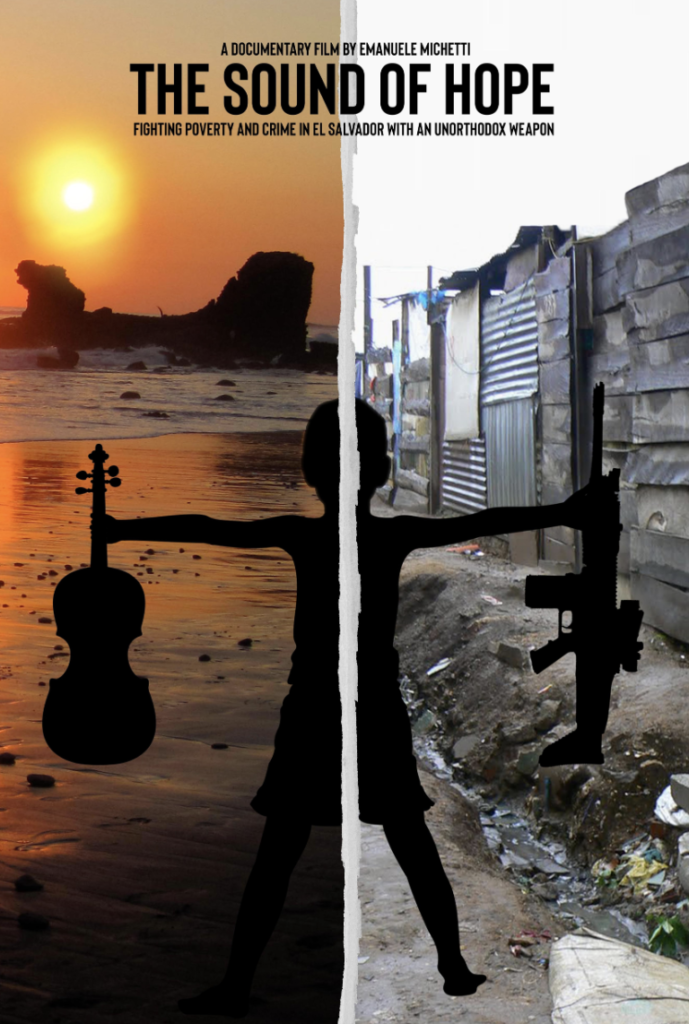
The Sound of Hope : A diplomat, a teacher, and a musician declare war on poverty, ignorance, and crime, using an unorthodox weapon: classical music education.
Director : Emanuele Michetti
Writer : Emanuele Michetti
Producers : Emanuele Michetti, Haruna Azumi, Michael D. Coffey
Stars : Mauricio Mena, Renato Portillo, Kevin Shaffter
Studio : Hopefull Films
El Sistema adapted its principles from the original El Sistema in Venezuela, which has seen much success since its founding in 1975 by José Antonio Abreu, reducing crime and producing numerous talents such as Gustavo Dudamel, music director of the Los Angeles Philharmonic. In El Salvador, formal music schools or conservatories do not exist, so programs like El Sistema are essential in filling that void. By involving youth in these programs, it fills their time with music, a fun and educational diversion that leaves them no time to participate in gang culture or other delinquent activities. Music education has a very important role, because some of these children and teenagers will go on to become professional musicians, teachers, or instrument repair technicians. Regardless of their career path, all of them will learn structure, discipline, and the skills to become better people in their community.
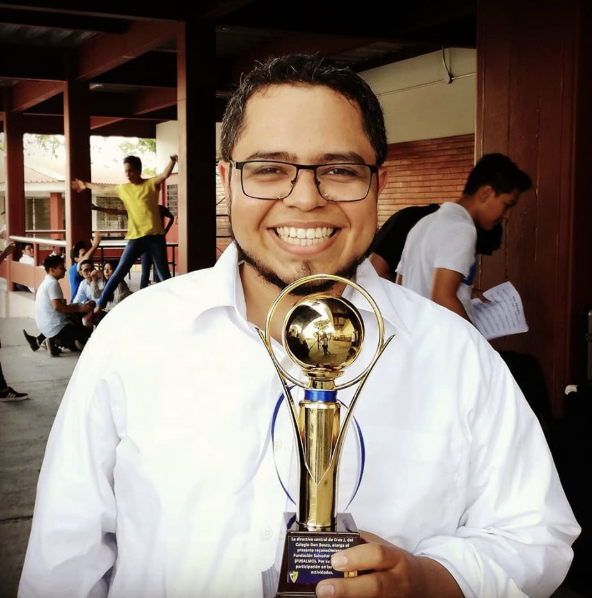
RENATO : El Sistema Teacher
Renato was born and has lived his entire life in San Salvador and observed the violence firsthand. Like most children there, his father left him with his mother when he was one year old. He has always loved music, but when younger he struggled to have access to music education. This all changed when a friend’s mother bought him a violin and enrolled him in music classes. Renato eventually became a music teacher, so that he could share his good fortune with future generations as they pursued their own musical paths. Now he has his own music school. He is also a teacher at El Sistema. “I think in the life of everyone, there are always some people that become really important because they change your life. If it weren’t for her, I wouldn’t be here right now… …I started to learn all these things and I started understanding, and playing [the violin]. It was great. It was like a whole new world for me.”
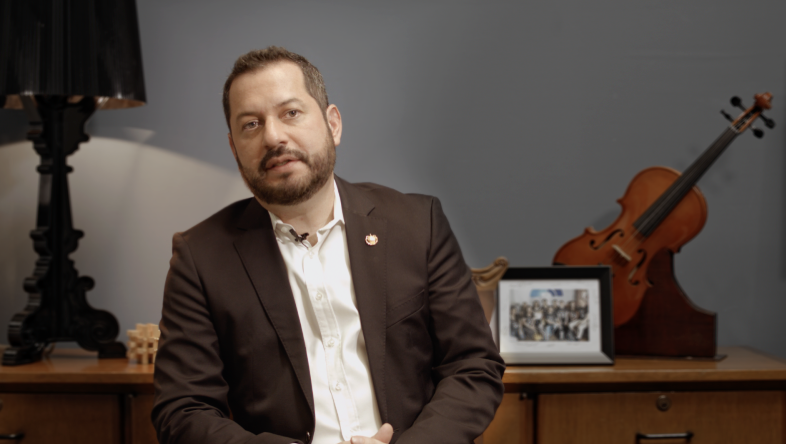
MAURICIO : El Sistema Former Director
Mauricio, like Renato, experienced a similar lack of educational opportunities. He left El Salvador at age 17 to continue his studies abroad and became an economist and a diplomat. After around 25 years, he decided to move back to El Salvador in order to give back to his native country. He worked as a director at El Sistema, a government organization that offers free music education to over 2,500 at-risk children and youth in an effort to deter them from becoming involved in street and gang violence. “It’s sad when somebody says that they have never been to a theater or a concert or seen or heard an orchestra playing, and the fact that we can bring children from their own communities to play not only in traditional venues such as theaters but also in parks, in schools, and other locations is highly motivational for everyone. It is also a way of bringing music closer to people, making people also work together as a family, as a community, as a whole. We want to make music accessible to everyone.”
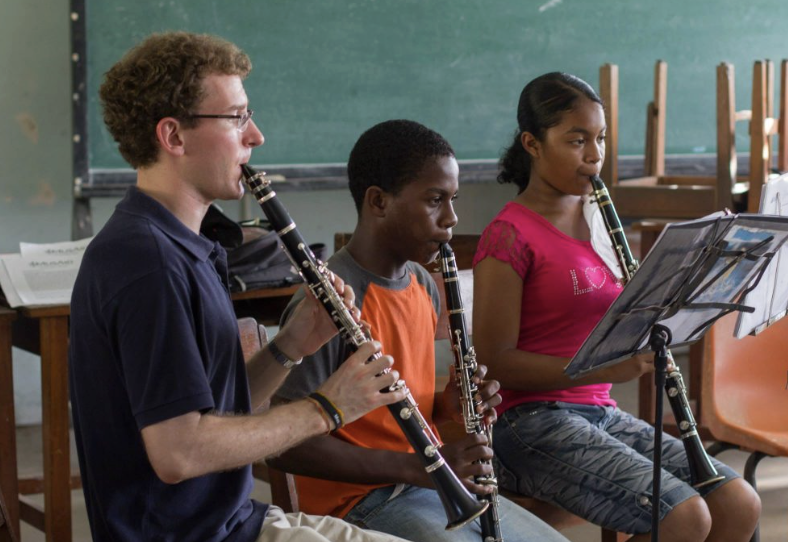
KEVIN : Musaid Director
Kevin was born in Thailand and lived in many different countries because of his father’s job at UNICEF. At an early age, he received as a gift a very old clarinet from his grandfather. In some countries where he lived, Kevin met musicians that had great talent, but who struggled with a lack of resources, materials, and instruments that were deteriorating. In other countries he encountered a shortage of music teachers. These experiences compelled him to think of ways to solve these problems. So while attending high school in the US, Kevin founded MusAid, a nonprofit organization that provides music education to underserved communities around the world and brings musical instruments and materials to schools that work with at-risk youth. “…from there music has been an integral part of my life, and it’s amazing how one gift of a used old rusty instrument completely changed my life. It makes me think about the kind of impact that we’re having by giving these kids donated instruments. And though it may not seem like a lot to us here, we can see the road that they take. Knowing how it impacted my life, I’m sure that 10 years from now we’ll get letters saying how it has impacted their life for the better.”
Film is available on Amazon and VIMooz Cinema
if you like the interview, share your thoughts below.
Check out more of Nobuhiro’s articles.
Here’s the trailer of the film.