

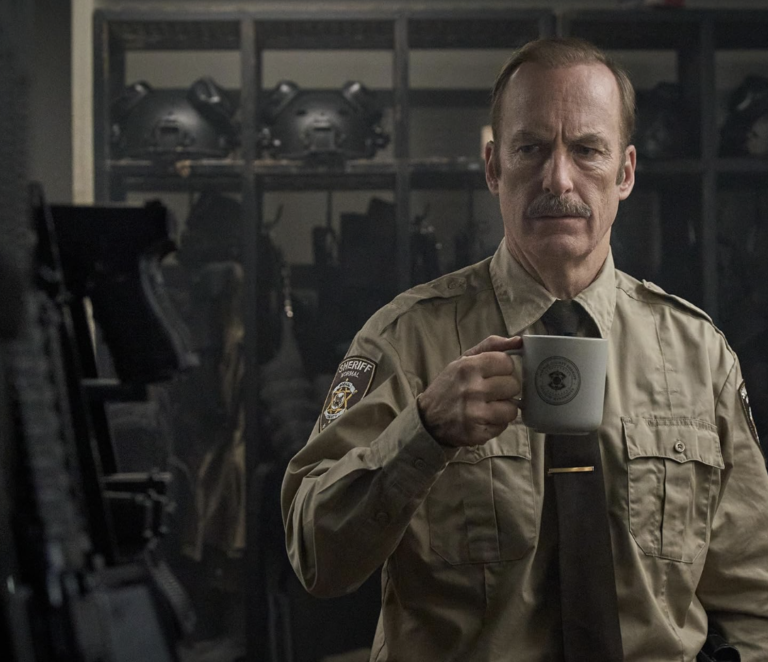
Combining grit, gunfire and a morally tangled hero can powerfully reimagine the classic Western genre through a modern, kinetic lens. That’s certainly true with the upcoming action-thriller, Normal, in which justice is messy, violence is unpredictable and nothing is quite as ordinary as it seems.
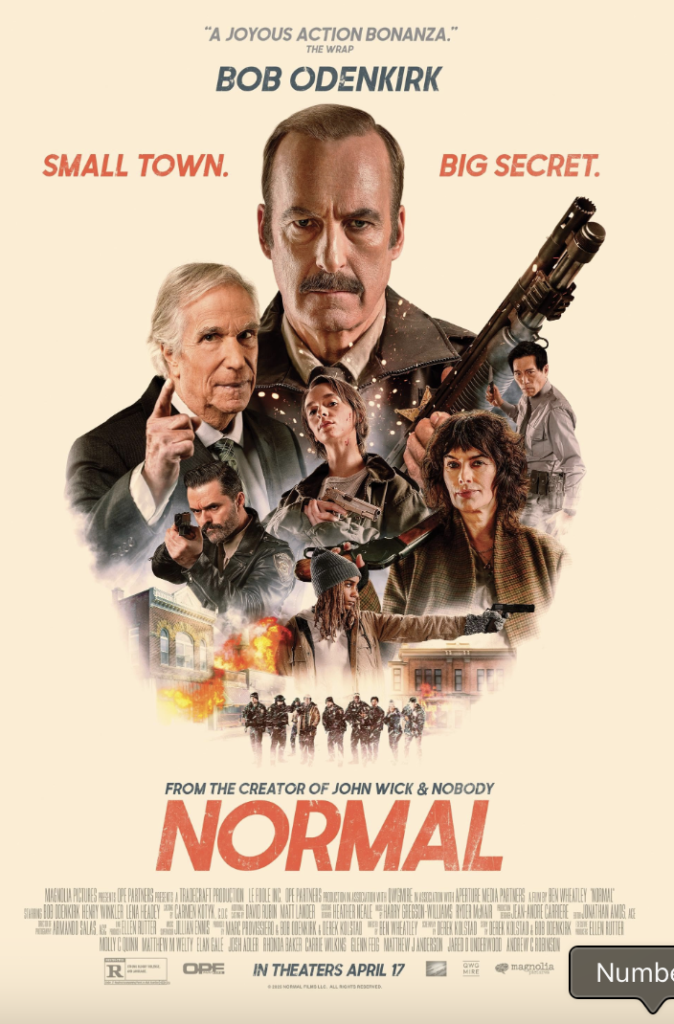
The new film is the latest pairing between actor Bob Odenkirk with John Wick creator Derek Kolstad and Nobody producer Marc Provissiero. Kolstad wrote, and Ben Wheatley directed, Normal. Provissiero, Kolstad and Odenkirk also produced the drama. Besides Odenkirk, the movie also stars Henry Winkler, Lena Headey, Ryan Allen, Billy MacLellan, Brendan Fletcher, Reena Jolly, Peter Shinkoda, Jess McLeod and Derek Barnes.
Normal follow Sheriff Ulysses (Odenkirk), an unassuming substitute sheriff with a troubled past who moves to a small, sleepy town for his latest assignment. His provisional posting to the quaint Midwestern American town of Normal was meant to be a welcome respite from both his marital woes and recent moral injuries in the line of duty.
But when the sheriff responds to a botched bank robbery, he unknowingly uncovers something far more explosive. The seemingly tranquil municipality’s dark secret is then inadvertently exposed, which leads Ulysses to quickly discovers that the town is anything but its namesake.
Magnolia Pictures will distribute the USA-Canada co-production in theaters nationwide on April 17. Before its official release, the neo-Western had its US Premiere in the Narrative Spotlight section at this month’s SXSW Film Festival. The drama was shown on 35mm on Sunday, March 15 at Austin’s Paramount Theatre.
Wheatley, Odenkirk, Kolstad and Provissiero attended the premiere. After watching the drama with the audience, they generously participated in a post-screening Q&A to discuss their experiences of reuniting to make Normal.
Q: Normal is the first 35mm print run at SXSW in about 10 years. Did you guys like it when you saw it?
Bob Odenkirk: I loved it. I thought it was great. It’s a very cool way to do it.
Q: Mark, Derek and Bob, you’ve all worked together in different capacities. How did the particular collaboration on Normal came together? Was this something that had been brewing for a long time, or did it come together quickly?
Derek Kolstad: We were working on the movie Nobody, and I love that film. Bob was doing a shot on a bus, and Mark and I were on the bus behind him. Mark asked me, “What else are you working on?” I told him, “I wrote this thing last night,” and I pitched it to him. He said, “That’s awesome.”
Then we all got busy. About six months later, Bob called and said, “Hey, what about that thing? It really was awesome.”
Eventually, he called again and said, “I want to do that.” So I pulled out the treatment, we expanded it, rebuilt it and then took off writing the screenplay. We met Ben, and it was super easy.
Well—easy isn’t quite the right word. It was incredibly difficult, but the joy at every step of the way was palpable.
Q: How about putting the whole package together, Mark?
Bob Odenkirk: How much time do you have? That was really hard!
Marc Provissiero: This was an independent movie, in case you didn’t know. We had the script—Derek, who’s one of the most sought-after writers in Hollywood, wrote it on spec. Then we all agreed we’d produce it together. Bob would star, and I’d lead the producing side.
Once we had the script, we had most of the package, but we were missing a director. You need all those pieces before you can go to a film market and try to raise money. We became more familiar with Ben’s canon of work, and it felt like a perfect fit—almost like his films were love letters to this movie.
When we connected, it all made sense. We went to Berlin and had a great sale, and raised enough money to make the movie.
Then, while we were shooting Nobody 2 up in Canada, we just kept the crew and rolled straight into this one. We stayed up there for about four and a half to five months and went right into production on Normal. We were heading right into winter—which was a pretty critical ingredient.
Q: Ben, aside from the names involved—what drew you to the script for Normal?
Ben Wheatley: Honestly, the names were a big part of it. I get a lot of scripts from my agent, but when you see Derek and Bob’s names on the front, you pay attention.
That said, I’d been wanting to do something in this space—something that builds on the kind of work I did with Free Fire, another big action piece.
At the same time, I’ve been trying to explore different genres. I’m still looking for the right musical, but this filled a different gap—a kind of neo-Western. A sheriff in a town, that kind of world—I was really excited about that.
Then when I read the script, it was the mix that grabbed me: a propulsive narrative combined with these almost “industrial accidents” that happen within the story, which really appealed to me. There’s a morality to it, but also a randomness, which I really love.
Q: Bob, you also have a story credit on Normal. What did you contribute?
Bob Odenkirk: I was able to contribute mostly to the first part of the piece—the part where the town feels a little off. It’s quirky and funny. The people are kind of charming, but something’s not quite right.
Derek is very open to ideas, so I always felt free to talk to him about ideas, and ask, “What about this? What about that?”
My contributions taper off once the action really kicks in. I did help a bit with the fight choreography. But I come from comedy, not action, like these guys did. So there was a point where I step back.
But that first third of the film really intrigued me. There were influences like Lake Wobegon and Cold Turkey. So I asked if I could help with that part of this film.
I had ideas about the mayor, the trip to Japan with the previous sheriff and the fact that they raised too much money for a small town. Things like that make you feel that something’s not just quite right. So Derek let me contribute, and that’s how I ended up with a story credit.
Derek Kolstad: Well, we say this phrase all the time: iron sharpens iron. The best idea wins. When you’re making an independent film like this, you leave your ego at the door. You just want to make something cool.
Q: Speaking of which—the action in this movie is intense, and it takes place in a very cold environment. Was that always part of the plan?
Derek Kolstad: Yes, I’ve always liked the idea of these movies being “man vs. man vs. God.” In this case, the storm is that third force.
I’m from Madison, Wisconsin, so I’m used to the cold. But then you go further north, to places like Winnipeg, and suddenly Wisconsin doesn’t seem so bad.
One of the smartest things we did was eventually move some of the production indoors and build sets. There were days where the guys from California walked outside and said, “There’s no way we’re filming outside. It’s -30 degrees with no wind.” So it was brutal.
Bob Odenkirk: But the snow still helped our creatively. It gave us that winter wonderland ending and allowed us to visually cover the trauma from the night before. It became an asset.
Marc Provissiero: During pre-production, Ben would always comment, “You know, that snow is really difficult.” I would share that with Derek and he would just go, “Yeah, you know, okay.” He wasn’t taking the bait.
Marc Provissiero: I can shoot action all day long, but storms are difficult. So, that was my fear the whole time, as half the movie in this storm.
Q: When it comes to writing the action, Derek, do you map everything out in detail in the script?
Derek Kolstad: Yes and no. For some sequences, we talked things through together. I love the Final Destination movies, so I like planting seeds that pay off later.
For bigger fight sequences, especially in the kitchen sequence, I’ll write out the first few beats in detail and then describe the rest more broadly. Once we bring in the stunt team, they take that foundation and run with it.
The best part is we genuinely like working with these people. You can throw out ideas mid-process and refine things together.
Bob Odenkirk: I’ll take a little credit here—I don’t get enough credit, do I?
In the kitchen fight, they had choreographed a fight. But then a gun gets knocked out of my holster and just sits there. I said, “No—someone has to grab the gun.”
That led to the “snake” moment, which I came up with on set. Then we had to figure out how to use the gun without shooting the hero in the head, which led to the drawer gag.
It’s fun solving those problems—figuring out how to make it feel dangerous without ending the scene too quickly.
Marc Provissiero: Before we go further, we should acknowledge the stunt team.
Bob Odenkirk: We also have to mention (executive producer) Ellen Rutter. A movie like this doesn’t happen without people like her. She never gave up on this project, and her expertise and work ethic made a huge difference.
Q: You can really feel how much fun everyone had making this—from cast to crew. So looking back, what’s the moment you’ll remember most?
Ben Wheatley: For me, it’s the first day. After all that buildup, seeing the footage come together made us think,, “Okay, this is going to work.” What about you, Marc?
Marc Provissiero: For me, it’s those late nights where we were freezing cold, watching playback and thinking, “This is actually my job.” That was surreal.
Derek Kolstad: For me, in direct contrast to Ben, the last day. Usually by then last day, you’re exhausted and ready to go home—but this felt like summer camp. Ben pulled me aside and said, “Can we just do this again?” I was like, “Yes, Ben.”
Then we walked over and a couple minutes later we wrapped Bob, and I clapped.
Bob left, and he was back in a minute to hang out with us for the rest of the shoot. We just wanted to get rid of that mustache.
Bob Odenkirk: Its not so bad. I’ll grow it again, if need be.
For me, there are a lot of moments. The kitchen fight was a blast to shoot, especially since we were filming in such a tight, real space. That’s a real kitchen, not a stunt kitchen. So we had to do our choreography perfectly
I also loved the quieter scenes with the character moments.
For instance, I liked the two scenes with Jess McLeod in the pickup. I was talking to the daughter of the sheriff, who’s alienated from her town. You feeling for that character in that scene.
I also liked the scene where my character was talking to Lena Headey about his past, as well as losing his sense of purpose and belief in himself. I think that was a a great monologue. It’s a monologue that you wouldn’t often find in an action film.
There’s such a maturity and truth to it that no one else would take the time to attempt it. Lena was amazing to work with, and it was brilliant. So I’m proud of it.
If you like the interview, share your thoughts below!
Check out more of Karen Benardello’s articles.
Here’s the trailer of the Film.