

©Courtesy of Neon
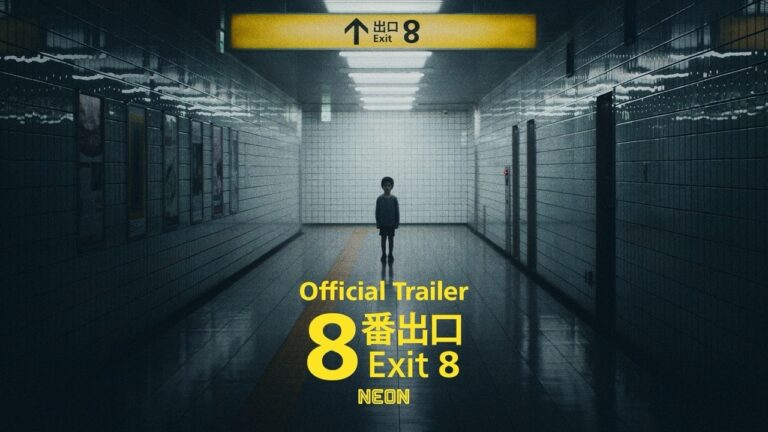
Horror films tend to express the fears of the generations consuming them. For instance, 1950s monster movies channeled the growing atomic anxiety. Yet, few horror films are as zeitgeisty as this new Japanese adaptation of KOTAKE CREATE’s hit walking-simulator survival-horror video game, because it taps into Gen Z’s all-consuming fear of commuting to work. “The Lost Man,” as the credits refer to him, is not even a fulltime employee. Yet, commuting still utterly demoralizes him. Unfortunately, his latest commute might never end in Genki Kawamura’s Exit 8, which opens this Friday in theaters.
The poor sad Lost Man was already feeling defeated, because he shamefully looked the other way while an abusive commuter berated a mother, simply because she could not silence her crying baby. Karma comes around swiftly. First, his ex-girlfriend calls, extending a surprise invitation to join her a pregnancy clinic. He somewhat reluctantly agrees, but he bizarrely cannot find Exit 8, or any exit for that matter. Apparently, the Lost Man is caught up in a liminal loop, wherein the same stretch of station corridor endlessly repeats in front of him.
Soon, he notices a sign instructing him to reverse course if he should notice an anomaly. Maddeningly, any mistake resets him back to “zero.” Consequently, his ordeal also entails elements of the game “Concentration,” wherein any change in the signage, ventilation grills, or locked service doors forces him to turn around and continue in the opposite direction. The Lost Man is not exactly alone in his torment. He soon joins forces with an understandably freaked-out little boy, who is too overwhelmed to talk, but has a keen eye for anomalies. 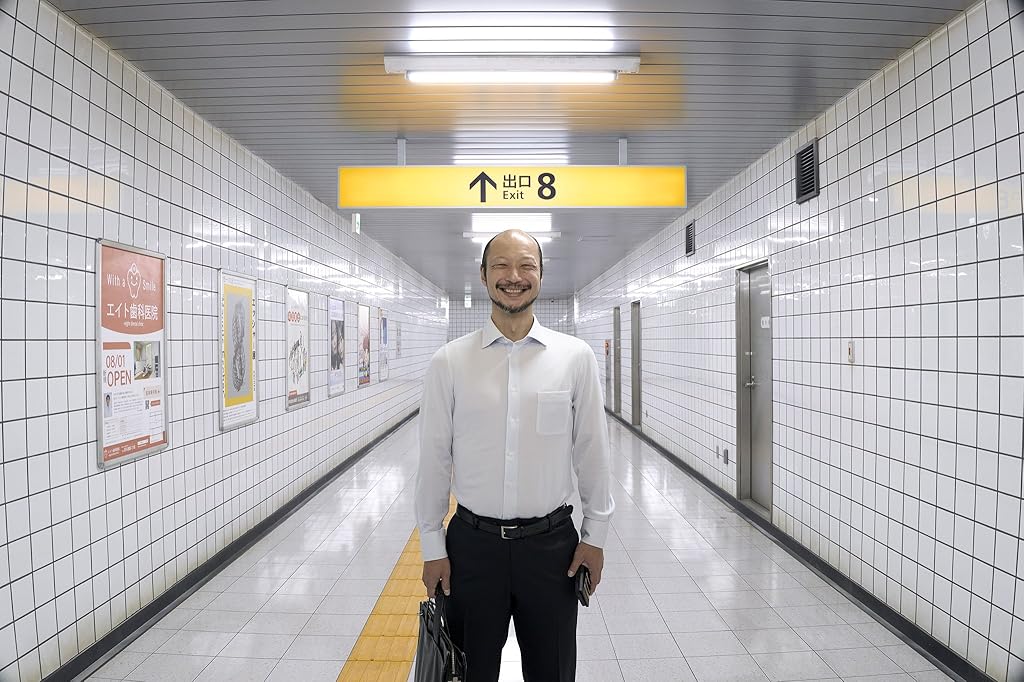 ©Courtesy of Neon
There is also the enormously creepy “Walking Man,” who does just that, often with a disconcerting grin worthy of Parker Finn’s Smile franchise. Intuitively, the Lost Man rightly recognizes the zombie-like Walking Man has succumbed to the looping “game,” as a flashback eventually confirms.
When it comes to walking simulators, the game version of Exit 8 truly walks the walk. However, Kawamura maintains an unflaggingly tense vibe, despite the constant, unchanging scenery. He launches sufficient scares to categorize the film as horror, but it obviously shares a kinship with the absurdist and existential writings of Jean-Paul Sartre and Franz Kafka. It is sort of like Vicenzo Natali’s Cube and sort of like “Five Characters in Search of an Exit,” Twilight Zone episode that riffed on Luigi Pirandello. 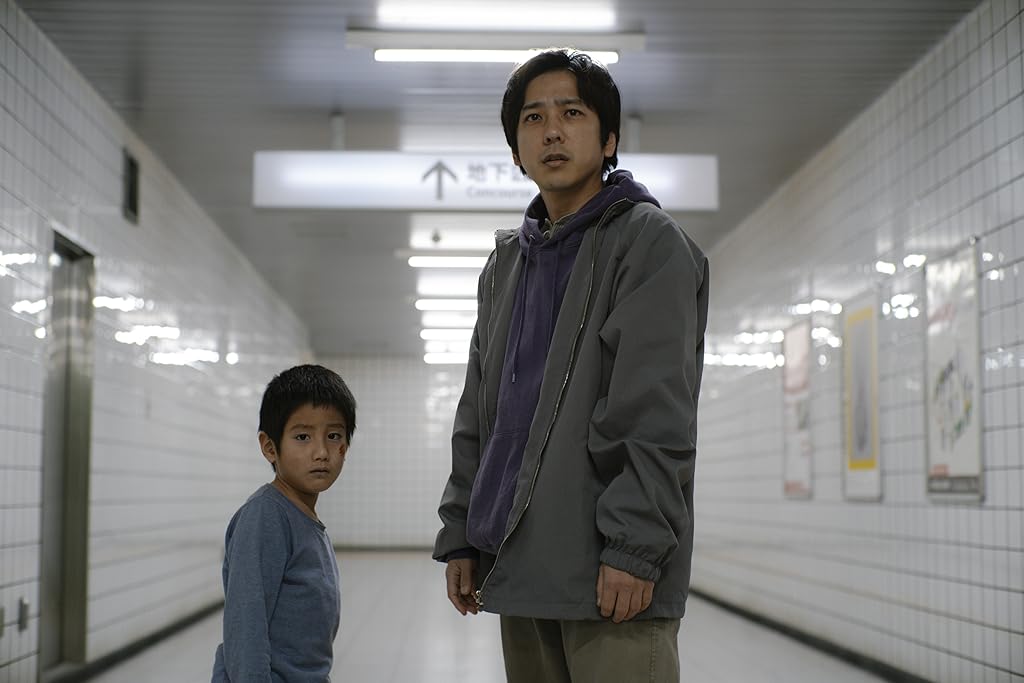 ©Courtesy of Neon
Yet, Kawamura and co-screenwriter Kentaro Hirase (with input from the original game designer) simultaneously lean into middle class Japanese salaryman fears over their disposability and dehumanizing drudgery. In a way, could be considered The Man in the Gray Flannel Suit, refracted through a genre lens, for the mid-2020s.
Despite his pop idol background, Kazunari Ninomiya is convincingly passive and nebbish as the Lost Man. Immediately, he appears downtrodden and projects despair. Yamato Kochi provides a massively unsettling presence as the Walking Man. Plus, young Naru Asanuma looks alarmingly distressed as the Boy. Yet, Kotone Hanase probably contributes the most terrifying performance in her brief but ominous sequence. You’ll know her when you see her.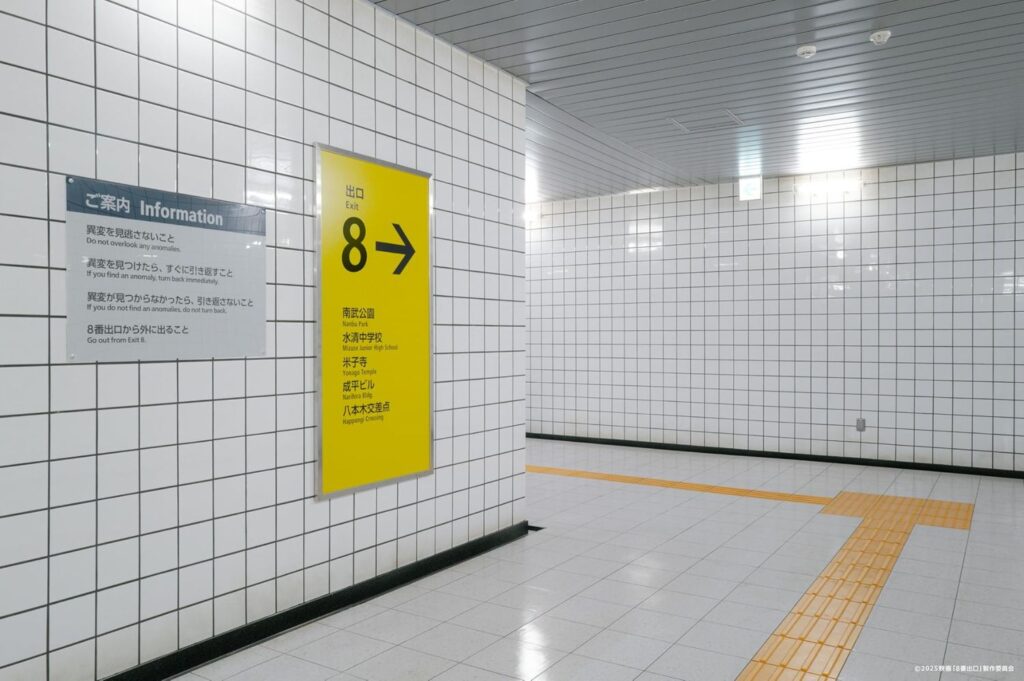 ©Courtesy of Neon
Although Kawamura unleashes some rather shocking imagery, the relentlessness of the looping corridor is what will really get under viewers’ skins. The sense of cyclical repetition is cleverly reinforced through the use of M.C. Escher’s Mobius Strip II (Red Ants) (which appropriately constitutes a figure eight), as seen on one of the passageway’s advertisement posters, and Maurice Ravel’s cyclical ballet movement Bolero (famously featured in the vastly different Bo Derek films, 10 and aptly Bolero), as recurring motifs.
Regardless, Exit 8 is at its scariest when it feels most familiar to viewers. It is easy to envision yourself in the Lost Man’s corridor, because we shuffle through such spaces every day. Arguably, Kawamura’s adaptation could crossover beyond the typical horror audience, because the filmmaker and the source material clearly reflect an awareness of its existential-surrealist forebearers. Yet, it also ranks as one of the most successful horror video game screen adaptions, alongside John Hsu’s Taiwanese Detention. Highly recommended for audiences of the sinister and absurd, Exit 8 releases in theaters this Friday (4/10).
Grade: A-
If you like the review. share your thoughts below!
Check out more of Joe’s articles.
Here’s the trailer of the film.