

Photo: © 2026 FUJIKO Film Partners
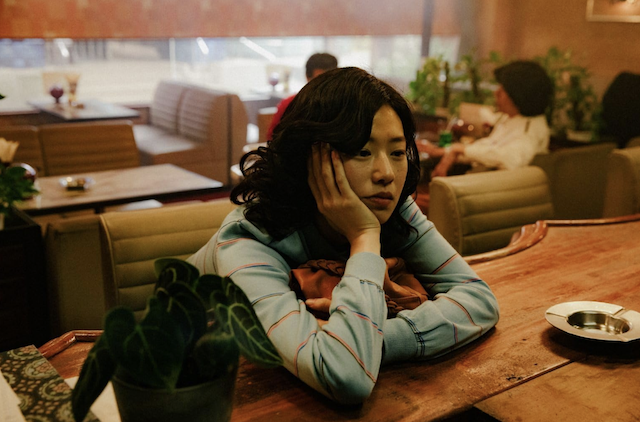
Fujiko : Shizuoka, 1977: a Japan still telling women where they belong, and a young mother who refuses to listen. Fujiko gives birth during a storm and a hospital blackout, and within months her in-laws have taken her baby. She wins her daughter Mari back, and sets out to raise her alone through low-paid work, scarce childcare, and the judgment of nearly everyone around her. Yuki Katayama plays Fujiko at full volume, swearing and laughing her way through what another film would stage as martyrdom. Taichi Kimura builds this female-emancipation story like a rock song: angry, alive, profane, impossible to keep down. FUJIKO took the audience award at Udine’s Far East Film Festival, then again at Nippon Connection. It plays like gangbusters.
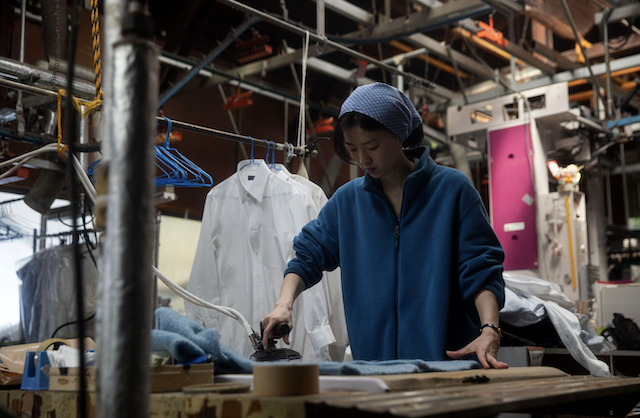
Photo: © 2026 FUJIKO Film Partners
Exclusive Interview with Director Taichi Kimura
Q: I hear this film was conceived based on the story of your mother and was planned, produced, and made in collaboration with actress and producer MEGUMI. How did you meet MEGUMI, and how did this project come about? You two have initially teamed up before on “Afterglows”, haven’t you?
Taichi Kimura: That’s where it started (it felt like that’s when my partnership with Megumi began). It really felt like we teamed up on “Afterglow”. Then, since she said she wanted to get into producing, I asked, “I have this story—what do you think?” and that’s how it all began.
Q: I thought this film really captured Ms. Katayama’s attraction. I heard that MEGUMI had worked with her before. Could you tell us what aspects of her attraction led you to cast her, and also, after working with her on this project, what new aspects of her attraction did you discover?
Taichi Kimura: Well, as for what made her appealing, first of all, her appearance was incredibly close to the image I had of Fujiko. But the biggest draw was really that her life story—her background—resonated so strongly with Fujiko’s, and there were so many similarities that I felt she would be able to portray the role with a high degree of accuracy. Working with her, I realized she really gets it—our ideas about what’s “cool” or “how it should be” just clicked perfectly, so I guess we were just on the same wavelength. We hang out all the time in our personal lives now, too.
We’ll be like, “This is so cool,” or “We don’t actually wear makeup like this in real life, do we?” One interesting piece of feedback I got during the screening in Japan was that, since there was no air conditioning in the Showa era, the characters looked shiny and sweaty. People asked me, “Was that intentional?” But no, it wasn’t intentional—it’s just that if I wanted to sweat, I’d sweat. That really made me realize just how much in Japan, they tend to hide everything (the actress’s face) with makeup.
Q: I read in an interview that, according to Mr. Katayama, he was allowed to read the revised drafts until he received the final script. As you mentioned earlier, were there any parts that were revised in a way that incorporated some of Ms. Katayama’s ideas?
Taichi Kimura: There were instances like that. Not so much with the script itself, but for example, when Atsushi Hashimoto, who played Shimoda, asked Yuki (Katayama), “I can’t find anyone for this role—who do you think would be good?” she said, “There’s this guy named Hashimoto—he’s wonderful. I think he’d be perfect for the part,” and that’s how he was cast. Decisions like that were made based on her ideas. But basically, when it comes to the script—or rather, the direction—I made it clear that I wanted them to apply the standard level of precision in Japan that’s taken for granted in the West, where actors can take the direction and make it their own.
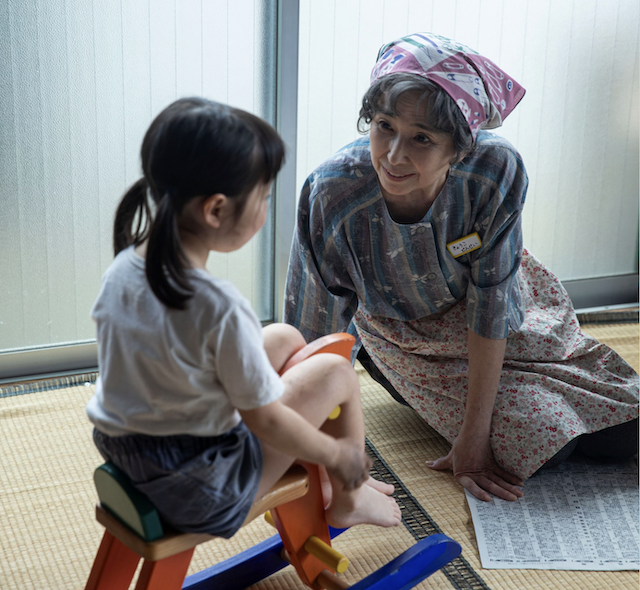
Photo: © 2026 FUJIKO Film Partners
Q: I hear that you studied filmmaking at St. Martin’s College, an art university in London, and at LCC London Communication College. After that, you began your career as a live video artist in the British music industry. However, the music in this film doesn’t really seem to fit the Showa-era image—it feels like a completely different kind of music, which I found really interesting. Could you tell us a bit about the process—how you collaborated with the musicians to create this music?
Taichi Kimura: But back then, there was actually a boom in Western music—people were listening to artists like Eric Clapton, and Led Zeppelin had come to Japan. While pop songs tend to draw on that kind of influence, it seemed like the cool kids at the time were actually listening to Western rock.
Q: That was my experience, too. We used to air shows like the American Top 40—programs that had been broadcast in the U.S.—the very next day in Japan.
Taichi Kimura: My mom and others really love CCR (Creedence Clearwater Revival).
Q: Oh, really?
Taichi Kimura: Since I’d been listening to that kind of music since I was little—and given the spirit of that era—I felt that her(Fujiko’s) attitude really matched the rock ’n’ roll attitude of that time. So I decided to work with that. Also, musicians tend to select their own music and define things like the BPM (beats per minute), so there’s a sort of foundation or reference point. During the editing phase, I’d tell them, “I want you to create something like this,” and they’d take that and make it their own, then finish the song.
Q: I see. Are there any musicians you’ve actually collaborated with who left a lasting impression on you?
Taichi Kimura: There’s this composer named Thomas Yardley—I’ve known him since way back in my reggae days when we used to party together—and he handles all the copyrights for my film scores. But during filming, he called me and said, “I just can’t do this anymore,” and “I can’t handle a task this difficult.” He told me, “I’ll play you a demo, but it’s not good at all.” When I listened to it, it was absolutely amazing, so I said, “No, it’s really good— it’s really wonderful,” and he was like, “Really?” I thought to myself, “He’s kind of childlike, almost like a baby,” but he still had that same distinctive laugh as always.
Q: In the movie, the conflict between Fujiko—played by Ms. Katayama—and her so-called mother and stepmother was portrayed by actress You and Kayoko Kishimoto. Both of them gave powerful and wonderful performances. Could you tell us a little about how you directed that scene—whether you guided them on how to approach it or left it mostly up to You and Kishimoto?
Taichi Kimura: Well, anyway, since You-san plays the villain in this movie, I kept telling her to be really nagging—that uniquely Japanese, nagging kind of way. In response, Kishimoto-san pointed out that her character has many layers, asking things like, “Why is she like this?” or “Okay, fine, treat her like a child,” or “Are you really saying that from the heart?” We had discussions like that about the direction. But when the two of them—You and Kishimoto—were actually discussing it on set, my own anger reached its peak, and that word that just slipped out before I knew it became part of the performance.
My pride as a mother wouldn’t let me back down, and we talked about how things just kind of dragged on like that. Well, I’m the type who likes to go through proper discussions before doing anything. There wasn’t a single instance where I just said, “Do it this way.” It’s more like, “What do you think?” or “How would you like to approach this?”
When they’d respond with something like, “Could you just do it this way here?” or “This is how I feel about this part,” I’d be like, “Oh, I see.” And there were a few times when I’d say, “This is how I see it,” only to be told, “No, that’s not right,” and I’d end up changing my mind.
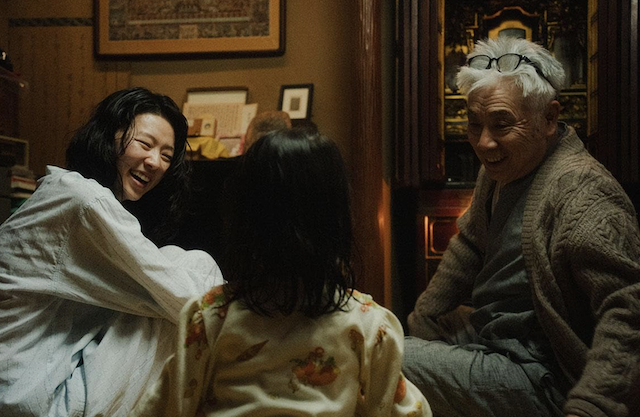
Photo: © 2026 FUJIKO Film Partners
Q: I heard that when Ms. Katayama was preparing to play Fujiko, she actually met and spoke with Mr. Kimura’s mother. Were there any elements added to the film based on those conversations, or were there any specific points that his mother specifically pointed out?
Taichi Kimura: (My mom) didn’t really point out anything specific, but she did say something like, “Don’t make the character too gloomy,” to Yuki-chan. Oh, right—she said something along the lines of, “Try to be strong,” so since Yuki-chan wanted to portray the character that way too, in that sense, it felt like we were on the same page.
Q: In this film, the coffee shop run by the mother character played by MEGUMI is incredibly popular, and I couldn’t help but notice that her approach as an owner—not getting too involved in her customers’ lives—somehow reminds me of MEGUMI’s own creative approach. Having worked with her on this project, were there any aspects of MEGUMI’s charm as a producer—or her work style—that you found particularly helpful or beneficial to you?
Taichi Kimura: Well, to put it simply, even though I hadn’t really achieved much with my first project, she brought in a huge amount of money (as a producer) for my second project—an amount that was completely incomparable to the first. That kind of faith… I’ve always thought that MEGUMI is truly amazing.
The fact that she believed this film would be good, and that she placed such tremendous trust in my talent—that power of trust is really what makes MEGUMI so wonderful, isn’t it? As for the rest, I was just doing what any producer would do, so there’s no point in praising me for that. But the fact that she went out of her way to raise the funds herself—to do that for a guy who’s only made two films—I think that’s truly amazing.
Q: She was part of “Japan Night” at the Cannes Film Festival, and she also has a deal with Netflix. When you work with her, do you feel that her approach as a producer is having a certain influence on and stimulating contemporary Japanese cinema?
Taichi Kimura: Yeah, I guess people are saying it’s amazing because the actor is producing—because the actor is the producer—but that’s actually pretty common overseas, you know.
Q: Well, that’s actually a pretty common occurrence in the U.S.
Taichi Kimura: It’s a pretty common story, isn’t it? So, even if I say “that’s amazing” or “that’s incredible,” it doesn’t really change anything. I mean, I think there should be more people like that from here on out, but as far as actually getting started on it, I do think it’s wonderful. Honestly, I don’t think it’s necessarily a good thing to just shower her with praise, though.
Well, I think she’s in a position where, once she keeps doing this and looks back, she’ll be able to say, “Megumi was amazing for being the first to do that.” So right now, Megumi definitely has the potential to keep producing films like this and become a leading figure in the field, so I really hope she keeps working hard at producing in the future.
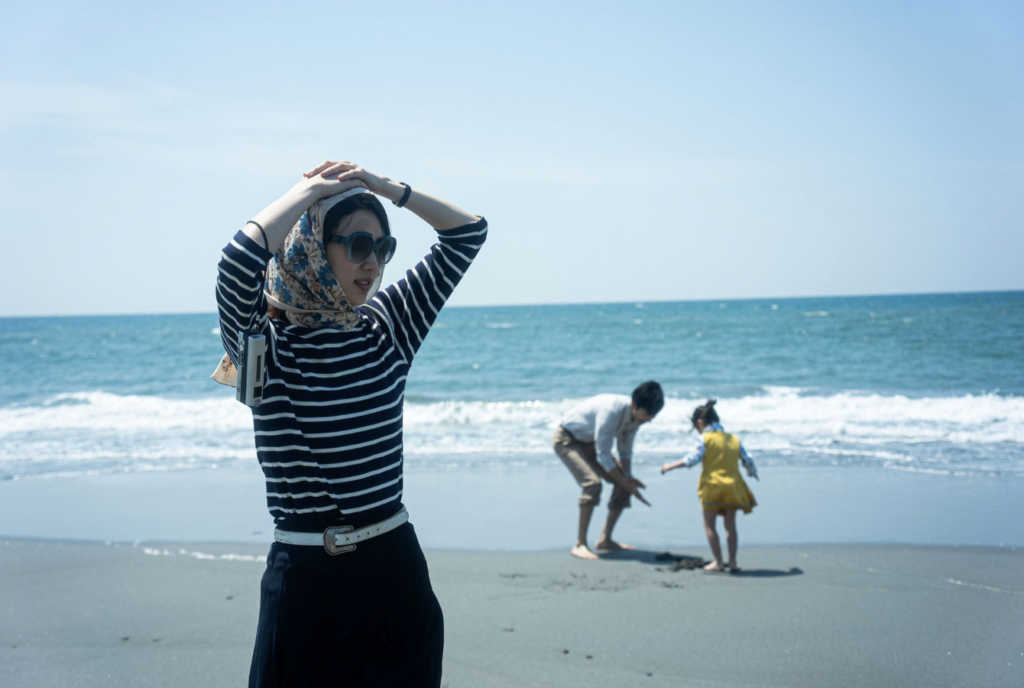
Photo: © 2026 FUJIKO Film Partners
Q: This character, Fujiko, can be a bit impulsive at times—she thinks things through and has her regrets, but she also lives life on a whim. Yet there’s something about her that makes it impossible to look away. When portraying Fujiko, were there any specific aspects that you, Director Kimura, were particularly conscious of wanting to depict, or elements that you absolutely wanted to include?
Taichi Kimura: That’s right. We live in a data-driven society these days, and inevitably, even when we’re just trying to decide where to eat, we end up searching online and thinking, “This place has a 3.8-star rating, so it must be good,” or something like that. I get the feeling that people rely way too much on that kind of thing instead of making their own judgments. Fujiko, on the other hand, doesn’t have access to that kind of data, and since she’s a first-time mom, she’s kind of in the dark—she’s just winging it.
But she still gets out there on her own two feet, using her own experiences as a springboard to move forward in life. That’s what I find incredibly appealing and worthy of respect, so I was very conscious of portraying that aspect. Whether that was a success or a failure doesn’t really matter.
Every experience is, in a way, the right answer—or a success—and those experiences become facts and assets. Things like, “If I do this, I’ll end up making this kind of mistake”—that’s something only someone who’s actually lived through it can say. So, keeping that in mind, I defined the question of “What’s missing in today’s world?” as the central theme.
Q: Now that you’ve worked on this film, what did your mother say after watching it?
Taichi Kimura: Well, when we were making it, she(mother) kept saying I didn’t want to do it—I was actually pretty upset about it—and even when she first saw it, she was just like, “Hmm…” But then I heard she cried the second time she watched it. To be honest, when it’s someone close to you, you just don’t really get that feeling the first time around. She was too worried about her own reaction—even my wife has only seen it once, and she said she wasn’t even focused on the actual content of the movie…
So, when I was on stage with my mother and she said, “Thank you for the first time,” I’d never heard her say “thank you” before that, so I’d been wondering why she never said it, but but in the end, in the script I wrote, Fujiko goes to the soba shop and doesn’t say “thank you” to Issey Ogata’s character—she just says “it’s delicious.” And I thought, “Well, she really understands me—she’s my son, after all.” It made me realize that not everything you say is beautiful, and I thought it was interesting that she pointed that out.)
Q: This film is portrayed in a way that strongly champions what is often referred to as “women’s empowerment,” and it has resonated not only with women but also with many men. It won the “Golden Mulberry Award,” the top prize at the 28th Udine Far East Film Festival, as well as the “Black Dragon Special Audience Award.” The film is set to screen at the New York Asian Film Festival soon—what aspects of the film would you like audiences to focus on?
Taichi Kimura: I thought that if it were just a contest to see who could boast the most about being poor, I’d definitely lose. Well, I don’t mean in terms of winning an award or anything like that—I mean losing as a work of art, so to speak. There are places in the U.S. that are even poorer, and the same goes for Brazil, the U.K., and other parts of Western Europe. Japan, too, had its share of hardships back then, but it wasn’t as bad as it was right after the war, and so I figured there was no point in comparing levels of poverty. What I really want people to see—and what I think will resonate—is the “poverty of the mind.”
It’s not about whether you have money or not; it’s about how society suppresses your desires. I felt I had to focus intensely on that aspect—on how that kind of suppression makes your mind feel impoverished. That aspect has resonated with audiences at film festivals so far, so I’d be happy if people in New York could see that side of it as well. I’m also really curious about the differences between Europe and the U.S.—specifically, the differences in audience reactions—and I’m really looking forward to it.
If you liked the interview, share your thoughts below!
Check out more of Nobuhiro’s Articles.
Here’s the trailer of the film.