

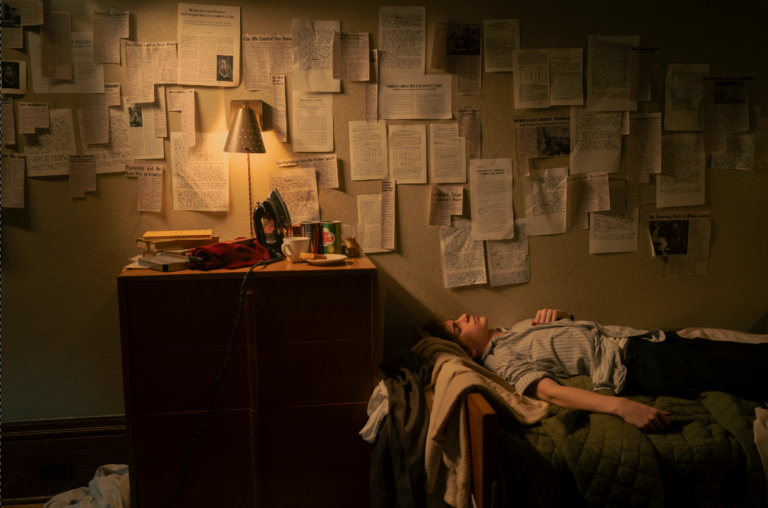
Unabomber is the nickname utilised to define an unknown perpetrator of bombs concealed in ordinary objects. Different countries have used this term, but the most famous Unabomber is the American Ted Kaczynski, who carried out a long campaign in the United States from 1978 to 1995, targeting people associated with modern technologies and universities. He carried out 16 bombings, killed 3 people, injured 23 and was arrested in 1996. He was given a life prison and committed suicide in 2023.
What caused the formation of such a cold-blooded brute? This is what the Netflix film Unabomber explores. Directed by Janus Metz and scripted by Sam Chalsen & Nelson Greaves, the film follows the transformation of Ted Kaczynski (Jacob Tremblay), from 16-year-old Harvard genius into the infamous Unabomber. Subjected to controversial psychological experiments by Professor Henry Murray (Russell Crowe), Kaczynski’s troubled past resurfaces decades later when his manhunt, led by FBI agent Joanne Miller (Shailene Woodley), brings to light the chilling consequences of ambition and isolation.
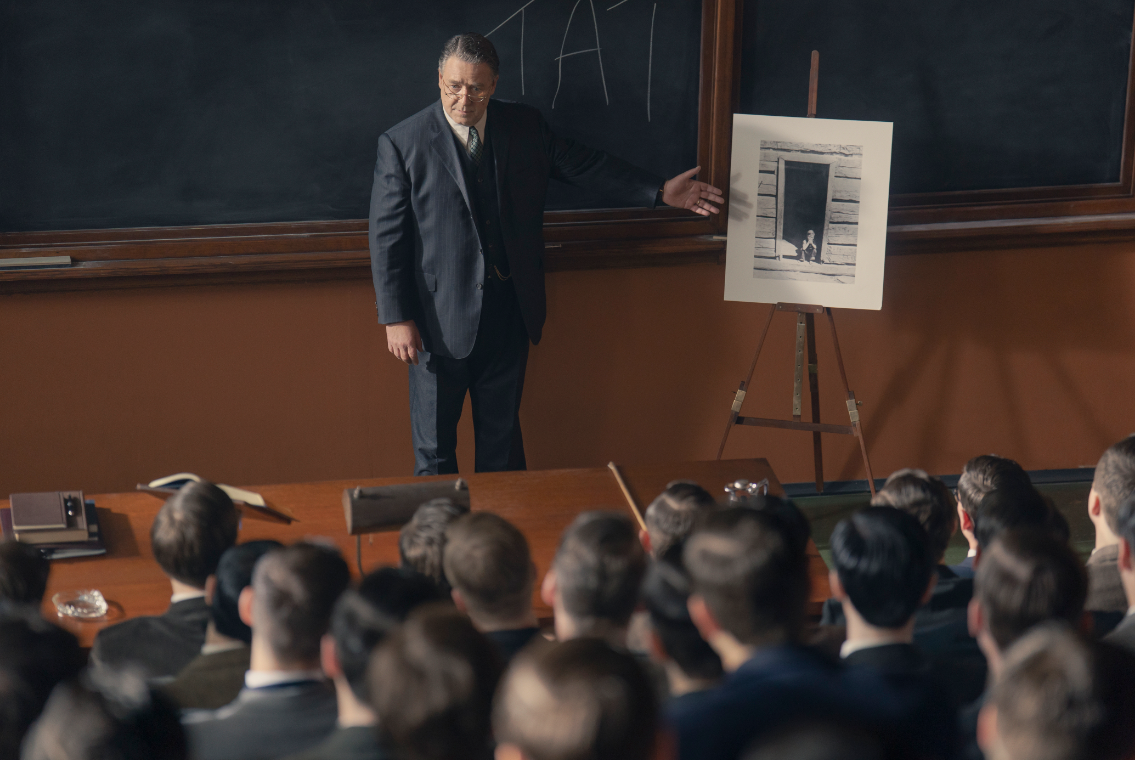
The prodigy child, before being diagnosed with paranoid schizophrenia, graduated high school at 15 and enrolled at Harvard University on a scholarship at 16. After earning his bachelor’s degree in mathematics, he obtained his master’s and doctorate’s degrees from the University of Michigan, and in 1967 he became the youngest assistant professor ever at the University of Berkeley. His interpersonal relationships with girls or his brother David, and even with his parents did not match his academic excellence. He was socially awkward and the film focuses on what might have transformed his sense of alienation into a violent expression of rebellion. For instance, when Kaczynski was at Harvard, he agreed to participate in psychological experiments led by Dr. Henry Murray. This man was a psychologist who previously worked in the governmental Office of Strategic Services, who focused on personality tests (such as the Thematic Apperception Test), to monitor brainwashing tactics done by the military.
The film in no way tries to justify the atrocious actions of Unabomber. Its quest is a philosophical inquiry into the way our society may foster evil from an early age. Young Ted is fascinated by philosophy, especially by the potential answers to the questions concerning the structures of the social fabric. At home he doesn’t find comfort to his calling and he turns to an academic mentor to quench his thirst for knowledge and purpose. But this figure turns out to be someone who sees him as a guinea pig for his own personal advantage. This cinematic dissertation interweaves with the environmental debate of our time, but takes it to an extreme, through the actions of Ted Kaczynski who opposed the industrial-technological society that he considered the cause of the loss of human autonomy.

In Unabomber there’s a reference to Henry David Thoreau’s quote “We do not ride on the railroad; it rides upon us” as a critique of society’s dependency on materialism, and the consequent human cost. We observe the adult Kaczynski abiding by the predicament of Martin Heidegger: living in a hut in the woods to preserve a mode of dwelling outside of the technological mindset. Furthermore, Ted questions Jeremy Benthem’s idea that morality of society should be judged by its ability to achieve “the greatest happiness of the greatest number, maximising overall pleasure and minimising suffering,” since Kaczynski argued that people could not remain free under this system.
Through it all Herman Melville’s Moby Dick becomes the great parable looming over the warped coming-of-age of Ted Kaczynski. The novel becomes the symbol of Unabomber’s idea that human beings may boast indefinitely about their scientific knowledge and technical skill, but nature ultimately remains in complete control.
The acting in Unabomber is superb, since the main characters — played by Jacob Tremblay, Russell Crowe, Shailene Woodley — are remarkably restrained and never veer into melodrama. The pace of the storytelling is compelling and deeply contemplative, with its thought-provoking messages that will linger with spectators long after the film ends. Above all the existential question that will haunt audiences is with whether societies create the monsters they later condemn.
Final Grade: B+
Photo Credits: Netflix
Check out more of Chiara’s articles.