

©Courtesy of Paramount Pictures
This time sees a live action rendition of the video game “Street Fighter“, a phenomenon that captivated the globe from the latter part of the 1980s into the early 1990s. From “Street Fighter II,” the game gained widespread availability on home consoles; the Super Family computer version sold about 2.88 million copies in Japan and 6.3 million copies worldwide, solidifying its global recognition, as you can see, their expectations are already high, and the studio can reasonably anticipate a good box office performance based on their worldwide fan base.
The director was Kitao Sakurai, who was born in Kinugasa, Kyoto, and raised in Cleveland, Ohio. He has engaged in short films and music videos, and has been a recurring director on the TV show “The Eric Andre Show,” alongside serving as one of the directors for “Beef.”
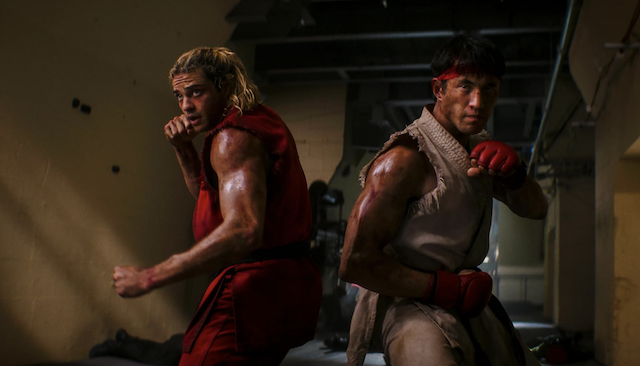
The story initiated in 1987, the film follows Ryu (Andrew Koji) and Ken (Noah Centineo), who were as inseparable as brothers under their mentor Gouken(DonLee)’ s guidance, and established themselves as formidable martial artists, but when Ryu (Andrew Koji) defeats Sagat in the first World Warrior tournament. His growing powers attract the attention of Akuma (Joe ‘Roman Reigns’ Anoa’i), who kills Ryu’s mentor, Gouken (Don Lee). The tragedy drives a wedge between Ryu and his adoptive brother, Ken Masters (Noah Centineo).
©Courtesy of Paramount Pictures
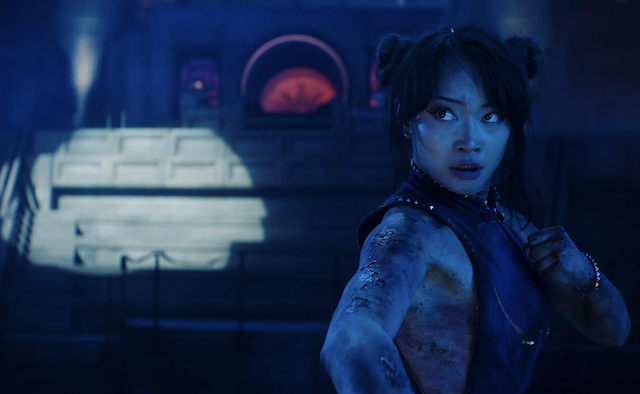
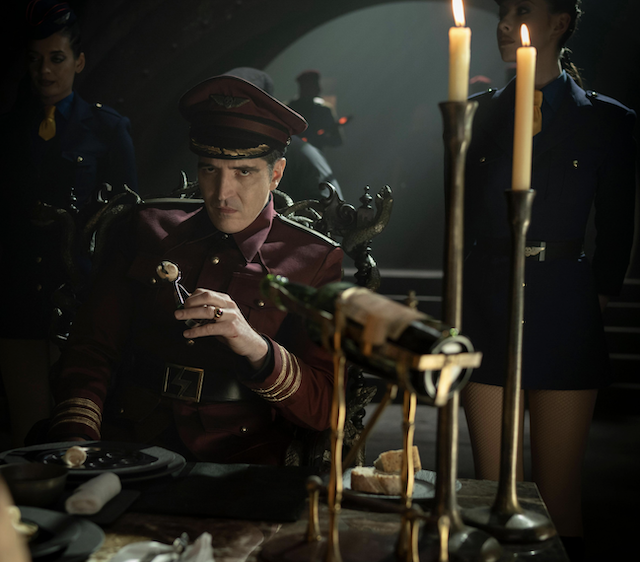
One incident caused them to part ways, but in 1993, a enigmatic female fighter known as Chun-Li (Callina Liang) appears before them and they are invited to join the World Warrior Tournament—a contest without rules or limitations, intended to identify the pinnacle martial artist in the world. Without their knowledge, a hidden scheme is being planned offstage during the tournament by Lord Bison (David Dastmalchian).
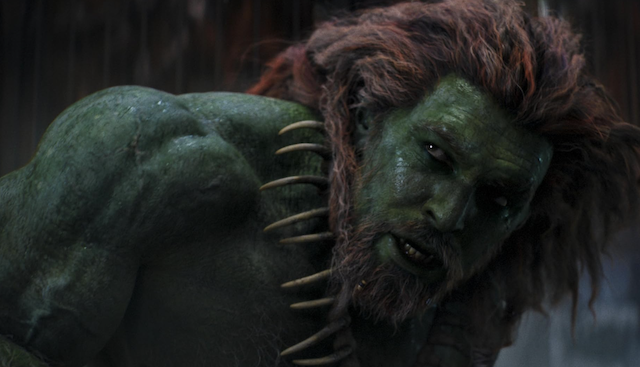
As I was teenage kid in Japan, I used to play as various characters and use their signature moves, so I watched this film with a special sense of nostalgia. The “flashback scenes” are predominantly conveyed via animated sequences. At first, I was a bit perplexed—wondering if it wasn’t a live-action film—However, upon reconsideration, this method seems quite innovative, or perhaps the director lacks the depth to explore each character’s background adequately, but I ultimately went with the latter option, I understand they’re providing backgrounds for Ryu and Ken, but they’ve even illustrated Chun-Li’s childhood and the period when Blanka was young.
What really caught my attention was the shallowness in the bond between Ken and Ryu, the “Kizuna” that meant so much in Japanese, as we understand that rising powers inevitably draw the interest of Akuma, like Joe ‘Roman Reigns’ Anoa’i, who ended up killing Ryu’s mentor, Gouken, and separating them, though they are temporarily distant due to strong convictions, within minutes they are reconciling without clear reasons, as if little “Kizuna” was ever established between them.
©Courtesy of Paramount Pictures
And it was noted that the distinctive backgrounds of these unique fighters such as Vega, Guile, Dhalsim, Edmond Honda, and Zangief were largely unexplored; they appeared to be used more as plot devices to advance the narrative, although the character of Chun-Li, an Interpol agent, was explored more for her backstory, but her signature move like Hyakuretsukyaku (Hundred Legs Kick) or her qipao, a Chinese dress imported over from Manchuria, Her signature outfit wasn’t much a presence in the film, others characters are thrown at the screen for comedic effect and treated like cameos, hardly any characters that you used to play with or rooted for.
Although the tournament is introduced as part of the narrative, most of the matches take place off-screen, leaving me unable to understand what the film was actually trying to focus on, while all this was going on, Akuma suddenly appeared out of nowhere, and on top of that, Zangief, Dhalsim, Guile, and Bison—who had all gathered there—vanished without a trace conveniently while Ken and Ryu are fighting Akuma with all their efforts.
Of course, there are certainly those who don’t anticipate a robust narrative in a video game adaptation, but “Resident Evil” and the animated “Super Mario” series recognized the potential of their IPs and delivered fresh, captivating works. On the other hand, I didn’t detect the slightest indication of respect for IP in this movie. Some argue that a stern response to Asian filmmakers or talents isn’t necessary, as past treatment in the film industry has been poor for them, and they don’t need that negativity.
However, as an Asian colleague, I feel compelled to mention that Paramount Pictures, which recently acquired Warner Bros, are setting a new standard for our industry in the future.
But the changes we’ve witnessed over the past decade, beginning with films like “Crazy Rich Asians” and “Parasite,” and television series such as “Beef”(Kitao even works as a director for few episodes) and “Shogun,” have brought higher aspirations and goals to our Asian communities. I’m asking to achieve the same lofty goals and purposes of this film, but I didn’t detect even a hint of respect for intellectual property in this movie. Most of the characters were portrayed as if they were just a cameo, akin to the Asian talents in the film industry in the past. There’s something sad about tackling one of the most popular IPs in the studio film as an Asian director to set the standard. This isn’t good enough, period!
©Courtesy of Paramount Pictures
If you like the review, share your thoughts below!
Check out more of Nobuhiro’s articles.
Here’s the trailer of the film.