


©Courtesy of Miyu Productions
Childhood friendships, painful betrayals and the lasting power of memory shape We Are Aliens, a Japanese animated coming-of-age drama about the emotional complexities of growing up. The film combines striking visual artistry with a psychologically perceptive story. Its distinctive animation transforms an intimate tale of friendship into a surreal exploration of adolescence, regret and the passage of time. Although its narrative occasionally struggles with structure, the movie demonstrates remarkable sensitivity toward the emotional vulnerabilities of childhood.
The movie stars Ryota Bando, Amane Okayama, Ten Yamasaki and Kemuri Matsui The project marks the feature writing and directorial debuts of up-and-coming filmmaker, Kohei Kadowaki. Although his narrative occasionally struggles with structure, his first movie demonstrates remarkable sensitivity toward the vulnerability of children maturing into adults.
We Are Aliens follows a friendship that blossoms between two schoolboys and the moment of betrayal that ends their connection. The consequences of that deception impacts the rest of their lives.
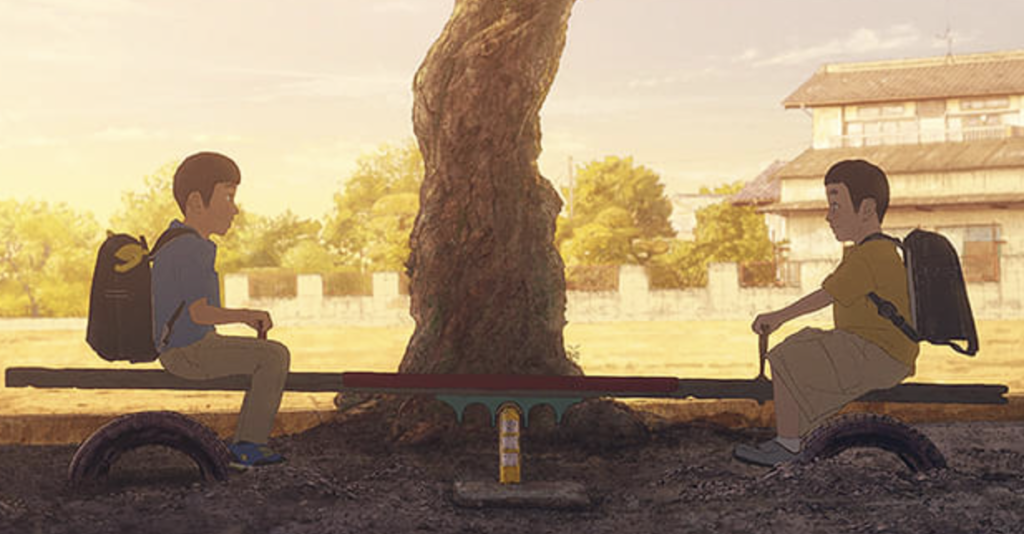
In a quiet Japanese town, the two boys form a bond that quickly becomes the center of their universe. They become inseparable through the strange, tender, and sometimes difficult experience of growing up. The thrill of youth creates a heartwarming dynamic between them. Childhood mischief deepens their admiration for each other and allows them the safety of a world where they are inseparable.

©Courtesy of Miyu Productions
That changes, however, when an incident alters the course of their friendship and their overall lives as they become young adults. As time passes, memories return with new weight. They reveal how childhood moments linger, change and inevitably become entangled with the stories people tell about who they became.
Kadowaki’s hand-drawn animation style infuses his heartbreaking tale with dreamlike intensity. The visuals help elevate familiar streets, classrooms and skies into something closer to memory than observation. The coming-of-age story ponders friendship, isolation and belonging, as well as the lasting gravity of moments that influence a person long after they fade.
At its best, We Are Aliens feels less like a conventional animated feature and more like a moving painting. Its imagery captures the strange intensity of adolescence, when ordinary experiences can acquire extraordinary significance. Beneath its surreal presentation lies a deeply human story about relationships that shape people long after their childhood ends. Kadowaki approached these experiences with tenderness, curiosity and an understanding of youthful vulnerability. The result is a visually captivating film whose emotional insights often outweigh its structural shortcomings.
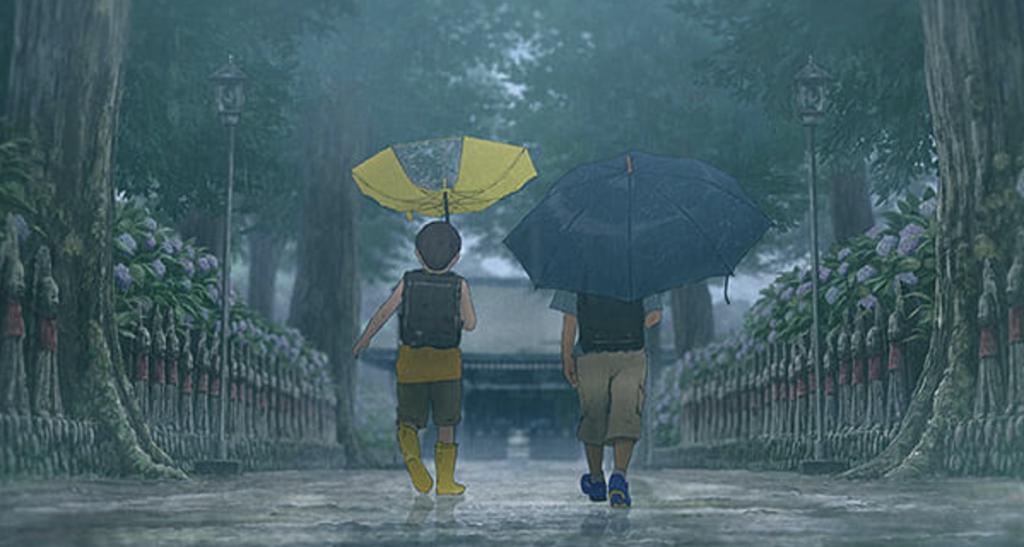
The greatest strength of We Are Aliens is its beautiful, unconventional animation. Rather than pursuing polished uniformity, the film embraces an expressive visual language that makes its world fun and unpredictable. Its imagery often resembles a painting brought to life. However, individual moments surface as disjointed recollections and half-remembered dream.
This artistic approach gives the movie a personality that distinguishes it from more conventional animated productions. Every visual choice contributes to an atmosphere that feels personal, mysterious and emotionally resonant.
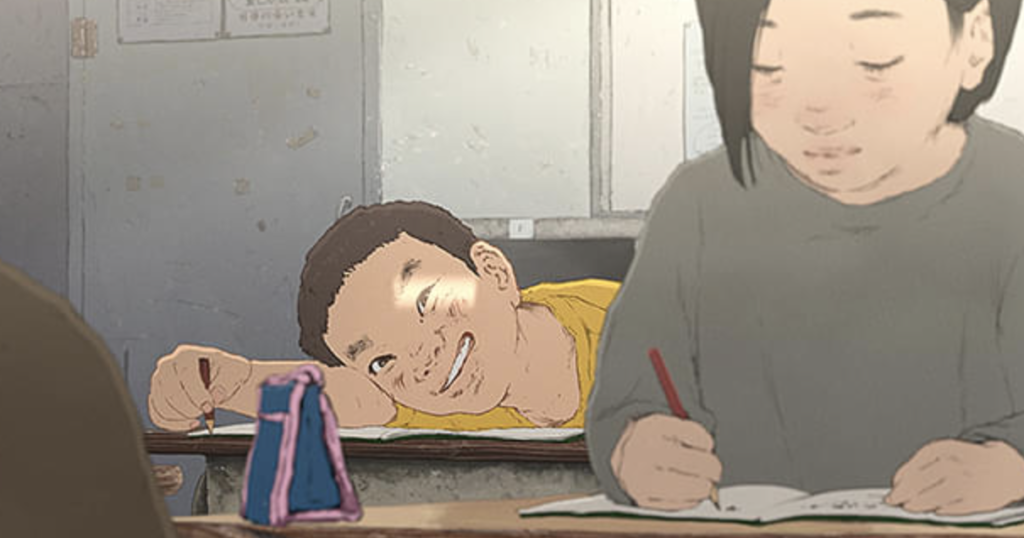
The rotoscoping deserves particular recognition for the distinctive movement it brings to the characters. This technique creates a compelling relationship between recognizable human gestures and the drama’s more stylized presentation.

©Courtesy of Miyu Productions
Movements are grounded in physical reality while remaining dreamlike. That tension suits a story concerned with adolescence and the uncertainty surrounding personal experience. In We Are Aliens, the animation becomes more than a decorative feature. It helps communicate feelings that the characters struggle to express through dialogue.
The backgrounds are equally impressive, offering richly detailed environments that reward careful attention. These settings provide more than attractive scenery for the characters’ experiences. Their textures and compositions contribute to the movie’s distinctive atmosphere, giving familiar spaces an almost otherworldly quality. Ordinary surroundings can appear charged with memories, anxieties and unspoken emotions. This visual richness reinforces the idea that childhood environments often become inseparable from the experiences associated with them.
Surreal sequences further expand the film’s imaginative possibilities. At these moments, We Are Aliens moves beyond straightforward realism and embraces images that feel symbolic rather than literal. The transitions between the recognizable and the fantastical create an atmosphere of uncertainty. This approach reflects how memories can distort, intensify or transform seemingly ordinary events.
However, the film’s visual accomplishments occasionally outshine its storytelling. Some sequences feel more fully realized as artistic experiences than as components of a cohesive narrative.
Nevertheless, the imagery remains compelling enough to sustain interest during less focused passages. We Are Aliens consistently demonstrates an eye for unusual compositions and evocative visual details. Its strongest images remain memorable because they communicate something emotionally recognizable through unconventional means.
©Courtesy of Miyu Productions
Beneath its experimental presentation, We Are Aliens tells a moving story about the fragility of childhood friendships. Relationships formed during adolescence can feel permanent, even when their foundations remain uncertain. However, a small disagreement, a careless decision or an act of betrayal can change everything. What initially appears insignificant may acquire greater meaning as time passes. The movie understands how such experiences can influence relationships long after the original circumstances have changed.
The drama avoids treating adolescence as a simple period of innocence or carefree discovery. Instead, it acknowledges the confusion, insecurity and emotional intensity that accompany growing up. Friendships offer young people acceptance and develop their understanding of themselves.
Kadowaki’s story also notes how personal bonds can become sources of disappointment, jealousy and profound uncertainty. When trust breaks down, the consequences may extend far beyond the original disagreement. We Are Aliens finds genuine dramatic potential in these ordinary but deeply consequential experiences.
The story’s psychological insight is particularly impressive. The characters’ emotions are not reduced to convenient explanations or simplistic moral judgments. Their responses emerge from the complicated circumstances of growing up and trying to understand other people. A betrayal can hurt without making either person entirely comprehensible. Likewise, the passage of time doesn’t automatically resolve emotional confusion. The film approaches these contradictions with unusual compassion, allowing its characters to remain complicated and recognizably human.
This humane perspective gives We Are Aliens much of its emotional power. Rather than presenting childhood friendships as disposable memories, the movie considers how they become part of people’s personal histories. Experiences that once seemed impossible to forget may eventually become difficult to understand. Yet their emotional consequences can remain surprisingly vivid.
The movie captures that contradiction without relying entirely on nostalgia. Its perspective is more thoughtful, acknowledging both the tenderness and the lasting pain associated with growing up.
©Courtesy of Miyu Productions
One of the film’s most intriguing narrative choices involves revisiting events through the eyes of the two boys. This shift in perspective encourages viewers to reconsider experiences that initially appear straightforward. Each boy remembers and interprets the shared past differently. Their recollections reveal how personal feelings influence our understanding of apparently identical events. What one character considers insignificant may remain deeply painful for the other.
This approach gives We Are Aliens an interesting psychological dimension. Memory becomes an active part of the storytelling rather than a passive record of previous events. The audience must reconsider earlier impressions as new perspectives emerge. Details acquire different meanings depending on whose experiences are being examined. This gradual reassessment reflects the uncertainty that often accompanies childhood misunderstandings. It also reinforces the film’s central interest in the distance between what happens and how people remember it.
The dual perspective is especially effective because it resists the assumption that shared experiences produce shared memories. Two people can participate in the same incident without understanding its significance in the same way. Their emotional circumstances influence what they notice, remember, and eventually believe.
We Are Aliens uses this difference to explore the limitations of empathy. Understanding another person requires more than remembering the same events. It also requires recognizing that those events may have meant something entirely different to them.
Nevertheless, this narrative structure creates some of the drama’s most noticeable weaknesses. The transitions between perspectives and periods can feel disjointed. Certain shifts interrupt the emotional momentum rather than deepening the audience’s understanding. The changing viewpoints sometimes make it difficult to establish a consistent rhythm. Although the underlying concept remains compelling, its execution occasionally lacks the clarity needed to maximize its impact.

©Courtesy of Miyu Productions
The uneven structure does not invalidate the movie’s ambitions, however. Instead, it reveals the challenges involved in translating a complex psychological idea into a cohesive cinematic experience. The changing perspectives encourage reflection, but they also demand considerable attention from viewers. Some connections become clearer through reconsideration, while others feel less fully developed. A more controlled arrangement might have strengthened the emotional progression. Even so, We Are Aliens deserves credit for embracing a narrative approach that complements its thematic concerns.
As a feature directorial debut, We Are Aliens offers an encouraging introduction to Kadowaki’s artistic sensibilities. Its visual imagination suggests a filmmaker interested in exploring animation beyond conventional storytelling methods. The drama’s distinctive imagery, unusual sequences and psychological themes demonstrate a willingness to experiment. These qualities give the production an identity that extends beyond its narrative imperfections. The helmer establishes a recognizable creative voice while leaving room for further development.
We Are Aliens is a visually captivating and emotionally perceptive animated film that deserves attention for its artistic individuality. Its rotoscoping, richly detailed backgrounds and surreal sequences create an experience that frequently resembles a moving painting. Beneath this striking presentation lies a sensitive examination of childhood friendship, betrayal and the lasting influence of memory. The film emphasizes that growing up involves learning how differently people can experience the same events.
Its shifting perspectives offer a fascinating way to examine those differences, even when the resulting structure becomes uneven. Nevertheless, these shortcomings do not erase the film’s considerable strengths. Its psychological observations remain thoughtful, while its imagery provides a compelling reason to stay engaged. We Are Aliens succeeds most convincingly when its visual experimentation illuminates the vulnerable emotions beneath its story.
Ultimately, We Are Aliens is an ambitious and visually distinctive debut that finds emotional depth in the fragility of childhood friendships. Kadowaki’s expressive animation and sensitive portrayal of adolescent vulnerability compensate for a narrative structure that occasionally feels disjointed. Its exploration of betrayal, memory and subjective experience offers a thoughtful perspective on how formative relationships shape our understanding of the past. Although the film doesn’t always achieve narrative cohesion, its artistic individuality and psychological insight leave a lasting impression.
©Courtesy of Miyu Productions
Overall: B+
We Are Aliens had its world premiere at the 2026 Cannes Film Festival in May. The movie is also screening in the This Animated Life section at this month’s 35th Philadelphia Film Festival.
If you like the review, share your thoughts below!