
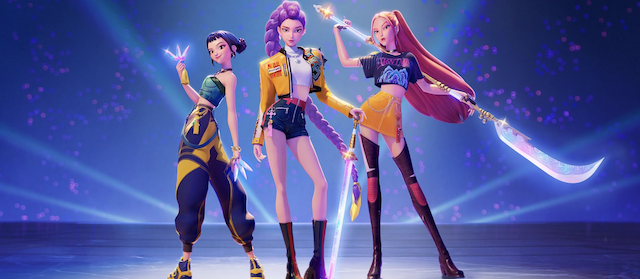
Blending the exhilarating energy of K-pop with themes of identity, self-acceptance, friendship and courage, KPop Demon Hunters has struck a chord with audiences around the world. Emmy-nominated talent manager and producer Rich Ting, who contributed to the Netflix phenomenon, embraces the film’s celebration of Korean culture and its growing influence on global entertainment.
The animated musical film is now streaming on Netflix. Since its release on June 20, 2025, the urban fantasy movie has become the most-watched original title in the streamer’s history. Danya Jimenez, Hannah McMechan, Maggie Kang and Chris Appelhans wrote, and Maggie Kang and Chris Appelhans directed, the drama. The ensemble project features the voices of Arden Cho, Ahn Hyo-seop, May Hong, Ji-young Yoo, Yunjin Kim, Daniel Dae Kim, Ken Jeong, and Lee Byung-hun.
In KPop Demon Hunters, when they aren’t selling out stadiums as girl group Huntrix, Kpop superstars Rumi, Mira and Zoey (Arden Cho, May Hong and Ji-young Yoo ) use their secret identities as demon hunters to protect their fans from an ever-present supernatural threat. Together, they must face their biggest enemy yet – Saja Boys, an irresistible rival boy band of demons in disguise.
Ting discussed KPop Demon Hunters during a roundtable at this year’s New York Comic Con. During the interview, Ting reflected on his decades-long connection to K-pop, and the film exemplifies the growing demand for authentic Asian representation in entertainment. He also spoke about the power of cultural authenticity to transcend generational and geographical boundaries, and its timeless themes of identity, hardship and adversity.
Rich Ting’s contributions to the film are noteworthy.
- Role in Production — Rich Ting has opened a production company that focuses on talent management and creative projects, including “KPop Demon Hunters”.
- Cultural Impact — The film has made a notable impact on pop culture, showcasing the fusion of K-pop and supernatural themes.
- Creative Collaboration — Ting collaborates with artists like Neckwav, who provides the singing voice for characters in the film, enhancing its musical appeal.
- Industry Experience — With over twenty years in Hollywood, Ting brings extensive experience to his projects, influencing the film’s direction and execution.
- Ting manages K-pop artists Andrew Choi (the singing voice for Jinu, the leader of the Saja Boys) and Neckwave ( the singing voice of Abby in the Saja Boys).
Director : Maggie Kang and Chris Appelhans
Producer : Michelle Wong
Screenwriter : Danya Jimenez, Hannah McMechan, Maggie Kang and Chris Appelhans
Production Co : Sony Pictures Animation
Genre : Animated, Musical and Urban Fantasy
Original Language : English
Release Date (Netflix) : June 20, 2025
Runtime : 1h 33m
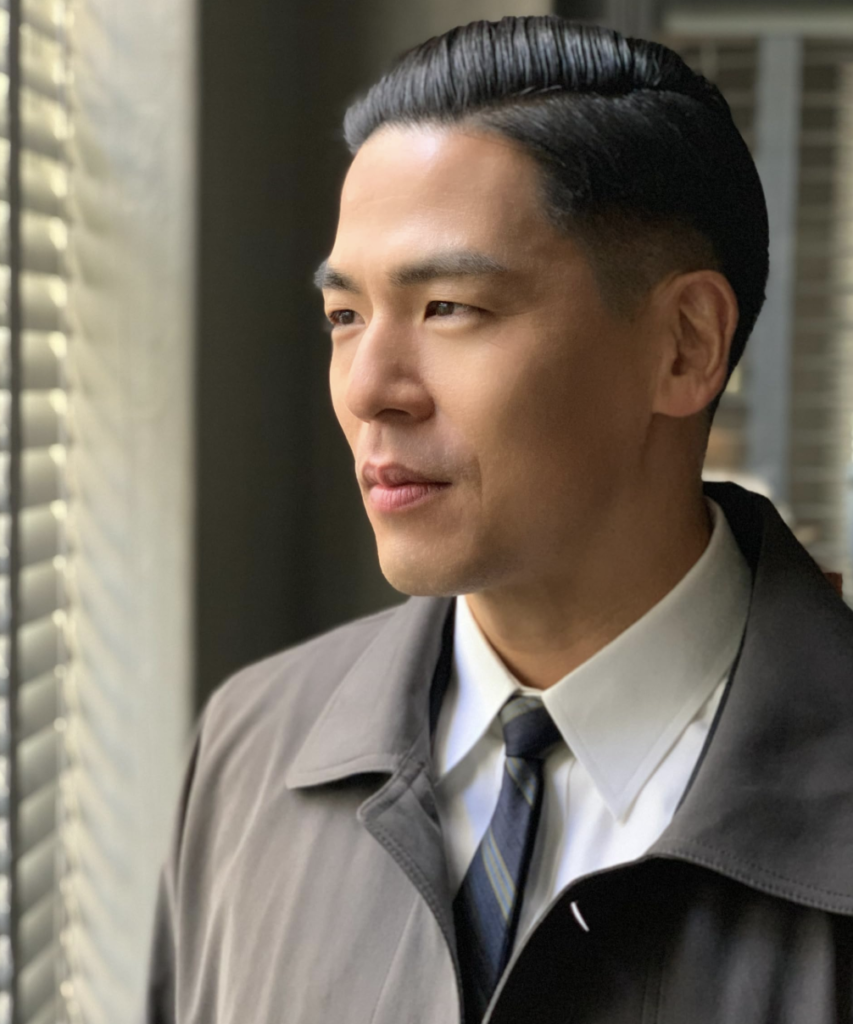
©Courtesy of Amazon Original/The Man in the high Castle, Rich Ting
Interview with Talent Manager/Producer Rich Ting
Q: When you found out that you were going to take part in anything to do with KPop Demon Hunters and the phenomenon it has become, what has that been like to experience? You’ve seen this fandom completely grow, and now Netflix House is doing an interactive experience with it.
Rich Ting: Totally. A little history: In 2010, one of my first feature films in Hollywood was with a singer named BoA from SM Entertainment, who was the top K-pop artist at the time. SM Entertainment is the leading K-pop company in Korea. They’ve even been rumored to have created K-pop as a genre.
I’ve been a fan of K-pop since the ’90s, when it was still so foreign to the West. Even in 2010, all the way up until probably 2015, things started to break, and K-pop began getting more exposure in North America, Europe and elsewhere.
Now, in 2026, we’ve gone from a point where Asian cultures were trying to put out our individual tastes and flavors to the world, showing everyone who we are and what we represent, to the world now demanding it. They’re seeking it.
I feel old, but I’m fortunate to have experienced that evolution. It’s now come to the forefront so much that when I walk into a room, people say, “K-pop!” I’m just like, “What about it?” I’ve been dealing with this world for the last 20 years, telling you about this. I talked about it, and no one cared. So I stopped talking about it.
The irony is that now, working with artists like Neckwav and Andrew Choi on a management level, speaking to brands and other partnerships, I hear people saying they want to focus on Gen Z, music and K-pop. That’s mind-blowing because back in the day, I would be the one pitching the genre, saying, “There’s this genre called K-pop, and it’s pretty catchy. A lot of other countries in the world are huge fans.” Now they’re pitching it to me.
When they call it a global phenomenon, it really is. I’m excited to be present while this evolution is happening. I’d call it a renaissance because it’s been around for a long time.
Q: You mentioned K-pop becoming mainstream. About a year ago on Saturday Night Live, there was that hilarious Bad Bunny sketch. Did you see it, and what did you think? Was there a moment when you realized, this is it. This is when we’ve finally hit the big game?
Rich Ting: Speaking of Bad Bunny, it just goes to show you that we use the word authenticity a lot. Coming from my position as an on-camera actor for so many years, I’ve tried to represent who I am as a fourth-generation Asian American, while also representing Asian leading men.
What’s been phenomenal is that we’re usually trying to conform to the script and the character, helping the audience identify with us. Now, as I mentioned earlier, the audience wants authentic culture.
I’ll give you two examples. I do a ton of voice work, including animation and video games, and I also do a lot of dubbing. I’ve been part of the Netflix dubbing world. Previously, whether it was Chinese, Japanese or Korean, if there happened to be a name I had to say in one of my lines, I would give that name its authentic accent in English. They’d say, “No, no, no. We want Western American English.” So, painfully, I’d have to say it incorrectly.
It’s gotten to the point where they’re rehiring me for old TV shows to say not only those words correctly, but in Korean, because the audience knows those words in Korean now. They don’t know rice porridge; they know what it’s called in Korean when they go to a Korean restaurant.
My point is that we just had Bad Bunny at the Super Bowl. He didn’t sing one English song. He was authentic to who he is and what he represents. The Super Bowl doesn’t get any more American than that.
The authenticity of these cultures has permeated and transcended not only generational but cultural barriers. We love it. Subtitles used to be something people thought would die out. Look at Netflix’s platform right now: there’s more international content than English-language American content.
Instead of us trying to conform, the audience is telling us, “Just be you.” I think that’s awesome.
Q: When did you realize what a phenomenon K-pop had become in America? People have been following BTS around North America whenever they go on tour for years now.
Rich Ting: Of course. That’s what’s crazy, because that’s been going on in Korea for generations, for decades. In the early 2000s, I had a lot of Korean idol friends, and there would be busloads of people from other countries coming in for their shows, of all ages. I’d think, “This is insane. How do they even know?”
That has finally gotten over to the U.S. Now we have these fandom groups, and I see them all over social media. I laugh because, to a lot of us here, that’s different and new. But to me, that’s been going on in other countries for decades.
As far as when K-pop became a phenomenon, having done a bunch of Netflix productions, I know what goes on behind the scenes with marketing, advertising and promotions, and how budgets dictate all of that. I’ve been on shows that were heavily advertised and others that weren’t.
I have another friend who is one of the lead voices on KPop Demon Hunters. When I heard she was doing the lead character, I was looking for the promotions and the marketing. There was zero. I just put it on the platform, and it blew up. That’s part of the phenomenon.
Toys are another example. Companies are still catching up, and it’s happening so late. I just spoke with Mattel in June at another convention. They haven’t released their dolls yet. That should have been done a year ago. People are still catching up.
The phenomenon really hit me when I looked at it from a different perspective: no marketing, and everyone is talking about it.
The title is KPop Demon Hunters. It’s such a weird title. While it’s common knowledge now, when you really think about it, it’s like, what does KPop Demon Hunters mean? It’s a strange title. When I first heard about the project, I thought, I don’t know what that means. Now people skip over that because of what it represents.
It continues to blow my mind. Being here at New York Comic Con, for example, and recently at San Diego Comic-Con, I think it’s something that’s really timeless.
It’s not about a specific time or genre. It’s about life, hardship and adversity. Those are timeless concepts that touch everyone, from kids to grandparents. The writing is genius.
If you like the interview, share your thoughts below!
Check out more of Karen Benardello’s articles.
Here’s the trailer of the film.