
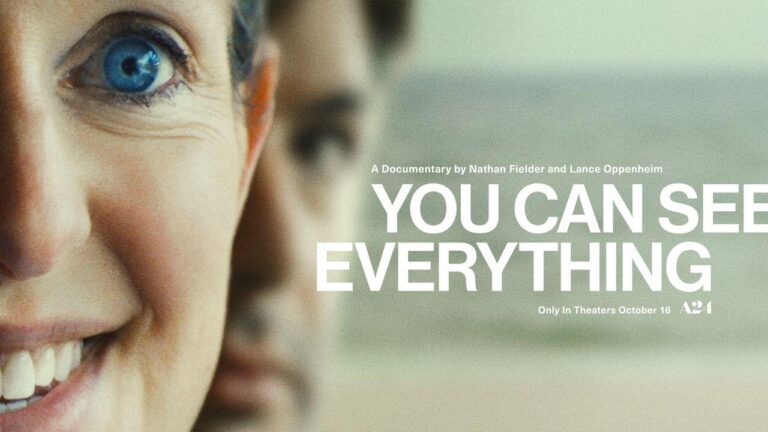
The much-anticipated documentary about Elizabeth Holmes arrives at the 17th edition of DOC NYC and the 44th Torino Film Festival, following widespread critical and commercial acclaim since its premiere at the 53rd Telluride Film Festival.
You Can See Everything could become the first documentary to receive an Oscar nomination for Best Picture. Directed by Lance Oppenheim (a documentary filmmaker whose first fiction feature, Primetime, was recently released) and Nathan Fielder (a writer and comedian known for series such as The Rehearsal and The Curse), the film follows Elizabeth Holmes over approximately three years, beginning 34 days before she entered prison in May 2023.
Elizabeth Holmes is an American entrepreneur who, in 2003, at just 19 years old, founded Theranos, a technology company that promised to perform hundreds of different blood tests using just a single drop of a patient’s blood. Over the years, Holmes was widely celebrated in Silicon Valley, eventually being named by Forbes the youngest self-made female billionaire in the world. Proclaimed “the next Steve Jobs”, she was also presented as a feminist icon. However, a 2015 investigation by The Wall Street Journal revealed that she had been misleading investors for years and that her technology was not working as promised. Theranos eventually closed in 2018, and Holmes was put on trial. During the court proceedings, Holmes testified that her former romantic partner and business associate, Ramesh “Sunny” Balwani, who was nearly 20 years her senior, had manipulated and sexually abused her. She also disclosed that she had been raped before meeting Balwani, when she was a freshman at Stanford University.
In 2022, Holmes, together with her husband Billy Evans, whom she had met in 2017, at the height of the Theranos scandal, sought out documentary filmmakers willing to tell her story. According to The Guardian, her intention was to vindicate her innocence while also promoting her husband’s startup, a sort of Theranos 2.0, which promises to revolutionise medical diagnostics through laser technology capable of identifying diseases and infections from small samples of blood, saliva and urine.
This is the premise from which You Can See Everything takes off. The film opens in April 2023, 34 days before Holmes began her prison sentence on May 30th. By then, the American public had largely come to know her through the media circus surrounding the exposure of her ineffective blood-testing technology and, above all, Amanda Seyfried’s portrayal of her in the television miniseries The Dropout.
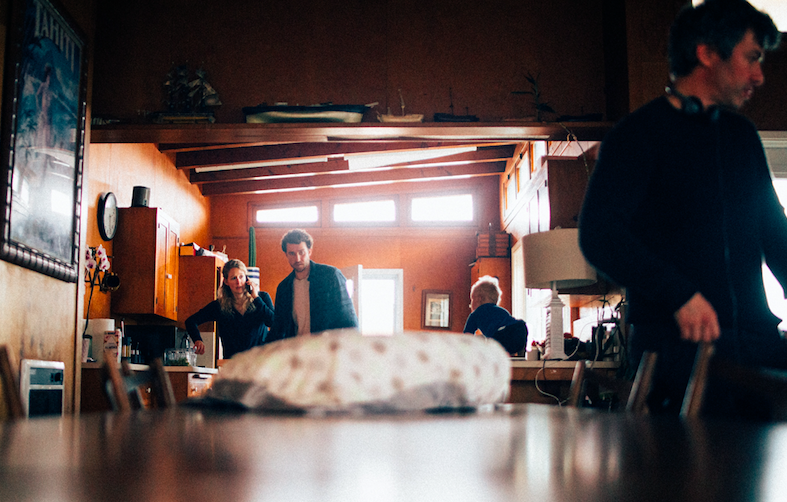
Fielder and Oppenheim begin their documentary chronicle with circumspection, following the day-to-day lives of Elizabeth, Billy, their children and relatives in Del Mar, just north of San Diego, where they have rented a house by the ocean. Nathan Fielder appears on camera as an interactive presence, asking uncomfortable questions with remarkable delicacy while expressing his doubts about the transparency of Elizabeth’s intentions.
Is the American con artist merely a myth created by people who do not really know her? Or is there more to the story? Could she have been manipulated by her romantic and business partners? Billy comes across as overly protective, to the point of being controlling, therefore is Elizabeth suffering from a form of Stockholm Syndrome, submitting to virtually every decision he makes? Is he simply her new puppeteer, or is she so cunning in playing the ingenue that she has managed to fool everyone?
Every answer she gives to Fielder’s questions comes across as genuine. Her emotional reactions, ranging from surprise to frequent tears, as well as her apparent inability to grasp sarcasm, all seem spontaneous and authentic. Holmes adamantly believes that she has done nothing wrong.
You Can See Everything also explores the misunderstandings that can arise through communication. Fielder questions Holmes about her earlier claim that Theranos’ technology “can run any test”. Holmes argues that she was referring to the machine’s potential to perform any test, provided the necessary testing chemistry could eventually be developed. In other words, she was using can to describe a theoretical or future capability, rather than what the machine was actually able to do at the time. Fielder challenges this interpretation because an ordinary listener would understand “can run any test” to mean that the machine was already capable of doing so.
To illustrate his mounting puzzlement with Holmes’s explanations, Fielder eventually resorts to an unexpected analogy: Abbott and Costello’s legendary comedy routine Who’s on First? In the sketch, a seemingly straightforward conversation descends into an endless exchange of questions and answers because the two comedians attach entirely different meanings to the same words. The players have names such as Who, What and I Don’t Know, which Costello repeatedly mistakes for questions rather than answers about the players’ identities. The parallel with Holmes is spot on. Like the comedians, she appears to defend the literal meaning she assigns to words, even when that meaning becomes increasingly bewildering to her interlocutor.
Her insistence that Theranos’ device can perform hundreds of tests, rather than that it could do so in the future, rests on an equally perplexing interpretation of language. What might initially appear to be a comic misunderstanding becomes something considerably more unsettling: the possibility that Holmes is either incapable of recognising the contradiction between her words and reality, or skilfully hiding behind semantics to avoid acknowledging it.
As the documentary unfolds, Billy increasingly emerges as a shady and controlling figure. He creates an avatar version of Elizabeth, takes full control of her Twitter account while she is in prison, and holds power of attorney over her affairs. He is also the one who imposes a financial agreement concerning the film’s profits, an arrangement that eventually evolves in a different direction from the one originally envisaged. Elizabeth seems to be largely in the dark about what is happening.
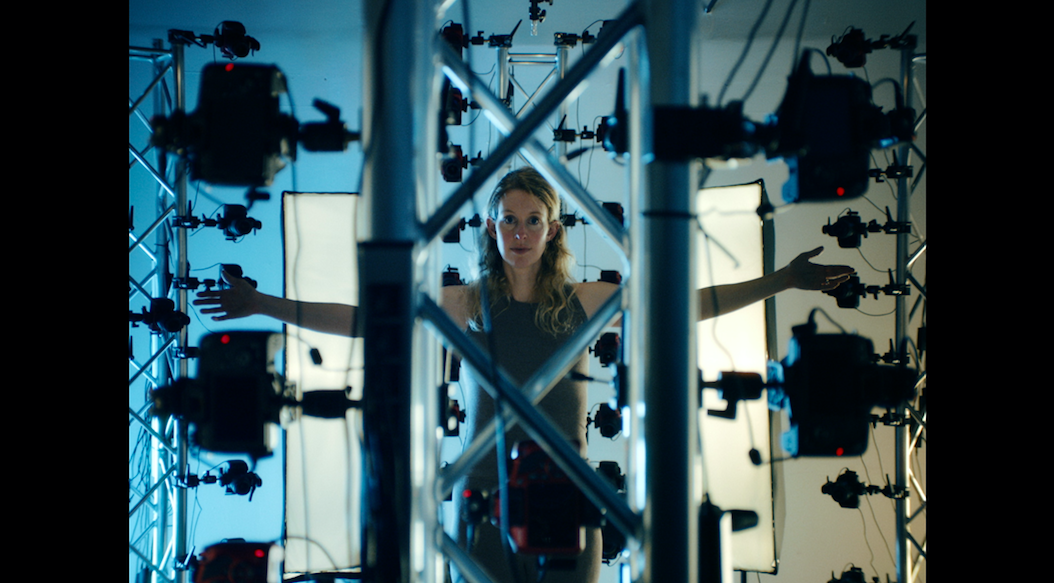
One of the film’s most fascinating aspects is the extraordinary freedom granted to the filmmakers by A24 executives. As Fielder and Oppenheim explained, they were given carte blanche to develop the story as it unfolded, even at the risk of having to abandon the entire project. This proved to be a rewarding gamble. For it is through the filmmaking process itself that the real stroke of genius in the storytelling emerges, particularly after Elizabeth Holmes is no longer available for interviews because she has gone to prison.
At this point, a form of metafiction takes over, raising questions about truth and the different versions of a story that can be told. How does getting closer to a story we previously judged from a distance change the way we see the people involved? Can storytellers come to reconsider their initial preconceptions, even developing a sense of protectiveness towards those they once considered at fault? And what happens when the person you are investigating responds with empathy to your own personal struggles?
The boundaries between an authentic record of events and a fabricated evocation begin to dissolve. This places the film within one of the most prominent and controversial traditions of documentary cinema: the use of reenactments. Robert Flaherty, often regarded as one of the founding fathers of documentary filmmaking, had already blurred the boundaries between fact and fiction in Nanook of the North. By staging and reconstructing traditional Inuit activities, he sought to capture what he considered the deeper truth of a vanishing culture, even at the expense of factual accuracy. His work established an enduring and controversial precedent: the idea that a documentary might manipulate reality in order to convey a more compelling version of the truth.
In You Can See Everything, Elizabeth Holmes emerges as the ultimate human optical illusion. She perfectly embodies our confused zeitgeist, in which we are increasingly uncertain about what is real and what is merely a personal interpretation of the world we inhabit. This is why every viewer of You Can See Everything will essentially see a different film. As Nathan Fielder points out, each embarks on an individual interpretative journey through the same story. The shared experience of watching the documentary thus becomes, in Lance Oppenheim’s insightful description, a Rorschach test.
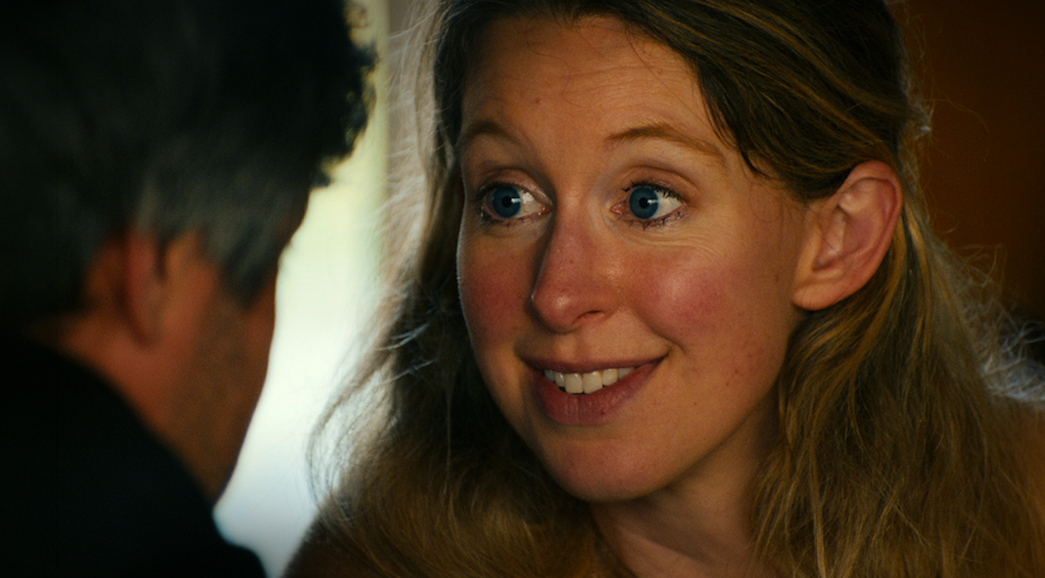
At one point, Holmes is asked whether she has watched The Dropout, the fictionalised television version of her story. She hasn’t. Fielder then shows her the miniseries on his laptop, filming her reaction as she watches the actress Amanda Seyfried portray her. Wouldn’t it be extraordinary if the reverse were to happen? If the fictional character saw the real-life person, who inspired her, through the footage shot by the documentarians? What would happen if Amanda Seyfried were to watch Elizabeth Holmes’s interview or even step into her shoes once again? Would the actress approach the story differently this time around?
As TFF director Giulio Base aptly commented, “There are films that make me fall in love with cinema all over again and remind me why I dedicated so much of my life to it. You Can See Everything is one of them: a true masterpiece, bold and unsettling, that turns the boundary between truth and staging into a dizzying adventure of the gaze.”
Final Grade: A
Check out more of Chiara’s articles.
Photos Courtesy of A24