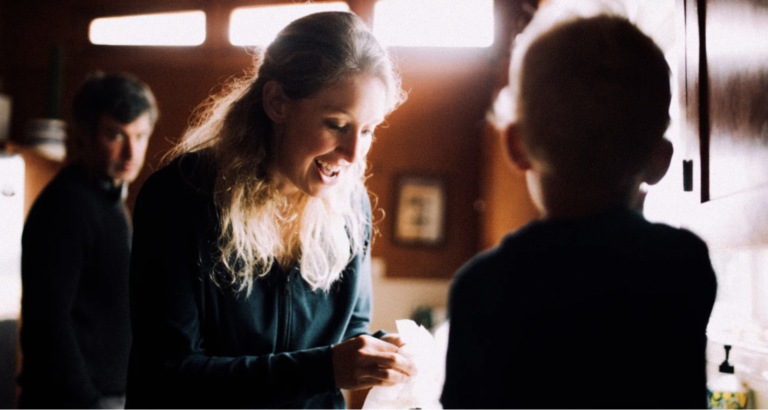

©Courtesy of Vertical
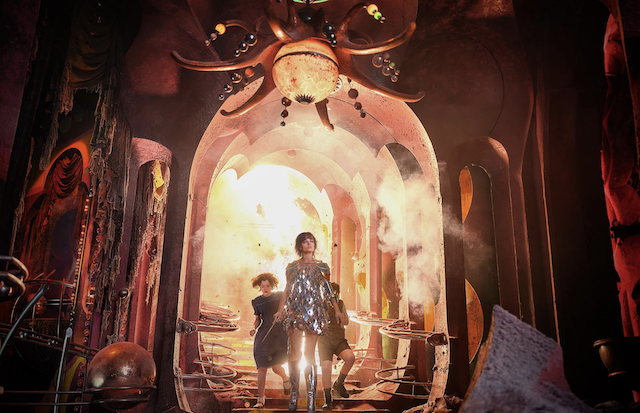
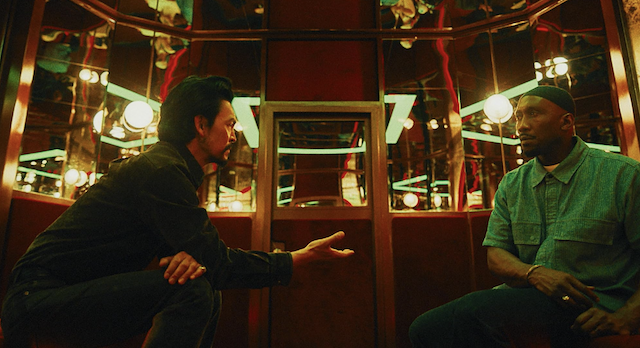
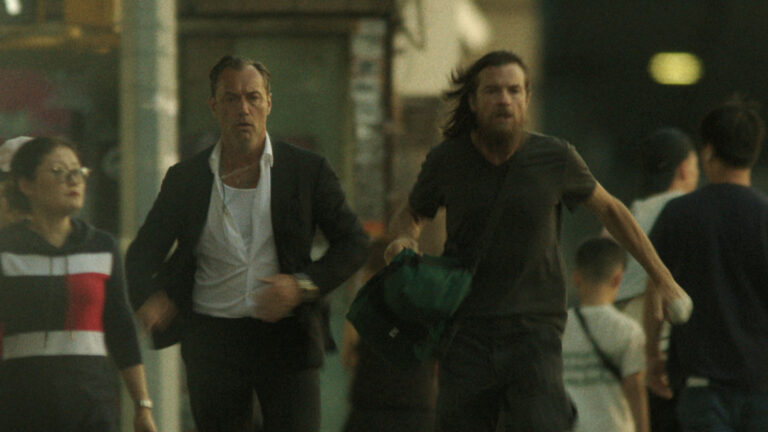
In retrospect, recruiting a not-so former KGB agent to run your country yields predictably disastrous consequences. Yet, the Russia’s oligarchs heedlessly did exactly that when they bankrolled Vladimir Putin’s presidential campaign. For some, like Boris Berezovsky, it wasn’t just the biggest mistake of their lives. It was the beginning of the end. Vladislav Surkov helped Putin turn the tables against his patrons. He served as the chief architect of Putin’s political domination of Russia and his military campaigns against Ukraine and Georgia. Surkov transparently “inspired” Vadim Baranov, the Machiavellian protagonist of Guliano da Empoli’s prize-winning French novel. Adapted in English by director Olivier Assayas, the more-truth-than-fiction Wizard of the Kremlin opens this Friday in theaters.
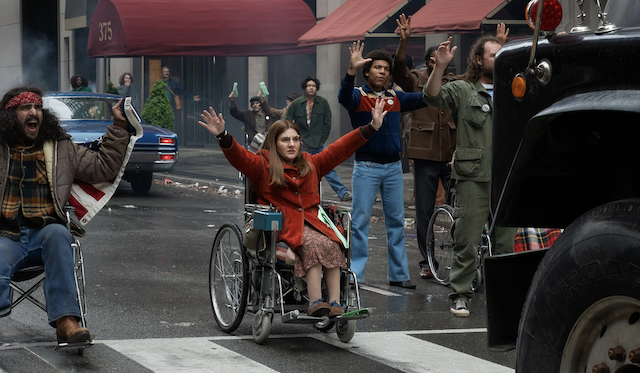
Baranov’s background is not especially Putinesque. He initially rebelled against his parents, low-level Communis Party members, by embracing the freedoms of Glasnost, especially the hipster avant-garde. However, he quickly grew disillusioned by the excesses of the post-Communist era, which he himself helped feed, as a media executive specializing in reality TV schlock.
[adseense]
However, Baranov’s knack for appealing to the unsophisticated masses made him valuable to oligarchs like Berezovsky and their ally, President Yeltsin. Baranov’s strategy helps Yeltsin win his final term, despite the ailing leader’s clearly compromised faculties. The oligarchs need a steady hand to guide Yeltsin, who would naturally become his successor. They chose Putin.
To better understand how deliberately and methodically Putin pursued power after the fall of Communism, read Yvonnick Denoel’s brilliant nonfiction graphic novel, Putin’s Fortune. However, Assayas and co-screenwriter Emmanuel Carrere only introduce Putin to the audience when the oligarchs ill-advisedly select him as “their man.”
©Courtesy of Vertical
Of course, Putin’s election, engineered by Baranov and financed by Berezovsky, quickly ushers in an entirely new regime. Putin informs the oligarchs they may keep their wealth and privileges, but they must surrender their ambitions of political influence. That does not sit well with any of his political patrons, especially Dmitri Sidorov (blatantly modeled after Mikhail Khodorkovsky), who emerges as an unlikely leader of the democratic opposition, until his imprisonment. That would be the same Sidorov who wooed away Baranov’s girlfriend, the high-living and hard-partying Ksenia.
Even though Putin fired Surkov in 2020, the shadowy real-life Kremlin power broker has thus far managed to avoid fatal defenestration, a fate that coincidentally often befalls Putin’s estranged associates. In some ways, Baranov departs from Surkov’s confirmed biography, but he never expresses guilt or remorse to Lawrence Rowland, the American academic, whose interview prompts the flashbacks chronicling Putin’s rise to absolute power. Even though the target audience will anticipate the general trajectory of the narrative, Assayas adroitly builds tension and a sense of mounting dread, as Russia grows increasingly authoritarian.
Arguably, the unrecognizable Jude Law’s chilling portrayal of Putin represents the best work of his career. He truly depicts the Russian “president” as a soulless sociopath. Yet, Putin himself might even approve of the disciplined restraint Law brings to bear. His embodiment of Putin is not a caricature—he is cold-bloodedly calculating and unabashedly ruthless—but in a way that is matter-of-factly realistic.
However, Khodorkovsky is poorly served by his analog, played by the preening Tom Sturridge, who is transformed into a physical dead-ringer for the tycoon-turned-dissident. Perversely, Assayas and Carrere present the thinly fictionalized Sidorov in much the same terms Putin’s state media propaganda used to demonize Khodorovsky, who spent ten years in Russian prisons. (In reality, Khodorkovsky remains one of Putin’s most credible critics, after he was released and exiled, as part of the regime’s cosmetic clean-up for the international media’s benefit, in advance of the Sochi Olympics.)
Conversely, Will Keen’s depiction of Berezovsky is surprisingly forgiving and humanizing. Although his arrogance leads to his downfall, his Berezovsky comes across more as a tragic figure, with comedic overtones. Even Baranov admits to missing the failed power broker, after his tragic end.
©Courtesy of Vertical
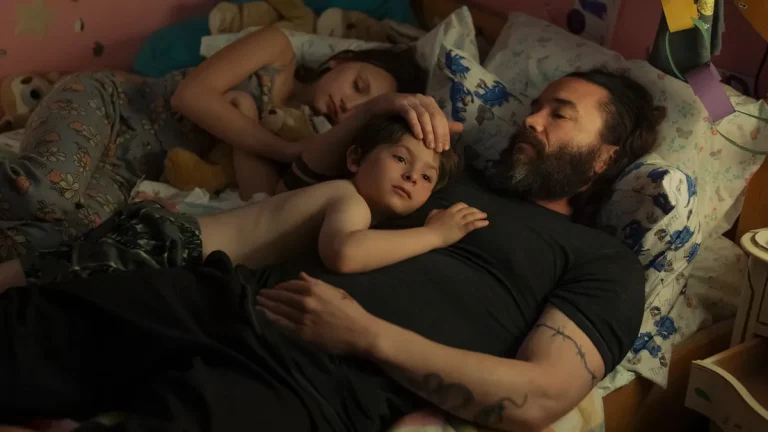
Assayas assiduously tries to exploit the disconnect between Paul Dano’s babyface and Baranov’s extreme cynicism. While Dano played against type quite menacingly in Matt Reeves’ The Batman, he cannot consistently summon the Bond villain-like urbane sophistication Baranov requires.
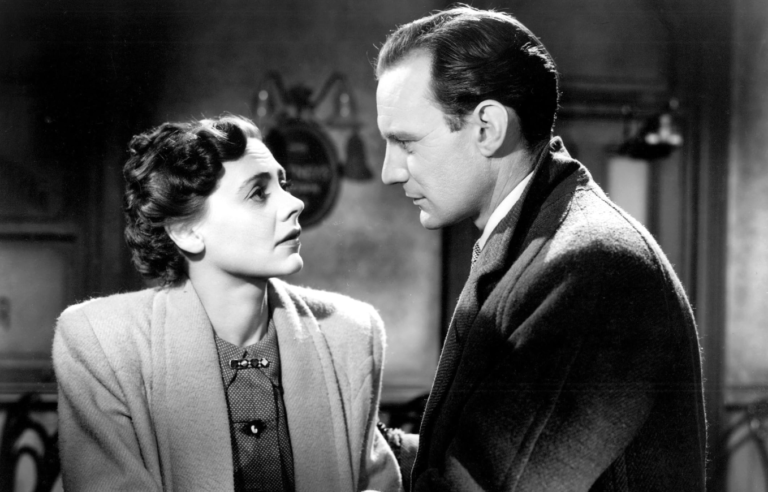
Similarly, despite casting an Oscar-winner, Alicia Vikander, as Ksenia, Assayas and Carrere never invest her with much personality. Instead, they utilize her as a hollow weather vane, first favoring Sidorov and then shifting with the wind, in Baranov’s direction.
©Courtesy of Vertical
Still, considering the 136-minute film’s big, sweeping scope, it is rather impressive how much works. It tackles head-on censorship under Putin, as well as his callous handling of the Kursk submarine disaster, at which time he allowed 118 Russian sailors perish, rather than request help from the U.S. Navy.
Obviously, this film will not sell to a Russian distributor, because there is too much veracity embedded in its sometimes gossipy drama. This is not a dry documentary—it is a big, entertainingly messy political thriller. Yet, all the scariest parts are true. Highly recommended for the fact-based intrigue and Jude Law’s eerie, image-shattering performance, Wizard of the Kremlin opens this Friday (5/15) in theaters.
Grade: A-
If you like the review, share your thoughts below!
Check out more of Joes’ review.
Here’s the trailer of the film.