

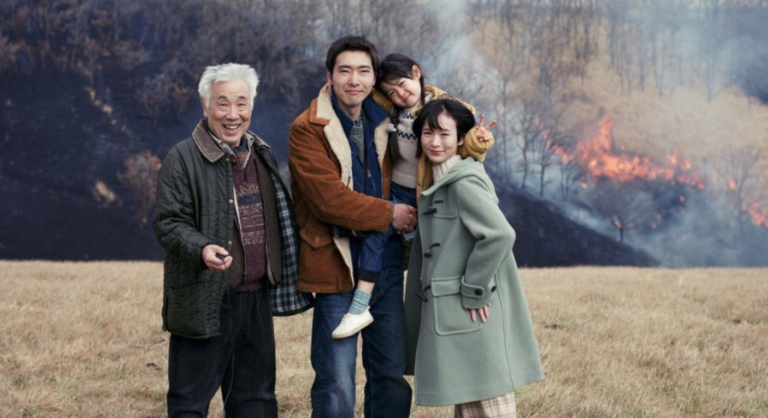
©Courtesy of Tribeca Festival
Our everyday lives are made up of countless small moments that slowly gather over time. Most of them are forgotten because they seem ordinary and insignificant. Lacking the drama of major events, they fade almost as soon as they occur. In great films such as Wim Wenders’ “Perfect Days” (2023) Jim Jarmusch’s “Paterson” (2016) and Hirokazu Kore-eda’s “After Life” (1998), the focus is not on life’s major turning points but on the small, fleeting experiences that pass almost unnoticed.
It is precisely these overlooked experiences that Japanese filmmaker Miiku Sakanishi explores in his debut feature ”Memorizu”, which premiered in the International Narrative Competition section at the Tribeca Festival in New York City. He does so as compellingly as his predecessors, yet finds a gentle and distinctive voice of his own, exploring recordings, personal archives, and the connections between them.
The premise is deceptively simple. The young and reflective Yuta (Tasuku Emoto) travels from Tokyo to a small town in Kyushu to help out at the photo studio and to care for his father-in-law, Makoto (veteran actor Issei Ogata), who has broken his foot. Separated from his wife Yuki (Moeka Hoshi) and young daughter, he maintains contact through smartphone videos and photographs, exchanging fragments of everyday life across the distance.
Yuta’s days are shaped by small acts of care. He prepares meals for his father-in-law, walks the dog through the tranquil landscape, opens the photo studio each morning, assists with photography, and tends to household chores. Makoto’s wife has recently died, and the old man seems to have quietly withdrawn into himself, living among traces of a past that is not spoken about.
These everyday routines soon become quietly hypnotic. Sakanishi sometimes creates this feeling through repetition, returning to the same scenes and images again: Yuta and his father-in-law sharing meals in the kitchen, a woman riding past on a bicycle, a horse in a field, or the many views through windows. Each return brings subtle changes and new details. In his feature, following several award-winning short films, Sakanishi directs with confidence, letting the static camera rest on faces, landscapes, and details that many filmmakers would overlook. The result is a powerful sense of presence, making even the simplest scenes feel significant.
As Yuta walks through the beautiful countryside, his reflective character gradually emerges, along with his fascination with photography, video, and the details of daily life. The photographs and video clips he takes on his iPhone and sends to his wife in Tokyo gradually become a kind of memory bank, preserving fragments of experience that might otherwise slip away. At the same time, we follow his wife, who works as a guide for Chinese tourists visiting shops and restaurants. She also sends back photos and videos, sharing glimpses of life in the city with their young daughter.
At the heart of the film is the fascination with images, both as a way of communicating and as a way of holding on to time. The same importance is given to the professional portraits and wedding photographs that Makoto takes in the studio and outdoors. Sakanishi treats all these images with equal care. Whether they are taken on a smartphone or with a professional camera, they serve the same purpose: helping people stay connected and preserving experiences that might otherwise disappear. The film suggests that photographs and videos are more than simple records of reality. They allow us to hold on to parts of life that are often fleeting.
Sakanishi also reflects on our habit of constantly taking photographs with our smartphones. In one shot, hundreds of images seem to scroll across a screen, suggesting that only a few of them will ever carry lasting meaning. The film gently asks whether the endless flow of digital images helps us hold on to our lives, or whether it makes truly meaningful experiences harder to grasp.
This preoccupation with images has deep roots. Sakanishi’s father, Isac Sakanishi, helped shape Japan’s music video scene in the 1980s and 1990s. Among his own cinematic influences, he has cited “In the City of Sylvia” by José Luis Guerín, Abbas Kiarostami, Sofia Coppola, and Edward Yang. Their presence can be sensed in the film’s patient observation of everyday life and its attentiveness to details that might otherwise go unnoticed.
“Memorizu” is unlikely to pass unnoticed. A striking debut, it recalls the humanism of Hirokazu Kore-eda and the quiet observational power of Edward Yang while establishing a voice of its own. Rather than relying on dramatic twists, Sakanishi lets gestures, observations and everyday details speak for themselves. The result is a film of rare patience and sincerity, one that trusts its audience to find meaning in the ordinary.
Grade: B+
If you like the review, share your thoughts below!