


ⓒCourtesy of New York Asian Film Festival
Identity is never portrayed as fixed in the new intimate yet stylistically ambitious drama, Cyclone; instead, it evolves through memory, trauma and the search for acceptance. The film follows a transgender woman navigating life in contemporary China and Hong Kong with remarkable emotional honesty. It examines discrimination, resilience and belonging without reducing its protagonist to a social issue.
Midway through this intimate character study, co-writer-director Philip Yung expands the narrative beyond conventional realism. Fragmented memories, dreamlike imagery and expressive visual storytelling reshape the movie into a layered meditation on identity. Although this ambitious approach occasionally sacrifices narrative clarity, the drama remains a visually compelling and emotionally affecting achievement.
Besides helming the drama, Yung also co-wrote the script with Thomas Leung, Carmen Hau and Annabelle Kayee Li. The film stars Yuqiao Liu, Edwynn Li and Jenny Suen.
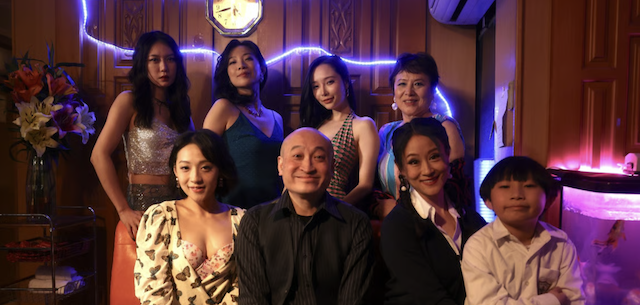
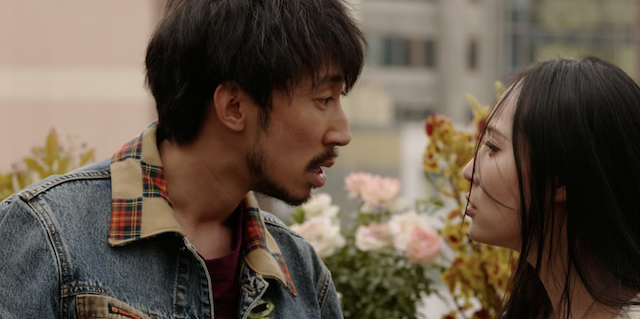
Cyclone follows Chiu Fung (Liu), a young trans woman known by the titular nickname, as she leaves mainland China for Hong Kong. In the process, she falls in love while working to save for gender-affirming surgery and reckoning with a traumatic past. In the city’s back alleys and transient rooms, she forms a romantic connection with Ah Bian (Li), whose affection comes tangled with damage and drug use, and Xiaomei, who lets her glimpse another way of being a woman.
ⓒCourtesy of New York Asian Film Festival
Liu delivers an extraordinary lead performance that anchors every emotional shift with understated confidence. Rather than relying on dramatic outbursts, the actress communicates Cyclone’s vulnerability through restrained expressions and carefully measured physicality. Every quiet pause suggests years of emotional hardship without requiring explanatory dialogue. The performance grows increasingly powerful as hidden aspects of Cyclone’s past gradually emerge. Liu ensures that even the movie’s more abstract moments remain emotionally grounded and deeply human.
Li and Suen provide equally thoughtful supporting performances that enrich the drama’s emotional landscape. Li brings warmth and compassion that naturally complements Liu’s reserved portrayal. Their scenes together create genuine intimacy without becoming overly sentimental. Suen contributes another nuanced performance filled with empathy and quiet emotional strength. Together, the ensemble gives the film an authenticity that continually reinforces its emotional credibility.
Yung approaches transgender identity with compassion rather than sensationalism. The screenplay acknowledges prejudice and violence without allowing either to define its central character completely. Cyclone exists as a fully realized individual whose aspirations extend beyond survival alone. Relationships, personal ambitions and emotional healing receive equal narrative attention. This balanced perspective gives the film lasting emotional depth while avoiding familiar dramatic conventions.
Although grounded in gritty realism, Cyclone frequently embraces a far more impressionistic cinematic language. Flashbacks reveal the eponymous character’s childhood fascination with kung fu and hint at emotional foundations beneath her guarded personality. Later memories expose deeply unsettling experiences that reshape earlier scenes through painful new context. Dreamlike imagery repeatedly blurs psychological memory with lived reality, creating an experience that resembles fragments of consciousness instead of straightforward storytelling.
These stylistic choices make the movie consistently engaging, even when they occasionally challenge narrative coherence. The frequent movement between memory, fantasy and present reality sometimes interrupts emotional momentum. Several transitions initially appear disconnected from the central storyline. The frequent use of symbolic imagery sometimes obscures the boundary between memory, metaphor and reality. Yet the cumulative effect ultimately reflects the fragmented nature of trauma and personal memory with remarkable sensitivity.

ⓒCourtesy of New York Asian Film Festival
Editor Jojo Shek skillfully weaves together the movie’s complex narrative layers. Rather than emphasizing chronological continuity, Shek prioritizes emotional rhythm and thematic association. The editing allows Cyclone’s psychological portrait to emerge gradually instead of providing immediate explanations.
This approach occasionally creates deliberate ambiguity before later revelations clarify earlier scenes. As the final act unfolds, previously disconnected moments acquire powerful emotional significance through careful editorial construction.
Cinematographer Leung Yau Cheung elevates nearly every frame through elegant visual composition and restrained camera movement. Urban environments become emotionally expressive without losing their grounded realism. Natural light and carefully balanced color palettes create a visual language that feels intimate rather than ornamental. Close-ups reveal emotional vulnerability with extraordinary precision. Every composition quietly reinforces the protagonist’s internal transformation without overwhelming the narrative itself.
Production designer Ka Lo Ng contributed equally impressive craftsmanship through richly detailed environments that are authentically lived-in. Apartments, workplaces and city streets possess remarkable texture and believable everyday realism. These locations subtly reflect the emotional states of the characters inhabiting them. Nothing appears artificially constructed for dramatic effect. The production design strengthens the film’s immersive atmosphere while complementing its understated visual elegance.
Ultimately, Cyclone succeeds because its artistic ambitions remain firmly connected to genuine human emotion. Yung refused to rely on easy narrative resolutions, instead embracing emotional ambiguity throughout the film. Not every stylistic experiment achieves complete clarity, but each contributes to the movie’s distinctive identity. Outstanding performances from Liu, Li and Suen provide an unforgettable emotional foundation. Combined with Shek’s thoughtful editing, Cheung’s beautiful cinematography and Ng’s exceptional production design, Cyclone is a visually accomplished and emotionally resonant character study.
Cyclone had its North American Premiere on July 22 during the New York Asian Film Festival (NYAFF). The screening included an introduction and Q&A with Yung, Liu and Li
ⓒCourtesy of New York Asian Film Festival
Overall: A-
If you like the review, share your thoughts below!