

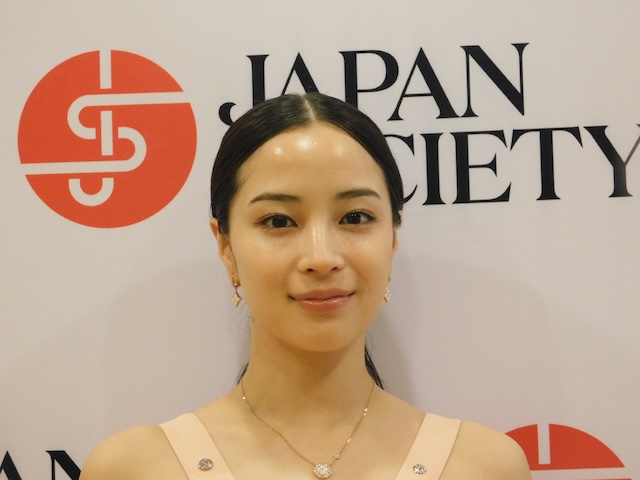
ⓒPhoto by Nobuhiro Hosoki
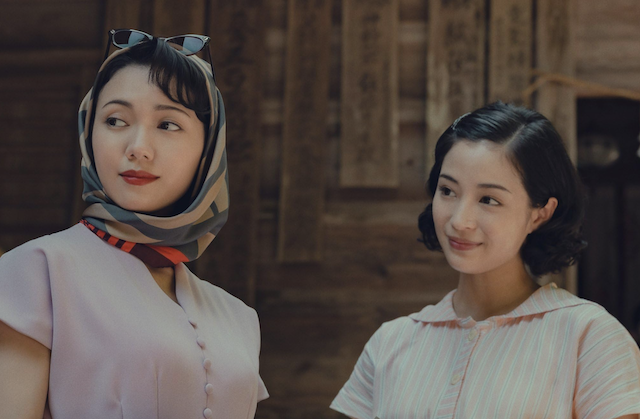
ⓒCourtesy of Japan Society
Q : Actually, I had previously interviewed Kazuo Ishiguro, the author of the original work, for the film “Living”. He used to live in Nagasaki before moving to the UK. During that interview, he spoke about his mother, and I later learned that she had been exposed to the atomic bomb while in Nagasaki. That story came back to me while watching this film, so I became very interested in this work and decided to request an interview. I imagine you had already read the screenplay by director Kei Ishikawa, based on this original novel, but what was your first impression when you read your own original book?
Suzu Hirose: I was really struck by the passages that seemed to evoke scenes Mr. Ishiguro remembered from his childhood—or perhaps a winter-like atmosphere—as if he were writing from memory. I first learned about this original novel through the movie script, and then went on to read the book. It truly captures the pain of a woman who survived the atomic bombing since I read the original novel after watching the film adaptation, I found the novel to have much more humor, and I wondered how much of it I should relate to—it was quite difficult. But I chose to interpret it as Kazuo Ishiguro’s words, written from his own memories. When I actually met Kazuo Ishiguro, he turned out to be a truly humorous and cheerful person—his aura and demeanor reflected that as well. The story of Nagasaki that emerged from that experience has a certain intangible quality to it, yet he seemed to truly sense my feelings.
Q: When I first watched this film, I thought its appeal lay largely in the diversity of the female characters. However, the men in this film seem to embody a certain pre-war, old-fashioned Japanese mindset—in a sense, somewhat rigid. It doesn’t quite reach the level of male supremacy, but their values do feel somewhat male-centric, creating a worldview that strikes me as a rather stifling environment for women. So, when you first read the script, what aspects of that diversity among the female characters—and the portrayal of the men—did you find particularly compelling? What elements did you feel reflected the era?
Suzu Hirose: When it comes to this marital relationship, I understand that what Etsuko has been keeping hidden—her curiosity about fashion and other trends coming in from overseas—is actually about the emotional connection and dynamics between a husband and wife. I found myself thinking that back then, it probably wasn’t considered normal to be open about those things.
They cast Kohei Matsushita as Jiro Ogata, a husband who’s missing a finger. In the story, while living the same life as Etsuko—he can’t tie his own tie, and Etsuko even lights his cigarettes for him. But when he stands up to his father and gets stubborn, he lights it himself.
But the way his character was portrayed as somewhat limited—and how the show also accurately depicted a form of male suffering distinct from that of the atomic bomb survivors—made me realize, from my perspective as someone living in the present day, that I hadn’t really thought about which side was “better” or anything like that. I didn’t think about which woman was more pitiful or seemed to have a harder time living.
Of course, they might not have had as many rights as men, but I think the film conveys the understanding that living within those constraints was simply the norm. And when I actually saw him as a fellow human being—someone who, like me, was missing just one thing—it was, how should I put it? It was a sight that left me quite speechless. That was, after all, the result of fighting for his country, and the way the film portrays a pain distinct from that of women made me wonder how this would resonate with the audience.
Q: When people overseas hear “Nagasaki,” they naturally associate it with the atomic bomb and radiation exposure—I think there are aspects that bring the atomic bomb to mind. However, I believe Nagasaki has actually developed into a thriving port city since the war. In this film, I think the vibrant postwar streets of Nagasaki are depicted. What were your thoughts when you stood on the set recreating that era? Also, what are your thoughts on the people of that time?
Suzu Hirose: Actually, the city of Nagasaki itself seems completely different now from what it used to be. We didn’t film there at all—I’d only ever seen it in photos—but I was really struck by the incredible energy people have when they have to keep going no matter what. And the way they support each other without saying a word—that sense of everyone pulling together to survive—really came through while I was acting. In scenes like the one at the wholesaler’s, and especially through the character of Fujiwara, played by Rie Shibata, I felt like she added a really warm touch to the film.
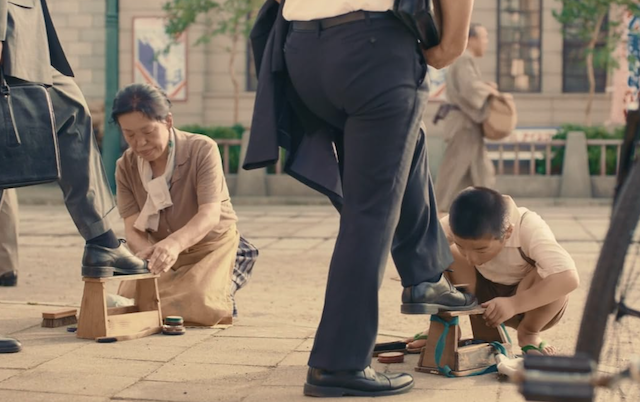
ⓒCourtesy of Japan Society
Q: Sachiko and Etsuko specifically talk about how much they resemble each other, and by the end, the so-called “reason” behind that gradually becomes clear. In terms of actually portraying the role, how did you coordinate in advance with Ms. Nikaido and Director Kei Ishikawa to determine how much of that resemblance to express and to what extent you should tone down that dynamic?
Suzu Hirose: When I was actually on set, Sachiko(played by Fumi Nikaido) was right there in front of me, so it felt like a completely different experience—it was just Etsuko and I, two people having a conversation and exchanging lines. I’m sure there were some lines that felt a bit off to both of us, but in this project, the approach was simply to try saying them once, or act it out once. If that sense of dissonance felt like a pleasant kind of dissonance, we’d just keep going with it—sometimes without even telling the director.
I hardly ever had to negotiate with Ms. Nikaido, and I didn’t really have to negotiate much with the director either. I think it’s because everyone’s interpretation and perspective were slightly different that no one interfered with that dissonance; instead, we all tried to make the most of it (within the film).
That’s why I think there were scenes where my performance made the director go, “Huh?”—like, “Is she really incorporating that much of Sachiko’s personality?” And while I also wondered which way to go with it, I didn’t feel like this was the kind of project where we’d strategize and build things that way.
Even in scenes where the two of us were talking at home, there was this constant sense of dissonance. It felt like nothing was really clicking, yet the conversation kept moving forward—I played those scenes treating that dissonance as a positive kind of tension. So, I didn’t really talk much about it.
Q: Etsuko, Sachiko, the character Shigeo Matsuda—played by Daichi Watanabe—seemed to have a set of values that were very forward-looking, and I felt that really gave rise to a sense of initiative and creativity. In a way, it felt like he was the kind of figure who could usher in something like Japan’s subsequent period of rapid economic growth. As for the character of Etsuko herself, were there any aspects that you, Ms. Hirose, could relate to or found in common with?
Suzu Hirose: I don’t feel like I’m that way to a great extent, but rather than putting everything into words, I’m the type who—since I can’t lie to myself—lets my curiosity and things like that just surge up intuitively. But before I actually take that step forward, I tend to go over it in my head quite a few times, look around, and try saying things little by little. That’s the kind of feeling I was portraying. It’s not exactly the same or similar, but I was able to play the role without feeling any disconnect.
Q: I felt that the character Etsuko, while not entirely certain that she herself had been exposed to the atomic bomb, felt a sense of threat or fear at the prospect of being discriminated against as a survivor simply because she happened to be there at the time—and that this led her to take action, or rather, to speak out. In fact, did you conduct any research beforehand—such as looking into the experiences of actual atomic bomb survivors from that era, the words spoken by so-called survivors, or the social phenomena surrounding them at the time—and were there aspects of that research that you intended to incorporate into this role?
Suzu Hirose: At the time, I was given a variety of materials—including some related to Nagasaki—that really helped me grasp the gap between reality and the flow of history. For example, while the atomic bombing occurred during that era, people were actually wearing clothes like this, even in the midst of it all. However, there really wasn’t a single definitive image of what women who survived the bombing were like.
I did get to look at several materials—memoirs, interviews, and newspaper articles—but there was no “correct answer” for what the women who survived the bombing were like. Many of the materials contained memories from the perspectives of bystanders or the opinions the women themselves held at the time.
And I realized that there are things that simply can’t be put into words—or at least, aren’t expressed very directly. It was incredibly difficult to figure out how to confront something invisible—something I couldn’t be certain about—and while I still don’t feel I’ve fully grasped everything, I acted while thinking that Etsuko’s pain back then must have been so profound that my imagination simply couldn’t keep up with it.
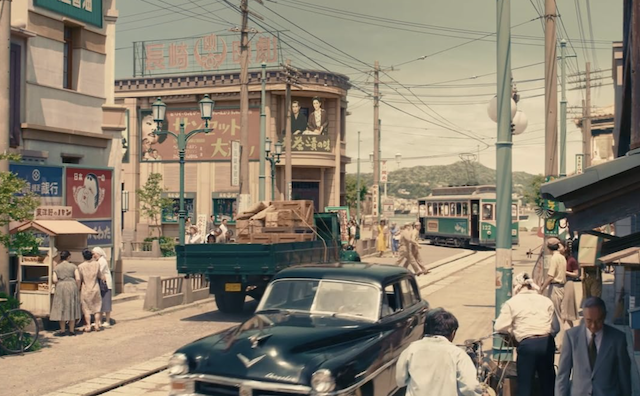
ⓒCourtesy of Japan Society
Q: Yoh Yoshida played the role of Etsuko in the 1980s version, and—this is just my personal impression—I got the sense that the Etsuko in this film was, in a way, completely different. Since you’re playing the same role to some extent, did you talk to Yoko Yoshida beforehand, and did she mention that there were some similarities between your interpretations?
Suzu Hirose: I hardly spoke with Ms.Yoh at all, either. There was a scene where I held my violin and expressed my emotions while thinking about the children, and Ms. Yoh said she wanted to watch me act in that scene. I think, given our current circumstances—and the fact that we’ve both gotten older—we were probably just acting based on our own individual thoughts and feelings, but but in the sense that we wanted our memories of the past to align, she came to the set specifically for that scene.
At first, we talked about creating some common ground—like in our mannerisms—but it wasn’t really about that; she just said we should share those specific memories of the past. Or rather, I think she came to the set with that feeling. Actually, I didn’t see Etsuko after she went to England until I watched the finished film myself.
So, since we watched it without exchanging much information beforehand, Etsuko—the two Etsuko and Sachiko—seemed both like the same person and yet different; it was an incredible portrayal of a woman whose memories and emotions were scattered across various aspects of her character. That’s what I found so interesting about this film, and in a good way, I feel like it was precisely because we didn’t exchange much conversation that we were able to create something special.
Q: This film was selected for the Un Certain Regard section at the Cannes Film Festival, and it has now been chosen as the centerpiece for “Japan Cuts”—the largest Japanese film festival in North America, held at the Japan Society in New York. What aspects of this film would you like international audiences to see? Also, you co-starred with Ms. Nikaido, who made her international debut in the drama “Shogun.” Do you have any interest in appearing in international productions in the future?
Suzu Hirose: Hmm, I don’t really have that strong desire to go overseas. I love Japanese films, and I really love the Japanese sensibility—there are so many moments when I find it truly enjoyable to express myself through them. So, I think this story—which recounts the memories of the women in Nagasaki who survived the atomic bombing and lived through the 1950s—depicts a kind of terrifying reality they faced.
The more we delve into it, the more I realize that—just as it was at the Cannes Film Festival—I simply can’t imagine how people here will perceive the pain of the atomic bombing or what that experience looks like to them. Precisely because it’s so hard to imagine, I wonder if people will find it frightening or if they’ll empathize with it. Since this is likely different from the memories, and history, I’m glad—though I’m not sure if “glad” is the right word—that there’s a healthy sense of tension, and I’m truly grateful that the film is reaching audiences in this way.
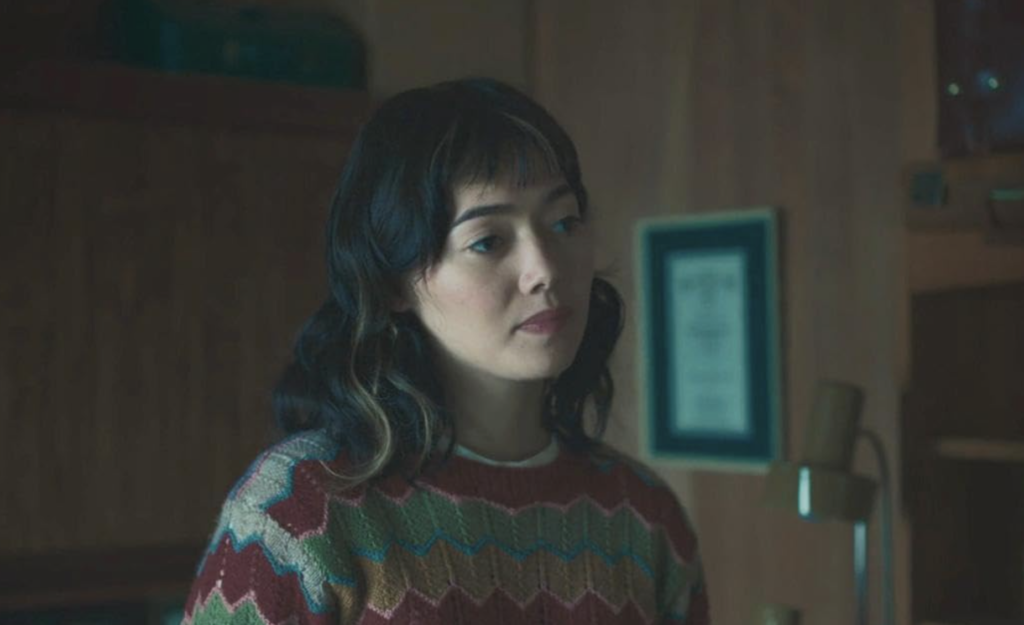
ⓒCourtesy of Japan Society
If you like the interview, share your thoughts below.
Check out more of Nobuhiro’s Articles.
Here’s the trailer of the film.