

ⓒCourtesy of New York Asian Film Festival
DIRECTOR : Koji Shiraishi
YEAR : 2025
COUNTRY : Japan
RUNTIME :104 minutes
LANGUAGE : Japanese with English subtitles
ORIGINAL TITLE : 近畿地方のある場所について
VENUES : Walter Reade Theater
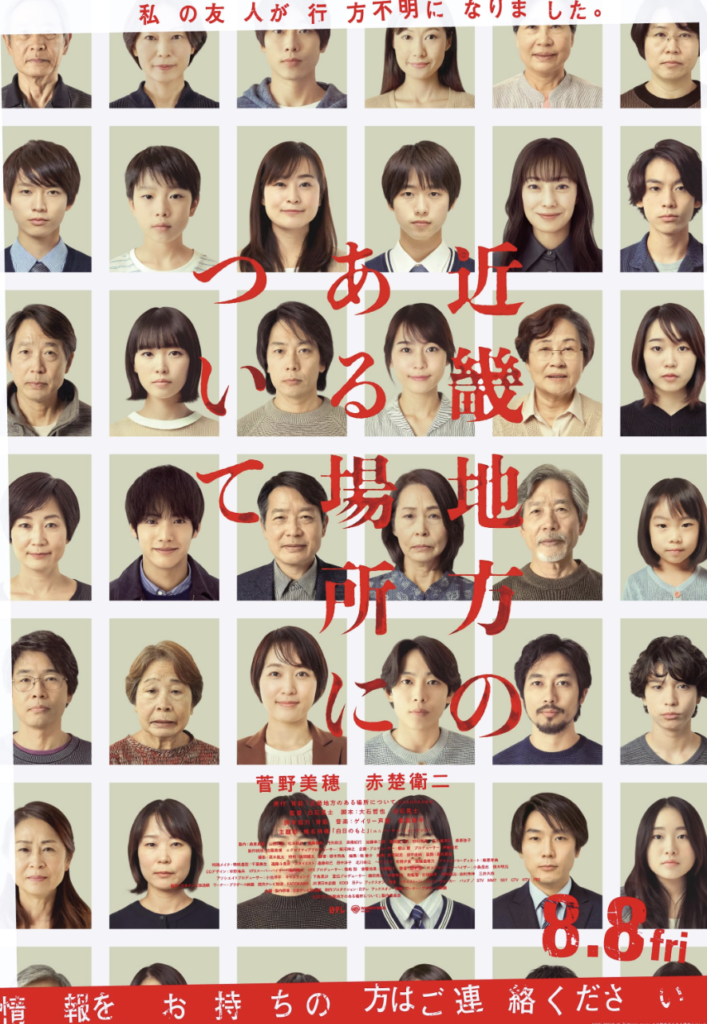
A missing occult-magazine editor’s collection of urban legends points toward one terrifying place. The director of “Noroi” turns a viral Japanese web novel into found-document dread at its most unnerving and entertaining.
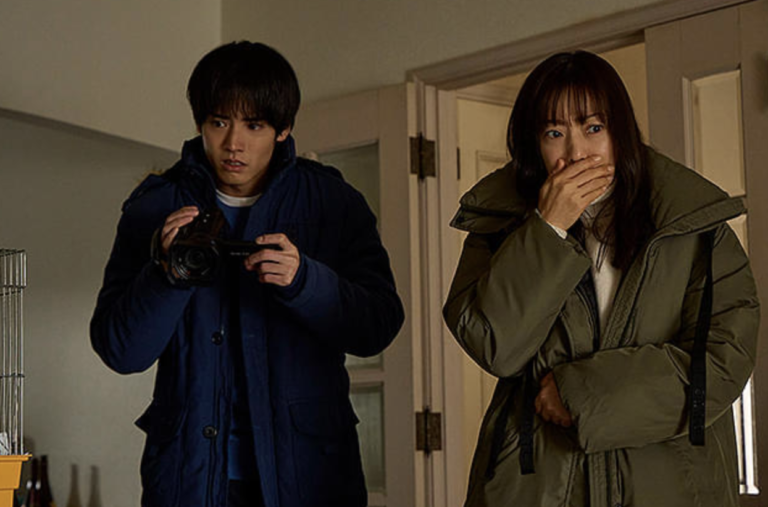
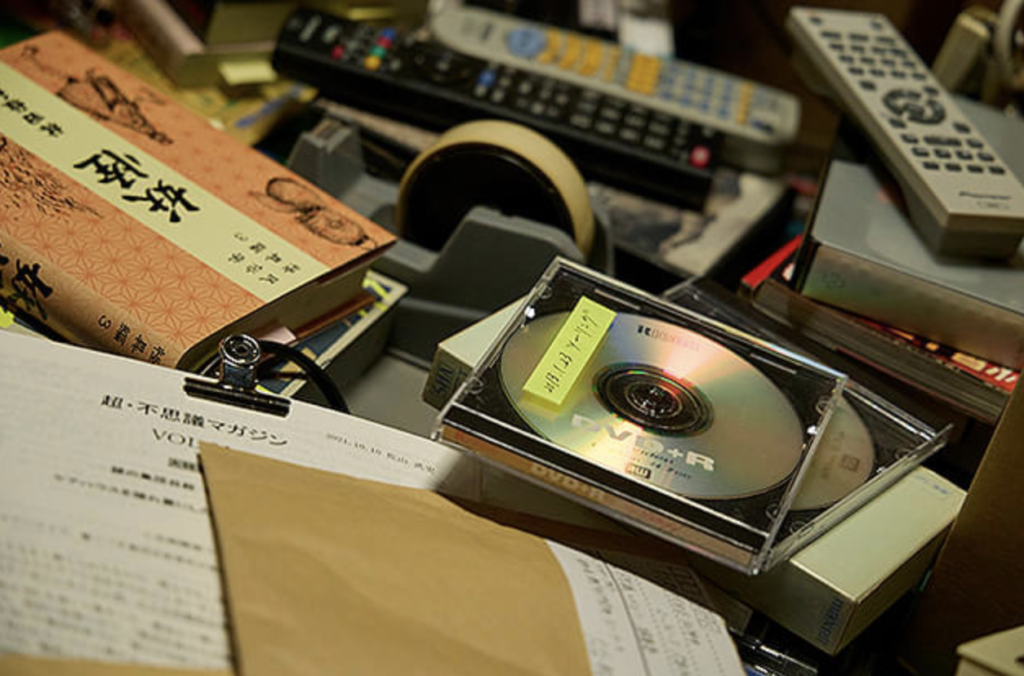
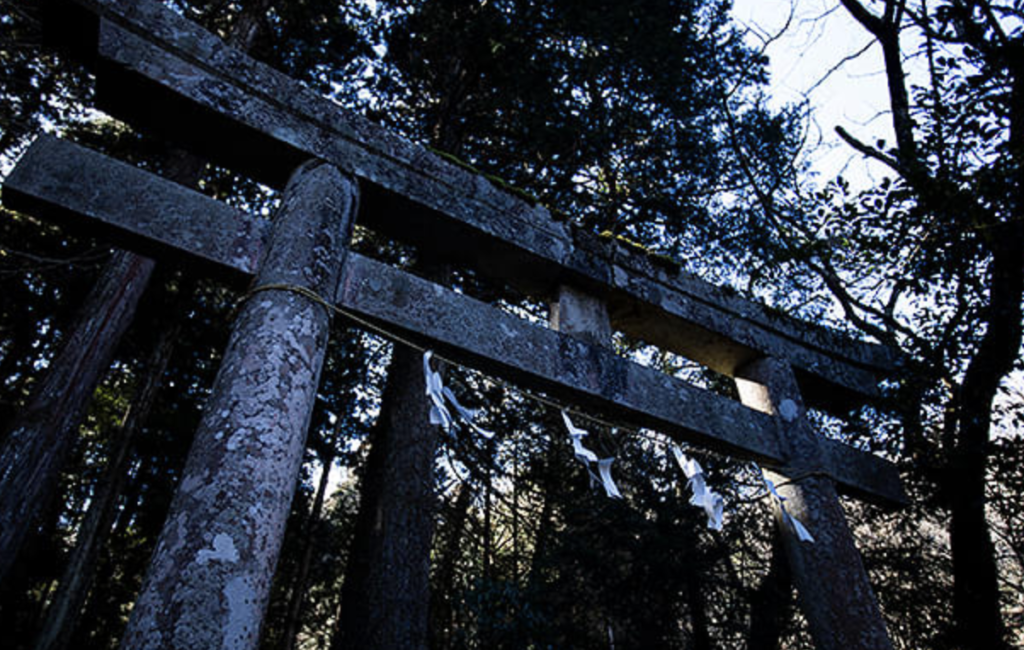
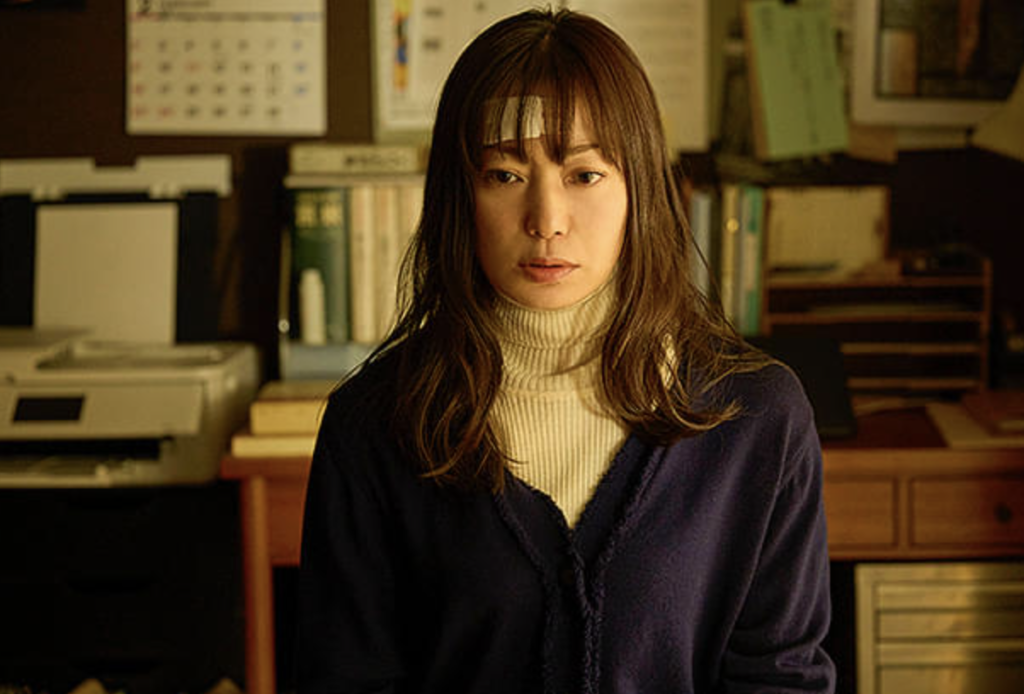
From Koji Shiraishi, the fiendish mind behind “Noroi” and “Sadako vs. Kayako”, comes a chiller that’s equal parts unnerving and highly entertaining, adapted from Sesuji’s viral web novel that became a major horror sensation in Japan. It starts with a disappearance: an occult-magazine editor vanishes after collecting reports tied to the Kinki region: missing children, mass hysteria, haunted livestreams, scraps of rumor that feel too strange to explain. Freelance writer Chihiro Seno (Miho Kanno) and the editor’s colleague Yūsei Ozawa (Eiji Akaso) follow the trail until the pieces, assembled into a single picture, converge on one location, and on something fundamentally wrong with it. Shiraishi works in the found-document genre he helped to pioneer, crafting dread from fragments with his trademark cheeky flair.
ⓒCourtesy of New York Asian Film Festival
Q: I hear that the original work for this film originated on a novel-sharing website and reportedly sold nearly 700,000 copies. How did you adapt Sesuji’s original work into a screenplay? I’ve heard there are quite a few differences from the original.
Koji Shiraishi: First of all, it was a matter of selecting and discarding material. We had to choose the episodes that worked best for the screen and create a climax suited for the medium, so the ending has a fairly original storyline. Since we needed to shorten the film a bit, there were parts where we had to tweak the rules within the story, so we made those adjustments and rearranged the story to fit within a two-hour runtime.
Q: I’ve heard that the original work is based on content from various sources—such as posts on online message boards, magazine articles, and recorded interviews—which have been compiled into a written narrative. When adapting this for the screen, were there any particular artistic choices or techniques unique to the visual medium? Could you tell us a little about what elements were altered, and which changes stemmed from your own creative vision?
Koji Shiraishi: I guess you could say we extracted elements that were easy to translate into visuals. The part at the beginning with the internet message board, for example, was inevitably text-based, and the content was about adult videos and such— It wasn’t really suitable for a general audience—the film started from a point that wasn’t quite appropriate for a general audience—so we decided to omit those episodes. From there, we thought about how to structure the film, and what we’ve done in the film is convert each episode into visual footage and wrap it all up in a narrative film style—that’s where the difference lies.
ⓒCourtesy of New York Asian Film Festival
Q: I heard that the original author, Sesuji, was also involved as a script consultant. To what extent was the script actually adapted from the original work? I also heard that the script went through several revisions before it was finalized. What kind of discussions did you have with Sesuji when adapting the story into the script?
Koji Shiraishi: During the scriptwriting phase, whenever I felt it was time to show Mr. Sesuji something—like, “What do you think of this?”—I’d run it by him and get his feedback. I think we met in person about once while I was revising the script, but for the most part, we held online meetings to discuss the finer details— “What about this part? How about doing it this way here?” We received quite a few ideas like that. Also, there’s a folktale from a picture book that appears in the film—the setting is that it’s animated within the movie—but Mr. Setoguchi wrote a new version of that story specifically for the film. Since it would have been too long to include as-is, we shortened and adapted it ourselves to fit into the film.
Q: Ms. Kanno has appeared in horror films such as “Tomie” and “Hypnosis” in the past. This film features a so-called dual lead cast with Miho Kanno and Akaso, and I thought Ms. Kanno’s performance in the second half—with its almost manic, defiant quality—was particularly brilliant. Could you tell us a little about how the casting for these two came about?
Koji Shiraishi: It’s true that I approached someone who I felt would be able to embrace this material. However, since Ms. Kanno hadn’t appeared in a horror film for quite some time, and given his nationwide popularity and name recognition, I thought his return to the genre after such a long hiatus might generate some buzz. Also, the fact that some elements of madness emerge toward the end of the film is reminiscent of the movies he starred in back in the day, and I figured there might be viewers who would find that aspect entertaining. That’s why I decided to ask Ms. Kanno to join the project.
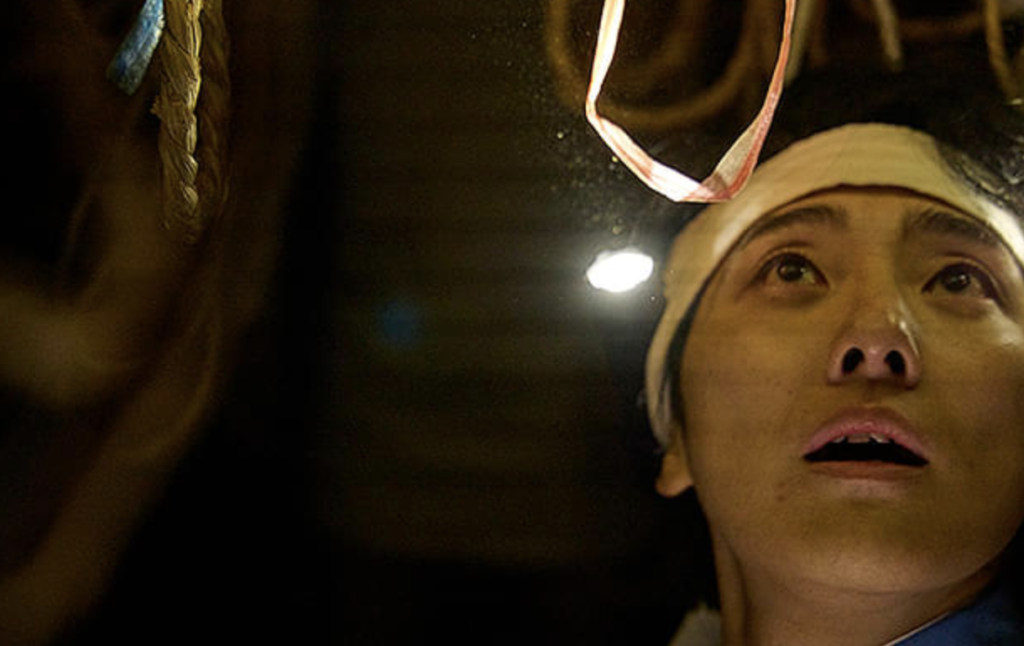
Q: In the movie, there’s a “hanging house” that the YouTuber visits. The set design there was really scary, but it also felt incredibly realistic. Could you tell us a little bit about how you worked with the set designer to bring that to life?
Koji Shiraishi: The original story was a little different, but when adapting it for the movie, we decided to make it a “house of hangings”—a house with lots of ropes and strings hanging around, as if people were about to hang themselves. We worked on the design through repeated meetings with our production designer, Mr. Ataka, and as we reviewed it, we’d say things like, “Let’s do this part like this,” or “ “Let’s do this here” and “Let’s do that there.”
One thing we really struggled with was the density of the hanging cords and how they looked. Since they were actually just hooked or taped to the ceiling, we had to discuss the details—like what density would best hide that fact—and go back and forth on those kinds of minutiae. We actually shot more footage, so I wanted to show more of it, but considering the overall flow of the film, we settled on that length. Still, quite a few people said they wanted to see more.
ⓒCourtesy of New York Asian Film Festival
Q: Watching this film, I notice that it incorporates some incredibly realistic footage, as well as some unearthed footage that feels a bit like found footage from the past—and it’s all woven in very skillfully. While there have been various examples of that kind of footage in past films, such as “The Blair Witch Project”, are there any American horror films that have influenced you personally, Mr. Shiraishi?
Koji Shiraishi: There might not be that many found-footage horror movies in the U.S., but I grew up watching a lot of American movies in general, starting with John Carpenter’s “The Thing”, and even though it’s a horror-animal-panic movie, I also really loved Spielberg’s “Jaws”, and I’m a huge fan of George Romero’s zombie movies, “Dawn of the Dead” and “Day of the Dead”. Who else is there in the U.S.?… There are probably plenty, but they don’t come to mind right away. I definitely feel like I grew up watching a lot of American horror movies.
Q: Since this is a horror movie, I imagine the set is designed to have a pretty gloomy atmosphere and a terrifying environment. However, Ms. Kanno mentioned that the set was actually surprisingly cheerful. Could you tell us a little about how you go about creating that atmosphere on set when making a horror movie like this, and how you work with the actors and staff to achieve it?
Koji Shiraishi: I might not have thought it through that deeply, but basically, I do want to create a set where things aren’t too tense—a relaxed atmosphere where everyone can have fun. Speaking of the Kinki set, Ms. Kanno himself is a very cheerful person. He’s friendly and talks to everyone, which really helps lighten the mood on set. Still, when we’re running out of time, a sense of urgency does start to creep in. (wry smile)
Q: What I found interesting was Ms. Kanno’s approach to physically confronting the so-called supernatural phenomena in the film—such as ramming into them with a car or hitting them with various objects. In typical horror movies, I don’t think you often see such a physical approach to supernatural phenomena. Mr. Shiraishi, did you approach this with a different mindset than in other films, or was there a particular philosophy behind it?
Koji Shiraishi: Even though it’s called “Japanese horror” or “J-Horror,” I’ve never really been that interested in the kind where human ghosts appear. After all, I grew up watching American horror, and American horror always follows a formula where there’s inevitably a showdown in the climax. I really loved that as entertainment, so I’ve been making films that lean in that direction. Also, I believe that at the root of anything scary—even if it’s a being from another world—there’s a kind of life force, a vital presence. So I thought, “If that’s the case, surely there must be elements here—physical energy—that can counteract it,” and because I want to create a climactic showdown, I generally incorporate elements where there’s some kind of physical clash or battle. It just builds more excitement that way.
ⓒCourtesy of New York Asian Film Festival
Q: Could you tell us a little bit about whether you, Mr. Shiraishi, intended to incorporate elements like human jealousy or resentment—the so-called “fears of humanity”—as horror elements in this film? I feel like this film really reflects not just the darkness or supernatural phenomena, but also the so-called “fears of humanity.”
Koji Shiraishi: This might be a bit of a spoiler, but I think there’s also this aspect to it: the love that lies at the core of the protagonist, Ms.Kanno, can take on a form that, depending on the person, could become something truly terrifying. However, I definitely wanted to portray that it is, without a doubt, love. People tend to imagine love as something happy and dreamy, but I wanted to show that it’s not just that. It seems love can sometimes turn into madness.
Q: I’ve heard that the original manga volumes by Sesuji-san were full of creative touches designed to keep readers engaged—such as text suddenly switching from vertical to horizontal writing, or special inserts included as reference materials. Did you discuss with Sesuji-san any approaches unique to film that you wanted to try, and were there any specific ideas you discussed in advance?
Koji Shiraishi: I think the film version has a certain level of complexity, but the novel ends in a way that feels like it just leaves things hanging. In that regard, I wanted to create a climax that would build up visually as much as possible. I explained my vision—saying, “This is how I’d like to handle it”—and they replied, “Okay.” I don’t know what they were really thinking inside, but it felt like they accepted it.
The approach of taking the various disparate elements from the novel and presenting them in a highly mixed way is very close to the mockumentary style I’ve developed. By incorporating those mockumentary elements while also including elements of a dramatic feature film, and by depicting various forms of expression, techniques, and frightening subjects, I hope that—even though the form is different in a sense— I hoped viewers would feel a similar texture or vibe to the novel version.
Also, for the climax, I really wanted to build up the tension in a way that’s unique to film and its visuals. So, I made the ending a bit more straightforward than the novel—though some say I made it too straightforward. In Japan, there are quite a few people who say they’d rather I hadn’t shown certain things, but I’m the type who prefers to show them—I grew up on American movies, so that’s why I chose that style of expression.
Q: This film has been selected for the New York Asian Film Festival. What aspects of it would you like American audiences to focus on?
Koji Shiraishi: Well, I just hope everyone enjoys it in their own way. Actually, there are some aspects I can’t quite imagine—like how people will react to it—so I’m planning to watch it with you all today, and I’m looking forward to seeing what kind of reactions there will be.
Q: Regarding J-Horror, Koji Suzuki—the author of “The Ring” and “Spiral”—passed away recently. Could you tell us what kind of changes have been taking place in so-called J-Horror over the past few years, and what changes you’ve noticed?
Koji Shiraishi: Lately—and especially since a little while ago—there have been a truly enormous number of independent, low-budget Japanese horror films being released in Japan. Many of them seem to be influenced by A24; they tend to be quite artistic or experimental, and the quality is generally quite high. The variety is incredible. It’s quite different from the stereotypical “J-horror” that people used to think of—you know, the kind where a female ghost with long hair appears and looks kind of hazy and scary. There are so many different kinds of films being produced—almost to the point of mass production—that I think Japanese horror is definitely going to be in the spotlight going forward. Since many of the people making these films are young, I feel like I can’t afford to fall behind either.
Q: Mr. Shirai, are there any horror film directors who are currently in the spotlight—or any other film directors you’re interested in?
Koji Shiraishi: As for active directors—though it may have just finished its run in Japan—I’m not sure if it qualifies as horror, but I’m interested in director Yuta Shimozu, who has a bit of a comedic touch. His previous film was “Best Wish to All”, and while it might still be in theaters, he’s currently screening his second theatrical feature, “NEW GROUP”. I found “NEW GROUP” to be absolutely hilarious—it incorporates very Japanese elements in a way that could be described as “A24-esque,” yet it’s portrayed in a uniquely Japanese style. It’s a wildly unpredictable movie, but it was easily the most thrilling theater experience I’ve had in recent years.
ⓒCourtesy of New York Asian Film Festival
If you like the interview, share your thoughts below!
Check out more of Nobuhiro’s articles.
Here’s the trailer of the film.