

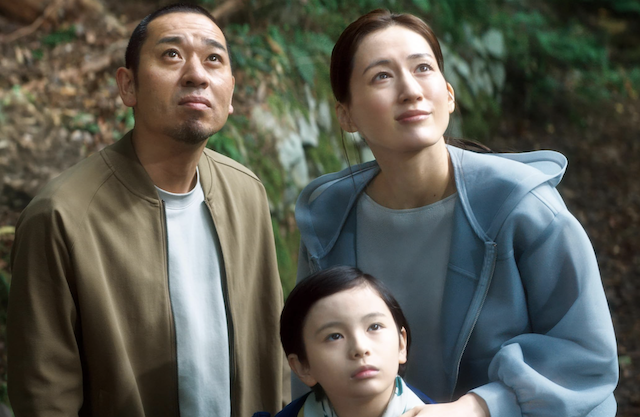
ⓒCourtesy of Neon
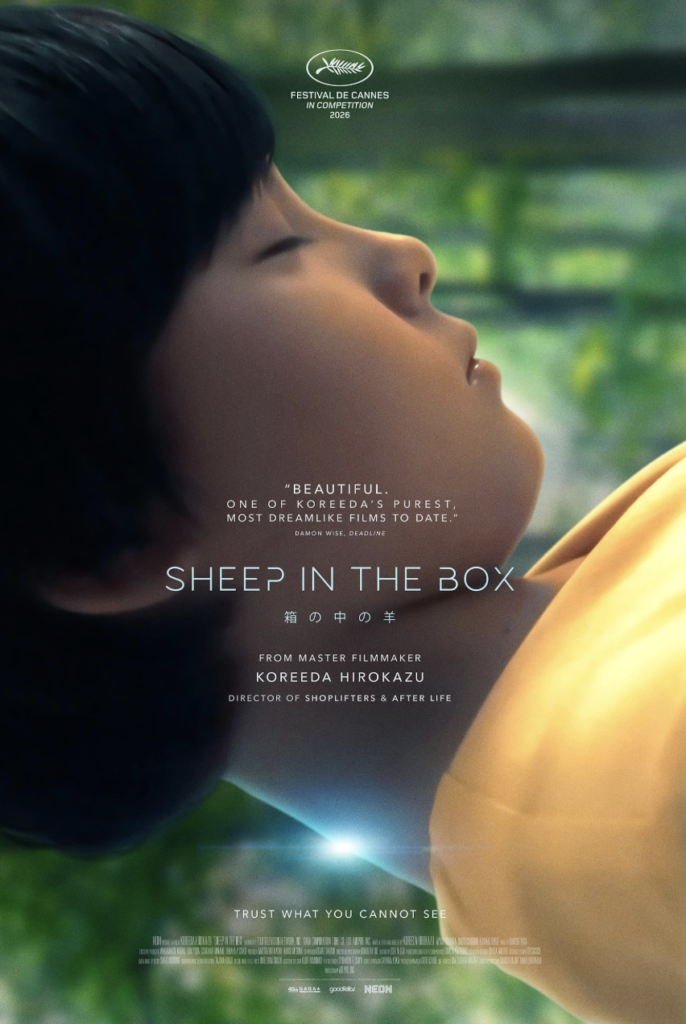
ⓒCourtesy of Neon
Exclusive Interview with Writer/Director Hirokazu Kore-eda
Q: Mr. Kore-eda, you’ve previously collaborated with Ms. Ayase on “Our Little Sister”, but when you cast comedian Daigo in the lead role, was that because you were hoping for a kind of unique chemistry—a sense of contrast that wouldn’t arise between two actors—that led to his casting?
Hirokazu Koreeda: That’s right.
Q: Two years after their son’s death, I felt that comedian/actor Daigo was the perfect choice for portraying a married couple who, emotionally, just weren’t quite on the same page. Having actually worked with him, what aspects of Daigo did you find particularly compelling?
Hirokazu Koreeda: Thank you very much. For one thing, the way they walked was really great. The way they walked, ran, or crouched—that kind of presence that goes beyond the words themselves—was truly wonderful, and I felt like I could watch it forever. That was one thing. And then, of course, between lines of dialogue, there are moments that aren’t actual lines—little hesitations, rephrasing, or sounds that haven’t quite become lines yet—that slip in from time to time. That was what was so wonderful. I think I was able to draw out something a little different from the kind of acting you see in more tightly controlled performances.
Q: Antoine de Saint-Exupéry, the author of “The Little Prince”, was educated at a Catholic school. In this work, the humanoid seems to take on the guilt felt by its parents—in a sense, relieving them of it on behalf of their deceased son—and demonstrates selfless love. I can’t help but wonder if there are aspects of this that, in a way, resemble Christ. Are there any elements in this work that were consciously inspired by Saint-Exupéry’s “The Little Prince”, or that draw parallels to Christ?
Hirokazu Koreeda: He’s not Christ—I mean, he’s definitely not Christ—but he comes and goes… Hmm, well. I can’t quite find the right words, but I was aware of that (Christ-like) element.
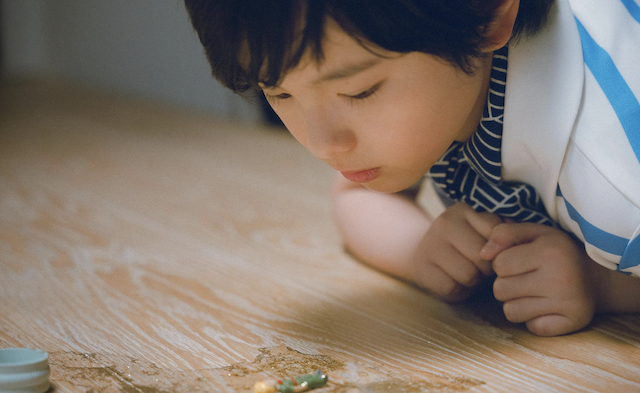
ⓒCourtesy of Neon
Q: Currently in Japan, there are film festivals featuring AI-generated films, and recently, a company called ByteDance, which produces AI-generated films, used its video-generation technology to create footage of Brad Pitt and Tom Cruise fighting. Looking ahead, how do you personally think major film festivals and organizations like the Academy Awards will establish standards for AI-produced works? Will they create separate categories or some other framework? What kind of vetting processes will they implement? What are your thoughts on this, Mr. Kore-eda?
Hirokazu Koreeda: Aren’t we going to accept that?
Q: So, would that mean setting it up as a separate category or as a separate AI film festival?
Hirokazu Koreeda: I think so. Probably because unions are particularly strong in the U.S. Unless you join a union, that is. I think they draw a clear line there, but considering how things have gone so far, I support that approach.
Q: That’s true. When you consider the employment and casting of filmmakers, I also think that approach is the right choice. What I found interesting in this film was Rimu Kuwaki, who plays the humanoid. It didn’t feel like they were making him move in a particularly “humanoid” way; instead, I got the sense while watching the film that his behavior varied based on the reactions of his “parents,” the Kawamoto couple. Was that a directing choice made with the audience’s perspective in mind to some extent? To some extent, that approach creates a stronger impact. I tend to think that works dealing with future humanoids or robots often focus too much on their movements, so your different approach really stood out to me. Could you tell me more about that approach?
Hirokazu Koreeda: Yes, thank you. That’s exactly right—I wanted to tell the story from the perspective of the humans who accept the humanoid. Rather than portraying that boy as particularly “humanoid,” I focused on the reactions of the adults who accept him—even though he’s almost human—as they feel a sense of unease, notice the differences, or try to convince themselves that he’s different.—whether they feel uneasy, notice the differences, or try to convince themselves that he’s different—to convey that he is a humanoid and that he’s not the same Sho as before. So I focused on that aspect. Of course, I also hoped that viewers would look at Sho from that perspective as well.
Q: In this film, the architect played by Haruka Ayase is portrayed as an admirer of architect Ryue Nishizawa and someone who has been influenced by him. Mr. Kore-eda, what aspects of Mr. Nishizawa’s architecture did you find appealing, and how were you inspired by his words to incorporate them into this film?
Hirokazu Koreeda: Well, I’m really sorry to say this, but I’m just a complete novice when it comes to architecture. One of the architects I met during the production of this film happened to be one of Mr. Nishizawa’s former students. Although we didn’t end up using that person’s home as a location, after meeting him and hearing his stories, and then starting to read Mr. Nishizawa’s books, I found it fascinating that within the Japanese architectural world, there’s a clear distinction between those who design everything on a computer and those who favor physical models. In short, there’s a type of architect who comes to understand their own design by physically building a three-dimensional house with their own hands—and Mr. Nishizawa’s group consists of such people.
I felt that this sensibility of grasping a design through the physical space itself was very similar to the process I go through when making a film— and the process of giving concrete form to my vision. That was one point. Another was that in Mr. Nishizawa’s book, he wrote that a characteristic of Japanese architecture is the combination of wood with materials that are fundamentally different from it— such as glass—is both very difficult and fascinating. This is similar to what we discussed right at the beginning of this interview regarding actors and comedians. When making a film, rather than gathering similar elements, I inevitably feel the urge to clash dissimilar elements and see if something new can emerge from that. That was another point where I felt a strong sense of kinship.
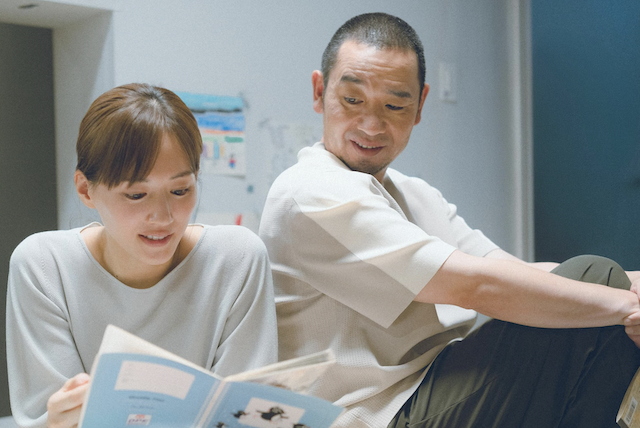
ⓒCourtesy of Neon
Q: In this work, regarding the humanoids sent out by RE birth Ltd—specifically, the fact that the Reverse team doesn’t frequently visit the new families to check on the situation or come over to instill their values, but rather their role is limited to handling malfunctions—and also regarding the humanoids themselves, such as sending them to school or dealing with bullying—it seemed to me that you didn’t really delve deeply into moral issues. Instead, you seemed to be depicting the coexistence of these humanoids, coexistence, as well as the meaning of coexistence between nature and humans. Was your understanding that such moral issues, to some extent, fell outside the scope of this work’s themes? Or did you feel that those elements were deliberately deemed unsuitable for this work?
Hirokazu Koreeda: Well, that’s true. I struggled right up until the final editing stage with how to strike a balance between the story from the adults’ perspective and the story of the humanoids—for example, how they become independent and form their own communities. In the end, I ended up gradually cutting back on the children’s storylines. That was something I really struggled with.
Q: In the movie, there’s a scene where Kakeru—played by Rimu Kuwaki—listens to a tree. As humans likely continue to coexist with AI in the future, coexist with AI in the future. Just as humans and nature coexist, I interpreted this to mean that the most appropriate approach for humans—in terms of how we treat AI—is to make choices and handle AI in a way that involves listening to nature. What are your personal values, Mr. Kore-eda, regarding this coexistence with AI?
Hirokazu Koreeda: I see what you mean. But in the movie, when you think of AI as the central theme, I imagine that AI would probably aim to form a community that doesn’t involve humans—much like stray cats. I think they’d likely keep their distance because there’s no benefit for them in getting involved. On the other hand, I’m sure there will be cases where humans, on the contrary, seek that involvement in various ways. My conclusion from this story was that they probably don’t really seek that kind of interaction.
Q: At this year’s Cannes International Film Festival, three Japanese films—by you, kore-eda-san, Fukada-san, and Hamaguchi-san—were selected. All three of them—Fukada, Hamaguchi, and you have previously worked on films with foreign investment. In 2014, Kore-ed-san, you co-founded a company called Bunpuku, Inc. with director Miwa Nishikawa-san, and they’ve been involved in various film projects. What changes do you think have been taking place in Japanese cinema in recent years? What kinds of trends or transformations are emerging, and have you noticed them?
Hirokazu Koreeda: Probably over the last 10 years—well, maybe not quite 10 years yet… As we approach the 2020s, the generation following ours—people like Mr. Hamaguchi, Ms. Fukada, and Chie Hayakawa—have been participating extensively in international film festivals and gaining recognition. Up until then, the names at the top had probably remained the same for nearly 20 years. After Takeshi Kitano—and while I’m grateful that I myself continued to be selected— but during that period of stagnation in Japanese cinema, people kept saying, “The names of the selected directors never change.”
Rather than me personally having the impression that the clock has ticked forward and the next generation has emerged with real strength, I feel it’s the international film festivals themselves that hold that view—and that’s why I think the generational shift has progressed smoothly. I hope that this energy will be fed back in a positive way into Japan’s domestic film culture and the film industry, creating a virtuous cycle. However, if we’re not careful, we could end up in a situation where everyone is forced to shoot with French capital and make French films.
I think it would be a shame not to consider whether that’s truly a good thing. Still, a positive situation is emerging, and the domestic film production environment—well, it’s taken a while, but is finally—albeit belatedly—moving in the direction of gradual improvement. So, on the one hand, I see the positive aspects of this; on the other hand, the current administration, which views the content industry as part of its growth strategy, has made it clear that it intends to fund only profitable projects—a blunt and unapologetic policy. I will continue to voice my criticism of this stance, and that’s the situation we’re in.
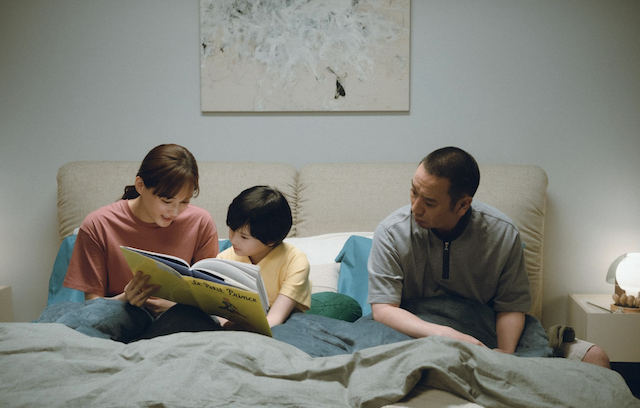
ⓒCourtesy of Neon
If you like the interview, share your thoughts below!
Check out more of Nobuhiro’s Articles.
Here’s the trailer of the film.