

©Courtesy of Film Movement
 ©Courtesy of Film Movement
Q: After making your previous film, “Plan 75”, what prompted you to start working on this one? What motivated you to take on this project?
Chie Hayakawa: Well, I actually started writing the script before we began filming “Plan 75”. Everything came to a halt during the COVID pandemic, and when production on “Plan 75” ground to a complete stop, I found myself with nothing to do.
It just so happened that around that time, there was a workshop in Japan where filmmakers from New York were offering script consulting. I decided to write a script so I could apply for it, and that’s how it all started.
I had written up to about the third draft when production on “Plan 75” began, so I had pretty much forgotten about it—or rather, I just set it aside. After “Plan 75” had finished its run and things had settled down a bit, I showed it to the same producer who worked on “Plan 75”, telling her, “I was actually writing something like this.”
She gave me a really positive response and said she wanted to work on this with me too, so that’s how it came to be. But it’s a completely different movie from “Plan 75”, and I felt that making this as the second film after “Plan 75” might not be quite right—it’s such a personal story. I knew people were probably expecting another movie like “Plan 75”, but I actually thought that doing something completely different would be refreshing for me—it would give me a fresh start and a chance to recharge.
I felt that now was the only time I could take on a project like this for my second film. Since “Plan 75” was a commercial success, I thought, “Maybe now is the time to make something a little different,” and I didn’t want to miss that opportunity.
Q : The story is set in the late 1980s, and I imagine that Ms. Hayakawa’s own feelings from that time, as well as the events and experiences she went through back then, are reflected to some extent. However, after casting Yui Suzuki(Lead Actress), were there any elements that were developed through your relationship with her?
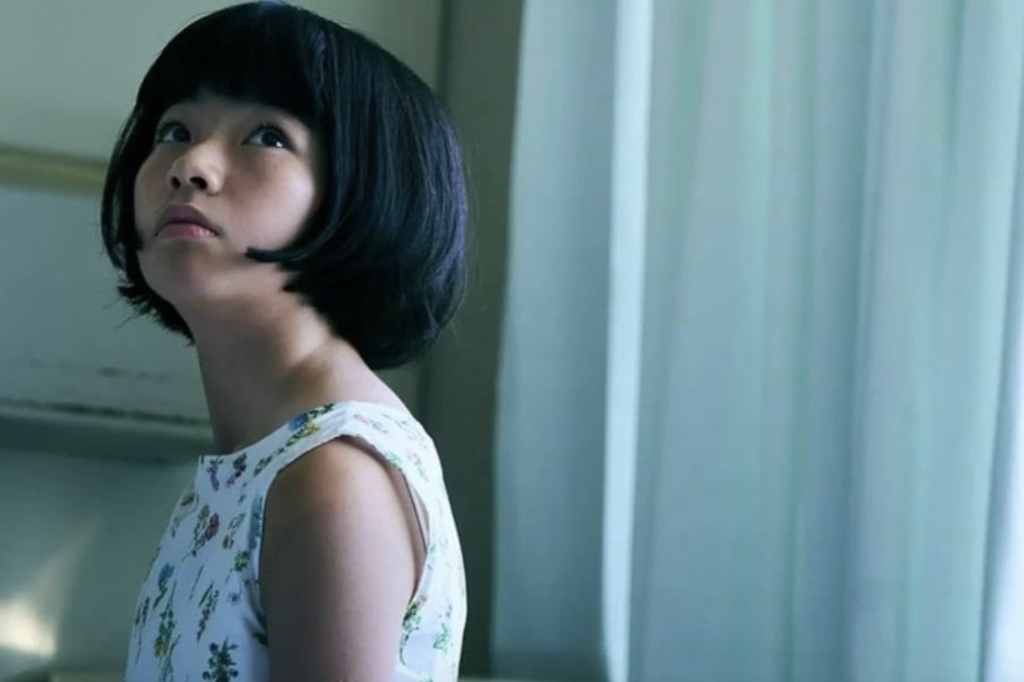
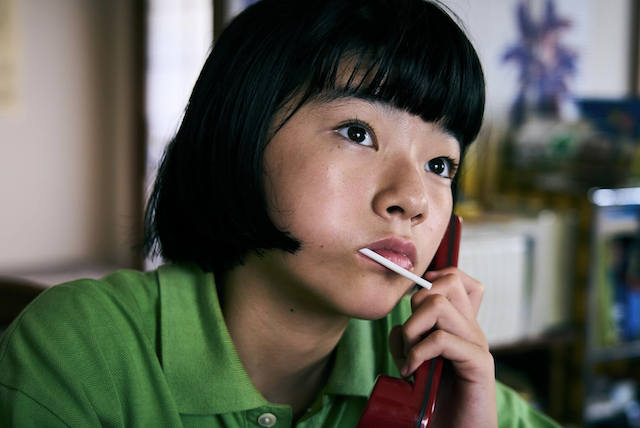
Chie Hayakawa: In the script, Fuki was supposed to be a bit introspective and quiet, but after meeting Yui Suzuki, it wasn’t that she became “brighter”—though she did have a more childlike, lighthearted quality about her—but she was just such a fun person. So those elements really started to flesh out the character, and I think she ended up becoming much more lively—or rather, a fun, slightly humorous character—than the Fuki I had originally envisioned.
Q: In the composition Fuki wrote, her mother was called to the school. Well, Fuki’s idea itself isn’t bad, and it seemed like the school was just issuing a gentle warning, but the mother also seemed a bit awkward about it, and I thought that was very typical of how Japanese schools operate. I thought that if this were an American student’s mother, she might have responded by saying, “That’s an interesting idea, isn’t it?” I wondered if this was a typically Japanese way for schools to handle things—was that something you were conscious of? During the production process, did you want to depict aspects that are characteristic of Japanese schools for a film intended for an international audience, or was it simply a setting you came up with?
Chie Hayakawa: That’s right. When I’m making a film, I hardly ever think about how it will be received overseas. But I saw this scene as a way to show that the mother is oblivious to the changes in her daughter and doesn’t pay her much attention. Also, drawing from my own experience—I remember during a parent-teacher conference in elementary school, the teacher told me, “I have absolutely no idea what this child is thinking”—so I adapted that experience a bit for the scene.
Q: At the beginning of the film, we see footage of a crying child. When viewed on its own, it looks like a public service announcement appealing to people about hunger in Africa and asking for donations. Later on, we learn the true nature of that footage, but the fact that the footage itself can be interpreted differently depending on how you look at it struck me as a really interesting perspective. By showing it at the very beginning, it looks like a completely different kind of footage. Was there an intentional element you wanted to establish right from the start—that the film itself also changes depending on how you view it?
Chie Hayakawa: That’s right. First of all, regarding the children crying, throughout the entire film, Fuki witnesses people crying in various places. It’s the same in the opening video, and then there are classmates crying at her own funeral, or the mother crying over the loss of her son while she was at the hospital at night, and the English teacher who cried when she heard her father had died—Fuki always watches all these different people crying with a look of great puzzlement, wondering, “Why do people cry?” She doesn’t really understand it yet.
But when she lost her father that summer and truly understood what it means for someone to be gone—to die—I experienced that pain for the first time. There was one scene in my dream where she was crying, and as I was making the film, I realized that this is a story about Fuki, who had never known pain or tears before, finally experiencing that pain and shedding tears. In that sense, the composition of Fuki watching that crying person was incredibly important.
That’s the most important thing this time around. Also, children who are suffering or grieving is one of the themes of this film. So, I decided right from the start that we would open with footage of that child.
 ©Courtesy of Film Movement
Q: When it comes to directing Yui Suzuki, I believe you, Mr. Hayakawa, have previously collaborated with director Hirokazu Kore-eda on an omnibus film. I’ve heard that Kore-eda-san tends to direct child actors on set without giving them the entire script. Could you tell us a little about the approach you took with child actors on set?
Chie Hayakawa: At first, I wasn’t sure whether I should give her the script or not. But since she’s already 11 years old, I felt that not letting her know what she was getting involved in wouldn’t be respecting her as a fully-fledged individual. So, I decided to explain everything to her—starting from the audition—and tell her exactly what kind of movie we were trying to make. I wanted to approach this in a way that didn’t treat her like a child.
As a partner in creating something, I didn’t want to treat her like a child, and I wanted to explain things as much as possible. Of course, I gave her the script so she could understand what kind of story it was, and I wanted her to decide for herself whether she wanted to participate. So, I didn’t treat her excessively strictly, nor did I treat her excessively leniently; I feel like I always interacted with her on a fairly equal footing. She’s a mysterious girl who seems to have both very childlike and very mature sides coexisting within her—she’s not the typical type of child actor, either. She doesn’t seem to be acting at all, and she doesn’t come across as particularly ambitious.
She didn’t seem like someone who was putting her whole life on the line for this job; she was just someone who could be herself naturally. So, from a certain point on, I found myself relying on her—thinking, “She’ll probably pull off even the most difficult scenes,” or “She can do this”—and then she’d just breeze through them effortlessly. There were so many moments where I relied on her so heavily that I honestly couldn’t imagine how I would have directed this role if it hadn’t been her.
Q: The last time I felt something similar with a child actor was when I saw Yūya Yagira in the movie “Nobody Knows”. He had this incredibly natural presence—it didn’t feel like he was being directed in any way—and his acting was truly wonderful. It really made me feel that she, too, is going to become an amazing actress.
Chie Hayakawa: She really wasn’t afraid of the camera at all.
Q: You worked with the same cinematographer Hideho Urata on this project as you did on the film “Plan 75”, didn’t you? Even though the world of this film is clearly very different from that of “Plan 75”, what specific details did you discuss with him regarding the depiction of the late 1980s before you began shooting?
Chie Hayakawa: That’s right. Since we’d already worked together on the film “Plan 75”, we’d built an incredibly strong bond of trust. We get along great, our tastes are very similar—whether it’s movies or music—and we knew our sensibilities aligned in so many ways. So, deciding to collaborate on a second project felt like a very natural progression.
Also, when I first gave him the script for this film, we were discussing how it was set in a town with a 1980s atmosphere—something we thought would be impossible to find in the Tokyo suburbs. But since Mr. Urata is from Gifu Prefecture, he suggested, “Come check out my hometown; we still have that 1980s vibe there.” So I went for the first time, thought, “Ah, this is perfect,” and we even started location scouting together at a very early stage.
Q: That’s exactly it. It feels like it blends in so naturally—I had that same sense when I think back on my memories of the ’80s, so I felt it was very close to that. I really appreciated how natural it felt. I heard that Shinji Somai’s film “Moving” was one of the works that influenced you while creating this project. Could you tell me specifically which parts of it influenced you?
Chie Hayakawa: That’s right. I saw the movie “Moving” in theaters when I was in middle or high school, and I absolutely loved it. The moment it ended, I couldn’t stop thinking about the main character—she had this charm that made me want to just keep watching her forever. I also wondered why I was so drawn to it, and I realized it was the beauty of the visuals and the way it captured that unique “cinematic” sense of time. It’s really a model for my own filmmaking.
It’s a film that left such a deep impression on me—it really defined what cinema is for me. So when I was writing the script, those images would just pop into my head. It might sound like an homage, but I included scenes that anyone who’s seen the original would definitely recognize. However, back when I was writing the script, director Shinji Sōmei wasn’t very well known internationally for some reason, and his work wasn’t really being introduced to the world.
I wondered, “Even if I write this, will anyone overseas even get it?” I thought, “Japanese people will get it, but people overseas probably won’t,” but then, just about the following year, the remastered version of the film *The Move* was screened at the Venice Film Festival, and I think it went on a tour afterward, coming to places like New York.
That’s when Director Shinji Somai became widely known all at once, and all the cinephiles came to know him. Then, when the film “Renoir” was released, everyone already knew about him. Ah, Shinji Somai’s “Moving”—that really made me happy. It was incredibly moving to see “Renoir” playing in the same theater at the very moment Shinji Somai’s work was gaining international recognition.
 ©Courtesy of Film Movement
Q: I was actually surprised to find that director Shinji Somai is quite well-known in New York. I remember there were a lot of Americans at the event we held at the Japan Society. I was also surprised by how many people had actually seen his films before. Of course, directors like Kurosawa, Ozu, and Mizoguchi are well-known in the U.S., but it really struck me that Shinji Somai’s films are also quite widely watched there.
Chie Hayakawa: They’ve been getting more and more exposure in recent years, haven’t they?
Q: The film “Typhoon Club”is also highly regarded in the U.S.
Chie Hayakawa: That’s true. “Typhoon Club” might actually be his most famous film overseas.
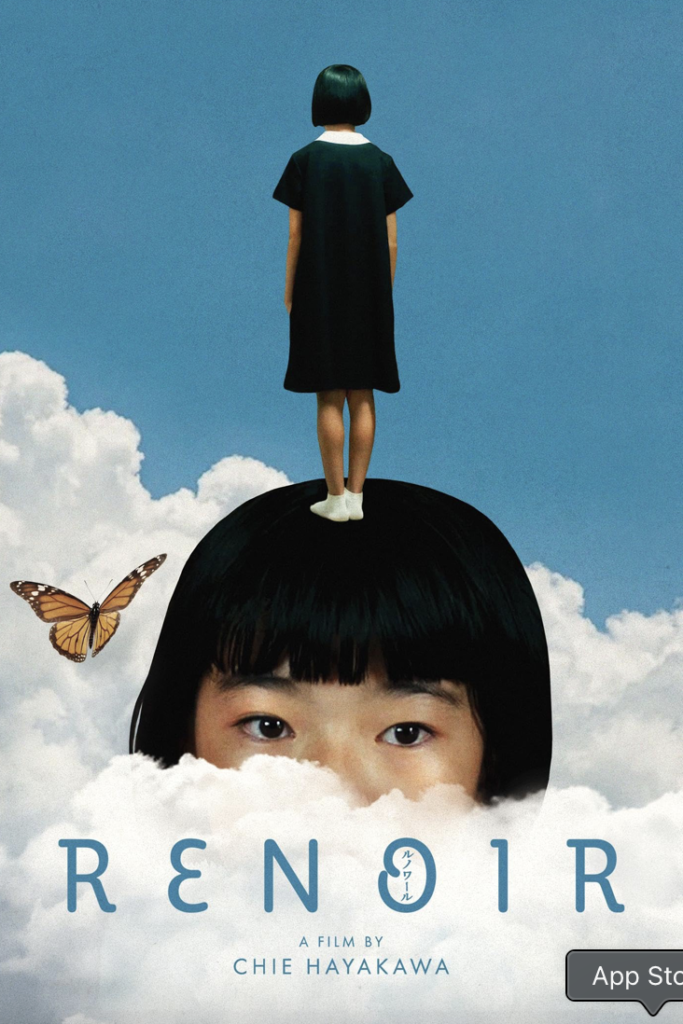
Q: I think so too. One thing that caught my attention this time was the title, which is “Renoir.” As the film itself touches on, it certainly evokes the image of the painter. When you were deciding on the title, were there various options to choose from? Could you tell us why you chose this particular title?
Chie Hayakawa: From the very beginning, I wanted to give the film a title that had absolutely nothing to do with the content. When I was thinking about what would work, Renoir’s paintings came to mind—and they aren’t related to the story at all, are they? But I thought the gap between a film set in 1980s Japan with a child as the protagonist and the name of a famous French painter like “Renoir” was interesting, so that’s why I decided to use it in the first place.
Q: I see. Also, what I found really interesting was the scene where Fuki has dinner at a restaurant with her mother and Toru(Played by Ayumu Nakamura), the mental training instructor played by Ayumi Nakajima. There’s the part where her mother suddenly buys her something, and the part where Fuki herself tries to walk a little behind them—it’s so childlike, but the way she senses the difference in how her mother treats her father versus how she treats Toru—that scene is portrayed from a child’s perspective in a way that I found really fascinating. When portraying such a sensitive child, it might sound strange to say, but I really felt the importance of seeing things from a child’s perspective in that scene. So, were there any specific things you were careful to do during filming to ensure you were truly seeing things through a child’s eyes?
Chie Hayakawa: She doesn’t really have many lines. I think Fuki probably has the fewest lines of all, so there were a lot of shots where she was just staring intently. But I wanted to create a sense of “unspoken storytelling”—where the audience could imagine what she was thinking without her actually saying it. As for those subtle expressions—it wasn’t like I was telling her, “Make this kind of face.” Whenever Yui-chan would say, “Okay, go ahead,” and I’d say “Action,” she’d just naturally pull it off like that right away. So rather than me consciously directing her to do it a certain way, I was filming with the conviction that—even though Fuki is sort of my (the director’s) alter ego—Yui Suzuki and I were the ones who understood this girl, Fuki, the best. So, it wasn’t a matter of deliberately adopting a child’s perspective; rather, the perspective of the mother within me and Yui-chan’s were so very similar that it felt strange.
 ©Courtesy of Film Movement
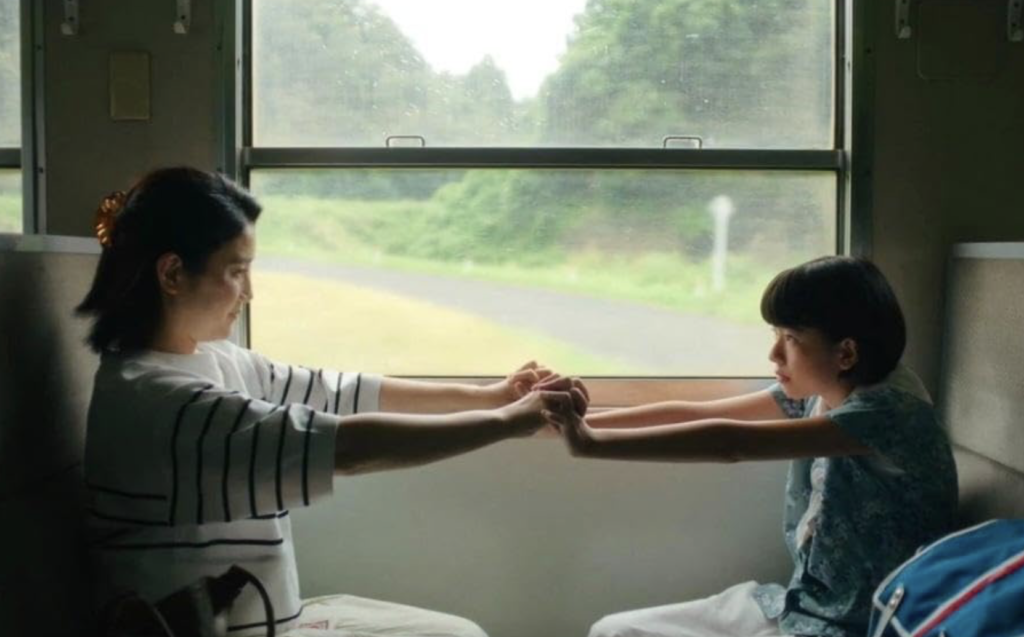
Q: In your previous film, “Plan 75”, you highlighted the issues of an aging society. In this film, I was particularly struck by the social environment surrounding women. The character of the mother, played by Hikari Ishida, left a strong impression on me—especially the way she interacted with her subordinates and her children while caring for her bedridden husband and juggling a demanding job, all while being subjected to —such as the relentless, harsh scrutiny of society—while caring for her ailing husband and juggling a demanding job. I think the film offers a broad perspective on the social environment and status of mothers and women in general. While this film focuses primarily on the child’s perspective, I found it fascinating how the relationships between the mother and others are portrayed so realistically. What kind of discussions did you have with Hikari Ishida, who plays the mother, as you developed that character?
Chie Hayakawa: When I spoke with Ms. Ishida, I gave her a three-page document that went into quite a bit of detail about Utako—her background, her upbringing, the insecurities she harbors, and how she ended up marrying her husband, Keiji—and asked her to read it. I think we talked about how she’s the one who’s under the most pressure and is always angry, but also about the reasons behind that anger. I didn’t really set out to depict the position women are in or the hardships they face—that wasn’t my intention. At first glance, Mom is always angry, harsh on her kids, a bit insensitive, and pretty cold toward her husband.
She’s a really unpleasant character. When I showed the script to friends, they said things like, “This is the worst mom ever.” But surprisingly, when women read it, some of them really empathize with her. And personally, I identify with her the most—she’s a character I find endearing. She’s trying her best, but she covers up her weaknesses with strength. She has so many insecurities—like feeling she has to be a good mother, a good wife, and the frustration of wanting to do better but not being able to. She gets angry even when she doesn’t want to, and that sense of helplessness is something I’ve felt deeply as an adult myself, so I really wanted to portray that. Like the frustration women feel about not being perfect.
Q: Your previous film, “PLAN 75”, was screened in a certain section at the Cannes Film Festival, and this latest work is competing in the main competition there. With Japanese films now available on Netflix and becoming increasingly accessible overseas, I wonder if your passion for creating Japanese films for an international audience will naturally come across if you approach your work with that mindset. For example, the actress Megumi has recently partnered with Netflix to produce films. She actually attended the Cannes Film Festival and organized events like “Japan Night” in her capacity as a producer. Looking ahead, aside from your work as a director, do you have any personal vision, ideas, or future plans regarding how you’d like your own films—or those of your colleagues in Japan—to be viewed by an international audience?
Chie Hayakawa: I think the category of “Japanese (films)” is gradually disappearing. We’re seeing a lot of Japanese directors filming abroad and foreign directors filming in Japan these days. Take Mr. Hamaguchi at this year’s Cannes Film Festival, for example—he has a film he shot in France, and and then there was last year’s “Lost Land” by Japanese director Akio Fujimoto, which tells the story of Rohingya refugees heading to Malaysia. Even among projects currently in development—though not yet made—I hear about these kinds of ideas all the time. So I think that in the future, we’ll become less and less fixated on the idea of “Japanese films made by Japanese people,” and there will likely be plenty of directors going abroad to shoot. There are also films like Hikari’s, where the setting is Japan but the protagonist is American. I feel like things are becoming much more open in that regard, so I find it really interesting.
Q: It feels like things are going to keep changing from here on out, doesn’t it? The way we approach things. I don’t know if you’ve seen it recently, but there was a movie called *Brad New Landscape*, and it really surprised me. The director was amazing, and I was also surprised by how talented the lead actor, Kurosaki, is. I don’t know if you’ve seen it, though…
Chie Hayakawa: I love it. Yeah.
Q: Well then, Ms. Hayakawa, thank you very much.
Chie Hayakawa: Thank you. I look forward to working with you again.
If you like the interview, share your thoughts below!
Check out more of Nobuhiro’s articles.
Here’s the trailer of the film.