

©Courtesy of MUBI
When famous figures are portrayed on film, it is almost always less interesting to follow the full arc of their lives – the rise, fall, and everything in between. It is far more compelling to drop into a brief period or pivotal moment and get a glimpse of who they really are, a snapshot. When Paweł Pawlikowski (“Ida”, “Cold War”) takes us back to 1949 in “Fatherland”, now playing at the New York Film Festival, to look at renowned author Thomas Mann, he focuses even more closely on the writer’s daughter, Erika. It is a tight, concise, and absolutely brilliant move.
Thomas Mann was a literary giant, Nobel Prize winner and one of Germany’s most celebrated intellectuals, the author of such landmark novels as “The Magic Mountain” (1924) and “Death in Venice” (1912), which was adapted into a classic film by Luchino Visconti in 1971. After fleeing the Nazis, he eventually landed in California, where he became an American citizen and lived the life of a celebrated exile. Yet beneath the towering public persona was a complicated man: deeply attached to Germany, yet forced to leave it, and a distant father to six children who had to find their own way in the shadow of his fame.
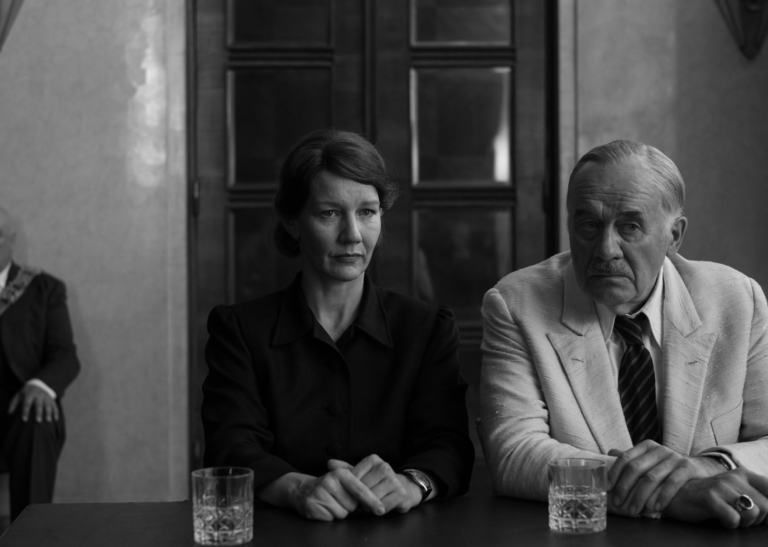
In that big shadow stood Erika and Klaus, the two children, both writers, at the heart of “Fatherland”. Set in the aftermath of World War II, the film sends Thomas Mann (Hanns Zischler) and his daughter Erika (Sandra Hüller) back to Germany in 1949, on a fictionalized road trip across the country’s bomb-scarred ruins, first to Frankfurt in West Germany, where Mann is to receive the Goethe Prize, and then on to East Germany. The son Klaus never joins them, leaving Erika alone with her father and at the heart of the story.
One of the film’s great strengths is how seamlessly history bleeds into the intimate drama of the Mann family. Postwar Germany, still shattered, torn apart and trying to find its way forward, becomes a mirror for Erika’s own fractured emotions. When tragedy strikes, she is left torn between grief, anger and loyalty, while her father’s complicated relationship with Germany and his gay son Klaus casts an even longer shadow over the family. One dimension the film leaves unexplored is Thomas Mann’s sexuality. His diaries reveal a lifelong attraction to men, which is also reflected in works such as Death in Venice — perhaps a subject for another film.
©Courtesy of MUBI
Another great strength is naturally Sandra Hüller, who gives a phenomenal performance. After “Anatomy of a Fall” (2023), “The Zone of Interest” (2023) and this year’s “Rose” (2026), she once again shows her remarkable range, giving Erika a deeply layered inner life with little spelled out. Pawel Pawlikowski, who won Best Director at Cannes for “Fatherland”, gives her the space to do so, keeping the performance understated. Hanns Zischler is an uncanny Thomas Mann, with a look that also recalls Victor Sjöström in Ingmar Bergman’s “Wild Strawberries” (1957) – another film “Fatherland” echoes in its portrait of a distant intellectual about to receive a prize and questioned by a close one. August Diehl brings a troubled intensity to Klaus, who opens the film in a long, unbroken phone call with Erika from his bed. The rest of the ensemble is convincing throughout.
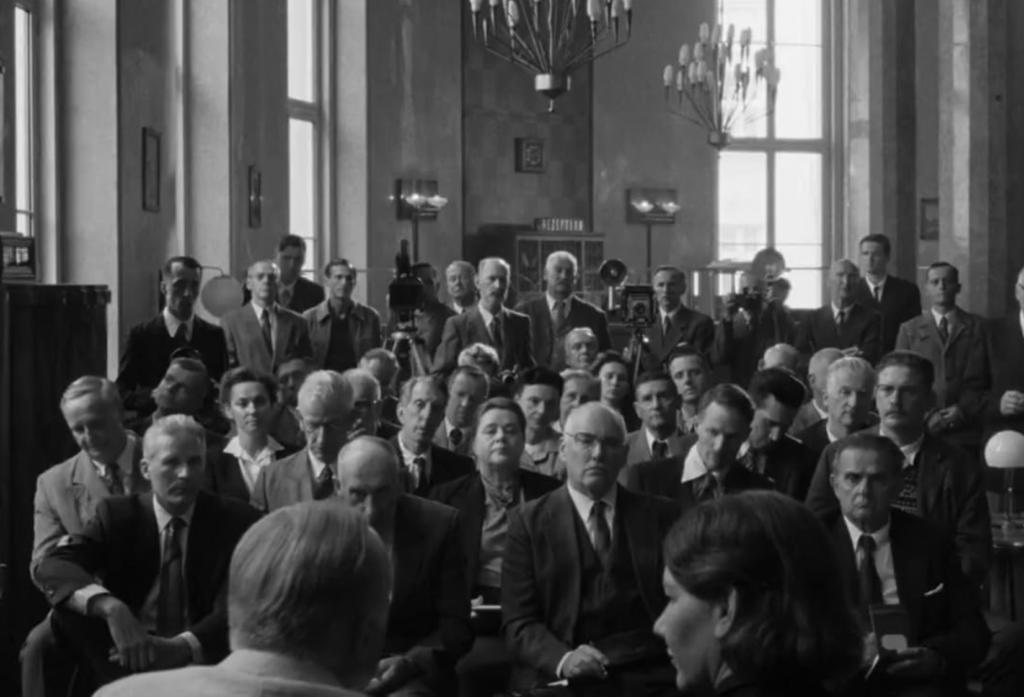
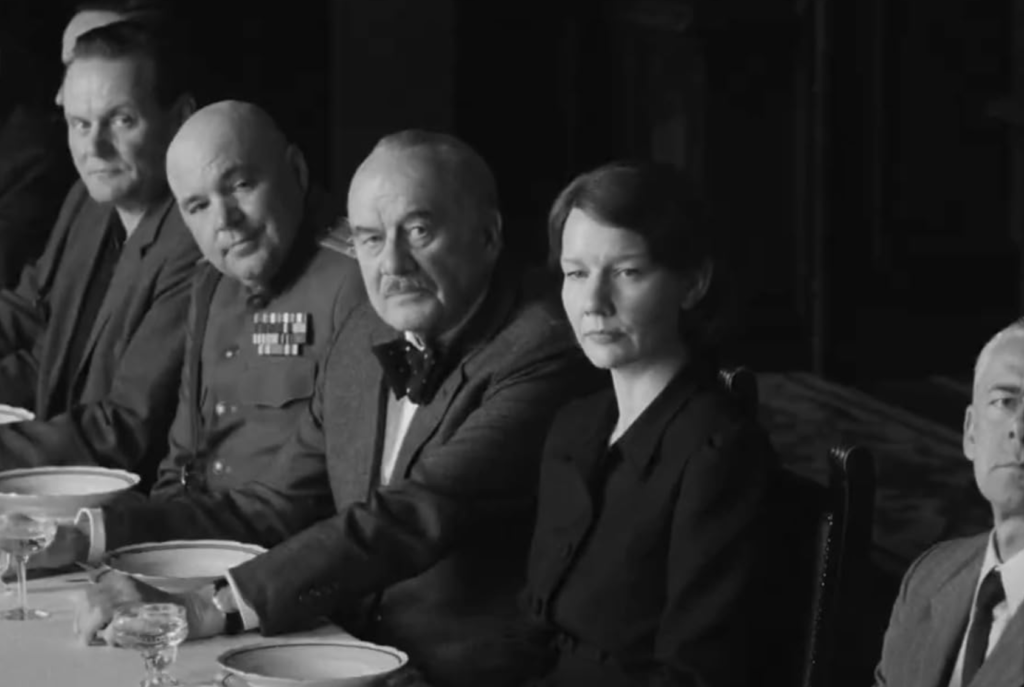
Besides that long opening shot, the film is strikingly tight, running for only 82 minutes. Every scene, every composition, beautifully captured by cinematographer Łukasz Żal, feels economical yet meticulously crafted, each frame like a painting. The connection to Pawel Pawlikowski’s two previous acclaimed films, “Ida” (2013) and “Cold War” (2018), is obvious (Ida won an Academy Award while “Cold War” was nominated for three, including Best Director for Pawlikowski). He somehow links all three films, although he insists they are not a trilogy: the intimate and the historical are intertwined, while postwar Europe, black-and-white cinematography and the rise of Communism echo through them all. Yet “Fatherland” never feels like a mere repetition of what came before.
In the end, “Fatherland” is a beautifully made, deeply human film about family, history and the weight of the past. Pawlikowski keeps it intimate and remarkably restrained, yet there is a great deal beneath its quiet surface. Its short running time feels just right, giving us enough to understand these characters and the world while leaving enough unsaid for our imagination to fill in the gaps.
©Courtesy of MUBI
Grade: A
If you like this review, share your thoughts below!
Check out more of Niclas’ articles.
Here’s the trailer of the film.