

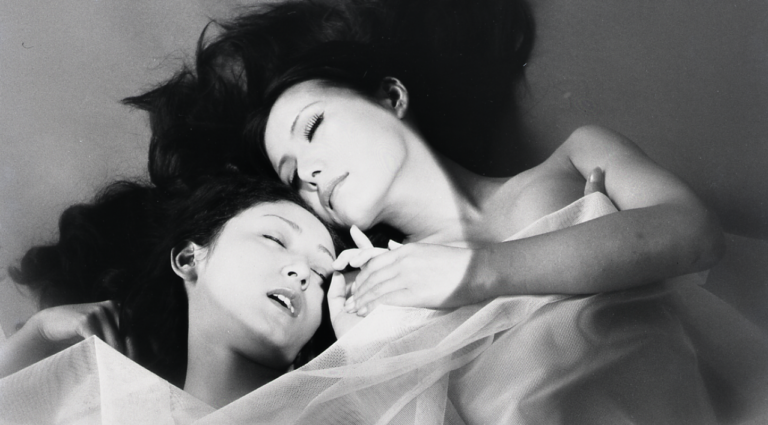
Woman on the Night Train © 1972 Nikkatsu
Japan Society Announces
Nikkatsu’s Golden Age of Eros
Celebrating 55 Years of Roman Porno
An Erotic Production Line from Japan’s Oldest Film Studio
November 20–December 6, 2026
New York, October 22, 2026—Japan Society is pleased to announce the film series Nikkatsu’s Golden Age of Eros, a 55th-anniversary retrospective on the widely influential Roman Porno (roman poruno) film line (1971-1988). Not to be confused with pinku eiga (pink film, or independent, low-budget softcore productions often made in black and white), this higher-budget, elevated studio-backed softcore film derived its name from either the French literary genre roman pornographique or a shortening of the word “romantic.” Utilizing 35mm color photography and studio resources, the Roman Porno gave new opportunities to young and first-time filmmakers and was known for the remarkable artistic freedoms given to them.
Amid the last breaths of Japan’s studio era, as the strain of plummeting attendance and the rise of television brought the industry into collapse, Japan’s oldest film studio, Nikkatsu, abandoned mainstream productions, favoring erotica. An unprecedented move by any measure, Nikkatsu’s bold decision established the legendary Roman Porno that, for 17 years, would usher in an era of creatively ambitious cinematic expression. Adhering to a strict set of conventions—a sex scene every 15 or so minutes, brisk 70-minute runtimes, medium-sized budgets and tight 10-day shooting schedules—the Roman Porno became known as one of the few avenues for aspiring filmmakers to make their debuts and hone their craft as the studio apprenticeship system buckled. Nagisa Oshima, in critique of the genre, would declare, “Roman Porno films take sex as their subject matter but not as their theme”—but it was precisely this distinction that allowed the genre to flourish while earning the respect and praise of critics including Shiguéhiko Hasumi and Tadao Sato. A thrilling period in the time of studio decline, Roman Porno would give many soon-to-be-known filmmakers of the 1980s and 1990s a chance to make early films or train in Nikkatsu’s production line, including Kazuhiko Hasegawa, Shinji Somai, Kiyoshi Kurosawa and Yoshimitsu Morita (whose Top Stripper is included). Underappreciated masters of the genre, Tatsumi Kumashiro, Noboru Tanaka and Chusei Sone, would emerge as new, exciting voices, illustrating that erotic cinema could be art.
The genre itself would not be without controversy. In 1972, Roman Porno became the subject of highly publicized obscenity trials, with Tokyo Metropolitan Police raiding Nikkatsu’s offices despite the films having already passed review under Eirin, Japan’s rating and classification organization. An eight-year legal battle—the last time a film would ever be tried for obscenity in Japan—would end with acquittals for the accused. In response, Tatsumi Kumashiro directed two features in 1973 (both included in the series) that would critique state-imposed morality and censorship, adapting literary works that had been prosecuted for obscenity or works by authors that had writings found legally obscene in the 1960s and 1970s: Kafu Nagai’s short story Yojohan Fusuma No Shitabari and Marquis de Sade’s Justine (its companion novel Juliette would be prosecuted and charged as obscene). Kumashiro’s The World of Geisha, adapting the aforementioned Nagai, drew comparisons between late Taisho-era authoritarianism and postwar censorship and would serve as a noted antecedent to Nagisa Oshima’s politically transgressive In the Realm of the Senses (1976). Reflecting on Japan’s postwar suppression of films, in the wake of pinku and Roman Porno prosecutions, Oshima would declare “sexual expression is always seized upon when it marks the beginning of something new.”
Presented with support from OCN Distribution, Nikkatsu’s Golden Age of Eros kicks off on November 20 with a 35mm import of Noboru Tanaka’s A Woman Called Sada Abe (1975)—a cinematic rendition of the real-life and notorious 1936 incident of amour fou, made the year before Oshima’s In the Realm of the Senses. Series highlights include libertine Edogawa Ranpo and Marquis de Sade adaptations Watcher in the Attic (1976) and Woods Are Wet (1973); Tatsumi Kumashiro’s acclaimed period drama The World of Geisha (1973), praised by François Truffaut, on imported 35mm; and rarely screened selections including gothic tale Woman on the Night Train with new subtitles by Japan Society, Nikkatsu’s most successful Roman Porno feature Love Letter (1981) and Roman Porno elegy Last Cabaret (1988).
Select Screeners and Press Stills available upon request. Please contact: press@japansociety.org
Tickets: $16 / $14 students and seniors / $12 Japan Society members
Series Pass: $120 Series Pass / $100 Japan Society Members
Screenings take place in Japan Society’s landmarked headquarters at 333 East 47th Street, one block from the United Nations. Lineup and other details subject to change. For complete information, visit japansociety.org. Tickets are available now.
FILM DESCRIPTIONS All films are listed alphabetically.
Angel Guts: Red Classroom
『天使のはらわた 赤い教室』 (Tenshi no harawata akai kyoshitsu)
Friday, December 4, 9 pm
Dir. Chusei Sone, 1979, 79 min., DCP, color, in Japanese with English subtitles. With Yuki Mizuhara, Keizo Kanie, Jun Aki, Minako Mizushima.
Desperate, broken souls and dark desires inhabit the Angel Guts series, adapting Takashi Ishii’s eponymous manga into a somber study of loneliness and disconnect. Enraptured by an 8mm blue film, Muraki, an adult magazine editor, becomes obsessed with finding its lead actress, Nami. Chusei Sone, one of the genre’s most influential figures, directs this second installment in the series (the first to feature Ishii’s involvement) with adroit self-reflexivity, drawing attention to the artificial, “acted” nature of its mandatory erotic scenes, and embedding it with a curious if not messy exploration of spectatorship and exploitation. Overwrought with an exuding sense of melancholia in tone and exuberant mise-en-scène, Angel Guts: Red Classroom is a brooding, almost lyrical portrait of Ishii’s tragic figures, buried in relentless traumas, desires and deep loneliness.
Last Cabaret
『ラスト・キャバレー』(Rasuto kyabaree)
Sunday, December 6, 7 pm
Dir. Shusuke Kaneko, 1988, 78 min., DCP, color, in Japanese with English subtitles. With Miyuki Kato, Yasuo Daichi, Kou Watanabe, Kyoko Hashimoto, Youko Takagi, Ryoichi Kusanagi.
Made the same year as his androgynous shoujo masterpiece Summer Vacation 1999, Shusuke Kaneko’s elegiac work would be the penultimate Nikkatsu Roman Porno. With their family-run cabaret soon to be shuttered due to a planned redevelopment, a father and daughter reflect on the past while facing their uncertain future. A turning point in Kaneko’s career, with him deeming it a “graduation”, Last Cabaret serves as a metaphor for the end of Nikkatsu’s Roman Porno, a nostalgic requiem for its 17-year existence.
Love Letter
『ラブレター』(Rabu reta)
Friday, December 4 at 7:00 PM
Dir. Yoichi Higashi, 1981, 83min., DCP, color, in Japanese with English subtitles. With Keiko Takahashi, Katsuo Nakamura, Mariko Kaga, Noboru Nakaya, Ken Nishida.
Marking the 10th anniversary of Roman Porno, this elevated prestige project directed by the late Yoichi Higashi (No More Easy Life), known for his delicate portraits of modern women, and written by Yozo Tanaka (Zigeunerweisen, Sailor Suit and Machine Gun) broke attendance records for the erotic line, netting an unusually high female viewership. Based on the real-life recollections of the mistress of postwar poet Mitsuharu Kaneko, Love Letter settles in on an age-gap relationship, as a lonely young woman (Keiko Takahashi) finds herself kept in waiting for her older, married lover to return. Pining for a love that is at once insatiable and ineffectual, Yuko finds her days spent yearning in a small, closed-off world. Higashi’s tale of the “other woman” gives a nuanced portrait of infidelity, ego and dependency—an examination of passion and its many painful subjugations.
The Oldest Profession
『㊙色情めす市場』((Maruhi) shikijo mesu ichiba)
Saturday, November 21 at 4:00 PM
Dir. Noboru Tanaka, 1974, 83 min, DCP, color, in Japanese with English subtitles. With Meika Seri, Junko Miyashita, Genshu Hanayagi, Shiro Yumemura, Moeko Ezawa.
4K Restoration. With its monochromatic pallor and flashes of chroma, Noboru Tanaka’s The Oldest Profession brings forth a cross of ATG and radical pinku sensibilities. Set in the forbidden expanse of Kamagasaki, Osaka’s poverty-stricken tract of slums, The Oldest Profession is anchored by Meika Seri’s turn as 19-year-old prostitute Tome. Tome’s restless days are spent surrendering to the urges of men within the district’s hopeless wasteland of railroad tracks, doyas (cheap hostels) and bars. Known during its production as The Annunciation—a biblical reference to Archangel Gabriel’s proclamation to Mary that she would bear a divine savior through virgin birth—Tanaka’s guerrilla-shot apostasy captures its subjects writhing in both agony and pleasure over the course of a sordid Osaka summer.
Scent of a Spell
『魔性の香り』(Masho no kaori)
Saturday, December 5 at 8:00 PM
Dir. Toshiharu Ikeda, 1985, 90 min., DCP, color, in Japanese with English subtitles. With Mari Amachi, Johnny Okura, Yuki Kazamatsuri.
2K Restoration. Mermaid Legend director Toshiharu Ikeda’s elegant, spellbinding thriller Scent of a Spell opens in the cleansing downpour of rain as a man witnesses a woman throw herself off a bridge. Rushing into the water, Esaka rescues the mild-mannered Akiko from drowning, taking her home to recover. Fearing that her violent husband might find her, Akiko’s recounted backstory starts to raise suspicions just as Esaka begins to fall for her. The second Directors Company-led Roman Porno after Shinji Somai’s Love Hotel, Ikeda’s moody “woman in trouble” story melds eroticism, tragedy and psychological paranoia.
Shinjuku Midnight Story: Man and Woman
『新宿真夜中物語 男と女』(Shinjuku Mayonaka Monogatari: Otoko to Onna)
Friday, November 20 at 9:15 PM
Dir. Koyu Ohara, 1972, 67 min., DCP, color, in Japanese with English subtitles. With Hidemi Hara, Lamy Rose, Yoshie Kitsuda, Michiyo Mako.
Pop art stylist Koyu Ohara’s Shinjuku Midnight Story: Man and Woman captures 70s queer subculture in the bustling streets of Tokyo with this sensual program picture. Beautiful nightclub hostess Kiyomi rejects the leering gaze of men at her Shinjuku bar, instead preferring the company of women, but after her longtime girlfriend leaves her for a man, Kiyomi begins a tryst with a trans woman (whose first appearance is a playful nod to Funeral Parade of Roses). Ohara positions men as objects of ridicule, conveying their hypocrisies and obsessions with women as “dolls”, taking it further when Kiyomi’s Madame pressures her to take them home. A gorgeous, candy-colored picture, Ohara’s Shinjuku Midnight Story retains unique explorations of femininity, sexuality and gender within the framework of a tale of queer desire.
Top Stripper
『(本)噂のストリッパー』((Hon) uwasa no sutorippa)
Saturday, December 5 at 4:00 PM
Dir. Yoshimitsu Morita, 1982, 67min., DCP, color, in Japanese with English subtitles. With Kensuke Miyawaki, Ayako Ota, Yuji Yoshikawa, Kaori Okamoto, Nami Misaki, Jun Ueno.
Made the year before his decade-defining Family Game, Yoshimitsu Morita’s delightful sex comedy is an irreverent coming-of-age story, abundant with cheeky, upbeat humor and punchy synthesizer beats as a young, naive boy encounters first love. After seeing Gloria perform at his local strip joint, Yoichi falls head over heels in love with her, attending shows every day hoping she’ll notice. But to Gloria, he’s just another face in the crowd. Directed with remarkable levity, and vibrant, on-location cinematography, Top Stripper is an irreverent take on the seishun eiga (youth film), raising questions of spectatorship all the while illustrating the bittersweet nature of first love. Treating sex as a mere fact of life, Morita captures his subjects’ personal lives with heartfelt candor.
Watcher in the Attic
『江戸川乱歩猟奇館 屋根裏の散歩者』(Edogawa Rampo ryokikan: yaneura no sanposha)
Saturday, November 21 at 8:00 PM
Dir. Noboru Tanaka, 1976, 76min., 35mm, color, in Japanese with English subtitles. With Junko Miyashita, Renji Ishibashi, Tokuko Watanabe, Shirō Yumemura, Aoi Nakajima.
Imported 35mm Print. A tenant in a boardinghouse spies on his neighbors, bearing witness to a series of bizarre events in this ero guro adaptation of the great Edogawa Ranpo’s 1925 short story Stalker in the Attic. Peering from the rafters, Goda becomes enraptured with the secret lives of his fellow boarders—a radical artist, a proselytizing Christian, and even the elegant, veiled proprietress (Junko Miyashita). From a secret liaison with a greasepaint clown to a strange, breathing velvet chair, these encounters unveil a perverted eroticism hidden deep within. The middle film in Noboru Tanaka’s Showa trilogy, following A Woman Called Sada Abe, Watcher in the Attic revels in its voyeuristic tendencies as Tanaka advances a libertine study of love, sex and death in Taisho-era Japan.
A Woman Called Sada Abe
『実録阿部定』(Jitsuroku Abe Sada)
Friday, November 20 at 7:00 PM
Dir. Noboru Tanaka, 1975, 76 min., 35mm, color, in Japanese with English subtitles. With Junko Miyashita, Eimei Esumi, Nagatoshi Sakamoto, Genshu Hanayagi.
Imported 35mm Print. Released the year before Oshima’s infamous In the Realm of the Senses, Noboru Tanaka’s visually alluring “docu-drama” of the oft-adapted and real-life legend of Sada Abe (still alive at the time of this film’s making) is a claustrophobic tale of amour fou. Former geisha and prostitute Sada Abe, fiercely portrayed by Junko Miyashita, secludes herself with her married lover Kichi in a run-down inn, embarking on a torrid, all-consuming affair of cavorting, imbibing and sexual abandon. Tanaka’s intimate study of female desire subverts convention as the two retreat into a world of carnal obsession, culminating in a notorious act that would grip a nation already in the throes of rising militarism.
Woman on the Night Train
『夜汽車の女』(Yogisha no Onna)
Saturday, December 5 at 6:00 PM
Dir. Noboru Tanaka, 1972, 71min., DCP, color, in Japanese with English subtitles. With Mari Tanaka, Keiko Tsuzuki, Tomoko Katsura, Kibaji Tankoba, Akemi Yamaguchi.
New English Subtitles by Japan Society. A baroque fantasy by way of Vadim and Buñuel’s Diary of a Chambermaid, Noboru Tanaka’s Woman on the Night Train is a gothic work replete with decadent, soft-focus imagery. Sisters Yumi and Saeko, the daughters of an archeologist, share a closely-tethered bond that becomes challenged when talk of marriage arises. The result is an unravelling of psyches in this atmospheric, swirling tale of sisterly love.
Woods Are Wet
『女地獄 森は濡れた』(Onna jigoku: Mori wa nureta)
Sunday, December 6 at 5:00 PM
Dir. Tatsumi Kumashiro, 1973, 65min., DCP, color, in Japanese with English subtitles. With Hiroko Isayama, Rie Nakagawa, Hatsuo Yamaya, Moeko Ezawa, Akira Takahashi.
Adapting the sister novel of Marquis de Sade’s Juliette—ruled obscene by the Supreme Court of Japan in the late sixties—Tatsumi Kumashiro’s legendary 1973 provocation transposes Justine to the Taisho period. Falsely accused of murdering her mistress, young servant Sachiko flees and stumbles upon a remote countryside inn governed by sadistic perversions. An aristocratic proprietor fixates on corrupting the virtuous girl, subjecting her to depraved acts obscured in shadows. Pulled from theaters just a week after release, Woods Are Wet calls to question ideas of morality when imposed by those in power—a pointed judgement aimed at the ongoing prosecutions of Roman Porno at the time.
The World of Geisha
『四畳半襖の裏張り』(Yojohan fusuma no urahari)
Saturday, November 21 at 6:00 PM
Dir. Tatsumi Kumashiro, 1973, 72 min., 35mm, color, in Japanese with English subtitles. With Junko Miyashita, Eimei Esumi, Go Awazu, Moeko Ezawa
Imported 35mm Print. The affairs of men and women make up much of Tatsumi Kumashiro’s concerns in his loose Kafu Nagai adaptation The World of Geisha, a period drama set within the fusuma-walled interiors of a Taisho-era pleasure house. A young courtesan takes on her first customer, and against her better judgement, falls in love. With intercut sequences of the 1918 rice riots and the Siberian intervention, Kumashiro touches not just on Japanese imperialism, but the idea of state-imposed censorship as well: exaggerating black censor bars and “self-censoring” titles—piercing commentary on the treatment of Roman Porno and its then ongoing obscenity trials. Praised by François Truffaut, The World of Geisha is said to be one of Nagisa Oshima’s greatest points of reference when making In The Realm of the Senses.
SCREENING DATES
FRIDAY, NOVEMBER 20
7:00 PM A Woman Called Sada Abe (35mm)
9:15 PM Shinjuku Midnight Story: Man and Woman
SATURDAY, NOVEMBER 21
4:00 PM The Oldest Profession
6:00 PM The World of Geisha (35mm)
8:00 PM Watcher in the Attic (35mm)
FRIDAY, DECEMBER 4
7:00 PM Love Letter
9:00 PM Angel Guts: Red Classroom
SATURDAY, DECEMBER 5
4:00 PM Top Stripper
6:00 PM Woman on the Night Train
8:30 PM Scent of a Spell
SUNDAY, DECEMBER 6
5:00 PM Woods are Wet
7:00 PM Last Cabaret