

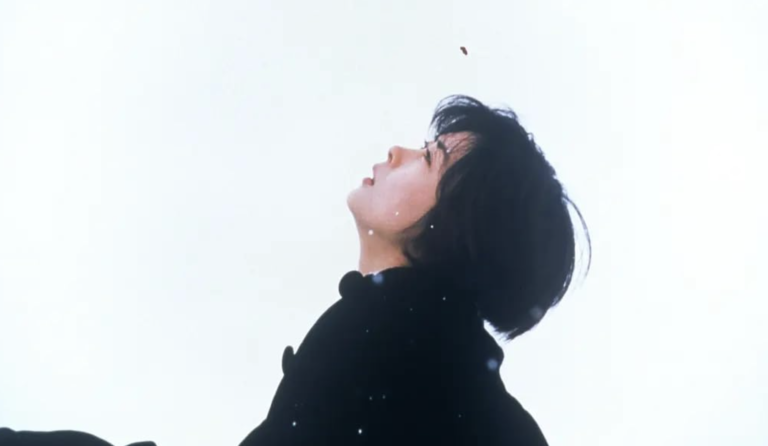
©Courtesy of Film Movement
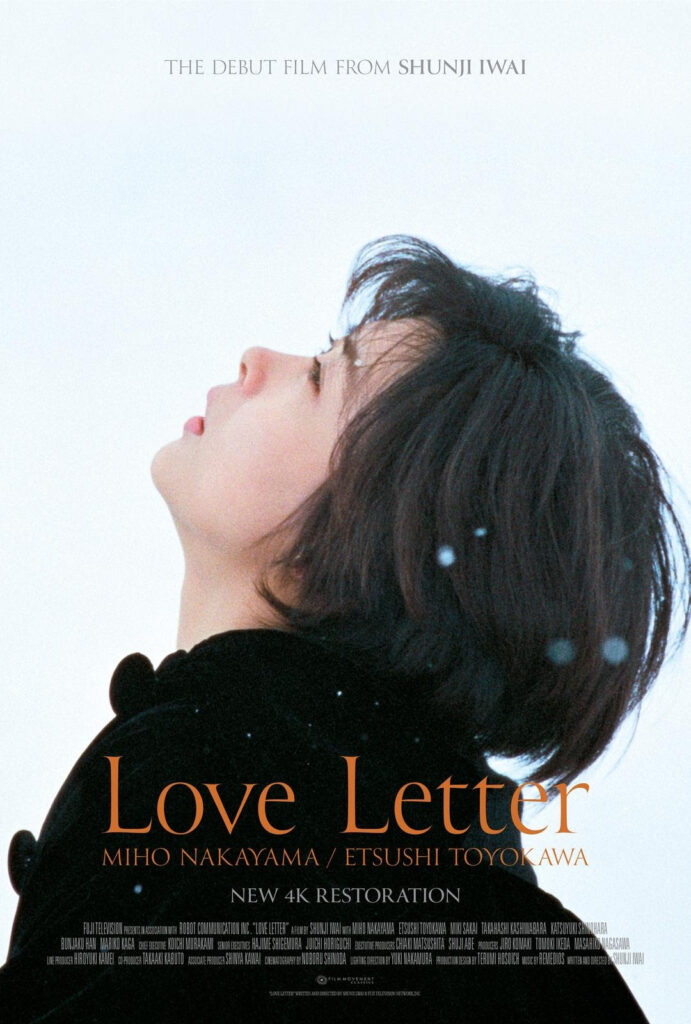
©Courtesy of Film Movement Movies
Exclusive Interview with Writer/Director Shunji Iwai
Q: I had the pleasure of seeing the film “Love Letter” in theaters. This year marks the 30th anniversary of its release, and now that the 4K remastered version is being screened in theaters, how do you feel about it?
Shunji Iwai: That’s right. You’d think it would make me feel nostalgic, but—and this might not be limited to the film “Love Letter”—when I revisit each of my works, I actually find myself feeling surprisingly close to them. It’s almost as if they happened just recently—so much so that I often get the impression I could easily start filming a sequel right away.
Q: I imagine you conducted technical checks for this 4K remaster, but since Mr. Shinoda, the cinematographer at the time, has already passed away, what specific aspects did you pay attention to when creating the 4K remaster? To what extent were you involved in the process?
Shunji Iwai: Well, regarding the color, we had the final Blu-ray or DVD master that we created with Mr. Shinoda, and we aimed to stay as close to that as possible. To be honest, rather than working directly with the film itself, we applied color grading during the process of telecine from the negative film and digitization.
Since it’s quite difficult for us to control the color on the film itself to that extent, we had a version with the color already adjusted, which was essentially the most recent version available, so we finished the color grading fairly faithfully based on that. As for the audio… well, we had a 5.1-channel setup (a configuration in which six speakers are arranged front, back, left, and right to surround the listener with different sounds) for the most part, but since the digital sound had a certain harshness to it, we took just the center speaker track directly from the film and integrated it into the mix. That way, we managed to sneak in a bit of that soft, film-like sound.
Q: At that time, Miho Nakayama was a popular actress who had transitioned from being an absolute idol to an actress. Before filming began, during the casting process, what aspects of Ms. Nakayama did you find appealing that led you to cast her?
Shunji Iwai: For this film, “Love Letter”, it had been decided from the very beginning that one actor would play two roles, so we were looking for someone who could portray both characters. Ms. Nakayama’s name came up as a candidate, and when I met her, I intuitively felt that she truly possessed the personalities of both characters. That’s why we asked her to take on the role, and I was really glad that she ultimately agreed to do it.
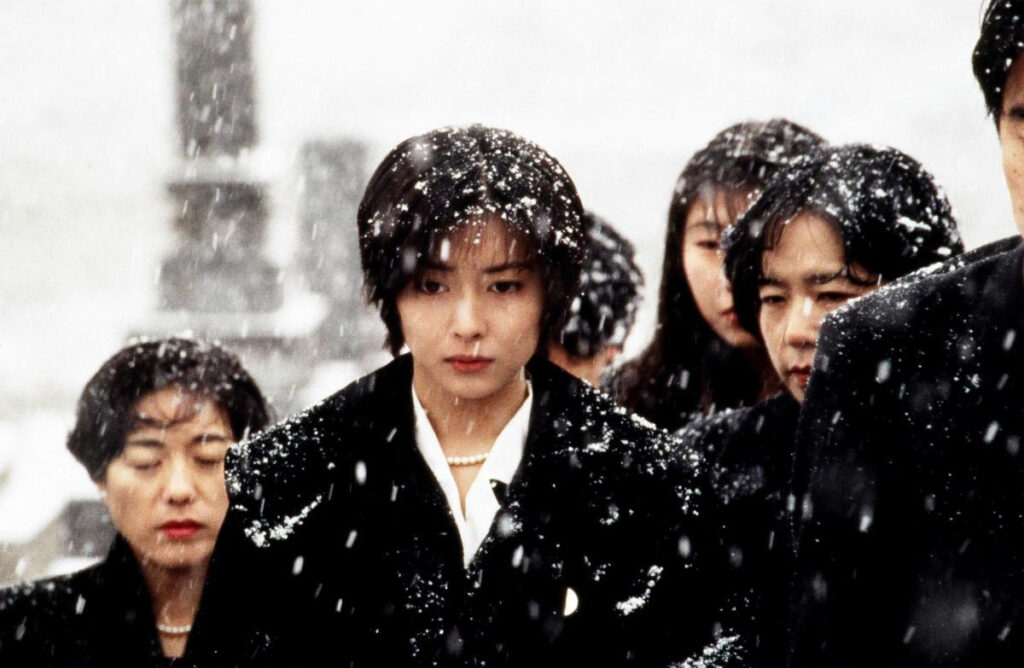
©Courtesy of Film Movement
Q: In my mind, I feel like from the ’80s and ’90s up until this film, Ms. Nakayama tended to play relatively lighthearted or comedic roles in dramas. But starting with this movie, I get the sense that she really began taking on a variety of serious dramatic roles. Did you have that impression as well? During the casting process, did you have any concerns—like, “Is this really going to work?”—or anything like that? When you actually met her, did you feel that he possessed those qualities after all?
Shunji Iwai: That’s right. When I actually met him, she was completely different from her TV persona—she had a very mysterious aura about her. In that sense, when I met her, I felt that she was the right person to play both of those distinctive characters.
Q: In the movie “Love Letter”, the city of Otaru is captured on screen in a truly magical and beautiful way, and the cinematography also has a very dreamlike quality to it. I was wondering what specific points you focused on during location scouting, and what kind of discussions you had with Director of Photography Shinoda beforehand regarding the Otaru shoot, and how you approached it?
Shunji Iwai: As for location scouting, I’d had this feeling from the very beginning that I wanted to shoot somewhere in the Hokkaido area, so I visited places like Sapporo and Hakodate. But Otaru really left a strong impression on me because it felt somewhat close to the kind of “primal landscape” I carry within me. I’m originally from Sendai in Miyagi Prefecture, and while it’s not exactly the scenery of Sendai, the area where I used to live was quite similar, and perhaps because of that, it felt like a very nostalgic place to me, so that’s why I chose it.
Q: I heard this from someone else, but while the film is set in Kobe and Otaru, Hokkaido, I heard that most of it was actually filmed in Hokkaido. Is that true?
Shunji Iwai: That’s right. Back then, the filming equipment was really heavy, so from the production side, we never even considered shooting here. I suppose it might be the same with Hollywood movies, but there was this atmosphere where they’d say, “We have to shoot this here,” and they just wouldn’t allow that much travel. Kobe isn’t a place where it snows, so since the story was set in a fictional Kobe where it was snowing—which was quite unusual—we had no choice but to shoot that part in Hokkaido anyway. There were a few other scenes as well, so I would have liked to go to Kobe if possible, but I never really had the chance. Or rather, the Kobe earthquake happened just about the following month, so I do have very special feelings for Kobe.
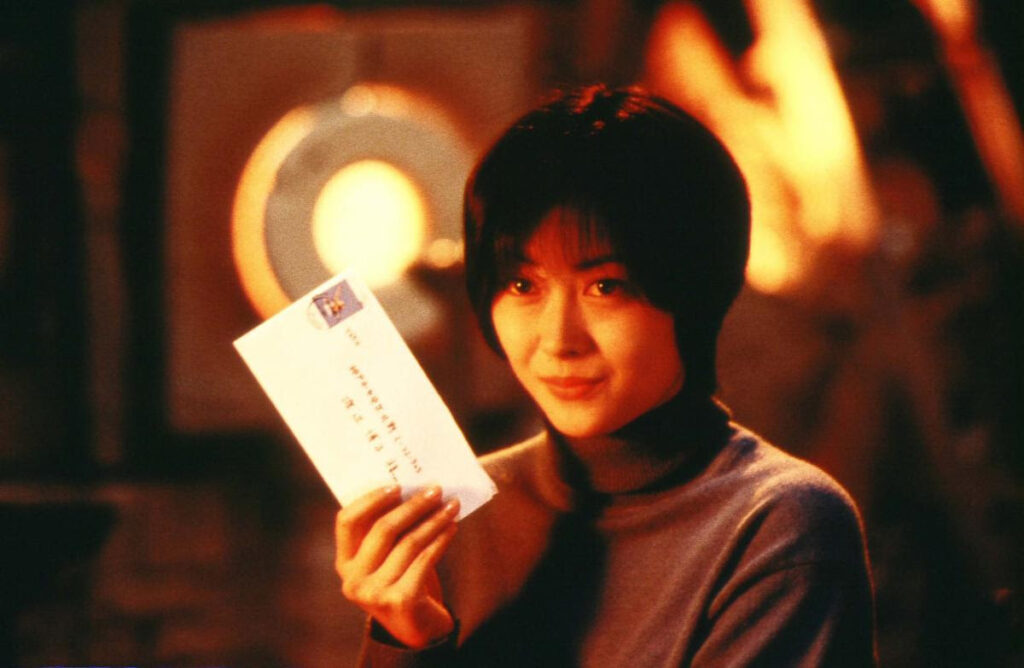
©Courtesy of Film Movement
Q: The film “Love Letter” was your debut feature, Mr. Iwai, but you had already been making films since your student days, and you’d written several TV drama scripts before this one, hadn’t you? I’ve heard that you shot this film with a crew of people you were already familiar with. Since I imagine a debut feature must be incredibly nerve-wracking, how much preparation did you do in advance with that familiar crew before going into production?
Shunji Iwai: Ever since my student days, I’d already directed about 10 films, both big and small, and even though I focused mainly on late-night TV dramas afterward, I still did about 10 of those as well. So when it came to creating works like that—it might sound strange to call it my “prime,” but—I certainly didn’t feel like a rookie anymore.
If anything, I wanted to rekindle that rookie motivation, so I really tried to refresh my mind by desperately recalling what it was like to be about 18 years old, trying to reawaken the feelings I had when I first rolled film. In that sense, I suppose it was actually hard for me to feel nervous about it—but as far as pressure goes, I was still so young back then, and on set, people often didn’t realize I was the director—especially when meeting me for the first time, they usually didn’t pick up on it.
It wasn’t exactly pressure, but even with that in mind, it was still a different kind of set from student films or late-night TV dramas. Plus, for our generation, the Pia Film Festival was at its peak, and there were people making their debuts as early as age 20, so I didn’t really feel that debuting after turning 30 was that early. I’d heard plenty of stories from people my age who’d struggled a lot in that environment, so I figured working with people I’d just met would probably lead to all sorts of problems. That’s why, while I was working on late-night dramas and music videos, I gradually assembled a film crew. By the time I made the movie “Love Letter”, I’d managed to bring together a team of staff members I could control quite well—it all worked out perfectly—so in that sense, the team setup went exactly as planned.
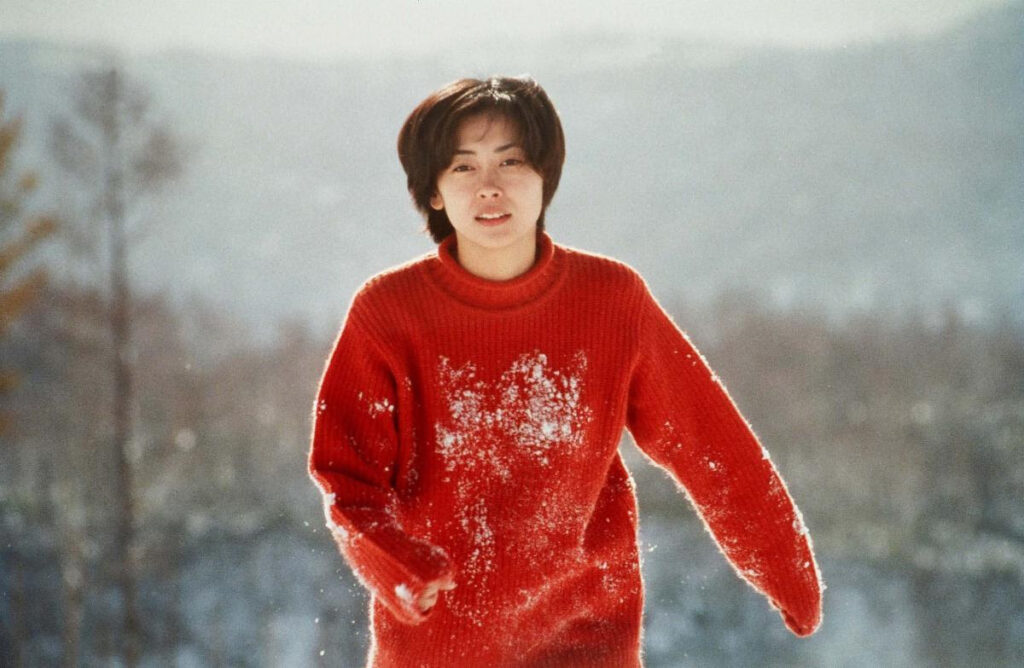
Q: There’s a scene where young Itsuki Fujii—played by Miki Sakai during her middle school years—finds a dragonfly trapped in ice on the side of the road after her father’s death. Personally, that scene really stuck with me, so I’d like to ask what the intention behind it was.
Shunji Iwai: Thinking back to my childhood, I believe I was about three years old when I attended my first funeral—it was for my father’s younger sister. At the time, I didn’t really understand what was going on, so I was catching cicadas with my older cousins. It was purely intuitive, but in my mind, funerals and insects became linked, and I wanted to use that as a form of expression back then. Actually, I wrote the screenplay for *Swallowtail* before this film, and in the scene where they’re getting tattoos, and a butterfly appears—it’s the same kind of visual device.
That came first, and when I was working on the film “Love Letter”, I thought, “I’d like to do something similar in a scene like that.” I felt it would fit perfectly there, so I tried freezing a dragonfly and incorporating it into the scene. I don’t really do that kind of thing much anymore, but since I originally attended an art school, I think I was probably doing it back then with that kind of symbolism in mind. Looking back now, it’s not that I’m embarrassed by it, but the expression might come across as a little awkward.
©Courtesy of Film Movement
Q: This film was screened not only in Japan but also in more than 20 countries overseas. I’ve heard that in South Korea, in particular, it reportedly drew an audience of around 1.4 to 1.5 million people during its re-release in 1999. What do you personally think, Mr. Iwai, is the special reason this film has been so well-received in other countries? I feel like it resonates deeply with audiences, especially in Asia, and I’m really looking forward to seeing how it’s received in the U.S. this time around as well.
Shunji Iwai: I’m not entirely sure myself, but one possibility that comes to mind is that this film was made during the shōjo manga(Shōjo manga is an editorial category of Japanese comics targeting an audience of adolescent girls and young adult women) boom around 1975—which was our generation’s era, right around the time I was in middle and high school. I had certain feelings about that genre, and when I create a work, I tend to think about various references. but with the movie “Love Letter”, I had this desire to create something with the flavor of shōjo manga from that era. When I think about what left a strong impression on me, the era before that was actually incredibly dark. The world felt gloomy—there was the Vietnam War, the United Red Army, and so on—and there was this oppressive, bleak atmosphere.
Whether that was a good thing or a bad thing—that sense of unease began to dissolve. Things like folk songs with a slightly ethereal feel, Yuming(Artist Name, Yumi Matsutoya, a Japanese singer, composer, lyricist and pianist), and “New Music” started to emerge, and in Japanese cinema, Kadokawa’s ”The Inugami Family” came out. It was a time when a lot of pop culture emerged—making things that had previously felt heavy and gloomy suddenly feel lighter—and shōjo manga was one of those elements.
I think the movie “Love Letter” was probably trying to recreate that feeling. It coincided with a turning point in a new era for both China and South Korea—in China, with Deng Xiaoping’s “capitalist-style communism,” which became the starting point for modern China, and in South Korea, with the transition from a military regime to the presidency of Kim Dae-jung and a desire to absorb new cultural influences. I get the sense that both countries had a mood somewhat similar to that of Japan around 1975. That’s about the only thing I can think of—that it somehow clicked with that era—but that’s really all I have to go on.
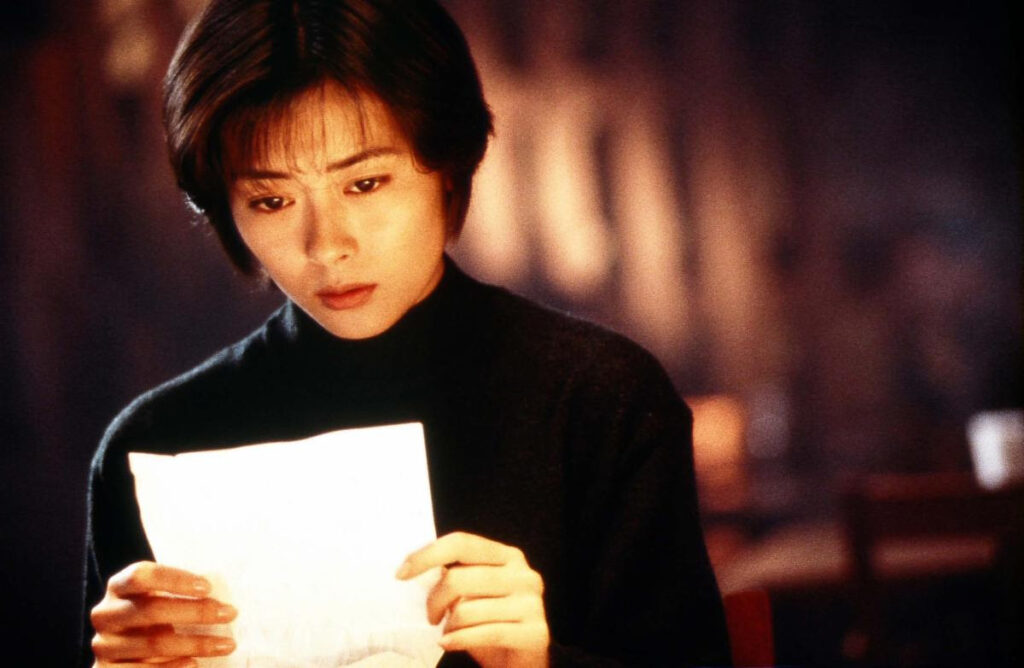
Q: This will be my last question. As I mentioned earlier, I’ve been greatly influenced by Miho Nakayama, and I think I’ve seen almost all of her TV dramas. Her passing two years ago was truly a huge shock to me—it really made me reflect on things, and I even went back to rewatch some of her works. Mr. Iwai, is there anything you’d like to convey to her now through this film?
Shunji Iwai: Well… I think the actual filming—it took about a month, though the entire shoot probably lasted less than a month or two. It was that kind of time for both of us, but in the end… Normally, most films tend to be forgotten after a single year, or maybe one, two, or three years—I think that’s just their fate.
But this one hasn’t been forgotten so easily; it’s kept resurfacing from time to time, carried by people’s words. It felt as though we’d both been riding in a small boat all this time, spending the past 30 years side by side with the film “Love Letter”.
So, right around the 30th anniversary, we’d been in touch and were just talking about how we’d like to visit Otaru while there’s still snow on the ground—and just as we were having that conversation, she passed away. Of course, it was a huge shock, but but somehow, it feels as though this film, myself, and her have been traveling together in that little boat, and I have a sense that, in a way, that journey by boat is still continuing. Before I knew it, I was invited again, and here I am in New York all by myself, but I feel that this little journey has been going on all along.
Eventually, of course, I’ll have to go where Miho-chan is, but for now—even though I can no longer see her—I feel her presence very strongly. So I feel like I want to continue this journey, even if it’s just a faint one.
©Courtesy of Film Movement
If you like the interview, share your thoughts below!
Check out more of Nobuhiro’s articles.
Here’s the trailer of the film.