
The Fredrikstad Animation Festival is the leading festival for animated film in the Nordic region, dating back to 1994 and the festival Animerte Dager in Oslo. The annual festival now takes place each October in the town of Fredrikstad, outside of the Norwegian capital, and has become a professional arena for the animation industry, as well as an important event for students and educational institutions within animation, graphic design and digital media production.
Throughout the 1990s, the festival rapidly expanded in terms of professionalism and scope, becoming a central meeting place for the animation community in Norway. It was also a natural development for the festival to include the newly independent Baltic states as a focus area, alongside the Nordic countries. This was crucial in establishing the festival as an important competition festival for the entire Northern European region.

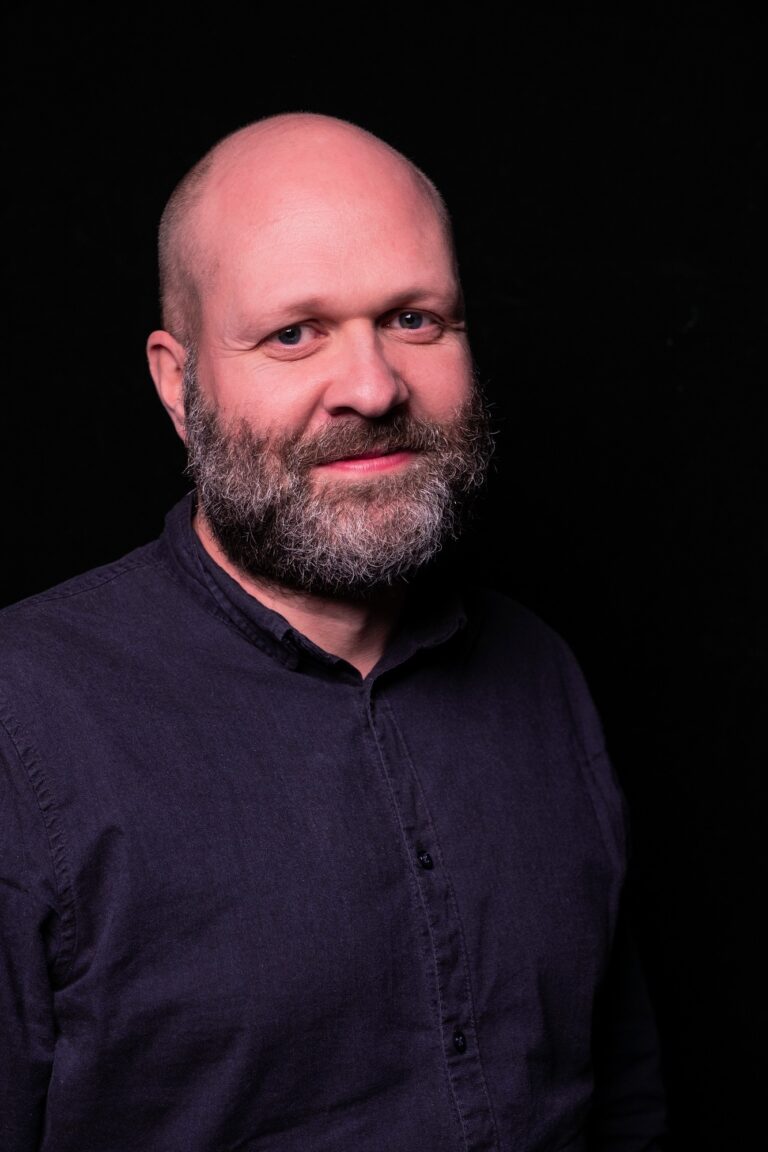
In this Exclusive Interview the Artistic Director Anders Narverud Moen, shares his impressions of the 30th Fredrikstad Animation Festival:
What is the film that made you fall in love with animation in the first place?
I would probably say Resan till Melonia, a 1989 Swedish film that loosely adapted for animation William Shakespeare’s The Tempest. The director is Per Åhlin, one of the greatest Nordic animators. I remember I was incredibly fascinated by this film. But besides this, I’m fond of cinema as an art form also beyond animation. I used to work in the biggest cinema company in Norway, in Oslo, and I was a programmer there. I’m not sentimental about old films, but I’m very projected in the future, I get excited about discovering new films.
That’s a hallmark for a good Artistic Director! You’ve covered this role at the Fredrikstad Animation Festival since 2012. What major evolutions in the animation industry have you witnessed that impressed you?
Animation as a medium is innovation in itself. If we go back to the early days of cinema, animation came before live action. The camera obscura and mechanical optical devices could simulate motion with drawings way before cameras could reliably record motion. The principle of animation is key to understanding how film became a popular art form. The community of animation is strongly driven by the exploration of new technology to bring forth moving images. Naturally there is also some skepticism on some new technologies. There’s always a tension between the old and new.
In these regards, how can animation navigate the space between traditional analogue techniques and emerging technologies, including A.I.?
Also analogue techniques use digital tools these days, like stop-motion or cut-out animation. But A.I. is rather controversial these days, because the generative kind has taken over the work of artists in a way, and there has to be some regulation. We are in the early stages. As a festival we think we shall receive more entries of films made with A.I. and we have to navigate this very carefully. This year in our line-up there were no films made with A.I., in the past we have screened some. I know some films use A.I. as assistants, it’s not part of the end results, but part of the process, such as the research and some slight corrections. As programmers we have to refine our way of looking and judging these type of films.
FAF has grown considerably over the years, while expanding its international outreach. When you look at this year’s selection what feels particularly exciting or revealing about where animation is heading?
There are some extremely talented animators out there that impress me. After twenty years that I’ve been working in this field, some works still surprise me for their visual storytelling. The boldness of that artistic expressiveness truly reflects the metamorphosis that happens in animation, where anything is possible.
This year FAF introduced the Animated Network Days market, what gap in the animation industry are you hoping this initiative will address?
We always had industry seminars and talks and this year we have structured it more consistently. By labelling these market events more precisely, we try to facilitate the networking that can occur if a film is seen and sparks the interest of someone in the industry, who wants to discuss the business side of it. Fredrikstad Animation Festival is the main meeting place for animation in the Nordic region, whether it’s to watch films or find someone who can help a project’s evolution through production or distribution.
To sum it up, what do you want people to feel about this cinematic form when they leave FAF?
Perhaps the excitement of discovering something so artistically striking that it took them by surprise, leaving them feeling that they had evolved, both, as cinema viewers and industry professionals.
Check out more of Chiara’s articles.
Photo Credits: Hanna Adam
