

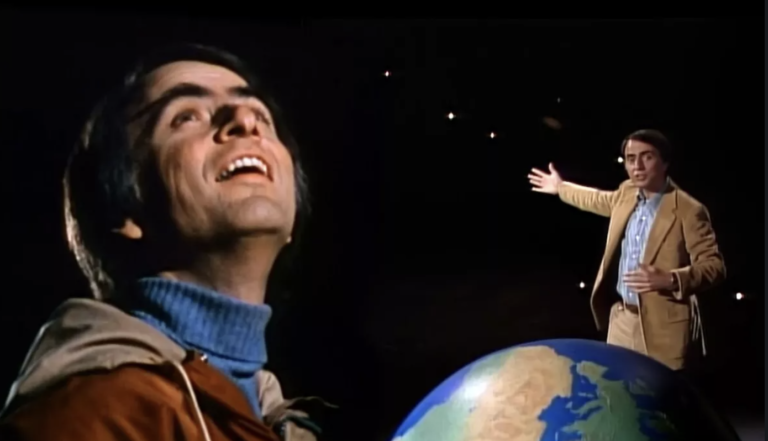
Some people explain the universe, while others change how humanity imagines its place within it. Astronomer and author, Carl Sagan belonged to both categories, combining scientific curiosity with an extraordinary gift for storytelling. His voice brought distant galaxies closer, transforming complicated astronomical concepts into accessible invitations for wonder. The new documentary, Carl Sagan: We Are Made of Star Stuff, sets out to celebrate that remarkable ability while also examining the personal experiences behind his public brilliance. The result is an intimate portrait that sometimes favors emotional biography over rigorous scientific exploration.
Nanette Burstein directed and produced the biographical movie. The helmer honors the celebrated astronomer’s life, career, relationships and enduring influence. Rather than delivering an exhaustive examination of the titular scientist’s achievements, the filmmaker offered an accessible portrait of the man behind the cosmic vision.
Carl Sagan: We Are Made of Star Stuff explores Sagan’s professional accomplishments alongside his marriages, family life and notable romance with Ann Druyan. The movie chronicles how the titular scientist first brought the cosmos into American living rooms and invited viewers to wonder about the vast universe beyond Earth.
But long before Sagan invited millions of viewers into Cosmos, he was a curious child devouring sci-fi stories and wondering what the stars were made of. That fascination became a lifelong quest to unravel the universe’s greatest mysteries and an equally passionate mission to make science accessible to everyone.
A pioneering scientist and gifted communicator, Sagan helped bring the possibility of extraterrestrial life into the mainstream. He also led the creation of Voyager’s Golden Record and transformed public understanding of the cosmos through his groundbreaking PBS series.
Yet behind America’s most famous scientist was a far more complicated man. His soaring professional ambitions often collided with the demands of marriage and fatherhood, leaving those closest to him with vastly different memories of who he was.
Drawing on interviews with family and colleagues, along with Sagan’s personal recordings, lectures and television appearances, he narrates his life in his own words throughout the documentary. For all his contradictions, one conviction remained constant: a belief that understanding people’s fragile place in the universe could help humanity become better protectors of the world we share.
The most compelling revelations about Sagan emerge in the film when the narrative moves beyond familiar biographical milestones. What begins as an informative retrospective gradually develops into a deeply affecting story about love, partnership and human connection. The documentary discovers its emotional center in the relationship between two people united by curiosity and imagination.
Cinematographer Adam Beckman deserves considerable praise for helping establish the movie’s visual identity. His work supports the documentary’s central challenge of connecting Sagan’s immense intellectual world with his deeply personal experiences. The visual presentation complements the subject without overwhelming the intimate stories unfolding onscreen. That restraint proves particularly valuable when the film shifts between scientific achievements and private memories.
Beckman’s cinematographic contribution helps maintain an atmosphere of reflection throughout the movie. The subject demands visual sensitivity because Sagan’s legacy encompasses both the grandeur of the universe and the vulnerability of human existence. The cinematography serves that dual purpose by supporting the documentary’s contemplative mood. It allows the audience to engage with the material without feeling trapped inside a conventional historical presentation.
The film benefits from this visual approach because Sagan was more than a collection of scientific discoveries. He was a communicator whose fascination with existence extended into everyday human relationships. The cinematography supports that broader understanding of his character. Rather than treating his life as a distant monument to intellectual achievement, the documentary encourages a more immediate connection with its subject.
Editor Tal Ben-David plays an equally important role in shaping the movie’s impact. The film’s effectiveness depends heavily on how its scientific history, personal recollections and emotional revelations work together. Ben-David’s editorial contribution helps bring these different elements into a coherent biographical experience. The result feels most engaging when the narrative moves beyond chronological accomplishments and embraces Sagan’s complicated humanity.
Carl Sagan: We Are Made of Star Stuff‘s early sections occasionally resemble a conventional career retrospective. They introduce the familiar milestones of the eponymous scientists’ professional life and summarize his contributions to public scientific understanding. Although informative, this approach sometimes sacrifices emotional immediacy. The documentary becomes considerably more compelling when its editing allows personal relationships to drive the narrative forward.
The transition toward Sagan’s relationship with Druyan provides the movie with renewed energy. Their romance introduces emotional stakes that a straightforward list of achievements cannot supply. Ben-David’s editing helps the personal story become the film’s connective tissue rather than a secondary biographical detail. This shift gives the documentary greater warmth, intimacy, and narrative purpose.
The strongest passages demonstrate how editorial choices can transform familiar information into something genuinely moving. Instead of merely presenting SaganN as an important scientist, the film gradually reveals the relationships that shaped his private world. The emotional material also provides a more accessible entry point for viewers unfamiliar with his scientific work. Ben-David’s contribution helps the documentary find its most persuasive rhythm when the heart takes precedence over the résumé.
The relationship between Sagan and Druyan ultimately becomes the documentary’s greatest strength. Their partnership supplies the emotional foundation that elevates the movie beyond an ordinary biography. The film explores a connection shaped by affection, intellectual companionship, creative collaboration and shared fascination with existence. Their story offers a revealing perspective on the man audiences often remember primarily through his scientific achievements.
This romantic dimension gives Carl Segan: We Are Made of Star Stuff its most memorable moments. The movie doesn’t need to follow the conventions of a romance to become deeply romantic. Instead, the relationship emerges naturally through the recollections and experiences that illuminate their lives together. Their bond reveals a tenderness that contrasts beautifully with the vastness of the universe the titular scientist spent his career exploring.
The personal material also makes Sagan more relatable. His marriages, family relationships, ambitions and imperfections remind viewers that extraordinary intellectual gifts do not erase ordinary human complexity. He remains an influential scientific communicator, but he also becomes a person whose emotional life deserves attention. This balance prevents the documentary from presenting him as an untouchable icon.
The creative partnership between Sagan and Druyan adds another layer of significance. Their relationship suggests that intellectual discovery and emotional intimacy need not occupy separate worlds. Curiosity can become a shared language, while affection can deepen the meaning of a lifelong pursuit. The film’s most successful moments emerge when these ideas converge.
Despite its strengths, the documentary offers a relatively cursory examination of Sagan’s scientific thinking. It introduces his career and major ideas without consistently exploring their intellectual foundations. Viewers expecting a detailed investigation of planetary science, skepticism, astronomy and scientific methodology may find the treatment insufficient. The film prioritizes biography over sustained scientific analysis.
This limitation becomes particularly noticeable during the opening career retrospective. Sagan’s accomplishments provide an impressive foundation, but their presentation occasionally feels more informative than illuminating. The movie identifies important aspects of his professional legacy without always explaining their full significance.
Nevertheless, the accessible approach has genuine value. Sagan’s greatest gifts included his ability to communicate complicated ideas with clarity, enthusiasm and humility. A documentary that encourages audiences to reconnect with his personality can still honor that legacy. Its human focus may even inspire viewers to explore his scientific work independently.
The distinction is important: this is primarily a biography of the man behind Cosmos, rather than a comprehensive scientific journey through the universe. Its emphasis on relationships doesn’t erase Sagan’s intellectual achievements, but it changes the perspective through which audiences encounter them. The film succeeds most convincingly when personal experience illuminates public accomplishment.
Carl Sagan: We Are Made of Star Stuff offers a warm, accessible and emotionally rewarding portrait of an extraordinary individual. Burstein’s documentary is most successful when it moves beyond conventional biography and explores the love story at its center. The relationship between Sagan and Druyan gives the film its emotional resonance, transforming a familiar career retrospective into a more intimate experience.
Beckman’s cinematography deserves recognition for supporting the movie’s reflective atmosphere and connecting its personal themes with its cosmic subject. Ben-David’s editing also merits praise for helping the documentary gain momentum as its emotional narrative develops. Together, their contributions support a film that becomes more engaging when it embraces human experience rather than simply recounting professional milestones.
The movie’s scientific limitations remain noticeable, particularly for viewers seeking a rigorous examination of Sagan’s discoveries and intellectual influence. Yet its emotional accessibility makes it worthwhile for audiences interested in the person behind the public image. It offers a reminder that scientific greatness and personal vulnerability can coexist within the same remarkable life.
Ultimately, Sagan’s enduring appeal rests partly on his ability to make humanity feel connected to something immeasurably larger. Carl Sagan: We Are Made of Star Stuff captures that spirit most effectively through his relationship with Druyan. The film may not fully explore the universe of ideas he helped introduce to millions, but it offers a meaningful glimpse into the heart of the man who invited us to contemplate it. Sometimes, the most revealing journey into the cosmos begins with understanding the people who dared to look upward together.
Overall: B+
Carl Sagan: We Are Made of Star Stuff screened in the Non/Fiction section at this month’s 35th Philadelphia Film Festival.
If you like the review, share your thoughts below!