


Just imagine how today’s media and politicians would have reacted to the Allied Normandy landing. On D-Day, June 6, 1944, American forces suffered 6,000 casualties, out which 2,500 were confirmed fatalities. That was simply to land on and hold the beaches of Normandy. Almost an entire year a fighting still lay ahead, including the brutal Battle of the Bulge. Frankly, D-Day could have been even worse. Had the winds gusted and the wave swells risen, the Normandy invasion would have been an utter disaster for the Allies. It was RAF Group Captain James Stagg’s job to provide an accurate forecast. It was General Dwight Eisenhower’s job to win the war. The fate of the free world depended on them both, as well as the soldiers awaiting their verdict in Anthony Maras’s Pressure, which opens this Friday in theaters.
Stagg is precise and methodical. That is why Churchill vouches for him. His American counterpart, Col. Irving Krick is a more seat-of-the-pants meteorologist, who simply relies on historical weather patterns. However, he never failed Eisenhower in North Africa, so the General is more inclined to trust him. Yet, Stagg has operational seniority over Krick and he sees potential storms clouds forming, literally and metaphorically.
Of course, Stagg initially refuses to declare anything with certainty, out of stubborn pedantry (meteorology is an inexact science he constantly equivocates). Nevertheless, his intelligence inspires the confidence of Eisenhower’s attaché, Women’s Auxiliary Corp (WAC) member Kay Summersby. She believes Stagg will forecast as accurately as possible, while Krick will simply tell the Generals what they want to hear.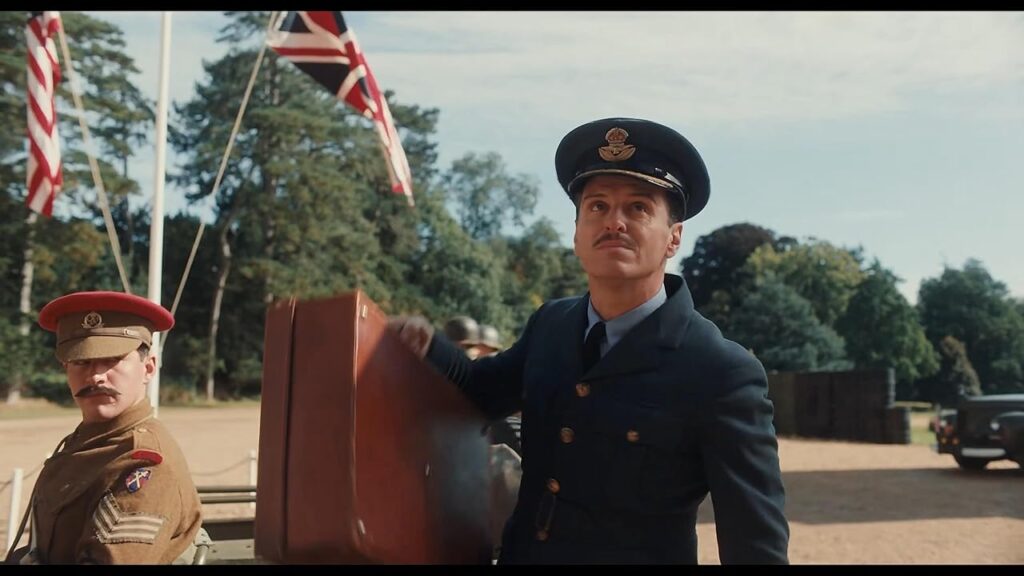 Like David Haig’s source play, Pressure elevates Stagg at the expense of other Allied meteorologists. While Maras and Haig’s adapted screenplay offers Krick some late redemption, their depiction of Eisenhower fully justifies viewers’ attention. The film explores the burden of command, with depth and sensitivity. Haunted by the tragic Operation Tiger “dress rehearsal” for the Normandy landing, Eisenhower acutely feels his responsibility to the men under his command. Simultaneously, he is constantly challenged and undercut by British Field Marshal Bernard “Monty” Montgomery, who clearly resents Eisenhower’s superior rank, as Supreme Allied Commander.
Admittedly, Brendan Fraser is not a great physical likeness for the future president, but he taps into Ike’s commonsense, smalltown sensibility and his steely sense of purpose. Every second he is on screen, Fraser projects Eisenhower’s grim understanding of the weight and implications of his orders. This film will help viewers grasp the heaviness of his solemn duty, because it fully establishes the risks of his go or no-go decisions.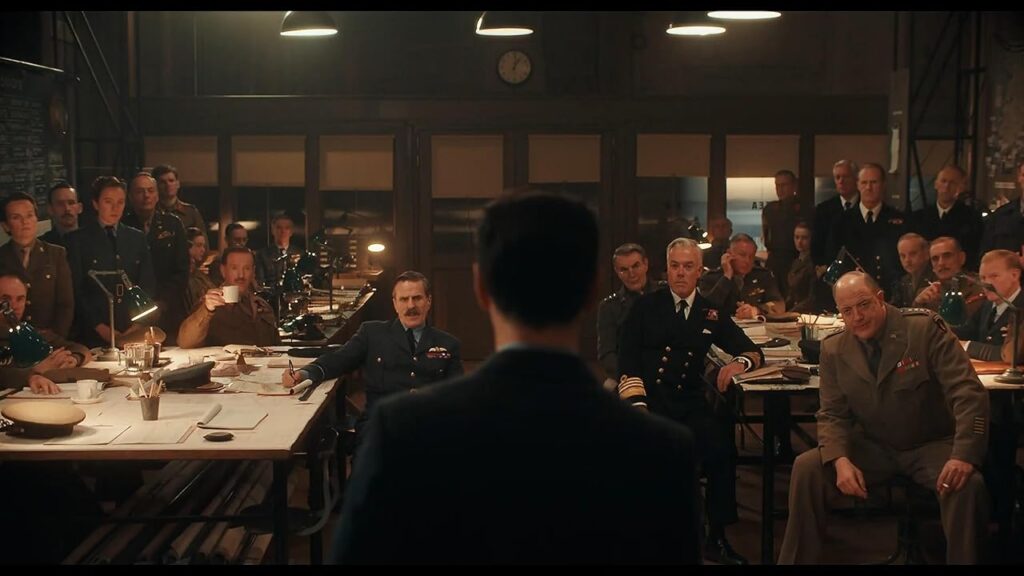 Andrew Scott keenly expresses the neurotic insecurity beneath Stagg’s aloof standoffishness. While the film completely stacks the deck against Col. Krick, Chris Messina’s energetic portrayal often livens up Maras’s conventional “PBS Masterpiece” stylistic approach. As Summersby, Kerry Condon also serves as a sympathetic foil to both Fraser and Scott, supplying a down-to-earth perspective on one of the greatest turning points in 20th Century history. Conversely, Damian Lewis depicts Monty as an arrogant caricature, but rather amusingly so (judging from the classic George C. Scott film, Gen. Patton would most likely have approved).
The warfighting sequences of Pressure never aspire to compete with the harrowing recreation of D-Day in Spielberg’s Saving Private Ryan, but they still viscerally remind the audience of the daunting defenses Allied soldiers faced. These relatively brief sequences are sufficiently realistic to send a chill down your spine and put a knot in your stomach.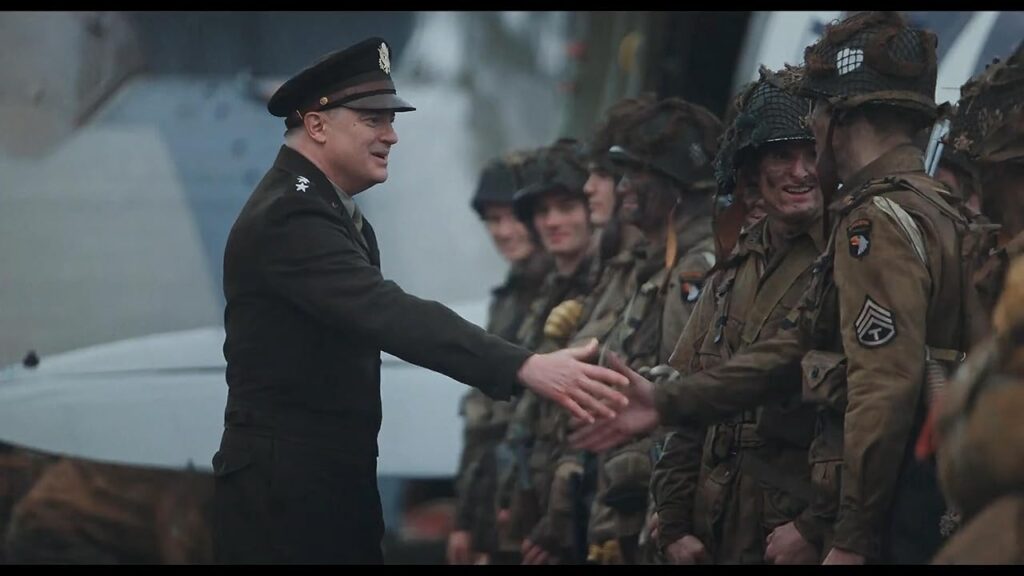 Pressure provides a timely reminder of the so-called Greatest Generation’s remarkable resolution, which starkly contrasts with the spoiled naivete of subsequent generational cohorts. When the recent Iranian conflict prompted an increase is oil prices the media reacted with outrage and panic. Yet, gasoline remains easily available to consumers. During WWII, it was strictly rationed, as were many common household staples, like sugar, butter, and coffee. In a scene that illustrates the point, Summersby offers to share a piece of fruit with Eisenhower, as if it were rare Beluga caviar.
Go or don’t go. That is the central question faced by Eisenhower and Stagg throughout Pressure. Either choice entails life-and-death consequences. To their credit, Fraser and Maras fully convey the risks and consequences of each alternative. Despite the film’s baked-in Anglo biases, Pressure makes viewers appreciate Eisenhower (and maybe even like Ike). Recommended for the honesty and intelligence with which it presents wartime stakes and strategy, Pressure opens this Friday (5/29) in theaters.
Grade: B+
If you like the review, share your thoughts below!
Check out more of Joe’s articles.
Here’s the trailer of the film.
https://www.youtube.com/results?search_query=pressure+trailer