

©Courtesy of Tribeca Festival
Chilean filmmaker Alicia Scherson has established herself as one of the leading voices in contemporary Latin American cinema through films such as “Play” (2005), “Turistas” (2009) and “Il Futuro” (2013), earning international recognition for her intimate, character-driven storytelling. She has also maintained a connection to the work of the acclaimed writer Roberto Bolaño. After adapting “Una novelita lumpen” (2002) in “Il Futuro”, Scherson once again turns to Bolaño with “Summer War” (2026), based on his posthumously published novel “The Third Reich” (1989), which has its World Premiere in the International Narrative Competition at this year’s Tribeca Festival.
Relocating Bolaño’s story from the Spanish coast to a Chilean beach town in 1989, “Summer War” unfolds against the backdrop of a country caught between dictatorship of Pinochet and democracy. By moving the story from Spain to Chile, Scherson gives Bolaño’s novel a new context. The backdrop of a country on the verge of political change adds an extra layer of tension and uncertainty, while also bringing Bolaño’s work back to the country that shaped both the writer and the director.
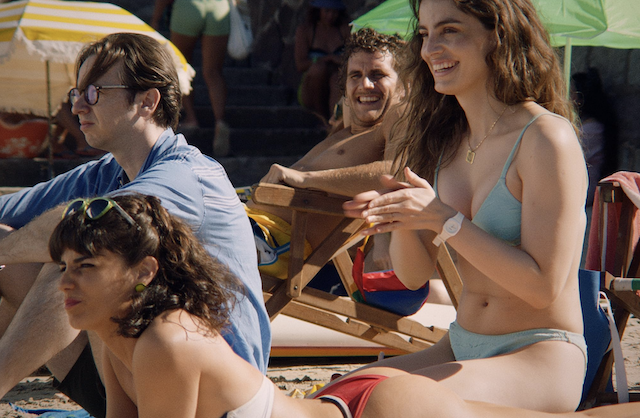
At the heart of the film is Udo Berger (Dan Beirne), a young American and obsessive war-game champion spending the summer with his girlfriend Ingrid (Lux Pascal). Although the couple appears happy at first, tensions soon begin to emerge. As Udo becomes increasingly absorbed by the people around him, his relationships grow more complicated. Jealousy, attraction and distrust slowly take hold, turning what seems like an ordinary holiday into something far more unsettling after an Argentinian friend disappears.
Udo is not a sympathetic character. Emotionally detached, he moves through the Chilean place with a quiet sense of privilege and control. Scherson subtly presents him as a figure of colonial power, someone who wants to dominate both the game and the world around him. Yet the character never fully convinces. Dan Beirne appears somewhat miscast, lacking the charisma and mystery needed to make Udo’s hold over those around him believable. In many scenes, the dialogue also feels oddly theatrical, as if some actors are reading directly from the script. As a result, Udo comes across as more stiff than enigmatic, making it difficult to understand why several women in the film are drawn to him.
What the film lacks in convincing performances, it largely makes up for in atmosphere. Scherson and her cinematographer Alejo Maglio beautifully capture the Chilean coastline, bathing the film in warm colors and a quiet sense of unease. The period details are equally impressive. From green telephones and brown lamps to the clothing, interiors and ever-present cassette tapes, “Summer War” recreates the late 1980s with remarkable authenticity. The use of the song “The Safety Dance” by Men Without Hats further reinforces the era, helping to ground the story in a specific time and place rather than mere nostalgia. Scherson also weaves in archival footage, particularly from World War II, which blends seamlessly into the narrative.
©Courtesy of Tribeca Festival
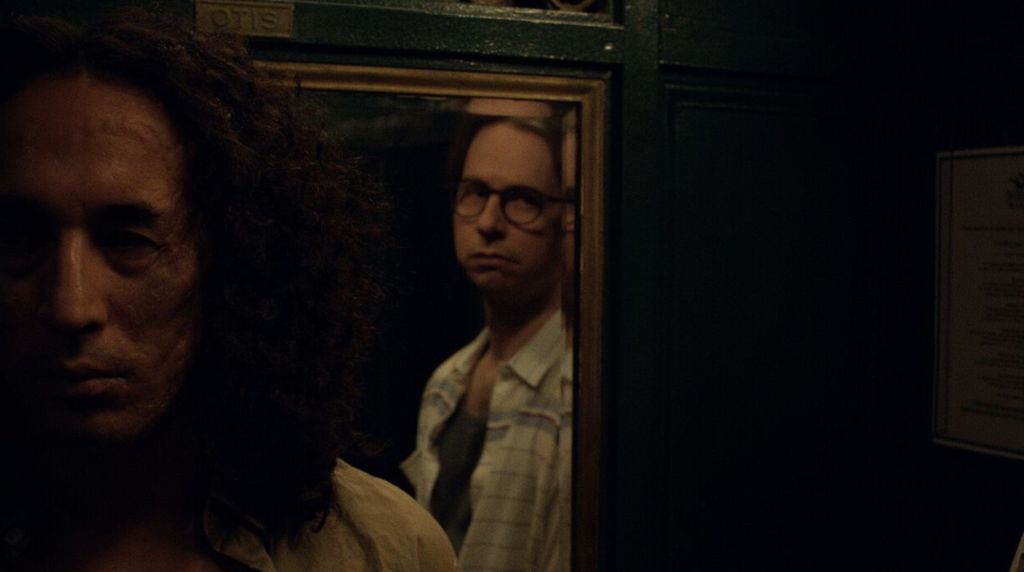
Scherson further develops the film’s colonial themes through an Indigenous beach vendor, El Quemado (David Gaete) with severe burns on his face. When asked who caused his injuries, he simply replies, “Nobody,” a striking answer that suggests silence, erasure and unresolved violence. At the same time, his uneasy relationship with Udo becomes one of the film’s central tensions, gradually blurring the line between rivalry and fascination. The film also draws attention to a hotel mural of Atahualpa, the 13th and last sovereign emperor of the Inca Empire, who according to legend learned chess by watching his captors play. The connection is hard to miss. Like Atahualpa, the Indigenous vendor exists outside the centers of power, yet he eventually sits down to play Udo’s beloved war game. In these moments, Scherson subtly links the personal rivalry between the two men to a longer history of colonial domination and resistance.
The film also touches on masculinity and patriarchal violence. One of its most telling moments comes after an Argentine man assaults his girlfriend. The female hotel owner responds with a chilling sense of resignation: “Men have been hitting since the beginning of time. Especially women. But don’t worry. Everything goes back to normal. After war, peace. Then war again.” The line echoes the film’s broader themes, suggesting that violence is not an exception but part of a cycle that repeats itself across both personal relationships and history. In this world, domination and control are not limited to war games, but shape the way men relate to women and to one another.
For all its thematic ambition, “Summer War” doesn’t fully come to life. The film is rich with ideas about power, masculinity, violence and historical memory, but some performances and dialogue often feel theatrical. At times, it is all too apparent that the film is working from a novel, with conversations and character dynamics feeling more literary than cinematic. Still, the striking cinematography and richly detailed production design create a vivid sense of time and place. While Scherson has crafted a complex and multilayered adaptation, it remains easier to admire than to truly connect with on an emotional level.
Grade: B-
If you like the review, share your thoughts below!
Check out more of Niclas’ articles.