

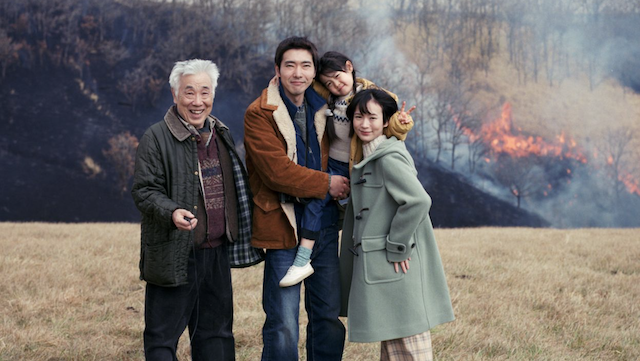
©Courtesy of Tribeca Festival
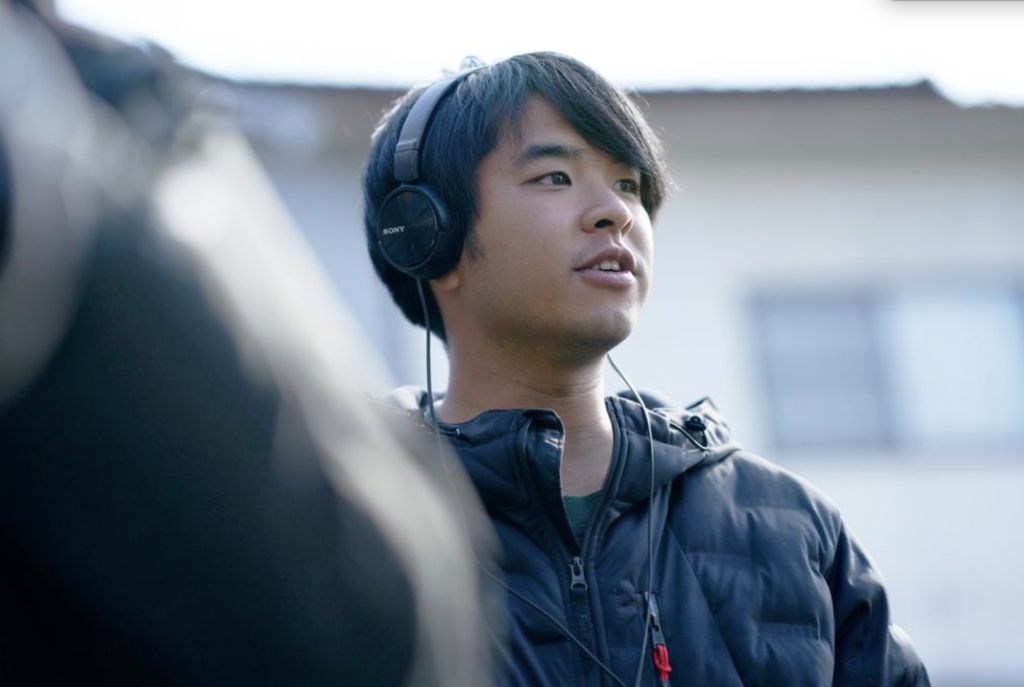
Q: I know you graduated from an art university in Kyoto and began making films during your studies there. Could you provide information on the types of films you were involved in at that time, and which films inspired you to begin making them?
Miiku Sakanishi: I started out by taking a seminar led by Takashi Ito, a professor of experimental film in Japan. His class was completely free-form; we were allowed to film whatever we wanted. At the time, I was interested in a Dutch filmmaker—or rather, a contemporary artist—named Marijke van Warmendam. When I saw her work at the Ebisu Film Festival, there was a 30-second clip of an elderly couple sitting on a bench, and on the other side, a window covered in condensation inside a house. and when an old woman’s hand wiped the condensation, an empty chair appeared. After seeing that, I realized that even seemingly mundane, everyday moments could be conveyed in interesting ways through film alone. So, starting from capturing those fleeting moments of daily life, the very first piece I shot during my university days was a 9-minute film of elementary school students simply playing in a park. I filmed it exactly as it happened, following the natural timeline—from the moment they entered the park until they left.
Q: I see. I heard that after graduating from an art university in Kyoto, you worked on making-of videos for directors like Yuya Ishii and Hiroyasu Doi. What techniques and filming methods did you learn from them at that time, and are there any aspects of that experience that have influenced your current filmmaking?
Miiku Sakanishi: I think it’s true that my current style is quite different from theirs, but as a director, I’ve simply learned so much from both of them. The biggest lesson I’ve taken away is that they’re both incredibly flexible and always try to incorporate the staff’s ideas into the film as much as possible. I’ve worked on other sets, of course, and while filmmakers and directors naturally have their own artistic vision—and there’s certainly an appeal to directors who take the lead in that way— but what I found truly appealing about those two was how they created an environment where everyone felt comfortable speaking up. Even if an idea surpassed something I personally found interesting, they would always adopt it on the spot and say, “Let’s go with that.”
As a co-producer and in terms of filmmaking, I believe the director is the one who maintains the big picture, but incorporating those other interesting points—that’s probably what I learned the most from them.
Q: So you were in an environment where you were constantly incorporating feedback from actors and staff. I heard that your father directed music videos, but I also heard that he passed away when you were in high school. Music videos often feature very emotionally charged direction, and I think the way they’re edited—being so short—makes them particularly interesting. Did your father’s work have any influence on you personally?
Miiku Sakanishi: I’m not sure—this is just my personal feeling—but from my sophomore year of high school until he passed away, my father would sometimes show me his work, saying things like, “I shot this,” or, since he was also involved in music, “What do you think of this song by such-and-such artist?” But I have this sense that he passed away before I’ve never got around to asking him, “How did you make this?” or “What was your intention?”
So, in that sense, I’ve always thought that I came to understand “my father’s style” in the same way as any other audience member. However, after the press screening, I invited some of my father’s colleagues from his generation—people I’m still in touch with today—as well as some of his seniors, because I really wanted them to see it. They told me that some kind of latent “father’s style” was definitely reflected in the film.
They pointed out specific parts of certain scenes, but I didn’t consciously direct those scenes—it was just a coincidence. As you just mentioned, I used to watch movies at home, watch the NBA, and watch them right beside him, so that kind of thing is really just a matter of instinct. I do break down the works of my favorite filmmakers and put them into my own words, but I’ve never done that with my father, so I think that’s just how I feel about it. That’s why I find it interesting.
©Courtesy of Tribeca Festival
Q: I’d like to talk about this film. I think it’s a story that weaves together what you might call “records” and “memories.” After all, from the era of flip phones to today’s smartphones, people’s memories have been preserved in various forms as records. But even before that, in the early ’90s, there was the “Utsurun-desu”(Fujifilm’s iconic disposable camera, which allowed memories to be preserved through photographs). However, I feel there’s a sense that we’ve come to rely on these too much, leaving our own memories somewhat vague or diluted. What inspired you to create this work?
Miiku Sakanishi: It all started when I was asked if I’d be interested in making a short film funded by a small-town municipality in Kyushu—with a very limited budget of around 200,000 to 300,000 yen. Since there was no budget, I wondered if there was anything interesting I could do. As you just mentioned, as long as the storage on our smartphones keeps increasing, the amount of video footage keeps growing. I don’t mean to judge this footage as good or bad at all; it’s just that, how should I put it… Since I’d been going to my father’s work sites all the time, the joy of pressing the shutter button or the act of filming itself—that sense of strength—had become somewhat diluted. I realized that those moments when I was just casually filming might actually be interesting.
At the time, I started with the idea of making a film based solely on the off-camera reactions to video letters exchanged between my family back in Kyushu and my husband, who had moved to Tokyo—all we had were their smartphones. Since we had no budget, I began there. But when I tried to turn this into a feature-length film, I realized that wouldn’t be enough on its own. I wondered if I could add some other elements, and the first thing that came to mind was that I’d had a hard time watching my father’s footage after he passed away.
That’s because I couldn’t quite accept his death. But once I decided to make the film, people—seniors, teachers, and various others in the film industry—would say things like, “Isn’t this your father, Sakanishi-kun?” They’d send me footage they’d seen of him, or tell me, “I grew up watching this footage.” In those moments, I found myself facing my (deceased) father in a way that felt less like watching a finished work and more like experiencing indescribable sensations—like reliving the days I spent with him. That’s when I realized what I mentioned at the beginning: “these smartphone videos I’ve been casually filming”—people today have grown up with video being a familiar part of their lives.
I mean, it’s not like people of my generation felt video was distant to me from a young age, but for someone my age, I grew up close to video—going to my father’s work sites or watching him shoot on MiniDV at home. So I started to think that maybe people today can relate to that feeling as something universal. The idea that photos serve as a device to help us feel connected when someone is gone—that was the starting point for this film.
Q: So, I’d like to ask about the locations. Was the location selection based entirely on the concept, or did you also do some location scouting? This film has a real sense of the places and people blending together, and I could tell that a lot of attention was paid to location scouting during filming. Could you tell me a little bit about how the atmosphere of the locations—including the filming itself—was captured?
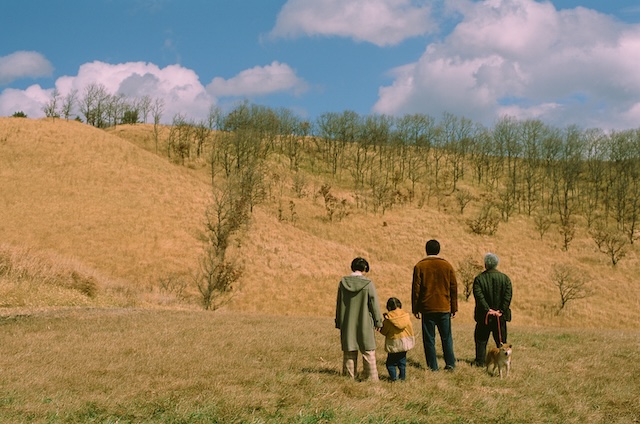
Miiku Sakanishi: Although the original plan was to start in Kyushu, that idea fell through, and since the project became a feature-length film, those elements were completely absent from the final narrative. However, since the first scene involved “field burning,” I traveled around the region searching for the perfect location for that final scene. The setting there was truly magnificent. Also, since Taketa City is situated against the mountains, there are many streetscapes where the atmosphere changes little by little as you drive to the next town.
From my perspective as someone born and raised in Tokyo, I felt a real sense of being able to capture many elements that felt like the archetypal rural landscapes from books. By combining those elements, I thought I could create a new, somewhat abstracted town—a rural landscape—where both the people and the town itself take on a fresh form. For this project, the producer, Mr. Date, skillfully organized the process as a combination of script development and location scouting, so some scenes were actually born out of the locations themselves. I ended up taking as many photos as I could and arranging them on the wall at home like a puzzle.
Q: When it comes to actor Tasuku Emoto’s portrayal of stillness and movement, the scene where he stands in a quiet space really left a strong impression on me. It was a truly wonderful piece of direction—one that evoked the contrast between stillness and movement, reminiscent of Ozu’s films. Having worked with Mr. Emoto, what kind of discussions did you have beforehand regarding scenes without dialogue at the filming location?
Miiku Sakanishi: At first, I talked with Tasuku about the character’s background—well, of course, the details, and though it might sound strange to call it “trivial,” I just explained the premise of what kind of work he does. After that, Tasuku and I would just hang out normally, having meals or drinks together. Even during those times, when we weren’t talking about the movie at all, I feel like we developed a shared sense of understanding—and he still tells me that now. There was another approach where we could have discussed the walking sequences in greater detail with the assistant director beforehand.
We could have worked with Tasuku to create a blueprint—like, “on your step, turn this way,” or “turn that way”—but this time, we didn’t really go with that kind of pre-planned approach. Instead, Tasuku, as an actor, did a “test shoot” (a term in film and video where the actor makes slight variations in movement from the initial test to the actual take).
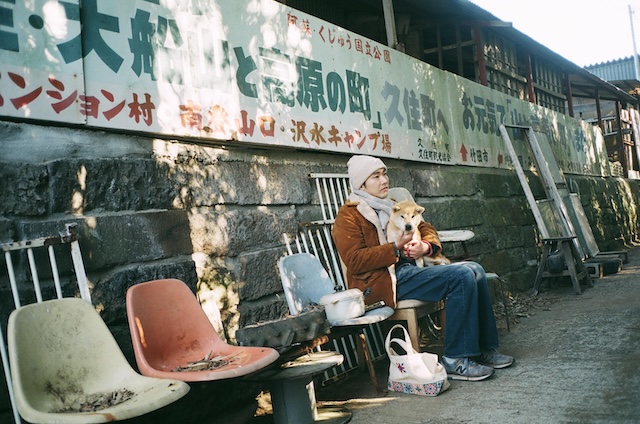
Of course, the dog’s movements were significant, and if the dog went in a certain direction, he’d be influenced by that. Or, for instance, if he saw the city or heard a sound, he’d turn his head that way. He picked up on all those subtle details.
When I saw that footage, I could see his reaction to the city as a man from Tokyo exactly as it was, so we discussed how it would be great if we could preserve that rhythm and atmosphere just as it was. I felt that if we could just achieve that, it would be enough.
As for the final scene where he just stands there, we actually discussed the number of steps beforehand and agreed that we wanted him to stop right there. I think we were able to work through the process step by step together.
©Courtesy of Tribeca Festival
Q: Actress Moeka Hoshi has already made quite a name for herself in the TV series “Shogun”, but she speaks Chinese in this film. Was there an audition process beforehand? Or was she offered the role because you wanted to leave it up to her?
Miiku Sakanishi: When we were deciding who should play the role of Yuki, I was introduced to Hoshi-san and had the opportunity to meet him once. It wasn’t exactly an audition; rather, they arranged a meeting for the two of us to talk with the producer. Of course, I’d seen her in shows like “Shogun”, but I told her I wanted to talk about what kind of role this might be. As we talked, I realized we had a lot in common—a sense of loss, perhaps—and when she told me, “Please ask me anything,” I felt that since Yuki is someone who lives her life while carrying a great sense of loss, we’d be able to share that feeling—even if it wasn’t expressed in words—right away.
As for Hoshi-san—and this is just my impression at the time—even while he was speaking very naturally, there was something mysterious about his gestures and tone of voice that seemed to reveal multiple facets of his personality.
I felt that someone whose true nature is hard to pin down—or rather, someone who makes you want to imagine who they really are—would be perfect for a film that weaves together these matter-of-fact, everyday moments. With those two things in mind, I went ahead and offered him the role right then and there.
Q: What really stands out to me is Issey Ogata’s acting. I feel that his performances are designed to bring out the best in his co-stars. Even though he’s such a brilliant actor, he never overshadows them; instead, he seems to time his lines and deliver his performance in a way that truly highlights his co-stars. Having worked with him, what aspects of Issey Ogata’s work did you find particularly compelling?
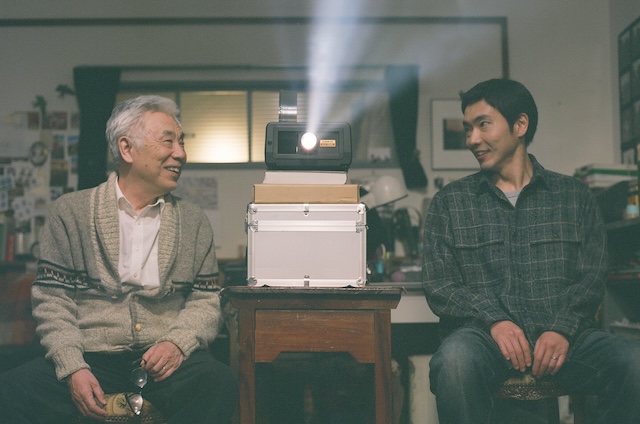
Miiku Sakanishi: If I had to say who really brought this scene to life, I’d actually say it was Tasuku-san. That’s because I feel that Issey Ogata really added a lot of humor to the character of Makoto, both within and beyond the script. I only wrote the bare minimum of dialogue—things like the teacup being different, I wrote the dialogue that forms the core of Makoto’s story, but Issey Ogata suggested that he wanted to entertain the audience a bit more before and after those scenes, so he added some ad-libbed humor. That probably wasn’t part of the vision Mr. Doi and Mr. Ishii had in mind, but there was a process where if I found it funny, I’d just go with it. And there was this dynamic where Tasuku-san was the one absorbing all of that.
I felt that the process of building the set—the sense of a father-in-law closing the distance with his son-in-law—was becoming very similar to my own approach. If we could have captured that dynamic directly—if the film had simply focused on the relationship between these two characters—I think the first half would have worked. But the sense of distance, or rather, the rhythm created by Issey Ogata’s humor and Tasuku’s way of receiving it, really elevated the film. I feel it ended up being more entertaining than I had imagined.
Q: How did you cast this child actress? She seemed to interact so naturally with Hoshi and Emoto, and they really looked like a family. Did you have them spend time together during rehearsals beforehand, or did you provide any kind of acting coaching within that family dynamic?
Miiku Sakanishi: Well, since this was her first time appearing in a movie, the assistant director and I would meet with her and go over her lines. Some days she was eager to do it, and other days she wasn’t, but we spent time working through that together.
So, we were actually planning to ask Hoshi-san ourselves, but Hoshi-san beat us to it. She mentioned that she wanted to spend some family time with this girl, Shiki-chan—playing together or going to the aquarium or something like that. So, separately from that, we were able to arrange for Hoshi-san to take her to the aquarium and play with her, giving them some time alone together as mother and daughter.
Q: Now that this film is being screened at the Tribeca Film Festival, I imagine that the audience’s perspective will naturally differ somewhat from that in Japan. Are there any specific aspects you’d like viewers—whether they’re particularly interested in Japanese culture or simply curious about Japanese cinema—to focus on when watching this film?
Miiku Sakanishi: But yesterday, after the opening day, when I received feedback, I noticed that while the names of Ozu and Ryusuke Hamaguchi came up during the talk show, the other questions were basically no different from the ones asked during the screenings in Tokyo and Oita— The comments were things people shared based on their own memories, or questions about the final scene—the kind of things I’ve been answering all along.
When I received similar doubts or questions, even though I can’t speak English at all, I felt that somehow, through the film, the dialogue was succeeding. It wasn’t about regional differences; it was more about what the film itself possesses. I also enjoy watching films with subtitles in Japan on my own, so I have a strong sense that this message is probably getting across.
©Courtesy of Tribeca Festival
If you like the interview, share your thoughts below!
Check out more of Nobuhiro’s articles.
Here’s the trailer of the film.