

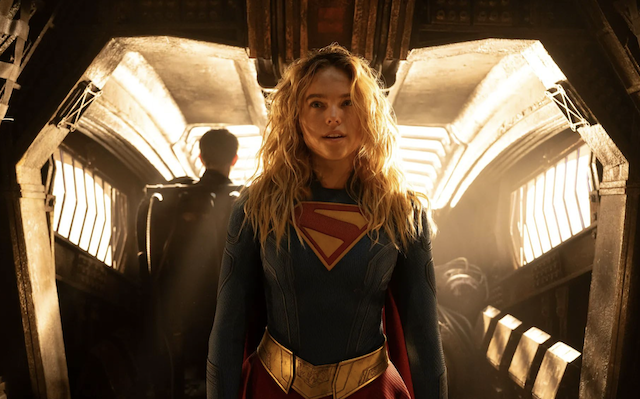
©Courtesy of Warner Brothers
From a cinematic perspective DC films have been far more interesting than Marvel movies, because they have been willing to go dark, in stylistically interesting ways. Truly, no comic book movies were darker than Todd Phillips’ Joker or Matt Reeves’ The Batman. In contrast, James Gunn’s rebooted Superman was widely considered a rebuke of the darkness of the Snyderverse. Yet, as the architect of the new DC cinematic continuity, Gunn went dark again with the immediate follow-up film. Given the depictions of child-trafficking, binge-drinking, and bodily excretions (filmed in IMAX, mind you), parents might seriously reconsider whether they want to take their younger children to Craig Gillespie’s Supergirl, which opens Friday in theaters.
While a lot of fans had mixed responses to Gunn’s Superman, there were two aspects that earned consistent praise. One of David Corenswet’s idealistic portrayal of Superman. His hip-to-be-square, “kindness is the new punk-rock” attitude undeniably resonated, but his screentime had to be limited in the new film, to avoid overshadowing Supergirl. Yet, perhaps the prior film’s greatest asset was the CGI Krypto, who became an internet sensation. However, poor Krypto spends most of the new DC film painfully sidelined, as a particularly cruel poison courses through his body.
Blame the red sun. Uncomfortable with the superhero role her cousin Kal-El (a.k.a. Superman) assumes she’ll warm to eventually, Kara Zor-El (Supergirl) has been drinking herself into a stupor on a planet with a red sun, where Kryptonians’ powers will not work (hence her states of inebriation). Sadly, that left her powerless (so to speak), when Krem (“of the Yellow Hills,” as he is fully known in Tom King’s comic mini-series, on which Ana Nogueira’s screenplay was based) stole her space-faring camper and shot a toxic dart into Krypto.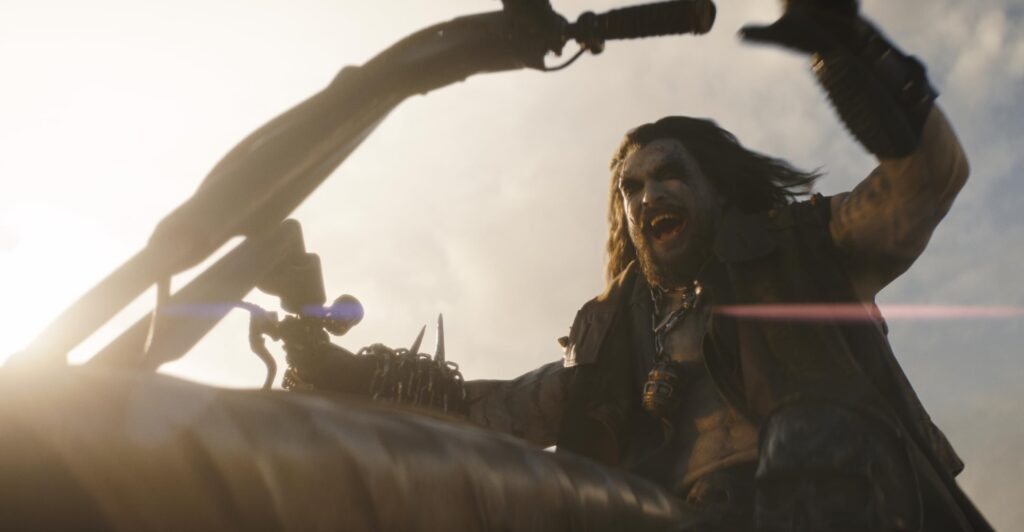
©Courtesy of Warner Brothers
To save Krypto, Zor-El must find Krem and the antidote, hopefully on a planet with a yellow sun. To do so, she will have the help (and perhaps hindrance) of Ruthye Marye Knoll, a young girl out to avenge the murder of her sword-smithing parents. Despite her understandable rage, Knoll is naïve and guileless. Zor-El considers her a potential liability, especially when they cross-paths with Lobo, an alien bounty hunter (and technically mass murderer, but he is a fan-favorite among comic readers anyway), who is also tracking Krem’s Brigands.
From a brand marketer’s perspective, Supergirl is a very frustrating film, because Zor-El’s ambivalence regarding super-heroing means she rarely wears the iconic suit and cape. Shifting the action onto alien planets also disconnects the film from the more familiar worlds of the DC Universe. Zor-El rarely steps foot on Earth and she never visits Oa, the headquarters of the Lantern Corps (who have their own upcoming DC streaming series). Frankly, the planets and aliens all look rather generic. In contrast, Rocky in Project Hail Mary was essentially a pile of rocks, but thanks to his personality, he became one of the most memorable movie characters of the year.
©Courtesy of Warner Brothers
Indeed, the sense of wonder and uplifting spirit that made the Ryan Gosling film such a smash hit are largely missing from Supergirl. Instead, it returns to the Snyderverse’s program of deconstructing superheroes. Admittedly, Gunn’s Superman had its dark moments, like Lex Luthor threatening the life of Metamorpho’s infant son, but in that film, darkness was something to overcome. Gillespie’s Supergirl largely embraces it instead.
At least the introduction of Jason Momoa as Lobo is a smashing success. He is responsible for at least 98% of the film’s fun. Obviously, Momoa has the right imposing physicality, but his cocky swagger is far more significant. Aside from the Kryptonians, he is the only character who is likely to play any future role in the Gunn continuity. On the other hand, Matthias Schoenaerts underwhelms as Krem, who looks like an aspiring Hellraiser cenobite, with facial upholstery studs in place of the usual pins and needles. 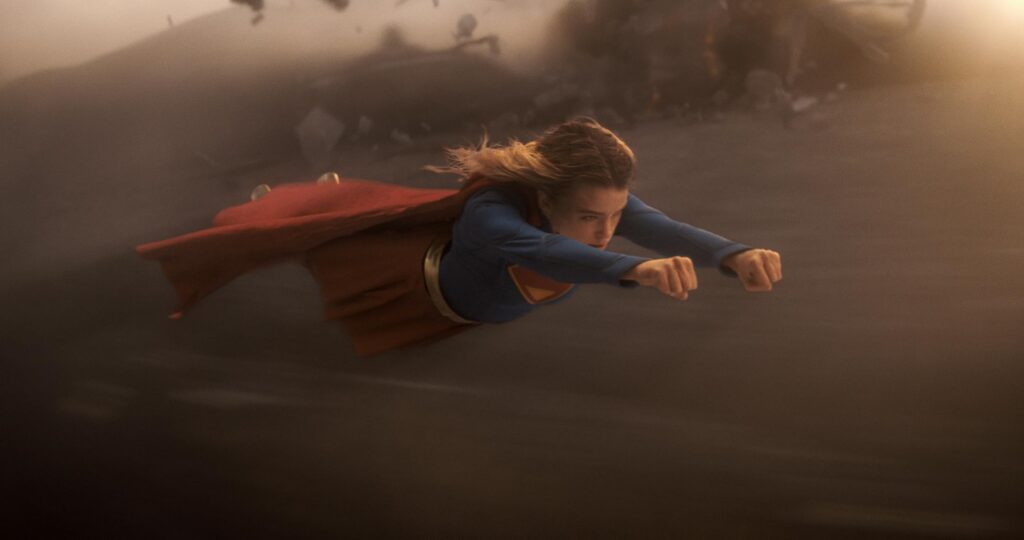
©Courtesy of Warner Brothers
Nevertheless, Eve Ridley is quite impressive as young Ruthye. King reportedly cited True Grit (the novel) as an inspiration for his 8-issue source comics. Viewers can really get that from her earnest, anguished performance. Admittedly, Milly Alcock fully commits to degenerate, self-destructive conception of Zor-El, who would better fit into a superhero version of Absolutely Fabulous than the Justice League immortalized in Saturday morning Super Friends cartoons. Inevitably, though, her unrelenting petulance becomes depressing.
Although Supergirl and Lobo emerge as distinctive characters, their off-earth exploits fail to expand the “Gunn-verse” in ways that fire-up the imagination. Frankly, the much-maligned Star Wars: The Mandalorian and Grogu serves up better interstellar CGI adventure. Disappointingly, Gillespie’s film represents a missed opportunity to build on the positive vibes of Gunn’s Superman. Mostly recommended—super-ironically—for fans of the Snyderverse, Supergirl opens this Friday (6/26) in theaters.
Grade: C+
If you like the review, share your thoughts below!
Check out more of Joe’s Articles.
Here’s the trailer of the film.