

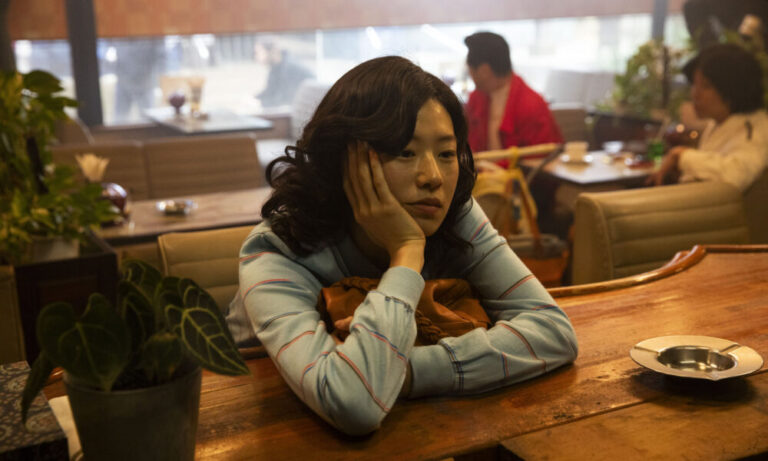
Taichi Kimura’s tragicomedy Fujiko is part of the 2026 New York Asian Film Festival, after taking home the prestigious Golden Mulberry Audience Award at the Far East Film Festival.
The film follows the strong-willed single mother Fujiko (Yuki Katayama) in 1970s and 1980s Shizuoka, as she fights for her child and self-sufficiency. It all begins with the eponymous character chronicling the dark and stormy night she gives birth to her daughter Mari. That moment became the allegory of her tormented fight to break free from the chains in her life: from her tyrannical in-laws, to her wimpy husband, from her cold family to the low-paying jobs. Fujiko manages to rise from the ashes of misery and become a resilient insurance saleswoman who is fearless in the face of adversity, in a time where the patriarchal society would pressure women in their choices. Little by little she also manages to surround herself with people who genuinely care about her and create her own family through the Oishis.
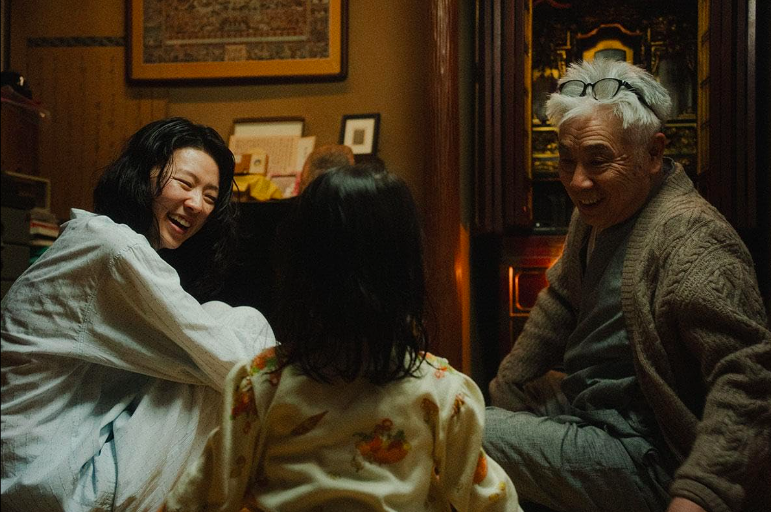
The screenplay, penned by Saki Kuniyoshi and Shōta Gaijin never fails to surprise and moves away from clichés. The cast that accompanies lead actress Yuki Katayama —Atsushi Hashimoto, Issei Ogata, Kaede Terada, Kayoko Kishimoto, Keiko Takeshita, Lily Franky, Megumi, Shuri Suna, Tsuyoshi Ijiki, You, Yuna Watanabe — delivers a feeling of authenticity even during the most rocambolesque of circumstances. The pace of the storytelling is very rhapsodic, thanks to the editing of Aika Miyake; whilst the cinematography by Hyogo Mitsuoka, Ryosuke Sato, Seiya Uehara, Tomoyuki Kawakami makes the visual rendering quite oneiric.
Fujiko is the epitome of the adage “When The Going Gets Tough, The Tough Get Going.” In fact, the autocratic mother confronts the rollercoaster of adversities carving her own existential path, defying social conventions to build a sustainable life for herself and her daughter. Kimura’s decision to set her heroine’s initial hurdles in 1977 is emblematic, since this was a period in which the struggle for Japanese women’s emancipation from patriarchal dogmas was reflected in the demands of the rising women’s liberation movement known as ūman ribu, marking a new social and political direction for women in Japan.
This element, emphasising the feminist activism of ordinary wives and mothers, is conveyed through a very energetic tone, by depicting a female lead who will not be silenced. Fujiko screams when needed, acts wild, and fiercely fights for her dignity. She verbalises her discomfort and never smothers her own subjectivity. Dysfunctional family dynamics are not passively accepted, they get dismembered through constructive rebellion.
Through this woman’s plight we get a snapshot of a rigid society that is in search of a balance after the postwar growth and the crises of the Seventies. The film overall amalgamates characteristics of slapstick with drama, blending the tragic and comic forms transforming this story in a timeless allegory of female emancipation. This aspect is very well represented in the way Fujiko, despite finding a new love interest, will not allow romance to determine her newly found place in the world. Hence, even though the narrative is set in past decades, it fervently looks into the present.
Final Grade: B+
Check out more of Chiara’s articles.
Photo Credits: © 2026 FUJIKO Film Partners (IMDb)