

ⓒCourtesy of Lionsgate
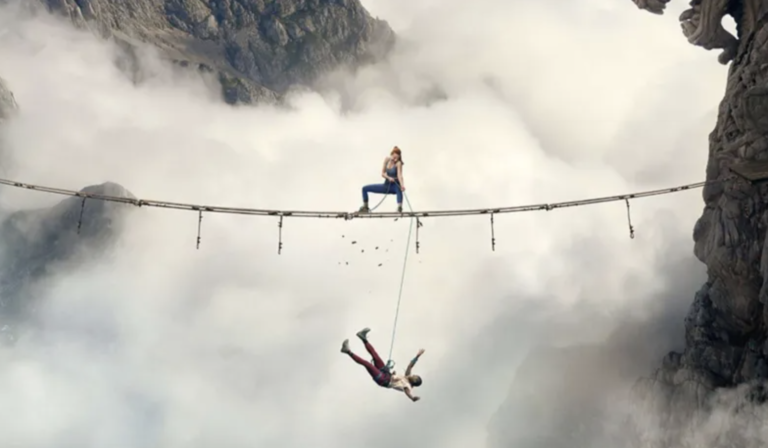
The most daring survival thrillers thrive on a potent combination of fear, isolation, resilience and the human instinct to overcome impossible circumstances. The new movie, Fall 2: Deadpoint, does just that, turning extreme climbing into a metaphor for confronting fear and pushing beyond perceived limits.
The film serves as a sequel to the 2022 survival psychological thriller Fall. Like its predecessor, it reflects people’s continued fight against overwhelming odds. It further explores how trust and determination can push people beyond their perceived limits.
Genre filmmakers The Spierig Brothers (Predestination, Jigsaw) directed Fall 2: Deadpoint. The follow-up was written by Jonathan Frank and producer Scott Mann. The duo also penned the original feature and created the series’ characters together. The new drama stars Harriet Slater, Arsema Thomas and Tom Brittney.
Fall 2: Deadpoint follows Jax Hunter (Slater) and Luce (Thomas) on a perilous climb up Thailand’s Mount Kwan. Jax is the older sister, and Luce is a friend, of Shiloh from the original movie. They embark on the climb with the help of local guide John (Brittney), hoping to pay tribute to Shiloh following her death at the end of the first film.
But their adventure takes a turn for the worse when they become trapped thousands of feet above the ground amid a sudden rockslide. As a result, they experience vertigo-inducing heights, sheer exposure, and impossible odds, turning every moment into a fight for survival.
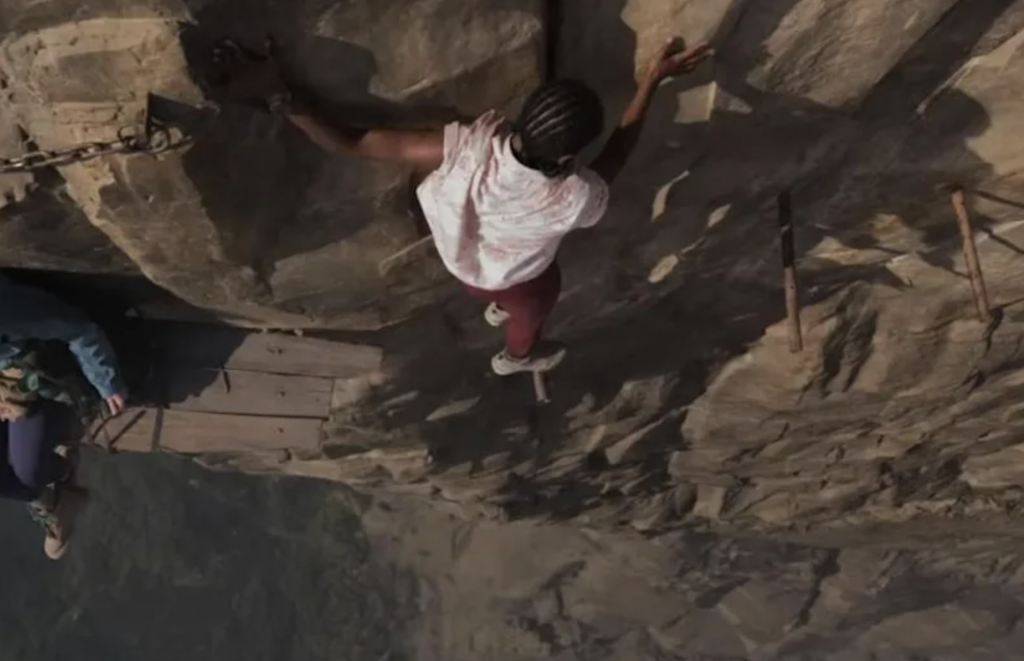
Fear is arguably the thriller’s most effective recurring theme.
The enormous heights make fear impossible to ignore. Jax and Luce must confront their surroundings while battling their own psychological limitations.
The drama understands that fear doesn’t disappear simply because survival requires courage. Instead, courage becomes the decision to keep moving despite overwhelming terror. That arc gives several sequences an emotional dimension beyond the duo’s physical danger.
Isolation strengthens that sense of fear throughout Fall 2: Deadpoint. The characters are surrounded by enormous spaces that offer little protection. Their distance from safety makes every problem feel more dangerous. The environment becomes almost another character, constantly reminding them of their vulnerability. This isolation also creates an interesting contrast between human determination and nature’s overwhelming scale.
The setting is therefore one of the movie’s greatest strengths. Fall 2: Deadpoint uses its climbing locations to create both visual beauty and psychological discomfort. Vast landscapes initially appear spectacular before becoming threatening. The enormous drops make the characters look incredibly small. That contrast reinforces the thriller’s theme of humans confronting forces much larger than themselves.
The climbing set pieces are easily among the film’s highlights. They transform simple movements into moments of genuine suspense. Reaching a ledge can feel like an enormous achievement. Crossing a dangerous section can become more stressful than a conventional action sequence. Fall 2: Deadpoint understands that anticipation can sometimes be more frightening than outright spectacle.
The stunts deserve particular praise. The physical performances make the characters’ struggles feel immediate and exhausting. Their movements communicate fear, fatigue and determination. The performers appear to understand that survival depends upon every decision. This commitment gives the climbing sequences a convincing sense of physical danger.
Vertigo is another major strength of Fall 2: Deadpoint. Cinematographer Andrew Strahorn repeatedly emphasized the terrifying distances beneath the characters. Wide shots establish the enormous scale of the environment. Close-ups then place viewers directly alongside the characters’ fear. The contrast creates an uncomfortable viewing experience.
The visual approach also supports the theme of resilience. The characters cann’t simply eliminate their fear. They must learn to function while experiencing it. Every successful movement becomes a small victory over panic. Fall 2: Deadpoint finds considerable tension in that process. Survival becomes less about being fearless and more about refusing to give up.
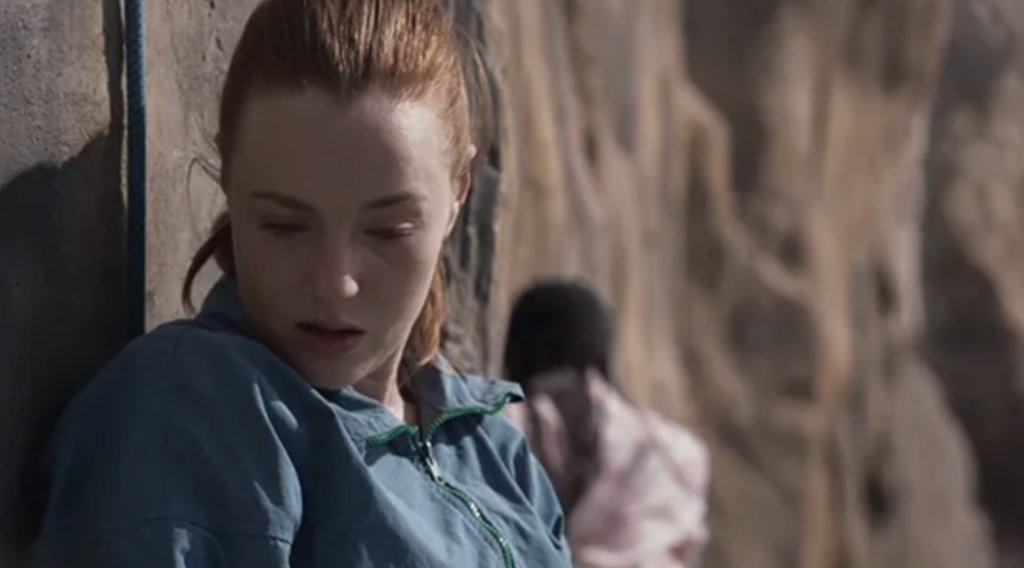
Slater gives that struggle an effective emotional center. Her performance as Jax is one of the drama’s strongest elements. The actress portrays her character as vulnerable without making her appear powerless. She communicates determination through both physical movement and subtle facial expressions. Her portrayal helps make Jax’s struggle feel personal rather than purely mechanical.
ⓒCourtesy of Lionsgate
Slater is particularly convincing when Jax appears exhausted. Her performance captures the physical consequences of prolonged fear and stress. She also conveys Jax’s determination to continue when surrender seems easier. That balance between vulnerability and resilience gives the character considerable appeal. Fall 2: Deadpoint benefits enormously from having such a committed lead performance.
Jax also represents the movie’s interest in confronting impossible odds. She repeatedly faces circumstances that appear beyond human control. Her response is not always confident or heroic. Instead, she experiences fear and uncertainty while continuing to search for solutions. That makes her resilience more believable. Slater’s portrayal allows the audience to understand the emotional cost of survival.
Trust is one important theme that could have received greater development. The thriller recognizes that survival often depends upon relying on other people. However, the relationships between the characters are not always explored deeply enough. Fall 2: Deadpoint sometimes moves quickly from emotional tension to another physical obstacle. More attention to those relationships could have increased the stakes considerably.
The supporting cast, includes Thomas and Brittney, contributed to the film’s survival dynamic. However, the screenplay doesn’t develop their characters as fully as it could. Their motivations and emotional histories sometimes feel underexplored. This limits the impact of certain conflicts. The actors bring commitment to their roles, but the writing does not always give them enough material.
[tf-tv]
Character development is therefore one of the dramm’s weaker areas. Fall 2: Deadpoint establishes potentially interesting emotional conflicts but doesn’t always pursue them. The physical challenges receive considerably more attention. As a result, some characters can feel like participants in a survival scenario rather than fully developed individuals. Stronger characterization would have made their victories and setbacks more affecting.
The story itself also has some significant weaknesses. Fall 2: Deadpoint occasionally relies on developments that feel implausible. Survival thrillers naturally require some suspension of disbelief. However, certain moments push that expectation too far. When the audience begins questioning the logic behind an event, the suspense can weaken.
The movie’s repetitive structure creates another problem. Characters repeatedly face dangerous obstacles before finding temporary solutions. That formula initially creates strong tension. Eventually, however, the pattern becomes predictable. Fall 2: Deadpoint would have benefited from more varied conflicts and unexpected developments. Greater narrative variety could have kept the suspense fresh for longer.
The repetition is particularly noticeable because the physical sequences are so effective. The film frequently demonstrates how thrilling its central concept can be. Yet similar challenges occasionally return without adding enough new emotional information. The result is an uneven rhythm. The best scenes feel terrifying, while weaker sections can feel familiar.
ⓒCourtesy of Lionsgate
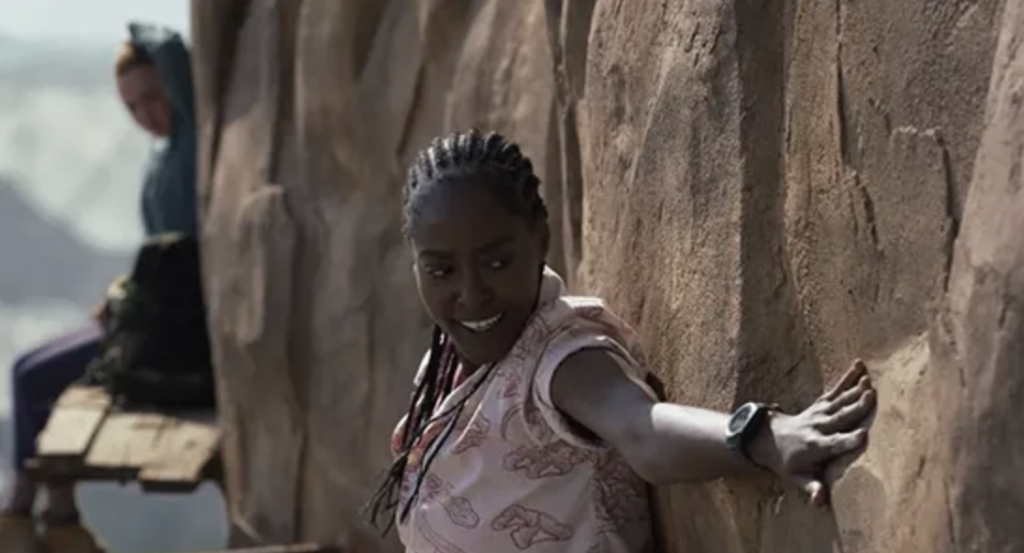
The theme of perseverance nevertheless helps the drama overcome some of these narrative problems. The repeated challenges emphasize how survival requires continuous effort. However, repetition can communicate perseverance only when each challenge reveals something new. Fall 2: Deadpoint does not always achieve that balance. The movie sometimes repeats danger without sufficiently developing its characters.
The CGI and visual effects are similarly inconsistent. Some effects successfully create the enormous scale required by the story. Other moments look less convincing when viewed closely. Those weaker effects can briefly break the illusion of danger. This is unfortunate because realism is essential to the film’s suspense.
Still, the visual effects do not completely undermine the experience. The strongest sequences combine practical performances, effective cinematography, and environmental scale. These elements create tension even when the CGI is less convincing. Fall 2: Deadpoint works best when physical filmmaking remains at the center of the spectacle. The sense of real danger is strongest when the audience can focus on movement rather than effects.
[tf-tv]
The Spierig Brothers deserve credit for creating an atmosphere built around vulnerability. Their direction repeatedly emphasizes how exposed the characters are in the story. The camera makes the surrounding environment appear enormous and unforgiving. This reinforces the themes of isolation and helplessness. At the same time, the characters’ determination provides a counterpoint to that vulnerability.
The thriller’s strongest moments also explore the relationship between fear and courage. Courage is not presented simply as confidence. Instead, it emerges through persistence when confidence disappears. Fall 2: Deadpoint understands that distinction. Jax’s continued attempts to survive become meaningful because the film allows us to see her fear.
That emotional idea works particularly well during the climbing sequences. A difficult climb represents more than reaching another physical location. It becomes another test of psychological endurance. Each movement requires concentration despite fear. The film therefore turns climbing into a visual representation of perseverance.
The drama’s survival themes also connect naturally with its emphasis on isolation. Being trapped far from safety creates a feeling of helplessness. The characters cannot rely on immediate assistance. They must use whatever resources remain available. This makes determination essential to their survival. Fall 2: Deadpoint is most compelling when these physical and psychological elements work together.
Unfortunately, the screenplay doesn’t always give these themes enough room to develop. The characters could have been explored more deeply. Their relationships could have carried greater emotional weight. Their personal fears could have been connected more directly to their survival decisions. These additions might have transformed an entertaining thriller into a more memorable character-driven experience.
Even with those limitations, Fall 2: Deadpoint remains an effective piece of survival cinema. Its stunts are impressive, its climbing sequences are nerve-racking and its setting creates genuine discomfort. The vertigo-inducing cinematography frequently puts viewers into the characters’ terrifying perspective. Slater also delivers a committed performance that anchors the movie emotionally.
Ultimately, Fall 2: Deadpoint works better as a physical experience than as a fully developed character drama. Its exploration of survival, fear, isolation, resilience, and determination gives the thriller thematic substance. The impressive stunts and climbing set pieces provide some genuinely suspenseful moments. Slater’s performance as Jax adds emotional strength to the dangerous journey. However, the implausible story, repetitive structure, limited character development and uneven CGI prevent the film from reaching its full potential.
Fall 2: Deadpoint is now playing in theaters, courtesy of Lionsgate Films.
Grade: B
If you like the review, share your thoughts below!
Check out more of Karen Benardello’s articles.
Here’s the trailer of the film.