
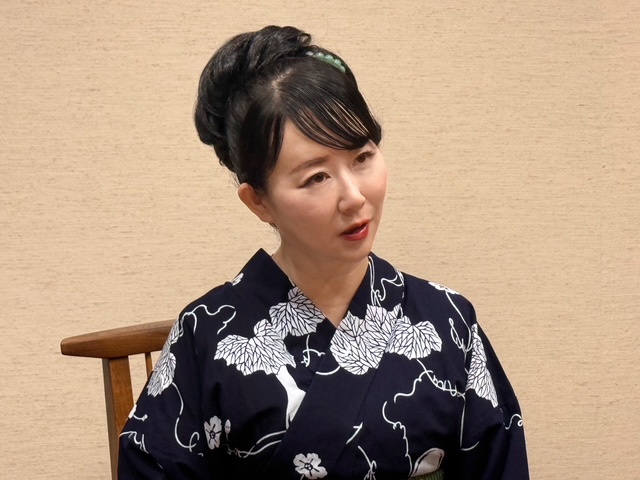
ⓒPhoto by Ayami Kusumi
A live-action film adaptation of the manga ”Blank Canvas : My So-Called Artist’s Journey”—an autobiographical work by popular manga artist Akiko Higashimura, creator of numerous hits such as ”Princess Jellyfish” and “Tokyo Tarareba Girls“—which won the 8th Manga Grand Prize and the Grand Prize in the Manga Category at the 19th Japan Media Arts Festival. The film depicts the nine-year journey of a girl aspiring to become a manga artist and her mentor, an art teacher.
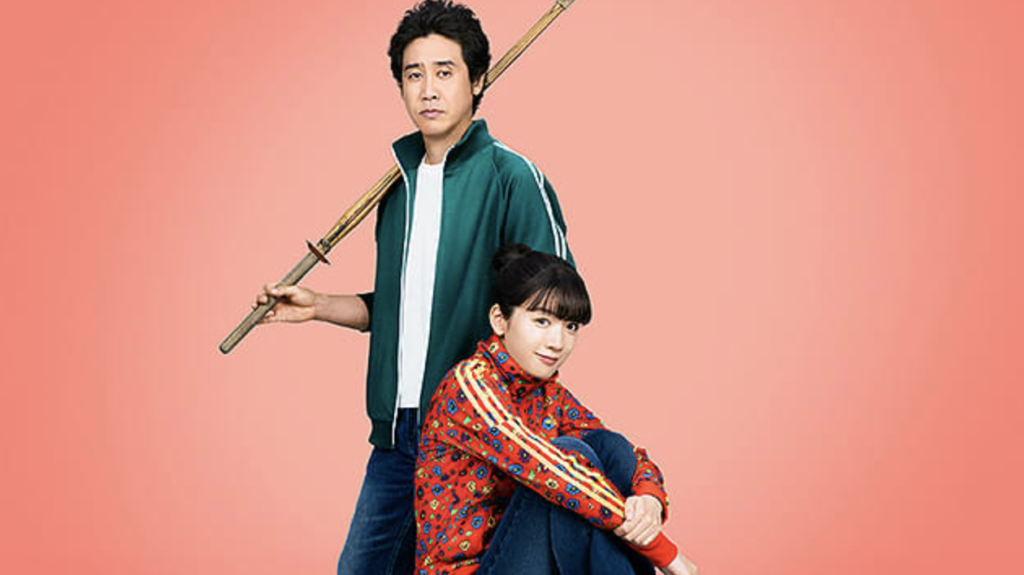
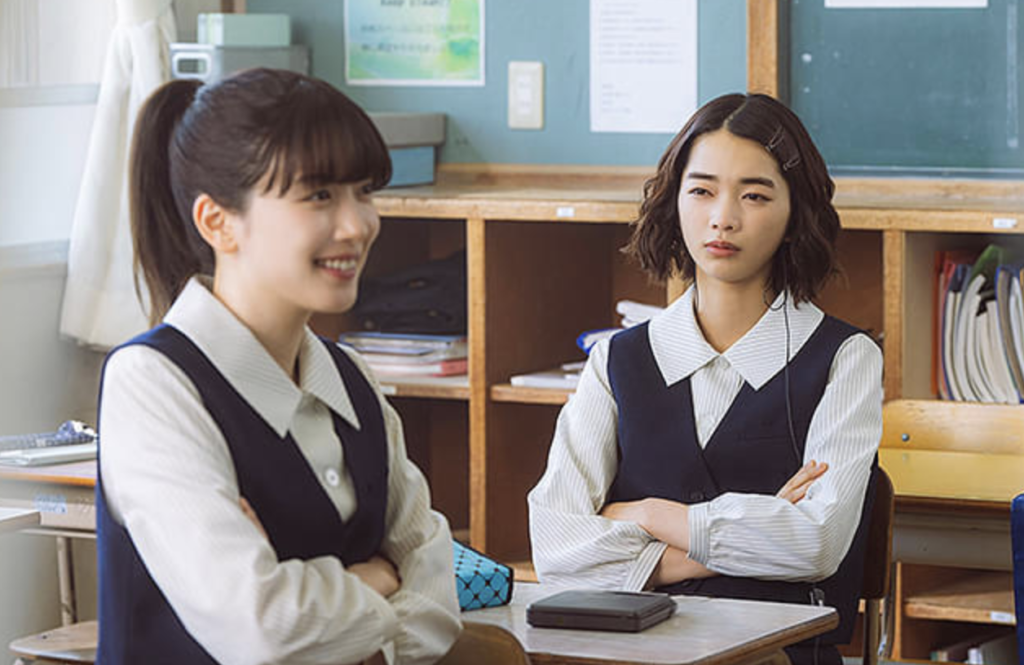
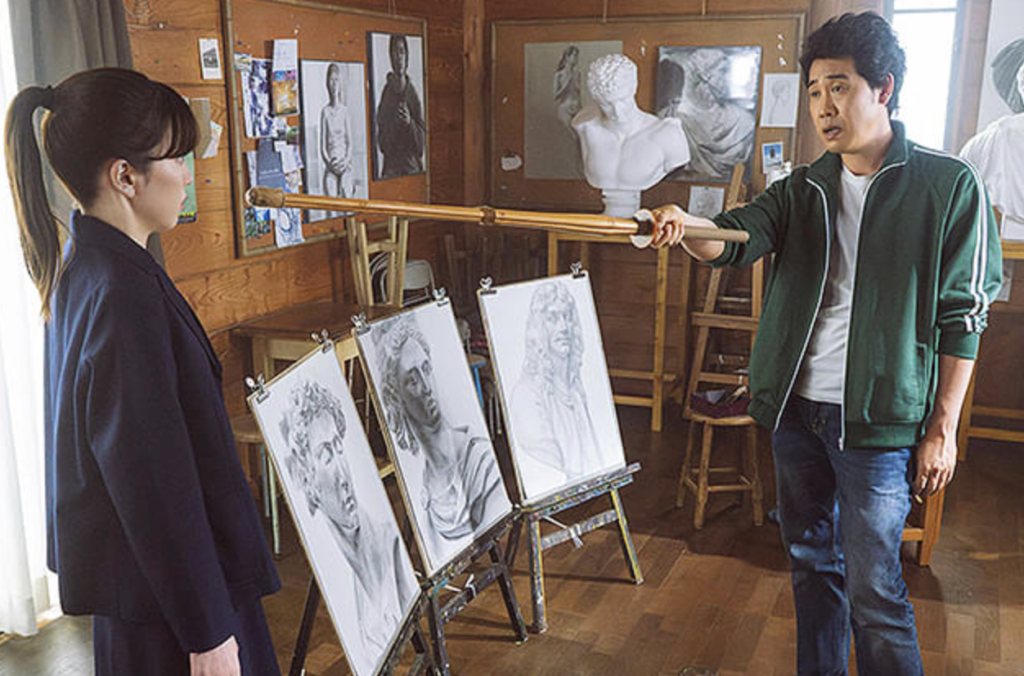
Akiko Hayashi, a carefree and lazy high school girl living in Miyazaki Prefecture, has loved manga since she was a child and dreams of becoming a manga artist one day. Determined to make that dream come true, Akiko sets her sights on attending an art university and begins taking classes at a local art school to prepare for the entrance exams. There, she meets Mr. Hidaka, a Spartan art teacher who shouts orders while brandishing a bamboo sword. No matter what happens or under what circumstances, Hidaka never lets his students stop drawing. Meanwhile, Akiko gradually comes to believe that she cannot fulfill her dream of becoming a manga artist in her hometown of Miyazaki, and she finds herself growing increasingly at odds with Hidaka…
The original author, Akiko Higashimura, wrote the screenplay herself and is also credited as a producer. Mei Nagano stars as the protagonist, Akiko, while Yo Oizumi plays Mr. Hidaka. The film also features a star-studded cast, including Ai Mikami, Meiku Hata, Jin Suzuki, Fuju Kamio, Kenjiro Tsuda, Teppei Arita, MEGUMI, and Nao Omori. The film was directed by Kazuyoshi Seki, who previously teamed up with Mei Nagano on “Hell’s Garden“.
Q: Your latest work, “Blank Canvas”, is an autobiographical manga in which you, Ms. Higashimura, depict your time at Miyazaki Nishi High School in Miyazaki Prefecture. I haven’t really heard of many manga artists who have funded their own films, but did you decide to do so because you wanted to incorporate your own perspective to some extent?
Akiko Higashimura: That’s right. For a long time now—even back when my work was being adapted into a film—I’d ask things like, “Can’t I invest in it?” But I’d always sensed there was an unwritten rule in the manga industry along the lines of, “Well, if the author invests, the movie might not turn out well, and it’s a bit risky,” so I was always discouraged from doing so. So, with the movie “Blank Canvas”, since it’s ultimately my autobiographical story, I felt I had to be deeply involved.
Basically, I’d already learned from all the previous adaptations of my manga that if I didn’t get inside the production, my opinions wouldn’t get through. It wasn’t so much that my intentions were being blocked, but rather that but it turns into a game of telephone. When I tell the manga editorial department, “I want it done this way,” and they pass that on to the TV station or movie studio, a time lag occurs—and since I’m impatient, I really hated that.
So, I figured that if I invested, I’d be fully integrated into the production committee and part of the inner circle, which would eliminate that time lag. That’s why I kept pestering the producer—insisting, “Let me invest, let me invest”—and eventually, the producer at Fuji TV worked incredibly hard to negotiate on my behalf. Although it was quite unprecedented, they agreed to let me invest. It wasn’t about making money or anything like that, nor was it about wanting backing; my goal was simply to be treated as a full member of the team from the very beginning and to have access to all the information.
Q: After graduating from high school, Ms. Higashimura, you attended an art university in Kanazawa and initially took a job as an office worker. Apparently, you were already drawing manga at the same time (while working as an office worker). Could you tell us what led you to return to manga full-time, and what were the circumstances behind that decision?
Akiko Higashimura: I was just so fed up with my job—I was working as a telephone operator—that five minutes would feel like an hour; every time I looked at the clock, the hands hadn’t moved at all. But I kept thinking it was exhausting, and that I just wasn’t cut out for it—I felt very strongly that this kind of work wasn’t for me.
I realized I simply couldn’t make it unless I was drawing. I’d always wanted to be a manga artist, but at the time, I never even dreamed I could actually make a living from it. Still, driven by the single-minded determination to break free, I started drawing manga, and then I made my debut. My editor said, “Why don’t you come out to the city for a bit?” So I quit my job and finally made it there.
Q: I see, that makes sense. I hear that this film, “Blank Canvas”, was actually shot at Miyazaki Prefectural Nishi High School in Miyazaki Prefecture, where you, Ms. Higashimura, attended, and that current students even participated as extras. When you returned to the school where you actually went to school, what memories came flooding back?
Akiko Higashimura: I really did think, “Are we actually going to film in this classroom?” I was like, “No way,” but the principal of Miyazaki Nishi High School was so easygoing, funny, and incredibly cooperative. I really felt that warm, welcoming vibe that’s so characteristic of Miyazaki—or maybe it’s just the way people there are. I actually asked, “Are we really going to do this over there?” I mean, if we filmed it in Tokyo, no one would even know, right? Since it’s inside a school…
Q: That’s right.
Akiko Higashimura: Plus, they let us use current students as extras—I was really surprised they gave us permission to do that—so I was incredibly grateful for the support from the local community.
Q: I’ve heard this from others as well, and apparently it’s reflected in the work itself—for example, the paintings and sketches in the film, including those actually used in the footage, were apparently included because of Ms. Higashimura’s particular attention to detail.

(C) Akiko Higashimura / Shueisha (C) 2025 “Blank Canvas” Film Production Committee
Akiko Higashimura: I supervised everything and prepared all the illustrations myself.
Q: Did you draw all of these yourself, or…
Akiko Higashimura: Some of the paintings I created myself, while others I arranged—for example, borrowing works from students at Kanazawa College of Art, inviting those students to my studio to paint, and directing their work. As for the paintings by Professor Hidaka, he is a senior of mine from college named Takahiro Hara—who is now one of Japan’s top painters—and I actually took the Shinkansen(Bullet Train) to ask him, “Would you be willing to paint this for me?” I gave specific instructions on what kind of paintings to create, and I personally arranged every single painting hanging on the walls.
Q: That’s amazing.
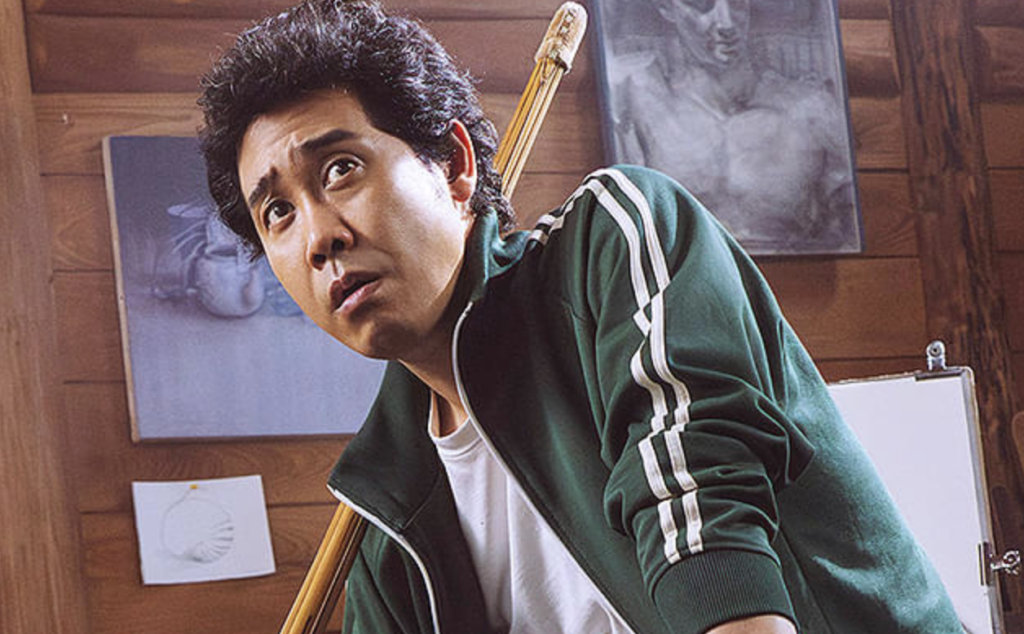
Akiko Higashimura: It was really, really tough, though. Well, it was kind of scary but also funny—I mean, it was really scary, but it didn’t feel terrifying back then. It was super scary, but for some reason I’d end up laughing, and it wasn’t like I was truly afraid of him. I did think, “This guy is a bit intense,” but if I’d really been afraid of him, I wouldn’t have kept going to that art class (taught by Mr. Hidaka), would I? But he was kind of charming—what we’d call a “power-harassing teacher” today. That kind of thing wouldn’t fly now, and corporal punishment is out of the question.
Though when I say corporal punishment, it was really just whacking us with a bamboo sword; he wasn’t actually hitting us with his bare hands. Still, in this day and age, it’s hard to portray a character like that. How should I put it? If the person isn’t charming, they’d just come across as genuinely scary, so Mr. Hidaka was actually a really charming person. Someone who can convey that “scary yet charming” vibe—I really felt that Mr. Oizumi was the only one who could pull it off.
So the producer worked hard, approaching him over and over again, asking, “Could you possibly take on this role?” Once filming started, Mr. Oizumi and I were on such the same wavelength. When he’d say, “Um, how exactly did the teacher say this part?” ” he’d ask, and I’d share my memories, saying, “Well, back then, I said it like this,” and Mr. Oizumi would incorporate that right into his performance. We made a great team, so I’m really glad it worked out that way.
Q: I’d also like to know a little about how actress Mei Nagano was cast. It seemed like both Ms. Nagano and Mr. Oizumi spoke the Miyazaki dialect very naturally—did you actually give them specific instructions on the spot about how to pronounce it?
Akiko Higashimura: Yes, first of all, I brought in my high school classmate, Mr. Hatanaka, to help with the dialect coaching.
Q: So you’re a classmate, then.
Akiko Higashimura: My high school classmate, Hatanaka, was with me the whole time during filming. So I felt really at ease. Basically, I’d kind of forgotten some of the Miyazaki dialect myself, and since my classmate Hatanaka was an actor, he understood what it’s like to be an actor. So when I asked him, “If you’re not too busy with work, would you mind helping me out a bit?” he said, “Sure.” So the two of us—my classmate and I—stuck together the whole time and provided dialect coaching to (Ms. Nagano and Mr. Oizumi).
But both of them—Mei Nagano and Oizumi—have a truly genius sense of pitch. Especially Mei—she didn’t have a single take that had to be redone, she never stumbled over her lines, and she picked up the Miyazaki dialect so quickly—I don’t know if she learned it by musical scale or what, but she was truly amazing.
(C) Akiko Higashimura / Shueisha (C) 2025 “Blank Canvas” Film Production Committee
Q: Personally, I think the appeal of Ms. Higashimura’s work lies largely in you keen observation of human nature. To be honest, I’m not very familiar with his work—I’ve mostly gotten to know it through his films and have only read a few of his manga—but in a way, that kind of observation is similar to what a film director does. I believe that outstanding film directors are, after all, very skilled at observing people. Now that you’ve taken on the role of film director for the first time with “The Vacation Principle”, what similarities have you discovered between manga artists and film directors? Conversely, what do you think are the key differences between the two?
Akiko Higashimura: First of all, there’s one thing I really liked about filming this drama: a work is a work, isn’t it? I was able to create a work that reflects my worldview and my personal tastes—it did come together—but with manga, I have to cover the staff costs myself. With this drama, however, I didn’t have to pay for the staff. Not only that, but I received a director’s fee, and the company covered the staff costs. In short, while ABEMA is the production company, they covered the staff costs, and I thought it was really great that my work could be completed this way. With manga, the system is that the author covers the assistants’ salaries, so that’s really tough on everyone.
I thought that aspect was pretty great. Also, on the creative side, I realized I was relying entirely on the actors. So, it’s more like the actors are so skilled—it’s a job where we’re riding on their talent. As for my own creative vision—like, “I want to do this” or “I want to do that”—I can handle the art direction and things like sets and scenery, but when it comes to acting, I can’t really direct them. I was completely reliant on the actress Kanna Hashimoto actually took the lead in directing to a large extent.
Q: I’ve heard that you made your debut as a serialized manga artist with the original work “Kisekae Yuka-chan”, and that at that time, your style still included a certain degree of seriousness. However, as far as I know, since then you’ve produced a lot of works with a strong comedic touch. Was there a specific turning point or reason behind that shift toward comedy? Or was it simply because you’ve always had a fondness for comedy?
Akiko Higashimura: Looking back now, I realize that what I’d been drawing since I was a kid were mostly gag manga—I drew tons of them starting in elementary school, so I guess that’s where my roots lie. But since I’m part of the generation that grew up reading shōjo manga during its golden age, I naturally looked up to shōjo manga artists and found myself thinking, “I want to try drawing that kind of serious, literary shōjo manga,”
But since I’d been drawing gag manga since I was a kid, my editor must have seen right through me—like, “This person isn’t cut out for serious stuff”—and basically steered me in that direction, saying, “Why don’t you draw some gag manga?” It felt like my editor was guiding me that way.
Q: Yesterday’s Q&A had the Americans laughing out loud over and over again, so I really started to think there aren’t many manga artists like this in the U.S. (laughs)
Akiko Higashimura: If I could speak any English at all, people would laugh at me even more. (smiles)
Q: Yeah, you’re right—maybe I should start learning about that. Speaking of the background of comedy, I’d like to ask you about this: I heard that you run a comedy theater, and that Higashimura Productions even has a division dedicated to comedians. Is it true that you’re trying to learn something from comedy and incorporate it into your own work? After all, comedy has its own key elements—like what makes people laugh and perfect timing, right?
Akiko Higashimura: I’ve always loved comedy—I’ve been crazy about manzai and Shinkigeki since I was a kid. I’ve had friends who were struggling comedians for a long time, and when they were entering the M-1 Grand Prix preliminaries, they asked me if it would be okay to list “Higashimura Pro” as their agency because it looked bad to leave that field blank. I said, “Sure,” and that’s how it all started. It kind of turned into a situation where I was just lending my name, but But for some reason, when we were drafting the company’s articles of incorporation—since you can write whatever you want there and we didn’t know what kind of business we’d end up running—I must have lost my mind and wrote “entertainment agency management” in that section.
So it just sort of worked out, but—um—comedy and manga are seriously similar. Well, to put it simply, the way they’re created is very similar. A lot of the comedians at Yoshimoto, for example, actually wanted to be manga artists or gag manga artists, and conversely, there are a lot of people who read a ton of manga. On the flip side, in the world of manga, I think everyone could write comedy material—they’re really similar. It feels like they’re practically the same—it’s just a matter of whether there are pictures or not.
(C) Akiko Higashimura / Shueisha (C) 2025 “Blank Canvas” Film Production Committee
Q: I see. Are there any comedians who’ve really made it big coming from that comedy division?
Akiko Higashimura: At our agency, we have what we call “DB comedians”—you know, the comedians based on “Dragon Ball”?
Q: Yes, yes.
Akiko Higashimura: We have Yamcha, Videl, Krillin, Chi-Chi, and…
Q: So Goku isn’t one of them.
Akiko Higashimura: Goku isn’t with us. Goku is with Yoshimoto.
Q: So there’s already a Goku. I see.
Akiko Higashimura: So, even though we have to call them “DB comedians,” quite a few of the main characters from Dragon Ball are actually signed with our agency…
Q: Do those comedians get invited to events and participate in them often?
Akiko Higashimura: Yes, they do. They get booked for gigs, and they appear on TV from time to time, too. I’d say they’re the ones making the biggest strides.
Q: Aside from the movie “Blank Canvas”, there’s something else I’d like to ask you about—you mentioned it yesterday, but I’ve heard that “Tokyo Tarareba Girls” was somewhat influenced by the American TV series “Sex and the City”. That show became a topic of conversation for the women’s candid thoughts, their sex lives, and—in terms of design—Patricia Field’s iconic costumes. What specific aspects of it really resonated with you, and how were they reflected in “Tokyo Tarareba Girls”?
Akiko Higashimura: I really am the worst person ever, but when I decided to write a Tokyo version of “Sex and the City”, I’d probably only seen about two episodes of “Sex and the City”—seriously, I’d just watched one or two episodes on TV—and I thought, “This is so good,” and “I want to do something like this.” I don’t think I’d seen the movie version at that time either. Anyway, watching those four women strutting through the streets of New York—looking stylish and having fun—I thought, “This is great.”
The one or two episodes I saw were at a point where their love lives weren’t going so well, so I thought maybe a story like this would be better than one where the romance works out. But after that, once I started drawing the manga, I watched the entire series, and now I’m a huge fan—I watch it very carefully. Still, at first, it was more like a single-panel illustration in my mind.
Q : And then there’s the sequel, “Just Like That…”
Akiko Higashimura: I watched it—I watched the whole thing. How’s the reception in New York?
Q: Not great—it’s kind of so-so.
Akiko Higashimura: I know, right? They went a bit overboard with the diversity.
Q: Also, Samantha isn’t in it, and I think she’s the most interesting character…
Akiko Higashimura: I like Samantha the best, too…
(C) Akiko Higashimura / Shueisha (C) 2025 “Blank Canvas” Film Production Committee
Q: A lot of people feel that way. It seems she and Sarah Jessica Parker weren’t really on good terms.
Akiko Higashimura: They had some kind of falling out.
Q: Yeah. That’s a bit of a shame, though. “Princess Jellyfish” is, in a sense, a work that really captures the essence, spirit, and charm of Japanese otaku culture. You yourself, Ms. Higashimura, collect kimonos and are a Takarazuka fan—you have such a wide range of interests. In the U.S., that kind of otaku culture is often referred to as “nerd” or “geek” culture. Well, in the U.S., there are anime conventions like San Diego Comic-Con and the so-called New York Comic Con, and now Anime NYC. Having participated in Anime NYC this time, what impression did you get of American otaku—or rather, the American fan base in general?
Akiko Higashimura: Yesterday, I held a signing event, and at Anime NYC, there were lots of young people in cosplay. Seeing all that made me realize—and this is true in Japan, too—that everyone is incredibly polite, and their mannerisms are exactly the same as those of Japanese otaku…
Q: That might be true. After all, they’ve been influenced by Japanese culture, so…
Akiko Higashimura: Their mannerisms were just like ours, and I thought that was really great. It made me happy, somehow. I thought, “We’re just the same,” so at first I wondered if they’d come with an American vibe, but they were just like the true manga fans here in Japan. That’s when I realized that manga culture transcends the specific cultural nuances of each country and turns everyone into otaku. I was filled with a tremendous sense of bliss. It just felt so happy.
Q: “Blank Canvas” really reflects your autobiography, Ms. Higashimura, and I imagine it’s a work that’s very close to your heart—one you were heavily involved in. Could you tell us, just to wrap things up, what aspects of it you’d like people in the U.S. or overseas to see?
Akiko Higashimura: Well, if I just say it’s a manga-based movie, people might think, “But there aren’t many manga scenes, are there?” So the question is: What does drawing mean? Does it have any meaning? It’s about what kind of meaning people should find in drawing—or rather, that’s the point. It might sound a bit like Zen, but it’s really about the act of drawing itself—not just in manga. Then there’s the mentor, the master, the teacher—as they say in China. The theme is that life with a mentor is quite different from life without one. That’s why I feel incredibly lucky to have had a mentor.

ⓒPhoto by Ayami Kusumi
If you like the interview, share your thoughts below!
Check out more of Nobuhiro’s articles.
Here’s the trailer of the film.