

©Courtesy of Netflix
Eight years ago, Korean auteur Lee Chang-dong gave us “Burning” (2018), a haunting and masterful adaptation of a short story by Japanese writer Haruki Murakami. Now he is finally back with “Possible Love”, another richly novelistic film inspired by Polish director Krzysztof Kieślowski’s “Dekalog: Ten” (1989). Once again, Lee demonstrates why he belongs among the world’s foremost filmmakers.
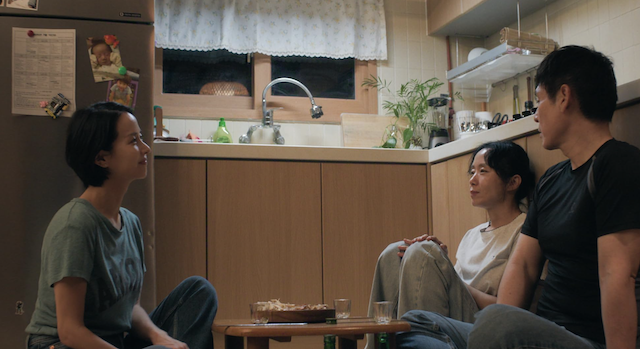
At the center of “Possible Love”, which won the Silver Lion Grand Jury and the FIPRESCI awards in Venice and is now playing at the New York Film Festival, are two couples. Their lives become intertwined when the well-off and stylishly dressed Ye-ji (Cho Yeo-jeong), a filmmaker, starts making a documentary about laid-off workers. One of them is Ho-seok (Sul Kyung-gu), a former blue-collar factory worker and broken soul struggling with alcohol and seems to carry the whole world’s problems on his shoulders. As Ye-ji and her wealthy husband Sang-woo (Zo In-sung) get to know Ho-seok and his outspoken wife Mi-ok (Jeon Do-yeon), the relationships between the four become increasingly complicated. Love, desire, envy and class all come into play, along with questions about the ethics of turning other people’s lives and suffering into a documentary.
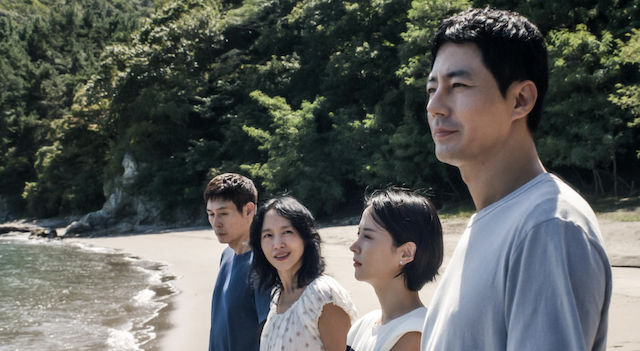
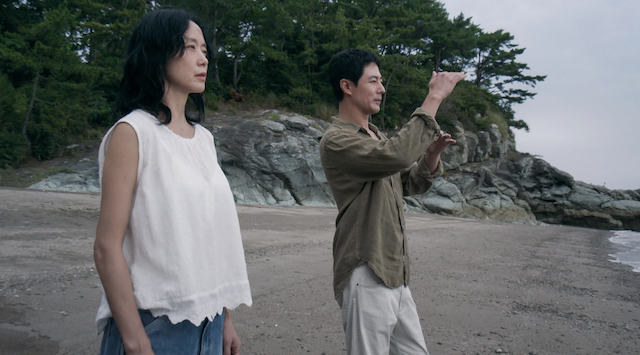
The two couples gradually become closer. Mi-ok agrees to take part in Ye-ji’s documentary and the two women develop a friendship, or perhaps a pseudo-friendship, while Ho-seok remains deeply withdrawn after losing his job. Ye-ji eventually invites the family to spend time at Sang-woo’s luxurious seaside home, with its private beach, where the differences between their lives become impossible to ignore. As the four hang out together, hidden desires and tensions begin to surface, and what initially looks like an unlikely friendship takes a more complicated turn.
©Courtesy of Netflix
The film’s twists and turns are also smoothly and carefully structured. Lee Chang-dong co-wrote the script with Jungmi Oh, who also co-wrote “Burning”, and together they gradually reveal the emotional complications that put these relationships under pressure. As the story unfolds, the characters are forced to look beneath the surface and confront uncomfortable truths about their lives, relationships, love and identity.
The Krzysztof Kieślowski connection is clear from the very beginning. “Possible Love” opens with the words “Thou shalt not covet,” taken from the Tenth Commandment and from Kieślowski’s “Dekalog: Ten”, the final film in his celebrated series. Kieślowski was one of the great filmmakers of modern European cinema, known for turning simple moral questions into complex human stories. Lee does something similar, using the commandment not as a lesson but as a question. What do we really covet in other people? Their money, their relationships, their freedom, or perhaps the lives we imagine they have? The question runs quietly through the film.
Class is also at the heart of the film, especially in the way Ye-ji looks at Ho-seok and Mi-ok and their life through her documentary. She comes from a very different world, and making the film becomes a way for her to explore a life she knows little about. But the film also asks what happens when someone with money and freedom turns another person’s hardship into a story. Ye-ji wants to understand Ho-seok and his wife, but can she ever really know what it means to lose everything? And where is the line between empathy and using someone else’s pain? Lee raises these questions without easy answers.
Possible Love is very much a character-driven film, which makes the acting crucial to its success. The four actors are excellent, bringing a lot of feeling to their characters without overplaying them. Jeon Do-yeon reunites with Lee Chang-dong after “Secret Sunshine” (2007), for which she won the Best Actress award at Cannes. Sul Kyung-gu has also worked with Lee before, in “Peppermint Candy” (1989) and “Oasis“ (2002). Cho Yeo-jeong, best known internationally for “Parasite” (2019), and Zo In-sung, known for “Escape from Mogadishu” (2021), bring a different energy to the other couple. Together, the four make the growing tension between the characters feel natural and believable.
What makes “Possible Love” also work so well is Lee Chang-dong’s natural and patient way of telling a story. He takes his time with the characters and lets their feelings emerge slowly, without forcing them into simple categories of good and bad. This has been a strength of his films from “Peppermint Candy” and “Oasis” to “Secret Sunshine”, “Poetry” (2010) and “Burning”. Again and again, he finds drama in ordinary lives and looks closely at people who are struggling with things they cannot easily express. “Possible Love” continues that tradition, while adding questions about class, work and the responsibility of looking at other people’s lives. It is a quietly exceptional film, one that stays with you.
©Courtesy of Netflix
Grade: A-
If you Like the review, share your thoughts below!
Check out more of Niclas’ Articles.
Here’s the trailer of the film.