

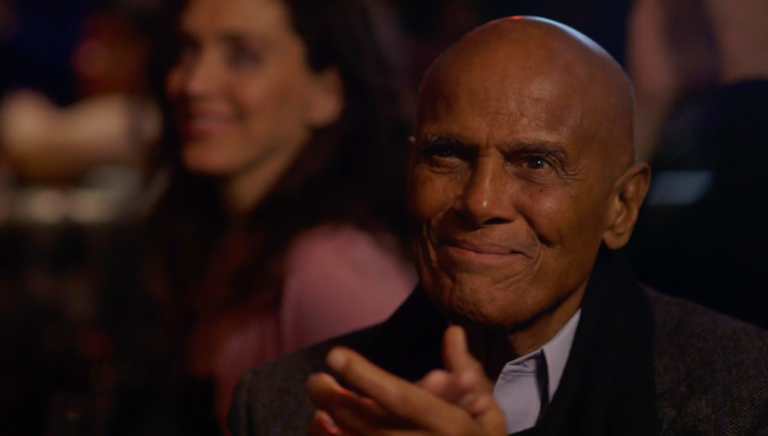
“The past has its own inevitability, but it’s never too late to change the future.” These words, spoken by Harry Belafonte, capture the spirit of FOLLOWING HARRY, an intimate documentary that retraces the final twelve years of the legendary artist and activist’s life. Directed by Susanne Rostock, the film is far more than a portrait of a celebrated entertainer. It is a meditation on responsibility, resistance, fear, and the possibility of creating a more just future.
The film opens a window into Belafonte’s extraordinary journey, moving between public history and deeply personal moments. Archival images of Ku Klux Klan violence, black and white footage of the Civil Rights Movement, contemporary protests, and intimate conversations create a stream of consciousness portrait of a man who spent his life asking difficult questions. One question in particular seems to reverberate throughout the film: “What is the enemy?”
For Belafonte, the enemy was not simply an individual or an institution. It was fear itself —the fear of difference, the fear of diversity, and the fear that prevents people from recognising one another’s humanity. The film suggests that societies are often “born in a space of fear,” and that overcoming oppression requires confronting the ideas and structures that allow that fear to flourish.
Belafonte’s political consciousness was shaped by some of the most important thinkers and activists of his time. He was mentored and inspired by figures such as Nelson Mandela and Dr. Martin Luther King Jr., whose ideas became central to his understanding of justice. King’s warning that America was “integrating in a burning house” becomes particularly powerful in retrospect. To survive that burning house, he argued, “we will have to become firemen.” FOLLOWING HARRY presents Belafonte as one of those firemen: someone who refused to stand at a safe distance from injustice.
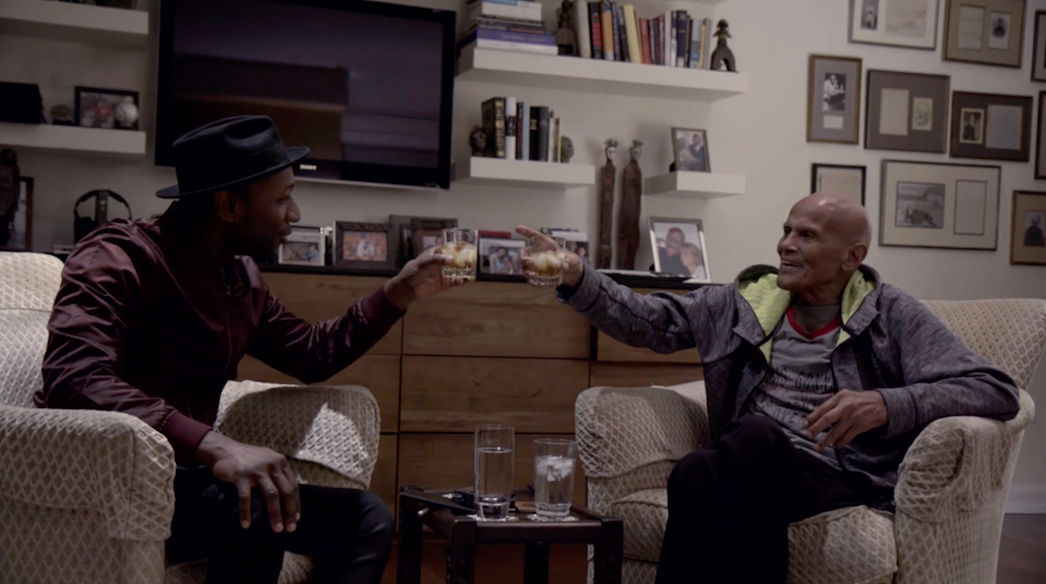
What makes the documentary especially compelling is its refusal to separate Belafonte the artist from Belafonte the activist. His career was built on music, performance, nightclubs, concerts, and international tours, but art was never merely entertainment for him. It became a vehicle for political consciousness and social change. His decision to engage politically through his art demonstrates his belief that culture could reach people in ways that political speeches alone could not.
That philosophy culminated in moments such as We Are the World, where music became an expression of collective responsibility and an acknowledgment of human need. Belafonte understood artists as uniquely positioned to influence culture. As Rosario Dawson observes in the film, the struggle involves “changing culture, combating ignorance.”
The documentary also brings Belafonte’s activism into the present, showing his response to the death of Trayvon Martin, the protests in Ferguson, and the Women’s March, which was created in his office. These events demonstrate that his activism was not confined to the history books. He remained engaged with the urgent struggles of his own time, searching for answers to the challenges confronting each new generation.
The parallels between Trayvon Martin’s death and earlier cases such as Oscar Grant’s underline one of the film’s most painful observations: history may change its details, but injustice can reproduce itself when society fails to confront its underlying causes. Belafonte recognised this continuity. His work was therefore not simply about remembering the past; it was about understanding the past well enough to prevent it from determining the future.
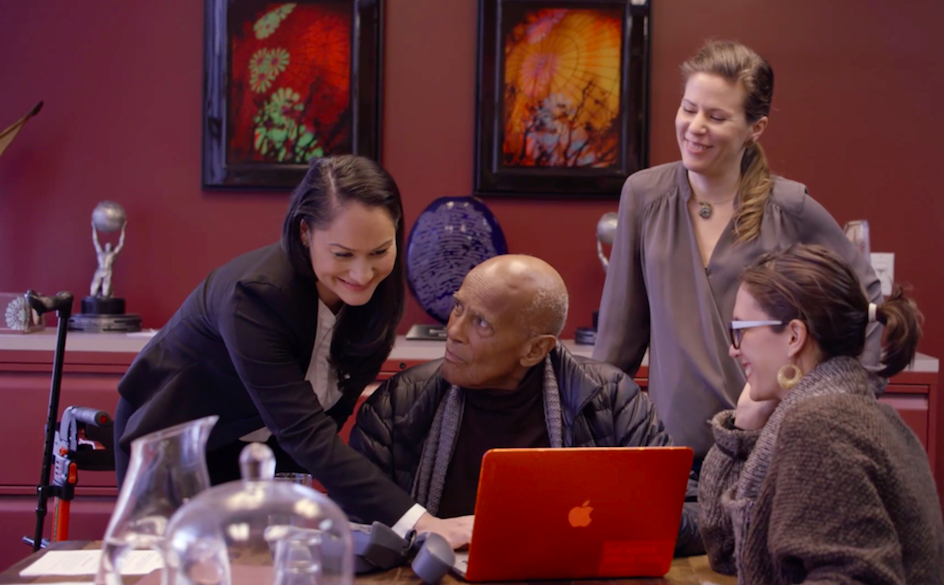
The film’s visual language reinforces this sense of history constantly, also through the cinematography by Martina Radwan, that gives the film an intimate quality, while Hahn Rowe’s score provides an atmospheric foundation for Belafonte’s reflections, as they intertwine with the various interviews. For instance, the film features Aja Monet, Angela Davis, Aloe Blacc, Carmen Perez, Chuck D, Gina Belafonte, Jamie Foxx, Jesse Williams, Kerry Kennedy, Matt Post, Phillip Agnew, Rod Starz, Rosario Dawson, Sean Pica, & Talib Kweli and many more.
The legacy of the artist-activist is important, but FOLLOWING HARRY does not reduce Harry Belafonte to an untouchable icon. Instead, it reveals the intensity of a man who understood that no one enters the world unscathed. His life was an evolving, often difficult journey of searching, questioning, and acting.
At the heart of FOLLOWING HARRY is Belafonte’s conviction that younger generations must become agents of change. He believed that crises can become opportunities for transformation and that people themselves are amongst “the greatest change agents the universe has to offer.” His message is both demanding and hopeful: we control our destiny.
The film’s title is therefore particularly fitting. To “follow” Harry is not simply to admire his achievements. It is to examine the path he left behind and decide what to do with it. Belafonte did not present himself as someone who had solved the problems of injustice. Instead, he offered his experiences as a map for those who would come after him. The film represents a passing of the baton of Belafonte’s plight onto the next generation.
Belafonte spent his life trying to be a bridge between art and activism, between generations, between cultures, and between the dream of equality and the difficult reality of achieving it. He understood that oppression stands in the way of love, and that changing society requires more than good intentions. It requires courage, imagination, and sustained action. The documentary projects what it means to take responsibility for the world we inherit. Ultimately, FOLLOWING HARRY leaves viewers not simply with the story of a remarkable man, but with a challenge. The question is no longer simply “What is the enemy?” The deeper question is: What will we do with the future we have been given?
Final Grade: B+
Photos credits: Belafonte-Nasso-Zeng Productions, LLC