

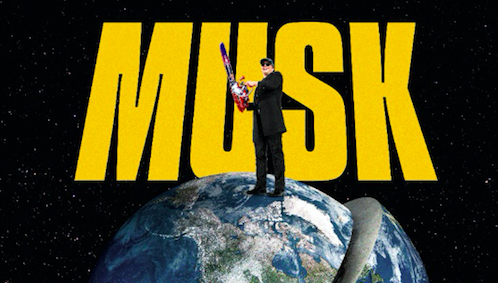
The 17th edition of DOC NYC presents Musk, the new documentary by Alex Gibney, previously screened Out of Competition at the 83rd Venice International Film Festival. The Oscar-winning director, who received the Academy Award for Best Documentary Feature in 2008 for Taxi to the Dark Side, has built a career investigating cult-like belief systems, abuses of institutional power, corporate fraud and systemic corruption. His previous films include Going Clear: Scientology and the Prison of Belief and Mea Maxima Culpa: Silence in the House of God. This time, his attention turns to perhaps the most controversial billionaire on the planet.
Alex Gibney’s portrait of a billionaire playing God
What emerges is a portrait of a man who presents himself as a visionary, a miracle worker and ultimately a saviour of humanity, but who increasingly resembles a dystopian version of the Wizard of Oz: someone hiding behind an elaborate machinery of self-promotion, carefully constructed mythology and technological spectacle.
Gibney’s central concern is not simply Elon Musk’s extraordinary wealth or his entrepreneurial achievements, but the enormous distance between the public persona he has created and the reality that emerges from the testimonies of those who have worked or lived alongside him. Musk seems to inhabit a simulation of his own making, constructing a personal mythology in which he is always the hero, the protagonist of a grand narrative about saving humanity. He plays by his own rules, and millions have been drawn to this seemingly superhuman figure, whose ambition is matched by an enormous ego.
The documentary traces the transformation from Silicon Valley’s celebrated whiz kid into what could be described as one of the most powerful capitalists in American history.
The making of a self-proclaimed visionary
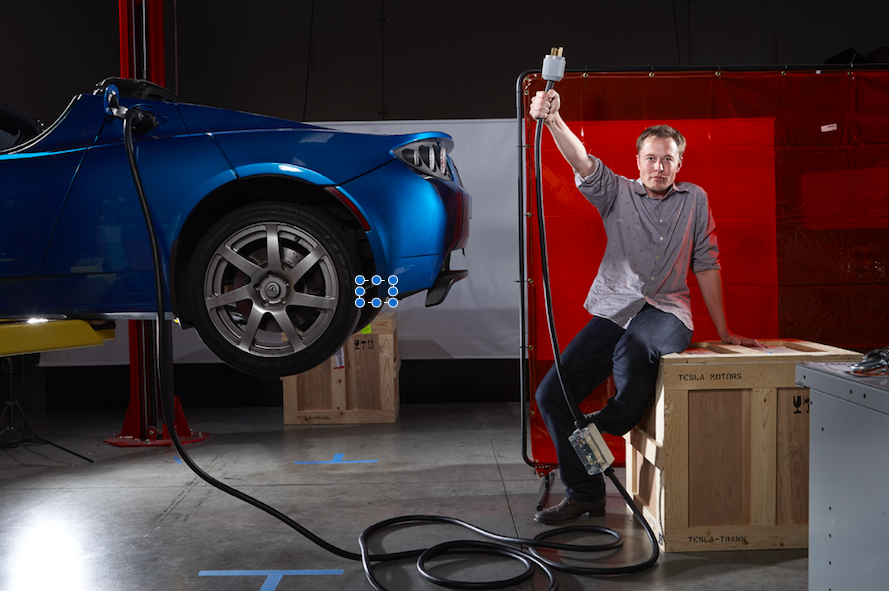
From his earliest interviews, three areas of interest consistently emerge: the internet, a sustainable economy and space exploration. These ambitions would eventually become the foundations of his business empire, encompassing PayPal, Tesla and SpaceX. The journey begins in Silicon Valley, following Musk’s early ventures, from Zip2, essentially an online version of the Yellow Pages, to X.com and the expansion of his other companies.
Gibney challenges one of the most deeply rooted myths surrounding Musk: that of the solitary genius capable of inventing and building virtually everything associated with his name from scratch. The documentary instead highlights his ability to recognise promising projects, attract capital, assemble highly qualified teams and, above all, turn himself into the principal marketing instrument of his companies.
Tesla, for instance, was not originally Musk’s creation. It was founded in 2003 by Martin Eberhard and Marc Tarpenning, although Musk subsequently managed to position himself as its central figure and eventually became widely regarded as its founder. Tesla’s history also exposes the gap between his promises and their actual delivery, from the proposed battery-swapping programme, which never became a publicly available service, to the repeated claims surrounding Autopilot, whose capabilities have often fallen short of the expectations created by its marketing.
A personality cult and the private empire
One of the documentary’s most revealing aspects is the relationship between Musk’s public mythology and his private life. Through testimonies from family members, former collaborators and people who have worked directly with him, Gibney presents a man who seems perpetually driven by the need to dominate the narrative, win every confrontation and remain the central character in every situation.
The testimony of his first wife, Justine Musk, is particularly significant. It connects the behaviours visible in his professional and public life with the dynamics of his intimate relationships, including patterns of manipulation and gaslighting.
His relationships and his extraordinary number of children also become part of the film’s wider investigation into his ambitions. Inspired, according to the documentary’s account, by the historical figure of Kublai Khan and his numerous offspring, Musk appears to have developed an obsession with extending his genetic legacy.
Fourteen children have been publicly reported, although the precise number and circumstances surrounding some of these births have been disputed. With Justine Wilson, he had six children. With their first child having died in infancy, Musk has nevertheless declared one of their surviving children, Vivian Jenna Wilson, dead, because of her decision to undergo gender transition. Musk subsequently married Talulah Riley, although they had no children together. With musician Grimes, he had three children. During that relationship, he also fathered twins with Shivon Zilis, a Neuralink executive, with whom he later had two more children. Author Ashley St. Clair has also publicly claimed that Musk fathered her child.
What emerges is an unsettling picture of procreation almost treated as an extension of empire-building: where women are simple breeders of the Musk legion. There is something distinctly Ancient Roman about this ambition, as though the entrepreneur were attempting to populate the world with his own descendants while preparing to conquer new territories.
The cult of personality surrounding him is further reinforced by his appearance in Iron Man 2, where he played himself. The boundary between the billionaire and the technological superhero — he seems to imagine himself to be — becomes increasingly blurred.
Reality as a video game
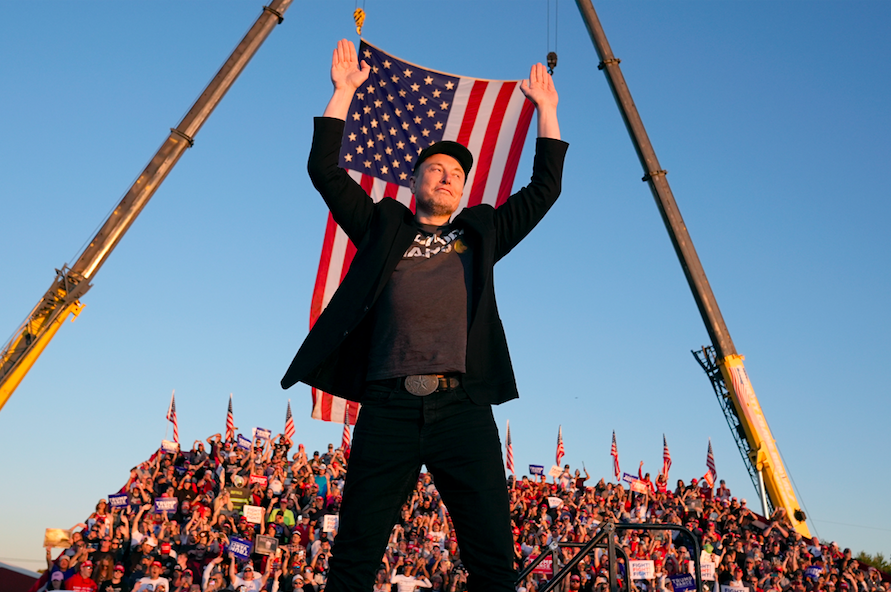
Perhaps the most interesting interpretative key in Gibney’s documentary is Musk’s relationship with video games. For him, gaming appears to be much more than a hobby. It provides a model through which he interprets reality itself. The world becomes a succession of levels, challenges, enemies and objectives to be conquered. Competition is perpetual, adversaries must constantly be identified, and every existing system can supposedly be dismantled and rebuilt according to his own rules.
Gibney takes this interpretation to its most disturbing conclusion: if reality is perceived as a simulation or a game, other human beings risk becoming nothing more than variables within a system to be optimised. Empathy and individual autonomy become secondary to the achievement of the ultimate objective.
This is where the documentary’s most provocative visual device comes into play: an artificial, digitally generated avatar of Musk, reminiscent of the futuristic aesthetics of Cyberpunk 2077, which addresses the camera and delivers statements the billionaire has actually made over the years. It is an unusual and deliberately unsettling substitute for the interview Gibney was unable to obtain.
Musk had attacked the project while it was still in development, dismissing it as a hit piece before having seen it and referring to Gibney on Twitter as a “douche.” The director had attempted to contact him directly, but Musk declined to participate. His absence, however, is barely felt. Through archival footage, public statements, interviews and the digital avatar, he remains a constant presence throughout the film.
Among the contributors are Justine Musk, Ashley St. Clair, technology journalist Zoë Schiffer, Tesla co-founder Martin Eberhard and Geoffrey Hinton, one of the leading figures in modern artificial intelligence research.
From technological salvation to technological domination
Artificial intelligence provides some of the most striking contradictions in Musk’s public career. For years, he warned that AI could become humanity’s greatest existential threat, famously describing it as potentially more dangerous than nuclear weapons. Yet he is now a central participant in the race to develop increasingly powerful AI systems through xAI and its chatbot Grok.
His technological ambitions extend well beyond artificial intelligence. Through Neuralink, he has pursued implantable brain-computer interfaces intended, among other things, to help people with disabilities communicate and interact with external devices through neural signals. His Optimus humanoid robot project takes this ambition further, with robots being trained in simulated environments to learn and perform tasks.
The contradiction becomes even more troubling when considering the controversies surrounding Grok. The chatbot has been used to generate non-consensual sexualised images of real people, including minors, exposing the potentially devastating consequences of releasing powerful image-generation technology without adequate safeguards.
Musk’s declared mission to save humanity increasingly appears entangled with an almost limitless desire to experiment, control and expand his technological influence. His ambition to collect and analyse enormous quantities of personal data also raises fundamental questions about privacy and surveillance. His words about life existing within the collective consciousness of society take on a particularly unsettling meaning when considered alongside his determination to build systems capable of monitoring and processing human behaviour on an unprecedented scale.
In this context, the term enshittification, coined by Canadian-British writer and digital-rights activist Cory Doctorow, becomes particularly relevant. It describes how digital platforms and online services progressively deteriorate as companies prioritise monetisation and their own interests over the quality of the experience they provide to users. The broader question is whether Musk’s technological empire represents genuine progress or simply the concentration of unprecedented power in the hands of a few individuals.
His attitude towards the pandemic provides another revealing example of the contradiction between his professed humanitarian mission and his business priorities. During the COVID-19 crisis, he dismissed public concern as “dumb” and opposed lockdown measures that interfered with Tesla’s operations. His insistence on keeping production running, despite the public-health risks, exposed the tension between his rhetoric about saving humanity and the practical consequences of his decisions for ordinary people, including his own employees. This is precisely the kind of contradiction Gibney wants the audience to confront: a man who speaks of humanity’s survival while repeatedly placing his business objectives and personal ambitions above collective considerations.
The political transformation: from Obama to Trump
Before becoming one of Donald Trump’s closest political allies, Musk had already attracted the attention of Barack Obama, when the at the time President was invited in 2010 to visit SpaceX as a reflection of his administration’s ambition to shift America’s space programme towards public-private partnerships. Elon Musk’s subsequent political evolution, however, is one of the most consequential developments explored in the documentary.
The film’s original focus on Musk’s entrepreneurial career gradually expands into a much broader investigation of the relationship between technological wealth and political power. His move towards the American right, his growing influence over public debate and his eventual alliance with Trump demonstrate how an entrepreneur can transform economic power into direct political influence.
His relocation to Texas was also strategically significant. As tensions with the Biden administration increased, particularly around regulation and government scrutiny of his businesses, Texas offered a more favourable political and economic environment. Musk’s expanding network of companies, industrial facilities and other projects in the state increasingly resembled an attempt to construct a private ecosystem within a state whose political leadership shared many of his priorities.
But perhaps the most revealing episode is his acquisition of Twitter, subsequently renamed X. Musk justified the purchase by presenting himself as the defender of free speech, promising to transform the platform into a more inclusive public arena. Yet one of his first major decisions was to reinstate Donald Trump’s account, which had been suspended following the January 2021 Capitol attack because of concerns about the risk of further incitement to violence. The platform subsequently experienced a profound transformation, with critics pointing to the proliferation of hate speech, extremist content, offensive sexual material and Nazi propaganda.
Financially, the acquisition was equally disastrous. Musk took on an enormous debt burden, while the company experienced a dramatic reduction in advertising revenue and workforce. His management style became notorious: employees were subjected to extreme working conditions, with reports of staff sleeping in the office to meet his demands for efficiency. His obsession with being first and most visible extended even to the platform’s algorithm. Reports emerged that engineers had been instructed to modify the recommendation system to increase the reach of Musk’s own posts after he became dissatisfied with their performance. The supposed champion of an open digital public square was therefore also using the machinery of that public square to amplify his own voice.
Geopolitical ambitions and the price of power
Musk’s political influence has not been confined to the United States. His changing position on Ukraine, his interactions with Vladimir Putin and his increasingly visible support for right-wing political figures around the world illustrate how his geopolitical positions can shift according to his own strategic calculations. His relationships with political leaders in countries including India, Argentina, Brazil and Turkey, as well as his alliance with Trump, suggest a growing ambition to operate beyond the conventional boundaries of corporate influence.
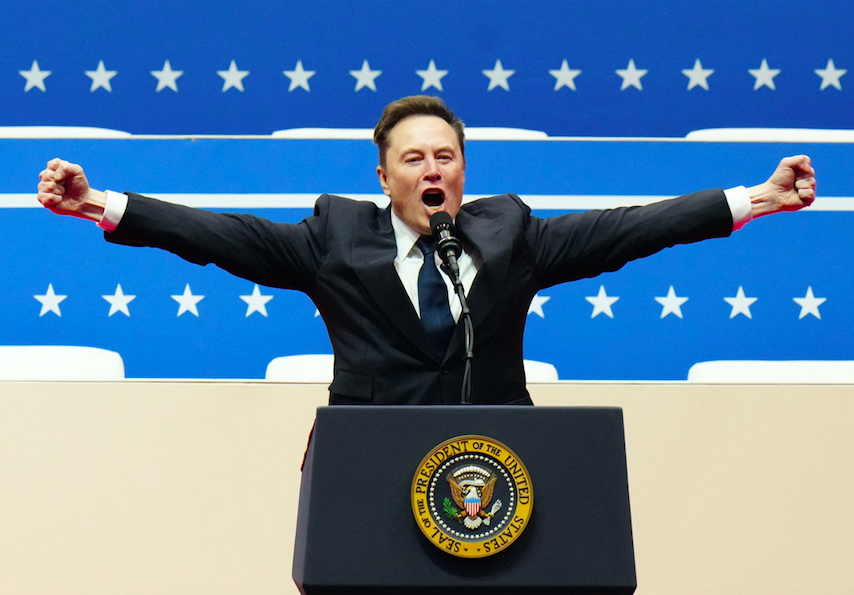
His appointment to lead the Department of Government Efficiency (DOGE) under the Trump administration represented the culmination of this transformation: a private billionaire entrusted with an extraordinary degree of influence over the federal government.
The consequences were highly controversial. DOGE’s actions involved access to sensitive government systems and personal data, alongside sweeping efforts to reduce federal spending and dismantle or restructure agencies, including USAID. The disruption of international aid programmes raised serious concerns about the humanitarian consequences of these decisions, especially due to the estimates of deaths resulting from these cuts to foreign assistance.
Eventually, the relationship between Musk and Trump deteriorated when their interests diverged. Their public feud demonstrated that even an alliance between two extraordinarily powerful personalities could become unstable when neither was willing to surrender control. Although they eventually went their separate ways, the names of Trump and Musk remained linked when they surfaced in the Epstein files.
Meanwhile, reports about Musk’s alleged consumption of ketamine, LSD, cocaine, ecstasy, marijuana and psychedelic mushrooms added another controversial dimension to the public scrutiny surrounding his behaviour and his suitability for positions of enormous responsibility. What Gibney ultimately exposes is a world in which technological entrepreneurs are no longer content with influencing markets: they want to shape governments, societies and the future of humanity itself.
Science fiction as a warning
Science fiction is an essential element of Gibney’s visual and intellectual vocabulary. Throughout the documentary, fictional worlds become metaphors to understand Musk’s ambitions and the increasingly blurred boundaries between technological fantasy and political reality.
Two references are particularly revealing. The first is The Man Who Could Work Miracles (1937), the British fantasy comedy directed by Lothar Mendes and based on H. G. Wells’ 1898 short story. Its protagonist discovers that he possesses virtually unlimited supernatural powers and initially believes he can use them to build a better world. Yet his extraordinary abilities ultimately expose the dangers of absolute power, particularly when combined with limited wisdom and an inflated sense of self-importance. The comparison with Musk is striking. Like the protagonist of the film, he appears convinced that his extraordinary capabilities give him the right to reshape the world according to his own vision, regardless of the consequences.
The second reference is Douglas Adams’s The Hitchhiker’s Guide to the Galaxy, originally published as a radio series in 1978 before becoming a novel in 1979 and subsequently being adapted for television and cinema. Its absurdist vision of humanity’s place in the universe provides a particularly fitting counterpoint to Musk’s obsession with colonising Mars. His ambition to make humanity a multiplanetary species is presented as an almost messianic mission, yet the practical difficulties of establishing a sustainable human presence on Mars remain immense. The planet’s hostile environment makes it anything but an obvious alternative home for humanity.
Gibney’s references to science fiction are not merely decorative. They expose the dangerous possibility of confusing technological imagination with scientific reality, and of treating the future as something that can be conquered through sheer force of will.
The price of the dream
One of the most revealing perspectives on Silicon Valley’s billionaire class can also be found in Adam Becker’s book More Everything Forever, a timely examination of the grandiose ambitions and disturbing obsessions of technology oligarchs. The desire for unlimited growth, endless technological expansion and the promise of immortality or interplanetary escape is presented as a peculiar form of contemporary ideology. It is a worldview in which every problem requires more technology, more investment, more data and more control. Musk embodies this mentality almost perfectly. His ambition to colonise Mars, develop humanoid robots, connect human brains to computers and build increasingly powerful artificial intelligence systems raises a fundamental question: who benefits from this vision of the future, and who is expected to bear its costs?
The environmental consequences are particularly difficult to ignore. The enormous energy consumption associated with data centres, the expansion of AI infrastructure and the environmental footprint of technological production sit uneasily alongside Musk’s earlier image as a champion of sustainability. The irony is difficult to miss: the man who claims to be saving civilisation from extinction may also be contributing to some of the very problems threatening its future.
A disturbing portrait of power
With music composed by Daniel Pemberton and David Byrne, the documentary also benefits from an unusually effective soundtrack. Byrne’s song Let Me Sell You a Dream is particularly appropriate, cutting through Musk’s public declarations and reinforcing the film’s central argument: that his greatest invention may not be a car, a rocket or an artificial intelligence system, but the mythology surrounding himself.
Gibney does not simply assemble a catalogue of scandals, controversial statements and questionable business decisions. He examines Elon Musk’s professional and personal conduct to expose his insatiable thirst for control, which permeates every aspect of his life and ambitions.
Musk seems to operate according to the logic of a video game in which he is the protagonist, the Player One who must overcome every obstacle and eliminate every adversary. Other people become non-player characters, existing within a world whose rules he believes he can rewrite.
What emerges from this 236-minute investigative documentary is not the portrait of an omnipotent genius, but of a man whose extraordinary influence may be built on a surprisingly limited understanding of the complexity of the world he seeks to control. His confidence is often presented as proof of competence, his ambition as proof of vision, and his willingness to break established rules as evidence of genius. But when technological power, immense wealth and political influence converge in the hands of one individual, the consequences extend far beyond his own companies or personal ambitions. And that is perhaps the documentary’s most disturbing conclusion: Musk has accumulated a degree of power that society may find extraordinarily difficult to challenge or reverse.
Ultimately, Musk is not simply a documentary about Elon Musk. It is an investigation into the world that has allowed someone like him to become so powerful, and into the dangers of entrusting the future of humanity to individuals who believe they alone know how to save it. This almost four-hour marathon never feels exhausting. Its encyclopædic accumulation of information, archival material, testimonies and provocative visual devices is so effectively delivered that the running time becomes irrelevant. It leaves the audience with plenty to think about, and perhaps with a question more unsettling than anything else in the film: what happens when the man who wants to save the world becomes convinced that he owns it?
Final Grade: A
Check out more of Chiara’s articles.
Photos Courtesy of Bleecker Street Film