

©Independent Film Company
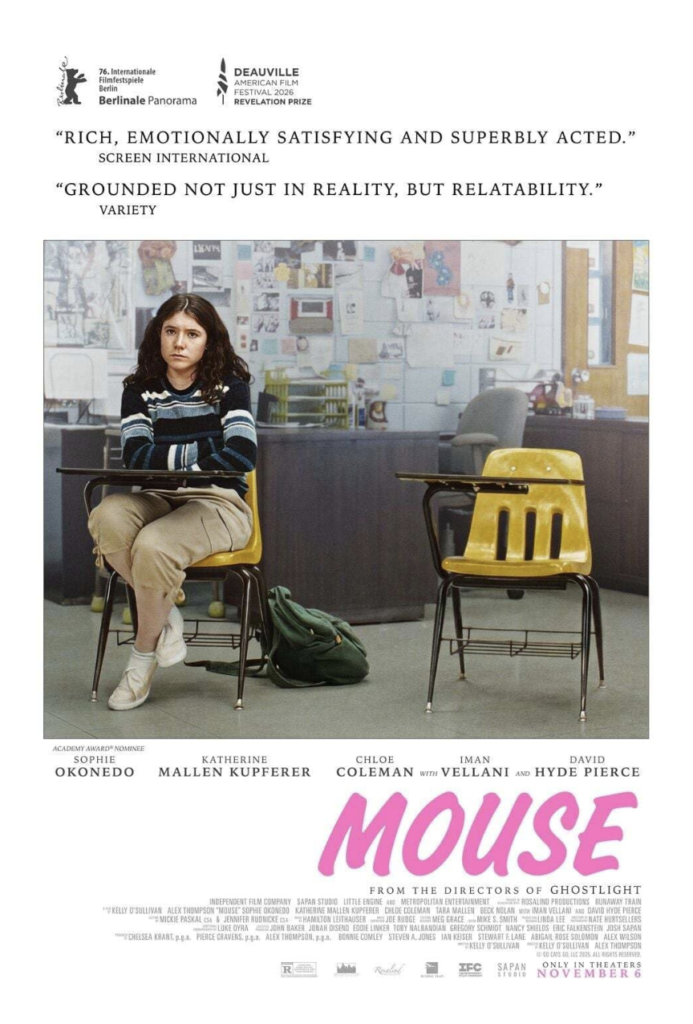
Q : Kelly and Alex, I think I would love to start with you. At this point, whenever there’s a new project announced with you, shepherding, it’s the top anticipated of the year for me, and Mouse was no exception. Tell us maybe a little bit about the beginnings of this project. You’re navigating the process of grief, like you did in a way in Ghostlight as well. Where did this particular story come from?
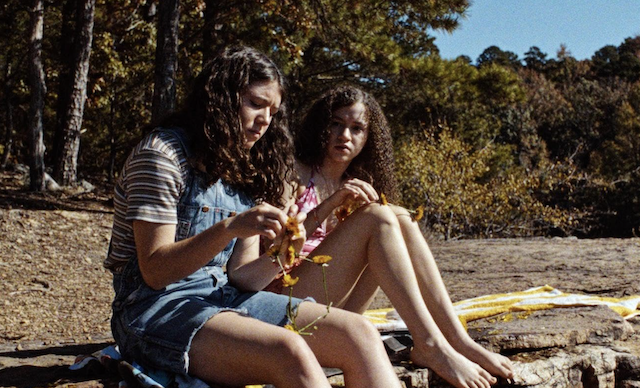
Kelly O’Sullivan : I started writing this one in 2019, and really wanting to make something in my hometown, and sort of make something surrounding my teenage years. And I really did have a friend who was killed in a car accident, and that experience affected the way that I thought about life forever.
It started with that, and then I became very interested in this idea of a girl who feels like an understudy in her own life, and somebody who both loves her best friend and is resentful of her best friend, and doesn’t know who she is without her. And then sort of on the opposite side of the coin, Callie’s mom(played by Sophie Okonedo), who’s devoted the last 17 years of her life to primarily, you know, mothering and teaching her daughter, and being there for her daughter.
Q : Thank you. Alex, I’m wondering if you can add to that. I know Kelly wrote this, but at what point did you get involved as a co-director?
Alex Thompson : Well, we live together, so-
Q : You know each other a little bit.(lol)
Alex Thompson : We know each other a little bit. You could say I have a first look deal on most scripts.(lol) I was always gonna co-direct it with Kelly, and then actually, the idea was that then “Ghostlight” was gonna be her solo movie debut. And when we did, we ended up shooting “Ghostlight” first, and so I sort of got grandfathered into “Mouse” which was very nice, very fortunate for me.
And I mean, I get the scripts very early. I mean, I get pages. The first scene I remember reading was the Brad scene in the car for some reason. That was the first thing that I really remember. Yeah, and then it’s just off to the races.
Q : Before I bring in this amazing cast, can I ask both of you, what is it like to make a kind of near era, near term period film? I mean, it’s hard to think for me that 2002 is nearly a quarter century ago at this point. And you capture that era so beautifully, so vividly, but it still feels contemporary. What kinds of considerations went into directing on your end?
Alex Thompson : Yeah, it felt there was a lot of pressure I think, ’cause we’ve all seen like the shitty version of movies set in this era, I think. And so the authenticity, I think, came from the fact that we weren’t pulling from other movies. We were pulling from high school photos, my middle school photos. You know, vintage, a lot of, like gasly cars. And then the fact that all of our music, you know, we have a lot of music, sets you in that era, but none of it is over the action.
It’s all like within the world, so it’s all what you’d call diegetic. That kind of is meant to evoke what it was actually like to be there, and I kind of think about, when a car would drive by playing like the radio or like when you walked into a party, or when you were upstairs and your friends were downstairs listening to music.
©Independent Film Company
Q : Sophie, thank you so much for being here, and congratulations on this.
Sophie Okonedo : Thank you.
Q : I’m wondering what stood out to you about your character Helen when you were first reading the script.
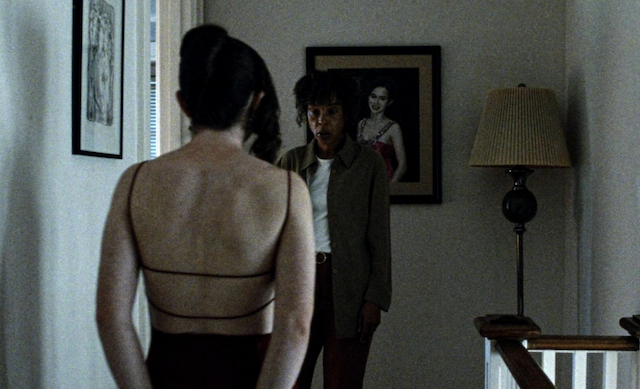
Sophie Okonedo : Well, actually, I wasn’t really thinking about… I got absorbed in the whole story, and I just thought, “This isn’t right.” And I also felt that it was so unexpected, I mean the story. When I started, my preference for reading a script, if I can, is to sort of read cold and not really look up or research people or anything around it, and I hadn’t seen “Ghostlight” at that time point, ’cause I probably would’ve signed up before even reading the script if I’d seen it, ’cause it’s so fantastic. I didn’t know anything about what I was reading, and then, so I wasn’t sure where the focus of the story was going to be.
So it starts off, and I start reading it and think, “Oh, this girl Callie(daughter of Sophie Okonedo’s character Helen), this is gonna be happen,” then the next thing happens, and then the most unlikely relationship occurs between… And I just thought, “This is so wonderful, what I thought would happen, what would normally happen in the movies, didn’t happen. And this felt to me, really significant, and about life now, even though it was set in 2002. It felt like, I said this, I feel that, you know, that here in the room’s rather embarrassing, and I’m British, and I’m bad at giving compliments. But, Kelly and Alex I feel are such important filmmakers, and I feel there’s no one really talking about America. And in this quiet, this way that’s not full of explosions and superheroes doing whatever, which is not saying there’s not room for all those films, but this film is something else. And so I hope in its quiet way that people will still get to see it, because I feel, I find it deeply meaningful as when I read the script.
Q : Thank you. I was wondering if you could also talk a little bit about where Helen is when we kind of….Embark on this journey with her, because most of your scenes are a few months after you lose your daughter. It’s a very specific time in somebody’s grief journey. Everything is still fresh, but maybe there’s also this expectation from others that it might not be fresh. How did you approach that balance?
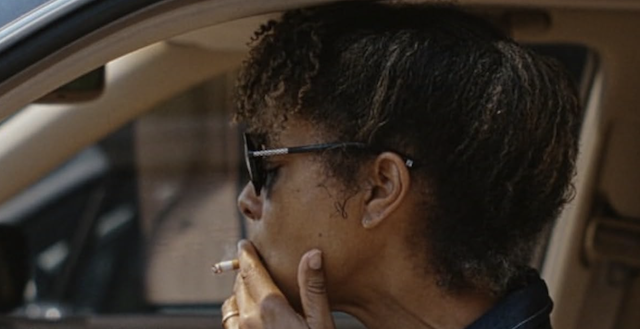
Sophie Okonedo : Obviously I’ve been doing quite a lot of Q&As, and I’m having to talk about something that I don’t often talk about. And I’m not quite sure, but what I know is I started with this wonderful script where Helen was when we first meet her. How did this concert pianist end up in Arkansas, in Little Rock at this time? So that’s what I think a lot about.
And when I get to the actual filming bit, when we’re on the set, great big ideas about how I’m gonna do anything, I just see what happens. And luckily, one that’s very sensitive, which is really great for filming and not so great for all your life. But I only have to have a suggestion, Kelly whispering a suggestion or Alex whispering a suggestion about before we start filming, and I’m off. So, you know, really, and then just working these actors here who and they’re all such remarkable actors, and we’re all theater-based actors. So I think we have a sense of preparation that’s deep, but it’s not pulling from outside. The script is our Bibles. We start with that. And I think we all share that sensibility. I keep using that word. I’m not sure it’s the right word.
Tara Mallen : I think it’s right.
Sophie Okonedo : I think it’s right. Okay. Thanks. I can’t really be technical about what happens, but it just seemed to happen. Well, you’ll hear it from the others as well, I feel like I’m hogging it now, but Kelly and Alex, they make a set where you can be your best. You know, there’s very few blocks in the way. So it’s just about allowing.
©Independent Film Company
Q : Thank you. Katherine, congratulations on this beautiful performance.
Katherine Malin Kupferer : Thank you.
Q : I was wondering if you can talk about your approach to Minnie(Played by Katherine Mallen Kupfere). What stood out to me most about her is that she’s very conflicted, as Kelly was saying, you know, before she was sort of like an understudy, and after her friend’s passing, she’s finding her voice, going through grief, guilt, and a lot of different shades in between, and you’re conveying a lot of that with your eyes and silence. So tell me a little bit about finding that journey in your performance.
Katherine Malin Kupferer : Well, to be honest, I think okay. So, when I got the role of Minnie, I was very excited obviously, but I knew that it was gonna be a little bit harder for me because Minnie isn’t incredibly similar to who I am as a person.
You know, I’m much more comfortable being out there and being loud and having people watch me and talking and a little bit more like Callie in this film. And Minnie, although I would never describe her as being shy, I would say she’s very comfortable with not having everybody watch her and not being center stage and observing and listening. And so I knew that I was gonna have to dig a little deeper inside myself.
Tara Mallen : You’re learning how to listen.
Katherine Malin Kupferer : Yeah. What?
Q : Learn how to listen.
Katherine Malin Kupferer : Obviously, ’cause I’m a great listener. Oh, Anyway, sidetracked there.
Tara Mallen : You’ll know.
Katherine Malin Kupferer : Yeah, I just get destroyed. Um, but no. Well, now I’ve lost my train of thought. Okay. Okay, okay. So I had to dig a little deeper inside myself to find what, like, the similarities between me and Minnie and, um, I’m very lucky to have, to have been guided b- by Alex and Kelly. After doing Ghostlight, we had, you know, I had a relationship with them and I really trusted them, and, and, um, had a lot of freedom working with them. And so I’m very lucky about that.
But in the aspect of how I played the grief and stuff like that, if I’m gonna be honest, both my parents are very deep in the Chicago theater community, and I was born into that. And they’ve taught me how to prepare for a role like I was preparing for a play, to really know, know everything, what the moment before is, where you’re coming from, you really know the material very well, so when I got there to the scene, I could let it all go and just really be in the moment.
So I think a lot of what I do is very instinctual. But for the grief, I try to think like who could I be thinking about in real life, who is this person in real life that I could be thinking about? And the truth is, Chloe (Coleman) and I got really close, who plays Callie. And so for the stuff where I had to be very sad that she wasn’t with me anymore, she had gone back to California, so I was very sad that she wasn’t with me anymore.
Q : Can you maybe talk about working with Sophie(plays a character Helen who is a mother of Callie) and Tara (Mallen=she is an actual Katherine Malin Kupferer’s mother who also plays a mother character Barbara in this film) , who’s your real mom, to build these two very different relationships, both very mother-daughter type relationships?
Katherine Malin Kupferer : Yeah, I mean, obviously, it was pretty easy with my mom- because it’s my mother, and we already had that relationship kind of. But it was important for me for Minnie’s relationship with Barbara too, you know, I feel like with my mom, I know that she’s always gonna be there, even if I’m awful to her, which you know, I’m trying not to be, obviously.
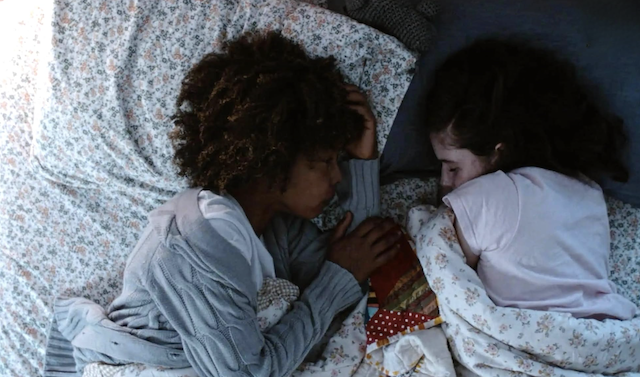
But you know, she’s always gonna be there. So, when Minnie has these outbursts and behaves with Barbara in a way that she doesn’t with any other character or any other person in the movie, it’s because she knows her mom’s always gonna be there. And I think with Helen, for me, I always thought about, she’s the closest thing to Callie, and so when Callie dies, I’ve got this hole in me that I need to fill, and she is the closest person there.
Sophie Okonedo : And, you know, of course I loved working with Sophie. I think, you know, we clicked right away. I would say we’re, we’re similar, I would say. And, my mom, you know, I live with her, so I’ve got no choice- but to click with her. Just kidding, I love her. (Lol)
©Independent Film Company
Q : Tara, I promise it will be your turn now. Thank you. Tara, I love your character Barbara, so much. She has the hugest heart, taking in strays of all species, basically. I guess maybe a two-part question. First, tell us about what you were excited to explore through her, and also what was it like to share the screen with your real-life daughter, build another mother-daughter relationship like you did in “Ghostlight” as well?
Tara Mallen : The truth is, when I was lucky enough to read the script, I knew who Barbara was pretty much right away. I am a parent, and I sometimes, not very often, make mistakes.. and say the wrong things, and wonder when I go to bed, “What possessed me to say that horrific thing to my six-year-old?” Or, and I’m sure I’ve given her much fodder for therapy. But I also love my daughter desperately, and there’s nothing I wouldn’t do for her, and I think Barbara’s the same. You know, she is in a slightly different situation than I am in regards to the fact that she’s a single mom, and I have an amazing partner.
But otherwise, I just felt like I knew who she was. In a way even that when I read “Ghostlight”, I felt like that Sharon was a little harder, a little further away from me. like Katherine has to contain herself for Minnie, I had to contain myself for Sharon. And Barbara, I could just let it all hang out. And working with Katherine s just a gift, and now I’ve been given it twice, so I’m just really lucky.
Q : Thank you. Alex and Kelly, among all the amazing powerful scenes in the film, one that I wanna talk about is the one that you sort of cross-cut this grief support group with Barbara helping the old sick dog cross the rainbow bridge. It really touched me personally on a lot of levels, and not only because I have to say goodbye to my own dog very recently. But it’s such a beautiful scene and cut so beautifully. How did you approach that?
Kelly O’Sullivan : Well, originally in the script, those two scenes were juxtaposed, but they weren’t intercut. You know, it had the same intention, but it was really our amazing editor, Mike Smith, who said… I think one day he was just like, “You guys, I have an idea. I already started working on it. Watch this.” And we were like, “Oh my God, this is brilliant,” because it took the idea that was on the page and really elevated it to be, you know, they’re both having… It’s the first time that they start to move away from each other by having solo experiences.
They’ve been having so many experiences together, and this is the first time that they’re like, “Oh, I think maybe what I need is not with that other person.” And so he was really, he took it and he made it so much better. And I love both of those scenes separately. I mean, that was a real grief group with real bereaved parents telling their real stories. And we filmed for an hour with grief group, and we cut… You know, there’s so much more to their stories. But we sort of picked the things that we felt like both Helen, was useful for her to hear, but also, like the echoing in Minnie’s head, you know? Like, sort of in a subconscious, magical way that would be useful for the story. But that’s Mike Smith, our amazing-
Q : Do you have anything to add?
Alex Thompson :Yeah, I guess, just from a filmmaking perspective, I always think it’s really interesting that some of the scenes that stand out as being the most effective at one point, like a problem scene in the edit. And that was basically, like the hardest 10 minutes of the movie at one point, and it got condensed into one of the strongest three and a half minute.
And so it’s really interesting that Mike has that instinct. And, you know, we were all kind of like, “I know these two things are meaningful. I know it.” Like, we felt it when we were shooting it right up against each other. It was sort of relentless followed by another relentless feeling. Yeah, I’ve been really happy to hear people-
©Independent Film Company
Q : Sophie, what was it like for you to be in that real support group as an actor?
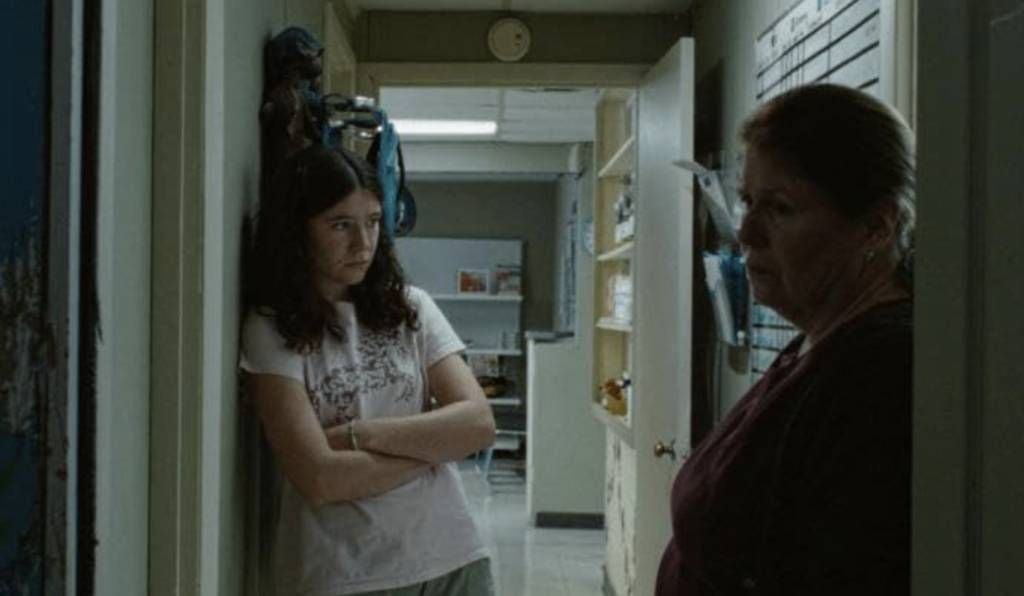
Sophie Okonedo : Yeah, I think that on the day there’d been a light, slight hiccup in our communication, ’cause, I knew the actor was there, Minnie, but I hadn’t quite realized the rest of the group were real grief group.
And what we did, we set down a couple of, like, “You’re gonna start that position.” And I said, “Look, I’d rather not know what’s gonna come next.” And so I just started out in the corridor, and I just basically entered into the scene. And then I didn’t even know there was two camera, I was really unaware of what was gonna happen. Like, I knew the state I would be in as I started, and then basically it was actually an hour and 10 minutes… I think that scene lasted for. And then it started dawning me during the scene, I think these are real people and not actors.
‘Cause otherwise they shouldn’t be okay with this. I mean, this is like, come on. And then, and then all the things… It’s funny because all the things, if it had been scripted in that way, that I would’ve perhaps thought in my mind I might do, just went away, because I could only just listen.
Q : Katherine, I don’t care what any character in the movie says, I think you’re an amazing singer. I really love that scene where you’re singing One from a chorus line, because you find this perfect balance of someone finding her voice unapologetically, regardless of how that sounds. It’s very strong, but also obviously it doesn’t have to be great singing. You find that balance, too. How did you approach that song?
Katherine Malin Kupferer : Well, I’m really not a great singer. That’s my real singing voice, so yeah. In “Ghostlight” that was not my real singing voice. That was someone else’s voice.
Q : Oh.
Katherine Malin Kupferer : So it’s okay, but that’s the truth.
Alex Thompson : Well, mixed. It was mixed.
Katherine Malin Kupferer : You say it’s a mix, but I can’t hear myself. But, so I was really scared to sing that day for that performance.
It was really hard for me, and I got really upset, because they had brought in these extras in the audience who were all like teenagers. They were all my age. And so I was so embarrassed. And so I was in the wings and I was really upset, and I started crying.
And Kelly came back and she was like, “Well, you know, this is how Minnie feels. This is what she’s going through and so you gotta use this and put it into how you sing the song.” And so, that’s what happened with the performance, you know, that was a moment that I really grew as an actor, and I think it’s a moment that Minnie really grows as a person. I would never have done anything like that in my own life and I don’t think Minnie would ever have done it, if not for the sequence of events leading up to it. But I think the song is really interesting to me because it’s how Minnie thinks of, you know, at the end. She’s the most beautiful, the most perfect person. And in the song it’s like… I’m not gonna sing it for you guys, but-
Q : I was kinda hoping you would.
Katherine Malin Kupferer : You know. But it’s like, you know, one singular sensation. You know, it’s talking about this is the one best person, and to Minnie, Callie was the one, you know, best person.
©Independent Film Company
Q : I think we have time for one last question. And Alex and Kelly, I remember this from talking to you during “Ghostlight” as well, you really immerse yourself in the community while you’re making a film, and I understand that this film was no exception. How did it work for this shoot in Arkansas? I know you mentioned that you’re from there. But you really embraced that community as well, it sounds like..
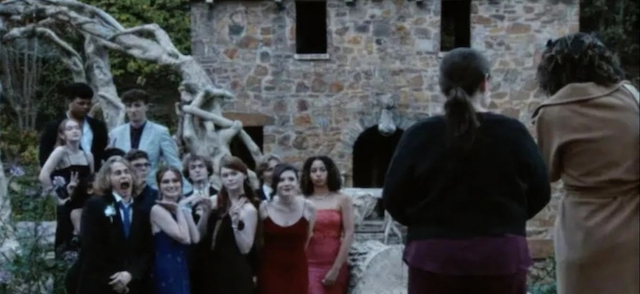
Kelly O’Sullivan : Oh, yeah. I mean, there were so many levels of just strange and bizarre and magical and joyful about shooting this in my hometown. So it’s so funny because, like, when I was in high school I did a dance for my friend. Like, I was sort of like Cara and Brandi(one of the students characters in his film) in that way. There were never any masks, but I did that. And my dance teacher who choreographed that dance choreographed this dance in this movie, you know, 24 years later, and she was a very young teacher when our friend died and so she was very moved by that. And then, you know, choreographing this and there are just so many layers of real life crossing over into fiction, but through a prism, you know? Never one-to-one, just sort of like echoes of the past existing in the future.
And like my parents, like my dad has a cameo in the film. He’s one of the people taking pictures at homecoming. We immersed ourselves in the community and we cast locally with our amazing casting directors because we just wanted it to feel real. Like, you can hear it in the dialect, you can see it in the people. I think, faces and comfortability within the community. The pastor in the funeral is a real pastor. That’s his real church and so it was really exciting and also totally strange to be back. And I just remember that’s Alex and my son. The baby is our actual son.
Q : Aw.
Kelly O’Sullivan : And he didn’t sleep very well, and I remember one night he didn’t sleep and like at 5:00 AM, when a coffee shop opened I went in my pajamas with Milo and I saw a high school crush of mine-like 24 years later. And I looked like a hot mess.
And he was like, “Oh my God, is that Kelly O’Sullivan?” And I was like, “No.” And I just felt like Minnie all over again, being like, “God!” , so yeah, it was, it was fun and weird and the best.
Q : Well, I want to thank you for not only this gorgeous movie, but also for all the “Good Will Hunting” references.
©Independent Film Company
If you like the Q&A, share your thoughts below!
Check out more of Nobuhiro’s articles.
Here’s the trailer of the film.