

©Courtesy of Film at Lincoln Center
Hajime Takano aspired to become a prolific celebrity architect, like Frank Gehry. In the process, he became an absentee father, like Louis Kahn (the subject of his son’s painful documentary, My Architect). His daughter, Emi has entirely given up on her emotionally-distant father, but her brother Ren still yearns for an unlikely breakthrough. Unfortunately, he likely risks fresh disappointment when trying to reconnect in Danzuka Yuiga’s Brand New Landscape, which screens during this year’s New Directors/New Films.
The prologue represents the point of no return. At the behest of his wife Yumiko, Takano agreed to join the family for a brief vacation, only to leave as soon as they arrive, because of a sudden professional opportunity. Shortly thereafter, his wife passed away—essentially from a broken heart. Yet, Takano remained the same disengaged parent he had always been.
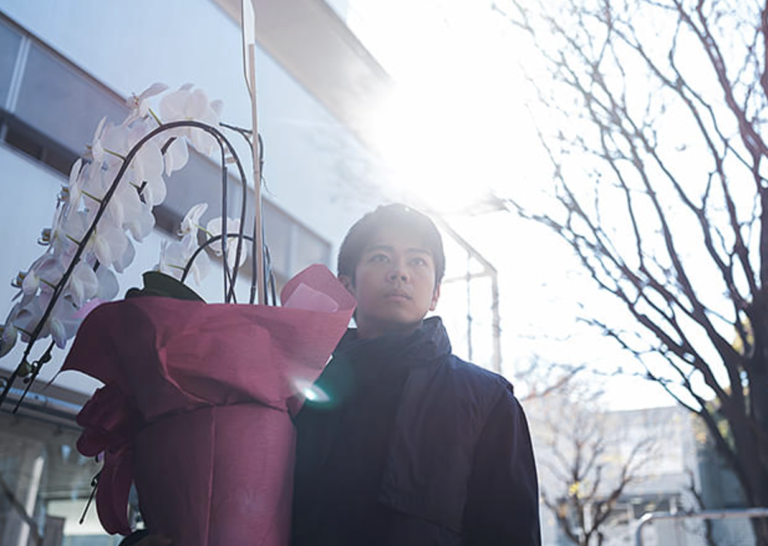
Flashforward a decade or so, Ren and Emi have grown up. They stay in touch with each other, but not their father. Ostensively, life is good for Emi, since she will soon move in with her reasonably presentable fiancé. In contrast, sullen Ren labors quietly as a delivery man for a large floral company, visibly carrying a father-shaped chip on his shoulder. A drop-off at the museum hosting Takano’s career retrospective leads to an awkward not-quite-reunion. Frankly, the architect shows no signs of affection. Nevertheless, Ren keeps returning, hoping vainly that his father might finally give him some form of emotional scraps.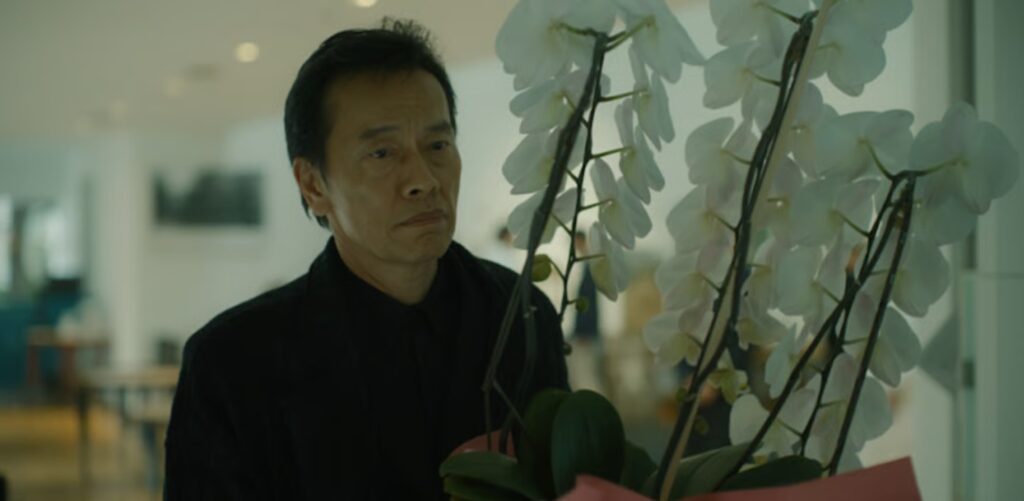
©Courtesy of Film at Lincoln Center
Essentially, Brand New Landscape plays out like a Japanese Hong Sang-soo film. It is talky and neurotic, featuring supporting characters who have secret connections to each other, before taking a slyly subtle turn into postmodern magical realism. However, unlike Hong’s recent output, Yuiga’s screenplay is meticulously written. This is no mere sketch for improvisational dithering. He truly plumbs his characters’ souls, to their lowest depths.
Yuiga also shows a good deal of architectural savvy, using the real-life Miyashita Park and the controversy regarding homeless evictions during its redesign, as an important element of Takano’s fictional backstory.
Regardless, the family drama drives the film. Kodai Kurosaki so convincingly projects Ren Takano’s barely repressed angst and heartache, it almost hurts to watch him. Likewise, Kenichi Endo’s portrayal of the not-so paternal Takano is so aloof and cold-blooded, it similarly stings. “Reserve” is an apt adjective for Yuiga’s ensemble, but Mai Kiryu is especially so, as grown Emi. Yet, Yuiga clearly shows she is the product of her upbringing, such as it was. However, Haruka Igawa is deeply poignant as tragic Yumiko Takaano.
Brand New Landscape is a deceptively small and quiet film, because great turmoil roils beneath the placid surface. Arguably, Ryo Teranishi’s delicate, strangely upbeat score gives the film a vibe reminiscent of some of Kore-eda’s bittersweet family dramas, such as Still Walking. 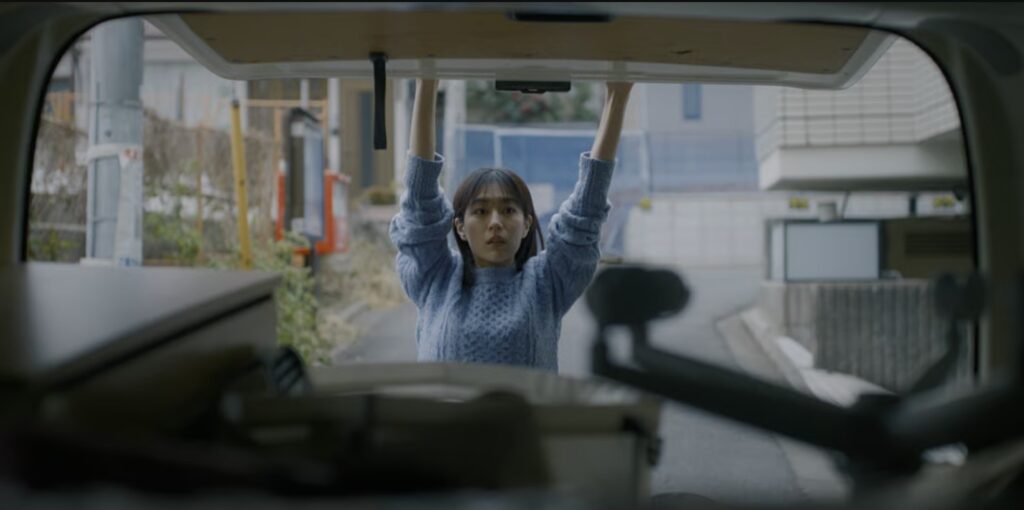
©Courtesy of Film at Lincoln Center
Altogether, it proves Yuiga is a fresh talent to look out for, but his minimalist aesthetic might challenge some patrons. Frankly, a tighter edit probably would have better served his vision rather than compromising it, but that also happens to be true of dozens of films released each month. Worth considering for patrons of art cinema and chamber family dramas, Brand New Landscape screens at MoMA and the Walter Reade, as a selection of ND/NF.
Grade: B
If you like the review, share your thoughts below!
Check out more of Joe’s Articles.
Here’s the trailer of the film.