

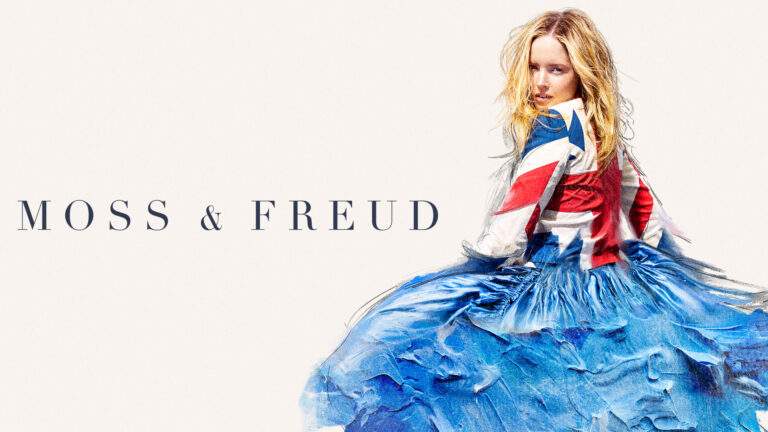
Academy Award-winning director James Lucas brings to the silver screen more than a conventional biopic. Moss & Freud is the extraordinary account of the never-before-told story of Supermodel Kate Moss and artist Lucian Freud’s unique friendship, that developed through the sittings that gave life to the painting Naked Portrait 2002, that sold for £3.9 million in 2005.
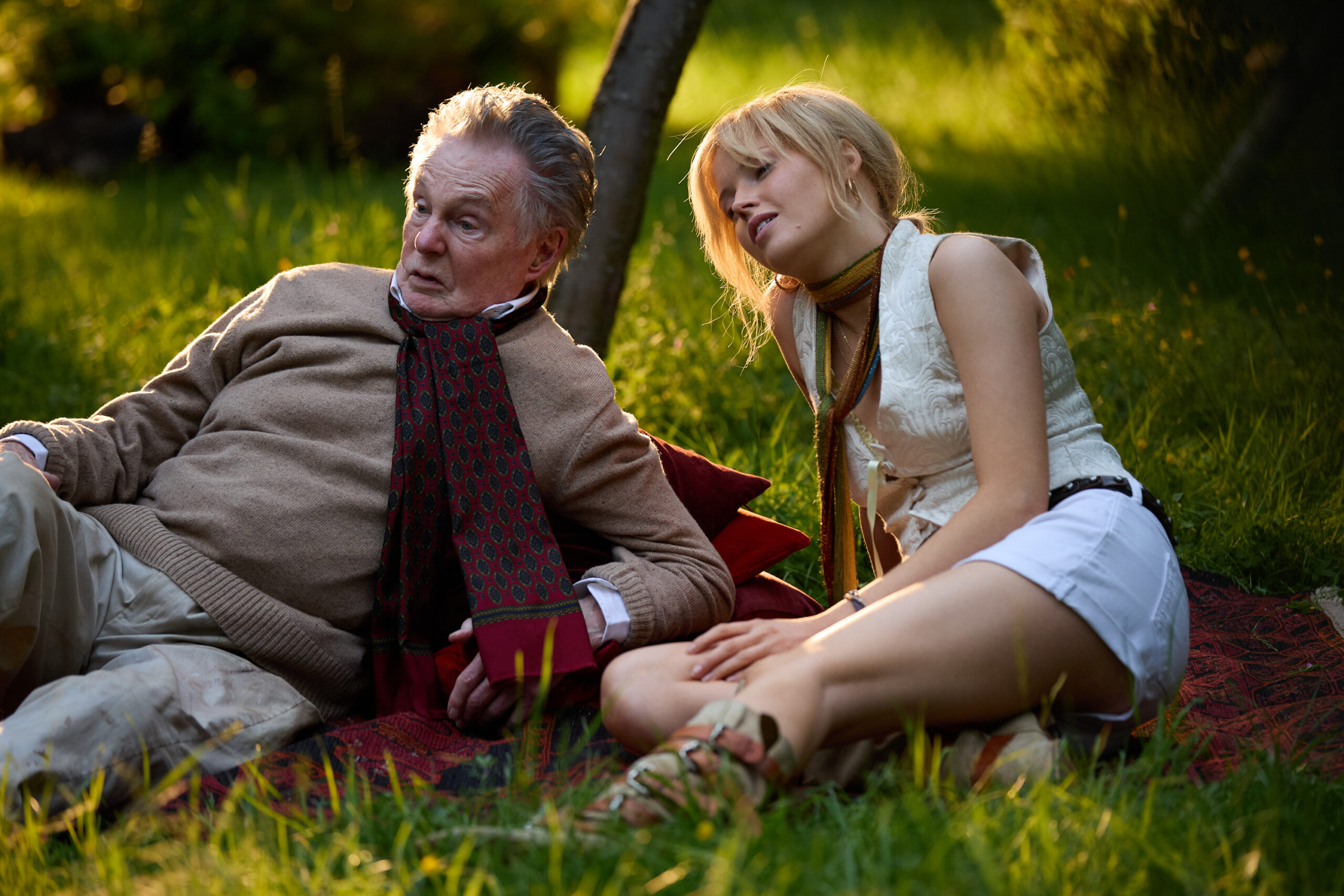
The greatest figurative painter of the 20th century is played by Derek Jacobi, whereas Ellie Bamber is perfect as the supermodel who was featured in Vogue for 127 times. The first meeting between the two is shown at the National Portrait Gallery, when it’s still closed. Lucian Freud is in awe of Titian’s Diana and Actaeon, where Actaeon accidentally stumbles upon the secret bathing place of Diana, chaste goddess of the hunt, and sees her naked. This leads the artist to reflect upon the way “life appears more permanent without clothes,” because when the person is naked there is no hiding, only the truth. This will stick in Kate’s mind to the point of asking to be painted nude for her portrait.
People have defined Lucian Freud’s works as psychological, he defines them biological, driven by the desire to get to the core of being. This is why his process is meticulous and extended through time. His method seems to clash with Kate’s shambolic lifestyle. Freud is punctiliously on time, Kate is always late. Yet they find an understanding, drinking Dom Pérignon, venturing into reckless night drives, and exchanging confidences. They share remembrances of things past. A black and white flashback shows Moss when she was a fearful ingenue, during her first campaign at 17 years old with a male model. Freud retraces his youth as a Jewish boy in Germany; his flight to England thanks to the legacy of his illustrious grandfather Sigmund; his days using opium in Paris; and his two marriages. Eventually the influence of Freud on Kate leads her to discipline her debauched lifestyle betwixt booze, drugs and shady nightclubs.
The model’s extraordinary career is represented on the screen with a phantasmagorical old roll effect and montage of her catwalks and prestigious photoshoots. But the core of Moss & Freud, relies in neither of the protagonists’ careers, but rather in the portrayal of the act of creation as a mutual collaboration between the muse and the artist. The series of sessions reveal vulnerability, discipline, and the psychological weight for both parties, since “A moment of complete happiness never occurs in the creation of a work of art. The promise of it is felt in the act of creation, but then disappears towards its completion.”
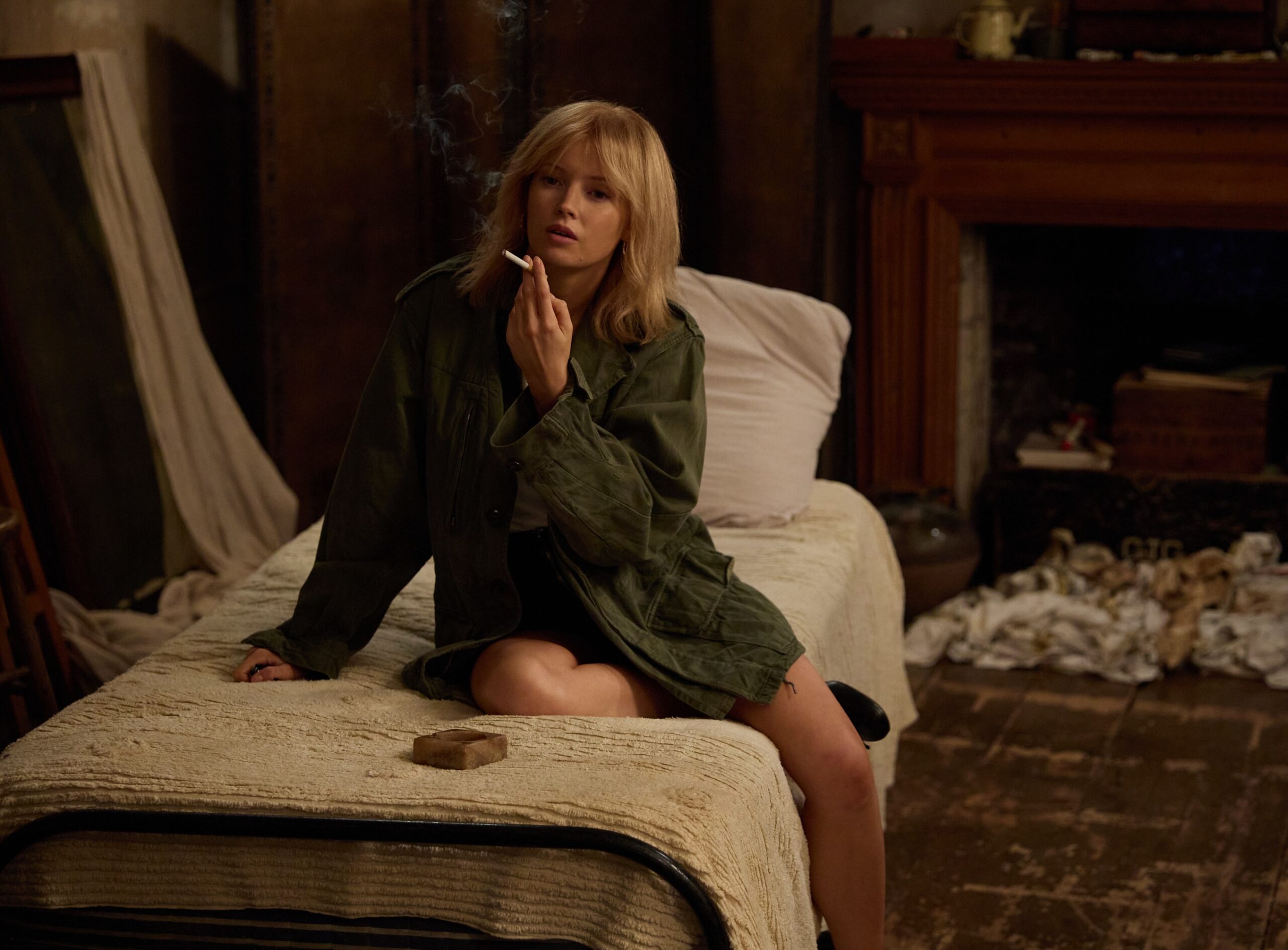
Life unfolds during the weeks, months, and year that go by between the various creative sessions. We begin with Kate having her pixie auburn haircut and end up with her iconically blonde beach waves. At first she is absorbed by her shindigs and ultimately focuses on motherhood. When the painting is finally complete Lucian has moved on to other sitters, because the process of creation is necessary to the painter more than the picture. However, the magic that seems to have faded between the two is still there, because they’ve shared a moment of truth no one else can understand.
The British-New Zealander filmmaker — who won the Academy Award for Best Live Action Short Film at the 87th Academy Awards with The Phone Call — seems to instill in Moss & Freud the spirit of Honoré de Balzac’s short story Le Chef-d’œuvre inconnu (The Unknown Masterpiece). That tale is a vivid parable of the constant gap between the artist’s conception and the realisation of that conception: the seduction of incompleteness and revision, and of infinite deferral. When the eminent artist Frenhofer saw the disappointment that his masterpiece aroused in viewers he was devastated. In the case of Moss & Freud, when the muse sees her portrait for the first time she is aghast, but time teaches her to understand the work of art. Freud does not share the same turmoil as Frenhofer while witnessing her reaction. However, what he does have in common with the artist in Balzac’s story is the process of transferring on canvas the essence of his subject. In fact, as the film illustrates, there’s a necessity to communicate the artist’s feelings about the object of his choice, that builds up to such an intensity that those feelings become infectious.
Final Grade: A