

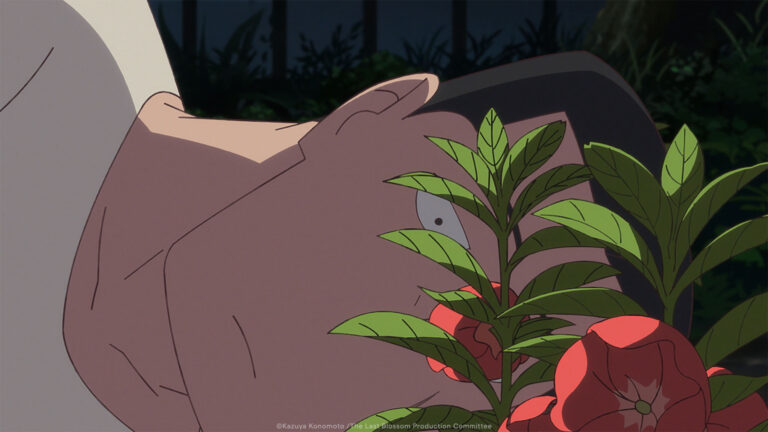
In 1836 Joseph-Xavier Boniface published a book called Picciola, about Count Charney, a former soldier who had been jailed for conspiring against Napoleon, who passed his days behind bars tending a plant that lightened his time amidst the walls that imprisoned him. Japanese film director Baku Kinoshita and writer Kazuya Konomoto seem to have grasped inspiration from this French 19th century story for their animated work The Last Blossom.
The film follows the dying days of former yakuza Akutsu (Kaoru Kobayashi and Junki Tozuka), who has been confined for 30 years in a dingy cell. He is serving life in prison after a middling career in the underworld and reminisces his life with a flower of a Balsam plant (Pierre Taki), that is growing out of a can. The human ponders upon those who have influenced his life, like Tsutsumi (Hiroki Yasumoto), his ruthless boss; Nana (Hikari Mitsushima and Yoshiko Miyazaki), the woman he loved, and Kensuke (Natsuki Hanae), the child he would give everything to protect.
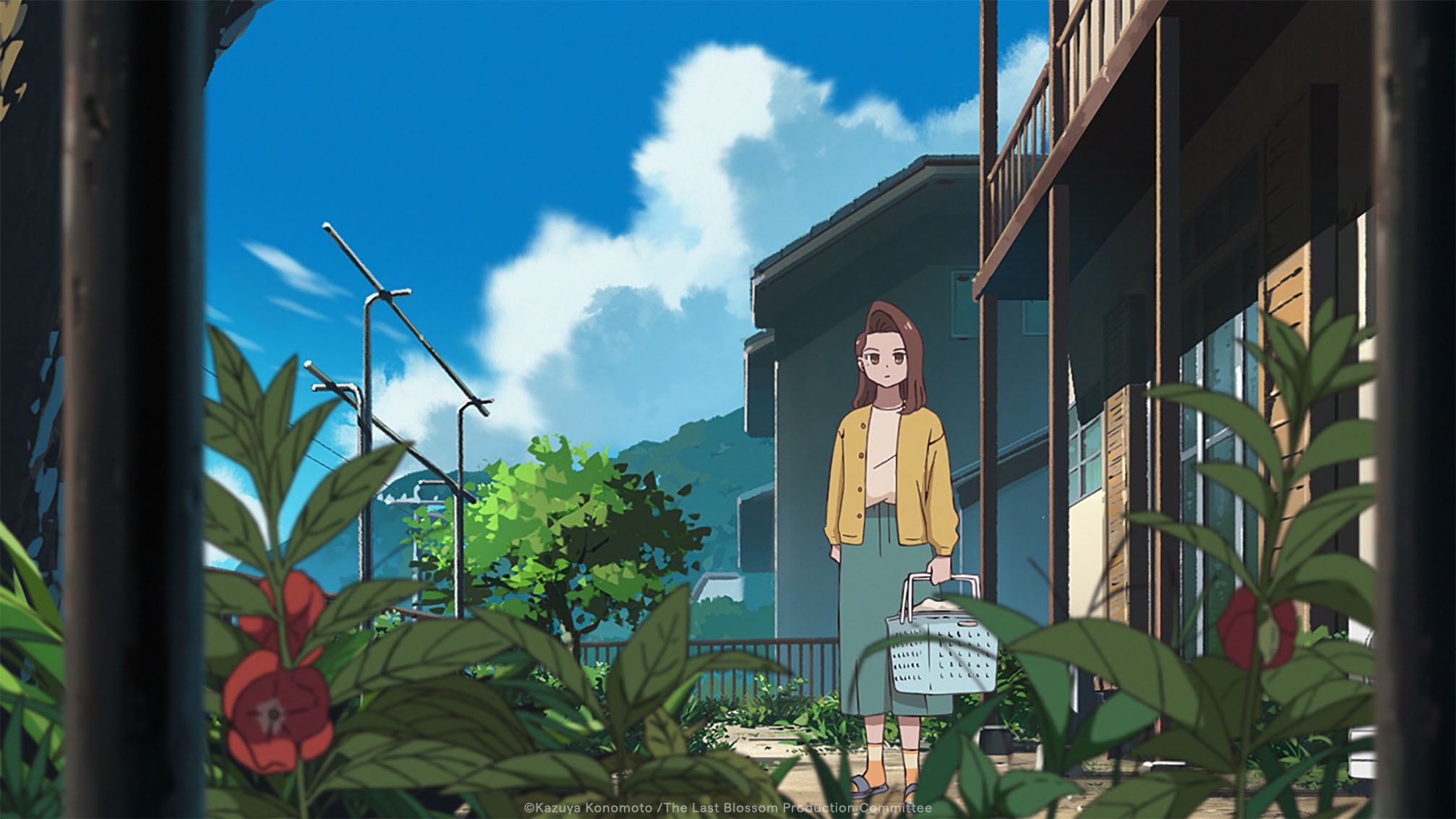
The Last Blossom opened the selection of animated films at the Far East Film Festival 2026 and is now part of North America’s largest festival of contemporary Japanese films — Japan Cuts — that returns to Japan Society for its 19th edition. Baku Kinoshita and writer Kazuya Konomoto, creators of Odd Taxi, and award-winning Studio CLAP (Pompo the Cinephile), come up with an inventive animated work that unleashes a story of redemption, through a meditative chronicle with nature.
From the prison cell, through flashback memories, we travel to the year 1987 between a house with a small garden and the dodgy metropolitan areas that used to be the stage of the criminal world. At that time, Akutsu made some regrettable decisions that had caused pain to himself and others. But he eventually made the final choice of atoning for his past mistakes, in favour of the happiness of those he loved. Nature — that we usually look up to — does not seem to respond with sympathy. The talking-flower insolently tells the man that his life has been pathetic and it cannot comprehend the human mentality of wanting to save a life at all costs. The belief system of the plant kingdom abides by the idea that nature’s cycle is infinite: “Life is a continuation of our ancestors. As long as a seeds fall on soil we live on.” That is the reason why plants have no fear of death. But humans do not belong to an eternal flow, once a human heart stops beating that individual has no way of returning. This is why Akutsu’s willingness to sacrifice himself for Nana and Kensuke, however questionable his methods, elevates him from an ordinary gangster to something greater. The plant in the film is “just channelling its consciousness,” the man opposes the idea that “What comes from nature should be left to nature,” and takes matters into his own hands.
Akutsu is a firm believer that time can mend what is broken if we act wisely. As a matter of fact, he even resorts to referencing William Shakespeare’s Othello in these regards. Akutsu sums it up by saying “When all backfires, you can turn things around.” The play about the Shakespearean Moor used the words “The robbed that smiles steals something from the thief; He robs himself that spends a bootless grief,” when the Duke was trying to console Brabantio who was distressed that his daughter Desdemona had married Othello. Coincidentally enough, Iago used similar words towards Roderigo who was hoping to marry Desdemona, reminding him that we have the power to change our circumstances by the choices we make: “Our bodies are our gardens, to the which our wills are gardeners.” This quote could have been referenced word for word in The Last Blossom, since its allegorical power is portrayed through a floral analogy, to describe how not all is lost after a painful setback. Thusly, Baku Kinoshita projects an encouraging message of recovering from disaster when things go astray.
Even the feelings of endearment that were never voiced out by the repentant man finally find a way to be fully expressed. In these regards, music plays a special role in increasing the emotional depth of the protagonist’s inner growth. The film’s theme song Moving Still Life, performed by Cero is truly effective; whilst the iconic 1961 song Stand By Me becomes the emblem of a meditation on found family, anticipating how the love language of a couple can become the secret code to a liberating treasure.
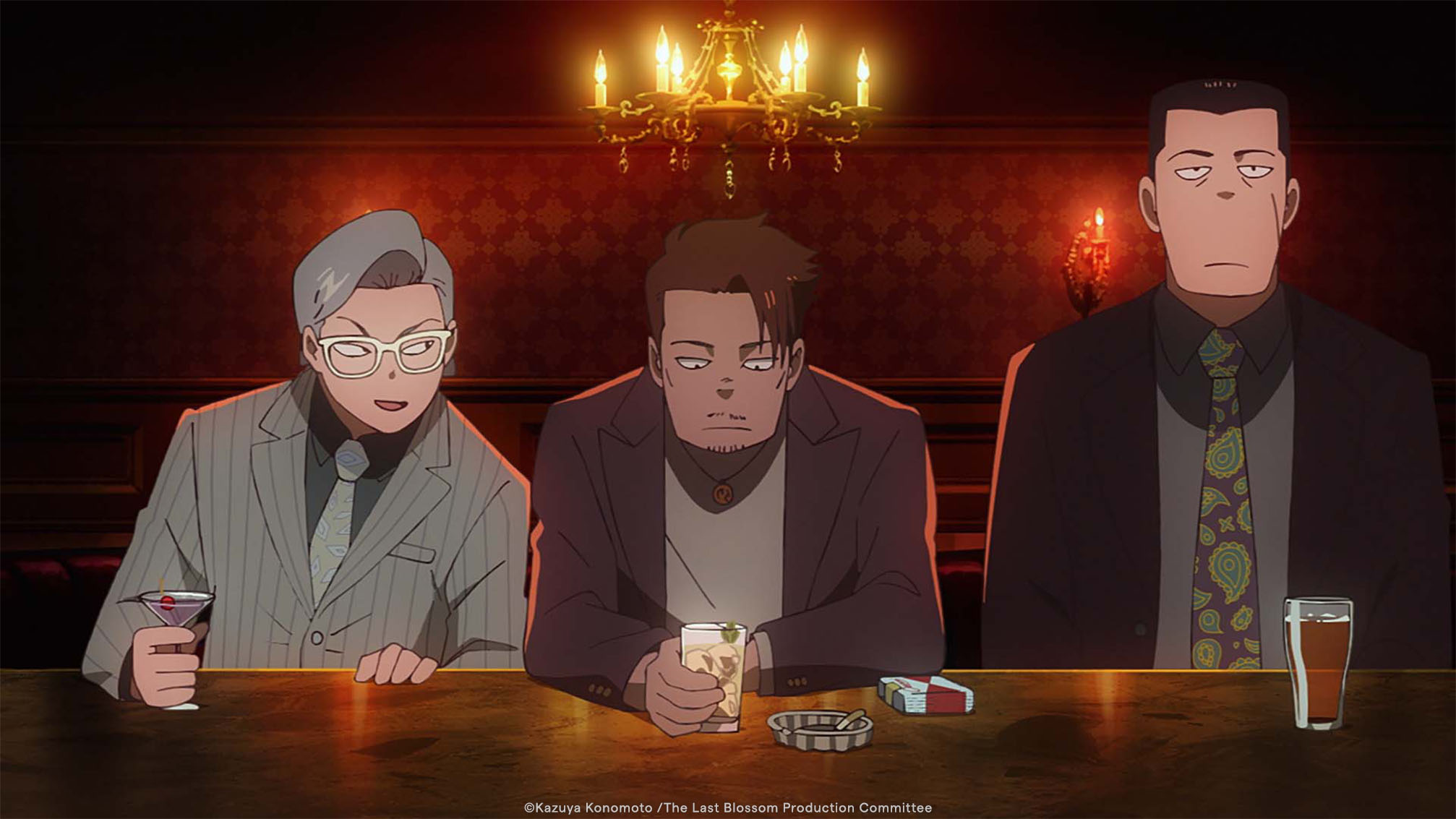
In terms of directorial choices, The Last Blossom beautiful coalesces the yakuza film genre with magical realism. It is enriched by a touch of animism, through the plant that enhances our interconnectedness with nature, as the speaking-bud evokes the belief system according to which everything on Earth possesses a spirit. The choice of the Balsam flower seems intentional if we think that, since the Victorian age, this species in the language of flowers was associated with patience towards the challenges of waiting.
The Last Blossom captures the sacrifice of a flawed man who dedicates his life to right his wrongs for those he loves, proving there is still some humanity our species can instil in nature.
Final Grade: A
Check out more of Chiara’s articles.
Photo Credits: courtesy of GKIDS — © Kazuya Konomoto/The Last Blossom Production Committee