

ⓒPhoto by Nobuhiro Hosoki
The image of the protagonist, Nausicaä—carried aloft by the Ohmu and walking through the air on a golden carpet—was seared into my memory as a teacher casually showed the entire 6th grade class in Singapore a VHS tape of “Nausicaä of the Valley of the Wind” as part of a moral education lesson.(Surely, expanding my views of animation)
However, as I was young and naive, Joe Hisaishi’s music didn’t make that much of an impression on me back then. Cut to a decade later, as I indulging heavily into film industry, I would retreat from reality and immerse myself in the movie theater,
I was at a double feature of Takeshi Kitano’s films “That Man Is Violent” and “Sonatine” at a movie theater in Ikebukuro which made more sense to me. The theme song from “Sonatine” exuded a sense of melancholy and sorrow that stood in stark contrast to the heavenly blue sea and the way of life of the yakuza men who were prepared to die. I remember buying the “Sonatine” soundtrack at Tower Records right then and there, still reeling from that impact of the music.
So, when Maestro announced his journey to big apple, It’s only natural to face this greatness with a more of my refined sense of artistry.
His music, created on a grand scale, has gained worldwide recognition among many people through Studio Ghibli films, while cinephiles have been captivated by the films of director Takeshi Kitano, which reflect his unique personality. But not so many people aware his humble begging, born as his real name Mamoru Fujisawa, the composer chose his stage name as a phonetic tribute to the American jazz titan Quincy Jones: the kanji for “Hisaishi” can be pronounced Kuishi, closely resembling “Quincy”; “Joe” directly stems from “Jones.”
Prior to his composing grand orchestral themes, deeply immersed in the minimalist and New Age music scenes of the 1970s and 1980s, when he was listening to artists such as Steve Reich, Philip Glass, and Yellow Magic Orchestra. His early ‘80s debut albums were rich with shimmering synthesizers, electric drum beats and eerie, compelling rhythms.
In 1984, he wrote the music for the animated feature film “Nausicaä of the Valley of the Wind,” directed by Hayao Miyazaki.
Haruomi Hosono had initially been planned to create the music for this film, but Miyazaki and producer Isao Takahata opted not to hire him due to his previous compositions, “High School Lullaby.” It did not align with the film’s vision, but their admiration for the concept album Hisaishi had composed in 1983, before the film’s release, which was widely appreciated, led them to consider it, and rest is history, their collaboration extended more than 4 decades.
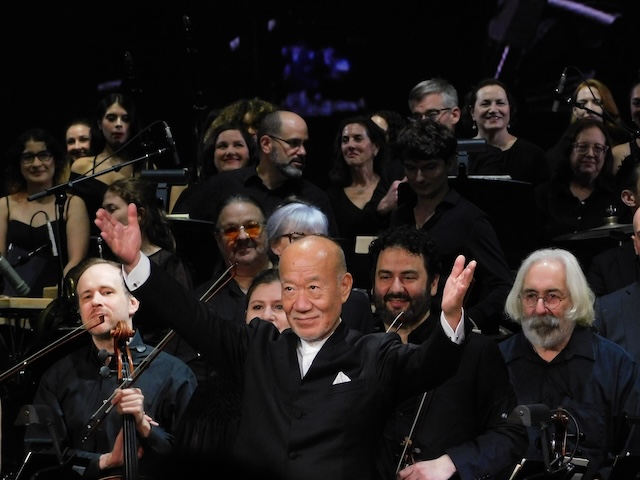
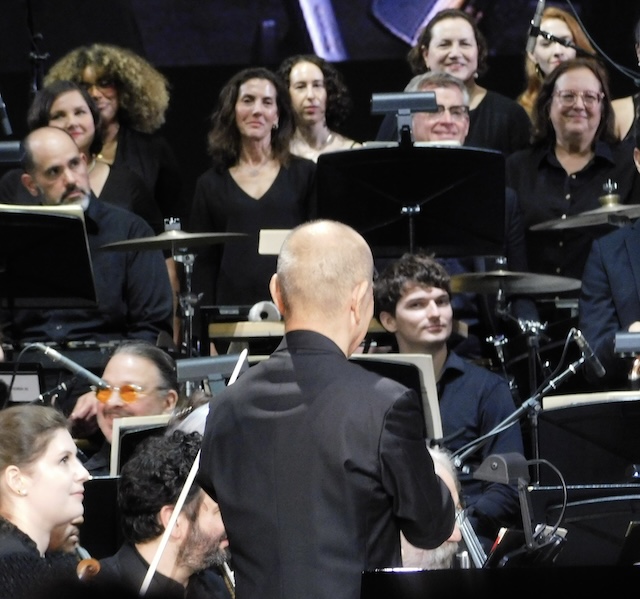
This time at Radio City, Maestro conducted the Orchestra of St. Luke’s and the MasterVoices choir across 6,000-seat nightly crowds, framed by enchanting visual projections from Hayao Miyazaki classics like “Princess Mononoke,” “My Neighbor Totoro“ and “Nausicaä of the Valley of the Wind.”
The concert started with his tribute to a Japanese auteur, Nobuhiko Obayashi, they initially teamed up in the film, “Chizuko’s Young Sister.”(Japanese title, “Futari”) They released as the theme song, “Kusao no Omoi” for the film, it featured an unusual collaboration between director Obayashi and composer Hisaishi, who sang the song together. The decision to have the two perform a duet came about after producer Kyoko Obayashi(wife of Obayashi) suggested that, since the film was titled “Futari” (“Two”), it would be fitting for two people to sing it. But the concert tribute their collaboration of their film, “Samurai Kids” with theme song, “Water Traveller” which resonated with audience with different ethnicity.
ⓒPhoto by Nobuhiro Hosoki
Over the years, Hisaishi expanded his repertoire, delivering gritty live-action films to director Takeshi Kitano and executing major symphonies worldwide. Another significant step was his rearrangement of his beloved movie scores into elaborate orchestral suites, from Kitano Films, they took me down to a nostalgic memory lane with Sonatine from “Sonatine,” Raging Men from “Brother,” HANA-BI from “HANA-BI“ and Kids Return from “Kids Return.” He definitely transformed movie scores into a genuine concert experience, appealing to the millions of fans in his audience.
Some fans who knew of Hisaishi through his music in Miyazaki films traveled to New York City from out of state or trip from Japan to see his performance. After intermission, concert hall embrace the songs from Ghibli world, upon hearing the opening bars of familiar songs from anime films directed by Hayao Miyazaki, including “Nausicaa of the Valley of the Wind,” “My Neighbor Totoro,” “Princess Mononoke” and the Oscar-winning “Spirited Away,” the audience erupted in cheers. I realized the fact that Rather than saying Joe Hisaishi’s music is not just special, it’s “something I’ve listened to regularly since I was a child.” It really hit me then that Joe Hisaishi’s music was, in fact, indispensable to Studio Ghibli… as it made the works that hold such a special place in my heart feel even more like cherished memories.
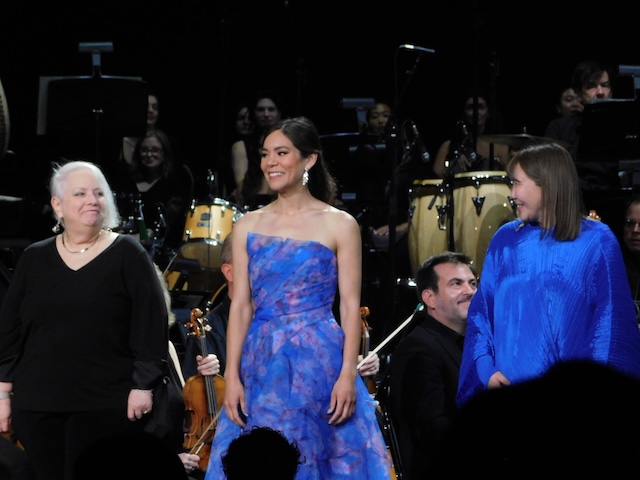
A highlight of the residency was, of course, “One Summer’s Day” from the Oscar-winning “Spirited Away,” where Hisaishi played piano alongside a vocal performance by his daughter, Mai Fujisawa. During the seventh and final night of his “Cinema Music Concert” show, Hisaishi was honored by Guinness World Records for the longest consecutive run of performances by a classical composer at the iconic venue.
At 75, Hisaishi was energetically conducting and playing the piano , it seemed that he was having an incredible time, then I thought to myself from the bottom of my heart, “This man really loves music…which really transcend into the world!
ⓒPhoto by Nobuhiro Hosoki