

©Courtesy of the NYFF
Simmering family trauma, buried resentment and the lasting consequences of violence drive the most intriguing and atmospheric crime dramas. Paper Tiger is one such film that turns those themes into a slow-burning story filled with brooding suspense and emotional tension. Rather than relying on constant action, the feature finds drama in silence, suspicion and wounds that refuse to heal.
Silver Lion award-winning filmmaker, James Gray (Ad Astra, We Own the Night) wrote and directed Paper Tiger. His latest movie stars Adam Driver and Miles Teller. The period drama also reunites Driver with his Marriage Story co-star, Scarlett Johansson.
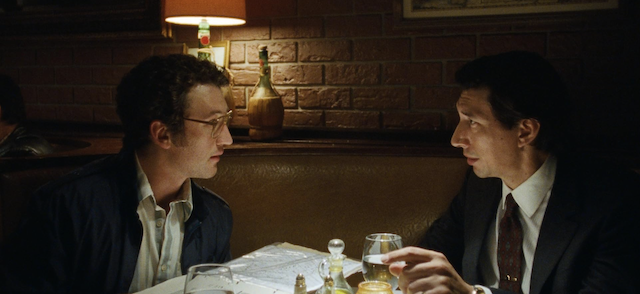
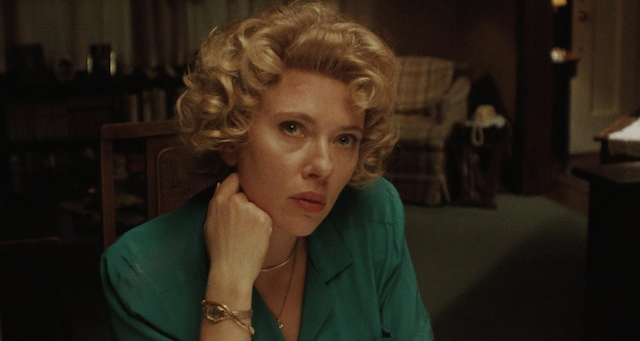
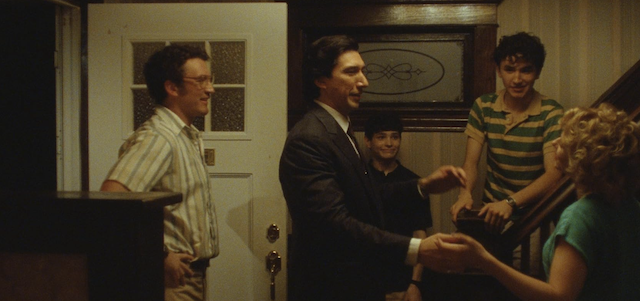
Set in 1986 Queens and Brooklyn, Paper Tiger follows engineer Irwin (Teller) after his brother, Gary (Driver), a former cop, draws him into a shady deal. Gary thinks he can make a killing on a scheme with Russian criminals dumping oil down by the Gowanus Canal, assisting them to work around regulations; instead Gary ends up endangering his brother, as well as Irwin’s sons (Gavin Goudey and Roman Engel) and wife Hester (Johansson), who is going through her own private crisis. Torn between brotherly love and marital loyalty, Irwin discovers he’s ensnared in forces far beyond his control.
Paper Tiger understands that the strongest crime stories often emerge from damaged relationships. The gangster thriller uses family trauma as a foundation for its suspense, giving its darker moments genuine emotional consequences.
Every strained exchange feels loaded with history, creating an atmosphere that becomes increasingly difficult to escape. That deliberate pacing gives the film its distinctive personality and keeps the story simmering beneath the surface.
©Courtesy of the NYFF
One of the greatest strengths of Paper Tiger is its commitment to slow-burn storytelling. The movie doesn’t rush toward revelations or manufacture suspense through unnecessary twists.
Instead, the drama allows uncertainty to grow naturally as its characters confront complicated personal circumstances. That patience gives seemingly ordinary scenes an underlying sense of danger and anticipation. The result is a crime story that feels more psychologically engaging than conventionally action-driven.
The tension in Paper Tiger often comes from what remains unspoken.
Characters carry emotional baggage that shapes their choices, relationships and reactions to unfolding events. This approach makes the family drama inseparable from the film’s criminal elements.
As tensions increase, personal history becomes just as important as external conflict. That combination gives Paper Tiger a strong emotional foundation beneath its crime drama framework.
The story also benefits from its willingness to embrace ambiguity. The film doesn’t treat every character or relationship as completely straightforward.
Instead, the thriller allows uncomfortable questions to linger long after individual scenes have ended. That uncertainty strengthens the suspense because even quiet conversations can feel charged with the possibility of something going wrong. The film never reveals more than necessary while allowing tension to build beneath the surface.
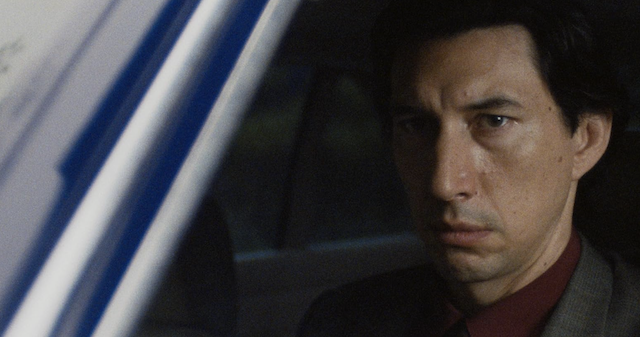
Driver gives Paper Tiger much of its emotional force through a performance built around controlled intensity. He avoids unnecessary theatrics, allowing small gestures and subtle expressions to communicate enormous amounts of emotion.
That restraint fits the drama’s slow-burning approach particularly well.
The Oscar-nominated actor made silence feel meaningful, especially during scenes where his character struggles with complicated emotions. His performance gives Paper Tiger a brooding quality that remains consistent throughout the story.
Driver is especially effective when the movie explores simmering family trauma. His character’s emotional conflicts never feel disconnected from the larger pressures surrounding him.
©Courtesy of the NYFF
Instead, personal pain gradually becomes part of the thriller’s broader atmosphere of suspicion and unease. The Emmy-nominated actor captured that internal struggle without making Gary’s character development feel overly sentimental. The performance remains grounded, which gives Paper Tiger a convincing sense of emotional authenticity.
There is also an impressive physicality to Driver’s screen presence.
Even when he says very little, his posture and expressions can communicate tension. That quality helps maintain suspense during scenes where very little appears to happen.
The Tony-nominated actor understands how to make stillness feel active, which perfectly suits Paper Tiger. His performance becomes one of the film’s most important sources of tension.
The focus on family trauma gives Paper Tiger a deeper dimension than a straightforward crime thriller. The film examines how unresolved pain can influence relationships across years and generations.
Those emotional tensions gradually become inseparable from the story’s suspenseful elements. As a result, the feature feels concerned with consequences rather than simply dramatic events.
That emphasis on consequence also connects Paper Tiger to the darker traditions of classic American crime cinema. Its atmosphere recalls gritty 1970s and 1980s crime dramas without feeling like a simple imitation.
[tf-tv]
The movie embraces shadowy moods, troubled characters, moral uncertainty and deliberately measured storytelling. Those qualities give an old-school cinematic texture that feels refreshingly patient. Its influences become part of the experience rather than overwhelming its own identity.
©Courtesy of the NYFF
At the same time, Paper Tiger also adds emotional sensitivity to those familiar genre traits. The family story prevents the thriller from becoming purely atmospheric. Its characters remain emotionally connected to the consequences surrounding them. That balance between crime, family drama and psychological suspense makes the thriller particularly engaging.
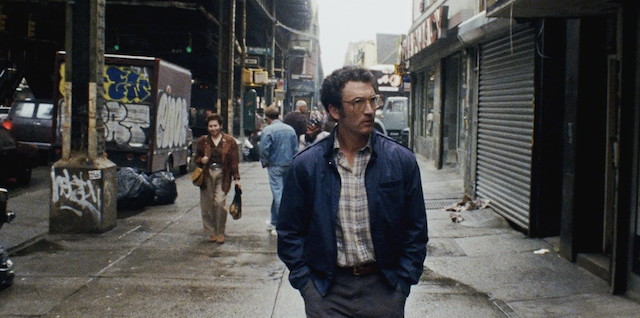
The production design is another important part of Paper Tiger‘s appeal. The environments contribute significantly to the film’s gritty and uneasy atmosphere. Locations feel lived-in rather than excessively polished, reinforcing the story’s emphasis on damaged relationships.
Details within the production design help establish a world shaped by history and emotional wear. That visual authenticity complements the drama’s darker dramatic tone and works well alongside Driver’s controlled performance. The environments possess a weathered quality that suits the film’s themes of memory, conflict and unresolved trauma.
Ultimately, Paper Tiger succeeds because its different elements reinforce one another. The slow-burn narrative creates suspense, while the family drama provides emotional stakes. Driver’s performance adds intensity without undermining the film’s restrained approach. The production design creates an appropriately gritty environment for the story’s darker themes. Together, these elements produce a crime drama with atmosphere, personality and emotional weight.
Paper Tiger is a compelling crime drama built on atmosphere, emotional tension and richly drawn characters. Its story combines family trauma with brooding suspense, creating stakes that reach beyond conventional criminal conflict. The slow-burn structure gives the film space to deepen its characters while allowing tension to steadily accumulate.
Driver’s restrained performance further strengthens the film’s emotional impact, bringing weight to its themes of loyalty, betrayal and unresolved pain. Most importantly, Paper Tiger understands that suspense becomes more powerful when characters have something meaningful to lose. The result is a gritty, absorbing crime drama that lingers well after the final scene.
©Courtesy of the NYFF
Overall: B+
Paper Tiger had its North American Premiere in the Main Slate section at the 64th New York Film Festival (NYFF). The drama served as NYFF’s Opening Night selection on Friday, September 25, 2026 at Alice Tully Hall. The movie’s next NYFF screening will be held on Friday, October 2 at 1:15pm ET at the Walter Reade Theatre.
If you like the review, share your thoughts below!
Check out more of Karen Benardello’s articles.
Here’s the trailer of the film.